













Best Blockchain Stocks to Watch on November 21

Best Blockchain Stocks

COIN4U IN YOUR SOCIAL FEED

Every year, investors revisit the world of blockchain stocks, searching for companies driving the next phase of innovation in cryptocurrencies, Web3, DeFi, and digital payments. Even as crypto markets experience periodic volatility, the underlying momentum behind blockchain technology continues to accelerate. It influences the way financial systems operate, how corporations verify data, and how consumers send money across borders. Because of this, the top blockchain stocks to keep an eye on often reflect broader technological trends rather than short-term price movements in Bitcoin or Ethereum.

As of November 21st, interest in blockchain-focused companies is rising significantly due to expanding regulatory clarity, growing institutional adoption, and steady integration of blockchain rails into mainstream finance. From cryptocurrency exchanges and Bitcoin miners to semiconductor giants and fintech innovators, each major player contributes uniquely to the evolving blockchain ecosystem. This article explores the most influential and promising blockchain stocks to watch right now, breaking down how their business models work, why they matter, and what investors should understand before making long-term decisions.

What Defines a Blockchain Stock in Today’s Market?

Blockchain Exposure Beyond Crypto Prices

In the past, many investors assumed that blockchain stocks simply mirrored crypto prices. However, 2025 has made it clear that the connection is far more complex. A modern blockchain stock may operate a major crypto exchange, mine Bitcoin at an industrial scale, develop AI-driven blockchain tools, issue stablecoins, or provide the hardware powering DeFi, NFTs, and tokenized finance. Because of this diversity, the top blockchain stocks to watch on November 21st offer very different exposure depending on business model, technology, and market position.

A blockchain stock might grow due to increasing enterprise demand for distributed ledger technology, even if crypto prices stagnate. Similarly, a semiconductor company may see rising demand for high-performance chips needed for mining, blockchain indexing, or on-chain AI systems. This variety allows investors to build exposure to blockchain trends with different risk levels and volatility profiles.

Factors Driving Blockchain Stock Growth

The strongest blockchain stocks are shaped by several long-term catalysts. Regulatory progress, especially around stablecoins and exchange compliance, has created a cleaner environment for institutional adoption. Network effects also matter because exchanges, wallets, and Web3 platforms become more useful as more people and businesses join them. Infrastructure demand is another essential factor, since GPUs, ASIC miners, cloud networks, and security systems are the backbone of decentralized applications.

Finally, crypto market cycles still influence many blockchain stocks, especially Bitcoin miners and trading-focused companies. While these cycles introduce volatility, they also provide significant upside potential during periods of rising crypto activity. Understanding this blend of regulatory, technological, and macroeconomic forces is crucial when evaluating the top blockchain stocks to keep an eye on.

Coinbase Global (COIN): The Exchange Powering the Crypto Economy
Coinbase Global (COIN) The Exchange Powering the Crypto Economy

The Role of Coinbase in Blockchain Infrastructure

Coinbase Global stands among the most influential blockchain companies, acting as a gateway into the digital asset world for millions of users and thousands of institutions. Although widely known as a cryptocurrency exchange, its importance goes far deeper. Coinbase’s products include secure custody for institutional investors, blockchain analytics tools, wallet services, on-chain staking solutions, developer APIs, and integrations with numerous decentralized applications. It functions as a crucial infrastructure layer for the broader blockchain ecosystem.

Because Coinbase connects traditional finance to the cryptoeconomy, it benefits from long-term adoption of digital assets regardless of short-term price swings. Its trusted brand, regulatory alignment, and massive user base make it one of the top blockchain stocks to watch as more institutions seek compliant and scalable access to cryptocurrency markets.

Growth Drivers and Strategic Advantages

The long-term bull case for Coinbase is supported by rising transaction volumes, growing institutional interest, and increasing demand for secure crypto custody. As the regulatory environment around stablecoins and digital asset trading becomes clearer, Coinbase stands to benefit from being a compliant, publicly traded exchange with strong security records. Its participation in on-chain finance, Ethereum Layer-2 networks, decentralized ID, entity, nd Web3 wallets further strengthens its position.

Additionally, Coinbase’s shift toward subscription and services revenue, including custody fees and blockchain rewards, helps reduce dependence on volatile trading income. This makes the company more resilient across market cycles.

Risk Considerations

Despite its strengths, Coinbase faces several challenges. Trading revenues remain cyclical, competition is intense, and regulatory scrutiny in the U.S. continues to evolve. Any new policies affecting crypto exchanges, staking rewards, or digital asset classification could impact operations. Still, its strong balance sheet and established reputation keep Coinbase at the center of discussions about leading blockchain stocks.

Marathon Digital (MARA): A Major Force in Bitcoin Mining

Mining at Industrial Scale

Marathon Digital is one of the world’s largest publicly traded Bitcoin miners, operating vast fleets of specialized ASIC miners in high-capacity data centers. Its business model centers on validating Bitcoin transactions and securing the network, earning Bitcoin rewards in return. Because of its scale, access t,o energy and strong partnerships, Marathon maintains a competitive edge in an industry where efficiency is everything.

The company holds one of the largest Bitcoin treasuries among miners, which provides additional leverage during bull markets. This structure makes Marathon a high-beta play on Bitcoin itself, meaning its stock often moves more dramatically than the underlying cryptocurrency.

Why Marathon Stands Out

Investors monitor Marathon closely because it offers direct exposure to Bitcoin’s long-term performance while also expanding into new forms of compute infrastructure. The company continues to upgrade its mining equipment, improve energy e,fficiency and grow its operational capacity. As Bitcoin halvings reduce block rewards, only the most efficient miners tend to survive and thrive. Marathon’s large-scale operations and strategic energy sourcing may help protect margins during these shifts.

Understanding the Risks

Bitcoin mining comes with inherent risks. These include rising mining difficulty, fluctuating energy costs, regulatory uncertainty around the environment, tax impact, and the volatility of Bitcoin itself. But for investors who believe in the long-term value of Bitcoin and want exposure through a major mining leader, Marathon remains one of the top blockchain stocks to keep an eye on this season.

Riot Platforms (RIOT): Mining Meets Next-Generation Compute

A Major Player in North American Mining

Riot Platforms is another major Bitcoin mining company, operating massive facilities primarily in Texas. With enormous energy capacity and vertically integrated operations, Riot has built a reputation for industrial-scale mining that prioritizes efficiency and long-term infrastructure ownership. This scale gives it flexibility not only in mining but also in future expansion into alternative high-performance computing, including AI-driven workloads.

Strategic Positioning and Future Potential

One of the reasons Riot remains a top blockchain stock is its strategic approach to infrastructure. Investors have increasingly speculated that large mining companies like Riot could transition part of their facilities toward AI compute or data-center services in the future. Because Bitcoin mining and AI computing require similar hardware, Riot’s data centers provide a potential optionality that goes beyond cryptocurrency alone.

Challenges and Volatility Factors

Riot, like all miners, is sensitive to Bitcoin price swings, regulatory developments, and energy market volatility. Governance decisions and shareholder sentiment also play major roles, especially as miners consider diversifying revenue streams. Despite these challenges, Riot continues to attract attention as a stock that blends direct blockchain exposure with broader compute potential.

Block, Inc. (SQ): Bitcoin Integration in Modern Payments
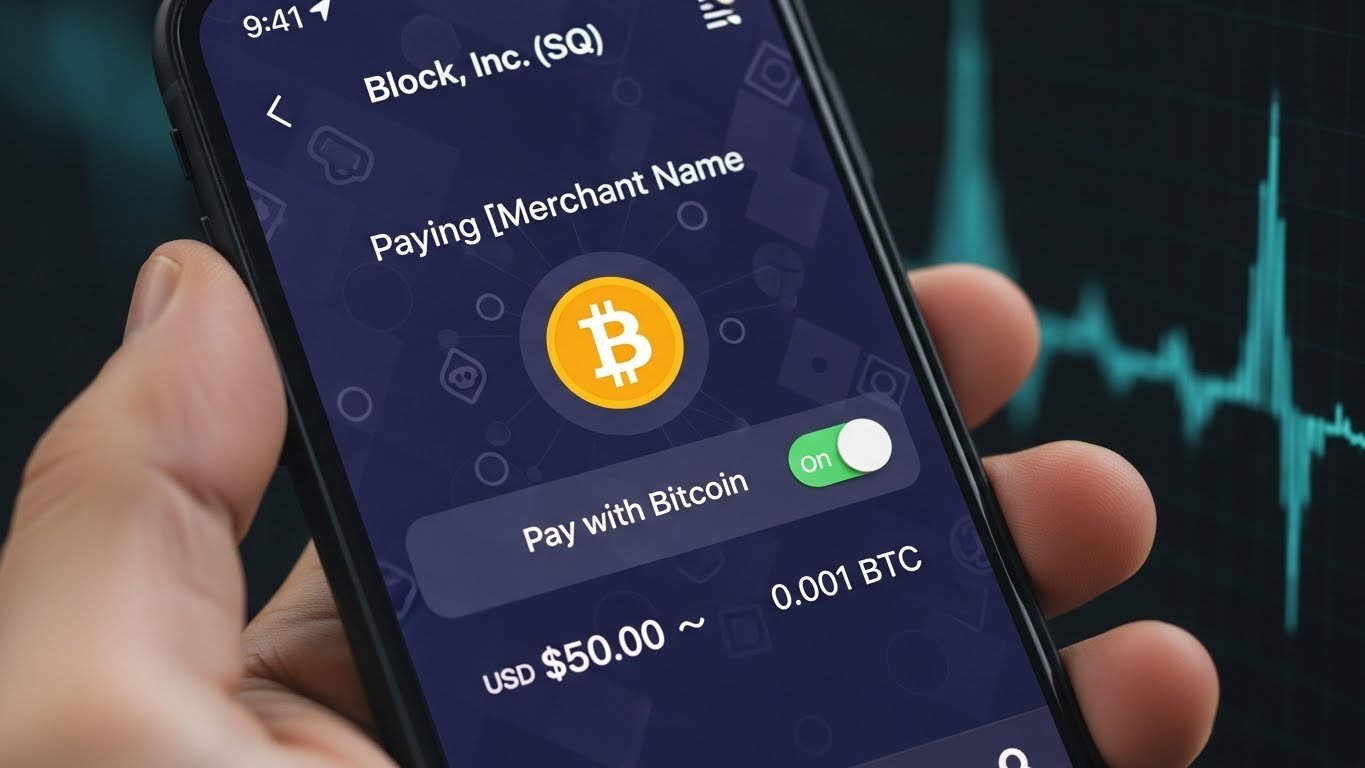
Block, Inc. (SQ) Bitcoin Integration in Modern Payments

From Square to Block: A Bitcoin-First Vision

Block, formerly Square, has grown into one of the most prominent fintech companies embracing blockchain technology. Its Cash App platform allows millions of users to buy, hold, and spend Bitcoin effortlessly, while its merchant ecosystem aims to integrate blockchain-powered financial services directly into retail and online commerce. What sets Block apart is its long-term commitment to a Bitcoin-centric strategy.

The company is also building hardware and open-source tools to expand Bitcoin accessibility. Its Bitkey wallet encourages secure self-custody, while its interest in Bitcoin mining hardware reflects founder Jack Dorsey’s vision of a more decentralized financial future.

Why Block Is Crucial for Blockchain Adoption

Block uniquely bridges consumer payments, merchant services, and decentralized digital assets. Cash App’s popularity among younger demographics and small businesses makes it an influential player in spreading Bitcoin adoption. By integrating blockchain payments into day-to-day commerce, Block extends the practical use of digital assets beyond speculation.

Risks and Market Considerations

Block’s diversified ecosystem means that Bitcoin-related revenue is only a portion of its business. This helps stabilize earnings but also means its stock doesn’t move in perfect correlation with Bitcoin or blockchain markets. Competition among digital wallets is significant, and regulatory shifts could influence Bitcoin payment features. Even so, Block remains one of the top blockchain stocks to watch because of its dedication to merging traditional fintech with decentralized systems.

Nvidia (NVDA): The Hardware Powering Blockchain and AI

GPUs as the Foundation of Blockchain Infrastructure

Nvidia is often associated with gaming and artificial intelligence, but its importance in blockchain cannot be overstated. High-performance GPUs are essential for specific types of mining, blockchain analytics, smart-contract development, AI-driven trading, and the infrastructure behind Web3 applications. As blockchain networks grow more complex, demand for advanced computing power continues to rise.

Nvidia’s latest GPU architectures are optimized for both AI and the computational tasks required in blockchain and cryptographic processing. This dual functionality places the company squarely at the intersection of two of the most powerful technological trends of the decade.

Why Nvidia Makes the List of Top Blockchain Stocks

Unlike companies fully dependent on crypto prices, Nvidia benefits from diversified demand across gaming, AI, data centers, and blockchain. This makes it a lower-volatility way to gain exposure to the blockchain sector while still benefiting from major adoption waves. As decentralized networks expand, the demand for high-end computation is unlikely to slow.

Considerations for Investors

Although Nvidia is not tied exclusively to blockchain, some investors prefer that stability. The key question is how much revenue ultimately comes from blockchain-related demand and whether competing chip manufacturers can erode its dominance in Web3-related data centers. Nonetheless, Nvidia remains a foundational name in the broader blockchain landscape.

IBM: Quietly Building Enterprise Blockchain Solutions

Enterprise Blockchain Beyond Speculation

IBM has spent years developing enterprise blockchain solutions using frameworks like Hyperledger Fabric. Unlike consumer-focused blockchain companies, IBM works with regulated industries such as finance, logistics, healthcare, and manufacturing to build permissioned distributed ledger systems. These systems support supply-chain transparency, cross-organizational data sharing, trade finance, and other mission-critical applications.

Why IBM Matters for Blockchain’s Future

IBM’s approach represents the more stable, enterprise-focused side of blockchain adoption. Instead of relying on token price movements, it builds real-world systems that companies use to increase efficiency and transparency. As more businesses transition from experimental blockchain pilots to production-grade deployments, IBM stands to benefit from rising corporate interest.

Challenges and Opportunities

IBM’s status as a diversified tech company means blockchain revenue forms only a segment of its operations. However, its reputation, enterprise relationships, and early leadership in permissioned blockchain development make it a significant player in long-term blockchain adoption.

PayPal (PYPL): Leading the Stablecoin Payment Revolution

Expanding Digital Payments Through PYUSD

PayPal’s launch of the PYUSD stablecoin has positioned it as a major contributor to blockchain-based payments. PYUSD is integrated into PayPal and Venmo, making it easy for millions of users to transfer stablecoins in a familiar environment. Stablecoins represent one of the fastest-growing sectors in blockchain because they blend the speed of crypto with the stability of fiat currency.

By extending PYUSD to blockchains like Stellar, PayPal is expanding the reach of its digital dollars across faster, low-cost payment networks. This makes PayPal one of the top blockchain stocks to watch as digital money becomes more programmable and borderless.

The Push Toward On-Chain Commerce

PayPal’s efforts go far beyond enabling simple transfers. The company is developing merchant tools, payout systems, and checkout integrations designed specifically for stablecoins. This could transform how businesses handle cross-border payments, reduce reliance on traditional card networks, and support faster settlement times.

Advantages and Growing Pains

PayPal’s massive user base gives it unmatched leverage in bringing stablecoin payments to the mainstream. However, stablecoins are closely scrutinized by regulators, and technical challenges—such as past partner errors in token minting—highlight the complexity of programmable money. Still, PayPal’s scale and leadership in digital payments give it a significant edge in shaping the next generation of blockchain-enabled commerce.

How to Approach Investing in Blockchain Stocks

Aligning Your Investment Thesis With the Right Companies

Before choosing among these top blockchain stocks, it is important to understand your own investment thesis. You believe Bitcoin will remain central to the digital economy, stocks like Marathon and Riot offer the most direct exposure. If your interest lies in the infrastructure powering Web3, then Coinbase, PayPal, and Block may make more sense. If you prefer broader exposure through enterprise technology or high-performance hardware, Nvidia and IBM offer more stable alternatives.

By aligning your expectations with each company’s strengths, you reduce the risk of holding stocks that respond to market forces unrelated to your goals.

Evaluating Fundamentals Instead of Hype

Blockchain sectors can generate intense excitement, but long-term success still depends on fundamentals. Revenue growth, profitability, innovation pipelines, market positioning, and management quality all play critical roles. Companies with strong core businesses—not just blockchain exposure—tend to fare better across cycles. This is why names like Nvidia, PayPal, Block, and IBM often offer more balanced risk profiles than pure-play blockchain companies.

Final Thoughts

As of November 21st, the blockchain sector is more diverse and dynamic than ever. Coinbase leads as a gateway to the crypto economy. Marathon Digital and Riot Platforms capture the energy and scale of Bitcoin mining. Block and PayPal push blockchain deeper into mainstream payments. Nvidia provides the computational backbone for both blockchain and AI. IBM quietly builds enterprise-grade solutions that anchor blockchain in the real world.

Together, these companies represent different facets of the future digital economy. By understanding how each fits into the broader blockchain ecosystem, investors can build a watchlist that balances growth potential, innovation,n and long-term stability. Blockchain continues to reshape global finance, and the companies behind these transformations offer compelling stories for anyone seeking forward-looking opportunities in the modern market.


Explore more articles like this

Subscribe to the Finance Redefined newsletter

A weekly toolkit that breaks down the latest DeFi developments, offers sharp analysis, and uncovers new financial opportunities to help you make smart decisions with confidence. Delivered every Friday

By subscribing, you agree to our Terms of Services and Privacy Policy

READ MORE

Best Cryptocurrency Exchange for Beginners 2025 Complete Guide

best cryptocurrency exchange for beginners

COIN4U IN YOUR SOCIAL FEED

Finding the best cryptocurrency exchange for beginners can feel overwhelming with hundreds of platforms available today. As someone new to the crypto world, you need an exchange that combines user-friendly features, robust security, and educational resources to help you start your digital asset journey safely. The cryptocurrency market has evolved significantly, and choosing the right platform is crucial for your success and security.

The best cryptocurrency exchange for beginners should offer intuitive interfaces, comprehensive customer support, and competitive fees without compromising on security. Whether you’re looking to buy your first Bitcoin, explore altcoins, or understand blockchain technology, selecting the right exchange sets the foundation for your entire crypto experience. This comprehensive guide will walk you through everything you need to know to make an informed decision.

Understanding Cryptocurrency Exchanges: A Beginner’s Primer

What Are Cryptocurrency Exchanges?

Cryptocurrency exchanges are digital platforms that allow users to buy, sell, and trade cryptocurrencies. Think of them as the stock markets of the crypto world, where digital assets are exchanged for traditional currencies or other cryptocurrencies. These platforms serve as intermediaries, matching buyers and sellers while providing essential services like wallet storage, market data, and trading tools.

For newcomers, understanding the difference between centralized exchanges (CEX) and decentralized exchanges (DEX) is important. Centralized exchanges are operated by companies that maintain control over user funds and trading processes, making them more beginner-friendly due to their customer support and user interfaces. Decentralized exchanges operate on blockchain networks without central authority, offering more privacy but requiring greater technical knowledge.

Types of Crypto Exchanges Available

The cryptocurrency ecosystem offers several types of exchanges, each catering to different user needs and experience levels. Traditional crypto exchanges allow direct cryptocurrency purchases using fiat currencies like USD, EUR, or GBP. These platforms typically offer the most comprehensive services and are ideal for beginners who want to start with small investments.

Peer-to-peer (P2P) exchanges connect buyers and sellers directly, allowing them to negotiate prices and payment methods. While these platforms offer more payment options, they require greater caution and experience to navigate safely. Hybrid exchanges combine features from both centralized and decentralized platforms, offering users more control while maintaining user-friendly interfaces.

Top Features to Look for in Beginner-Friendly Exchanges

User Interface and Experience

The best cryptocurrency exchange for beginners prioritizes simplicity without sacrificing functionality. A well-designed interface should make navigation intuitive, with clear buttons for buying, selling, and managing your portfolio. Look for exchanges that offer both basic and advanced trading views, allowing you to start simple and graduate to more sophisticated tools as you gain experience.

Mobile applications are equally important, as many beginners prefer managing their investments on-the-go. The mobile app should mirror the desktop experience while being optimized for smaller screens. Features like price alerts, portfolio tracking, and easy fund transfers should be readily accessible through the mobile interface.

Security Measures and Protocols

Security should be your top priority when choosing a crypto exchange. The best platforms implement multiple layers of protection, including two-factor authentication (2FA), cold storage for user funds, and regular security audits. Look for exchanges that store the majority of user funds in offline cold storage, keeping only small amounts in hot wallets for daily operations.

Insurance coverage is another crucial factor to consider. Some exchanges provide insurance policies that protect user funds in case of security breaches or platform failures. While this doesn’t guarantee complete protection, it demonstrates the exchange’s commitment to user security and provides additional peace of mind for beginners.

Educational Resources and Support

Quality educational content distinguishes the best cryptocurrency exchange for beginners from basic trading platforms. Look for exchanges that offer comprehensive learning centers, including articles, videos, and tutorials covering fundamental concepts like blockchain technology, wallet security, and trading strategies.

Customer support quality varies significantly across exchanges. The best platforms offer multiple support channels, including live chat, email support, and comprehensive FAQ sections. Response times and support quality can make a significant difference when you encounter issues or have questions about your account.

Best Cryptocurrency Exchange for Beginners: Top Recommendations

Best Cryptocurrency Exchange for Beginners: Top Recommendations

Coinbase: The Gateway for New Crypto Investors

Coinbase consistently ranks as a top choice for cryptocurrency beginners due to its user-friendly interface and strong regulatory compliance. The platform offers a simplified buying process that allows users to purchase cryptocurrencies with bank transfers, debit cards, or PayPal. Coinbase’s educational program, Coinbase Earn, rewards users with small amounts of cryptocurrency for completing educational modules.

The exchange supports over 200 cryptocurrencies and provides secure storage through Coinbase Wallet. While fees are higher than some competitors, the platform’s ease of use and strong security track record make it attractive for beginners willing to pay premium prices for simplicity and peace of mind.

Binance.US: Comprehensive Trading Platform

Binance.US offers one of the most comprehensive trading experiences available to American users. The platform provides both basic and advanced trading interfaces, making it suitable for beginners who want room to grow. With some of the lowest trading fees in the industry and support for over 100 cryptocurrencies, Binance.US offers excellent value for active traders.

The exchange’s educational resources include Binance Academy, which offers free courses on blockchain technology, trading strategies, and cryptocurrency fundamentals. The platform also provides features like recurring purchases, allowing beginners to implement dollar-cost averaging strategies automatically.

Kraken: Security-Focused Exchange

Kraken has built a reputation as one of the most secure cryptocurrency exchanges in the industry. The platform has never experienced a major security breach and offers advanced security features like global settings locks and withdrawal whitelisting. For beginners concerned about security, Kraken provides an excellent balance of safety and functionality.

The exchange offers competitive fees and supports a wide range of cryptocurrencies, including many lesser-known altcoins. Kraken’s customer support is highly rated, with multiple contact methods and generally quick response times. The platform also provides extensive educational resources and market analysis tools.

Gemini: Regulatory Compliance Leader

Gemini stands out for its strong regulatory compliance and institutional-grade security measures. Founded by the Winklevoss twins, the exchange is regulated by the New York State Department of Financial Services and offers FDIC insurance on USD deposits. This regulatory oversight provides additional confidence for beginners concerned about legitimacy and fund safety.

The platform offers a clean, intuitive interface and supports major cryptocurrencies like Bitcoin, Ethereum, and Litecoin. While the cryptocurrency selection is more limited than some competitors, Gemini focuses on quality over quantity, thoroughly vetting each digital asset before listing.

Comparing Fees and Costs Across Different Exchanges

Understanding Fee Structures

Cryptocurrency exchange fees can significantly impact your returns, especially for frequent traders or those making small transactions. Most exchanges charge trading fees as a percentage of your transaction amount, typically ranging from 0.1% to 1.5% per trade. Some platforms use a maker-taker fee structure, where makers (users who add liquidity to the order book) pay lower fees than takers (users who remove liquidity).

Deposit and withdrawal fees vary considerably between exchanges and payment methods. Bank transfers usually incur lower fees than credit card purchases, though they may take longer to process. Some exchanges absorb withdrawal fees for certain cryptocurrencies, while others pass these costs directly to users.

Hidden Costs to Watch Out For

Beyond obvious trading fees, several hidden costs can affect your overall trading expenses. Spread costs represent the difference between buy and sell prices and can significantly impact your trades, especially for less liquid cryptocurrencies. Some exchanges also charge conversion fees when buying cryptocurrencies with fiat currencies.

Inactivity fees, account maintenance costs, and premium feature subscriptions can add up over time. Always read the complete fee schedule before choosing an exchange, and consider how your trading patterns might affect your total costs. The cheapest exchange isn’t always the best value if it lacks essential features or security measures.

Security Considerations for New Crypto Investors

Two-Factor Authentication and Account Security

Enabling two-factor authentication (2FA) is essential for protecting your exchange account. The best cryptocurrency exchange for beginners will require or strongly encourage 2FA setup during account registration. Use authenticator apps like Google Authenticator or Authy rather than SMS-based 2FA, as phone numbers can be compromised through SIM swapping attacks.

Create strong, unique passwords for your exchange accounts and consider using a password manager to generate and store complex passwords. Never share your login credentials or write them down in easily accessible locations. Regularly review your account activity and set up email notifications for login attempts and significant account changes.

Best Practices for Storing Cryptocurrency

While exchanges provide convenient storage solutions, they should not be considered long-term storage options for large amounts of cryptocurrency. The best practice is to use exchanges for trading and transfer your holdings to personal wallets for long-term storage. Hardware wallets like Ledger or Trezor provide the highest security for significant cryptocurrency holdings.

For beginners starting with small amounts, leaving funds on reputable exchanges may be acceptable initially. However, as your holdings grow, consider moving to personal storage solutions. Remember the crypto community saying: “Not your keys, not your crypto,” which emphasizes the importance of controlling your own private keys.

Getting Started: Step-by-Step Guide to Your First Purchase

Account Registration and Verification

Starting your cryptocurrency journey on the best cryptocurrency exchange for beginners requires completing account registration and verification processes. Most regulated exchanges require Know Your Customer (KYC) verification, which involves providing government-issued identification and proof of address. This process typically takes 1-3 business days but may take longer during high-demand periods.

Prepare necessary documents in advance, including a driver’s license or passport, utility bill or bank statement for address verification, and sometimes additional documentation for enhanced verification levels. Higher verification tiers usually allow larger transaction limits and access to additional features.

Making Your First Cryptocurrency Purchase

Once your account is verified and funded, making your first purchase is straightforward on most beginner-friendly exchanges. Start with small amounts to familiarize yourself with the platform’s interface and processes. Most exchanges offer market orders (buying at current prices) and limit orders (buying at specified prices).

Consider your payment method carefully, as this affects both fees and processing times. Bank transfers typically offer lower fees but slower processing, while credit card purchases provide instant access but incur higher fees. Some exchanges also accept PayPal or other digital payment methods.

Portfolio Management for Beginners

Effective portfolio management starts with setting clear investment goals and risk tolerance levels. Beginners should focus on major cryptocurrencies like Bitcoin and Ethereum initially, as these tend to be less volatile than smaller altcoins. Consider implementing dollar-cost averaging strategies, where you make regular purchases regardless of price movements.

Most exchanges provide portfolio tracking tools that show your holdings, performance, and allocation percentages. Use these tools to monitor your investments and rebalance when necessary. Set realistic expectations and avoid making emotional decisions based on short-term price movements.

Common Mistakes to Avoid When Choosing an Exchange

Falling for Unrealistic Promises

New cryptocurrency investors often fall victim to platforms promising guaranteed returns or risk-free investments. Legitimate exchanges never guarantee profits, as cryptocurrency markets are inherently volatile and unpredictable. Be wary of platforms offering unusually high interest rates or guaranteed returns on cryptocurrency deposits.

Research any exchange thoroughly before depositing funds. Check for regulatory compliance, read user reviews, and verify the platform’s security measures. If an exchange’s promises seem too good to be true, they probably are.

Ignoring Regulatory Compliance

Operating on unregulated exchanges can expose you to significant risks, including potential loss of funds if the platform faces regulatory action. The best cryptocurrency exchange for beginners operates under proper regulatory oversight and maintains compliance with local financial regulations.

In the United States, look for exchanges registered with FinCEN and compliant with state money transmitter requirements. European users should seek platforms with MiFID II compliance or equivalent regulatory authorization. Regulated exchanges provide greater consumer protection and are less likely to experience sudden closures.

Overlooking Customer Support Quality

Poor customer support can turn minor issues into major problems, especially for beginners who may need guidance navigating the platform. Test customer support responsiveness before making significant deposits by asking basic questions through available channels.

Look for exchanges offering multiple support channels, including live chat, email support, and comprehensive help documentation. Consider the platform’s support hours and whether they align with your time zone, especially if you plan to trade actively.

Advanced Features for Growing Crypto Investors

Trading Tools and Analysis Features

As you gain experience, you’ll likely want access to more sophisticated trading tools. Many exchanges offer advanced charting capabilities, technical analysis indicators, and order types like stop-losses and take-profit orders. These features help you make more informed trading decisions and manage risk more effectively.

Some platforms provide social trading features, allowing you to follow successful traders or copy their strategies. While these can be educational, remember that past performance doesn’t guarantee future results, and you should always understand any strategy before implementing it.

Staking and Earning Opportunities

Many modern exchanges offer staking services, allowing you to earn rewards for holding certain cryptocurrencies. Staking involves participating in blockchain network validation and typically offers annual returns ranging from 3% to 15%, depending on the cryptocurrency and network conditions.

Some exchanges also provide savings accounts or lending services where you can earn interest on your cryptocurrency holdings. While these services can provide passive income, they involve counterparty risk, as you’re essentially lending your cryptocurrency to the exchange.

Future of Cryptocurrency Exchanges for Beginners

Future of Cryptocurrency Exchanges for Beginners

Emerging Technologies and Features

The cryptocurrency exchange landscape continues evolving with new technologies and features designed to improve user experience. Artificial intelligence and machine learning are being integrated to provide better fraud detection, personalized trading recommendations, and improved customer support through chatbots.

Decentralized finance (DeFi) integration is becoming more common, with centralized exchanges offering access to DeFi protocols through their platforms. This allows beginners to access advanced DeFi features without the complexity of interacting directly with smart contracts.

Regulatory Developments

Increasing regulatory clarity worldwide is making cryptocurrency exchanges more stable and trustworthy. New regulations often require enhanced consumer protection measures, better fund segregation, and improved operational standards. While this may increase compliance costs, it ultimately benefits consumers through greater security and reliability.

Central Bank Digital Currencies (CBDCs) may also impact how exchanges operate, potentially providing new fiat currency on-ramps and changing the relationship between traditional banking and cryptocurrency trading.

Regional Considerations for Exchange Selection

United States Market Specifics

American cryptocurrency investors must navigate state-specific regulations and federal oversight requirements. Some exchanges operate differently in various states, with certain features unavailable in specific jurisdictions. New York residents, for example, face additional restrictions due to the state’s BitLicense requirements.

Tax reporting requirements are particularly important for US users, as the IRS treats cryptocurrency as property subject to capital gains taxes. Look for exchanges that provide comprehensive tax reporting tools or integrate with popular cryptocurrency tax software.

International Exchange Options

Users outside the United States often have access to different exchanges and features. European users can access platforms like Bitstamp and Bitpanda, which offer strong regulatory compliance and local payment method support. Asian markets have access to exchanges like Huobi and OKEx, though regulatory environments vary significantly by country.

Consider local payment method support when choosing an exchange, as this affects both convenience and fees. Some exchanges specialize in specific regions, offering better local currency support and customer service in local languages.

Conclusion

Selecting the best cryptocurrency exchange for beginners is a crucial decision that will impact your entire cryptocurrency journey. The platforms highlighted in this guide offer excellent starting points, each with unique strengths that cater to different preferences and needs. Remember that the best exchange for you depends on your specific requirements, including your location, trading goals, and technical comfort level.

As you begin your cryptocurrency investment journey, prioritize security, start with small amounts, and take advantage of educational resources provided by these platforms. The cryptocurrency market offers exciting opportunities, but success requires patience, continuous learning, and careful risk management.

READ MORE:Best Cryptocurrency Exchange for Beginners 2025 Guide

Explore more articles like this

Subscribe to the Finance Redefined newsletter

A weekly toolkit that breaks down the latest DeFi developments, offers sharp analysis, and uncovers new financial opportunities to help you make smart decisions with confidence. Delivered every Friday

By subscribing, you agree to our Terms of Services and Privacy Policy

READ MORE

ADD PLACEHOLDER