









































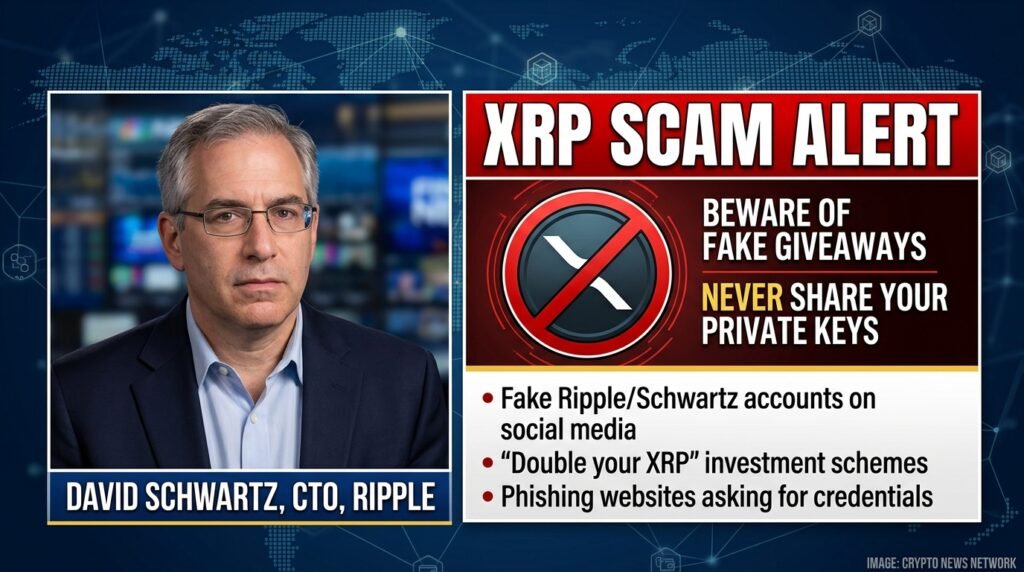
The cryptocurrency industry continues to evolve at a rapid pace, but alongside innovation comes an increasing wave of cyber threats targeting digital asset investors. Recently, the crypto community has been shaken by growing reports of fraudulent XRP airdrop campaigns designed to steal funds from unsuspecting users. In response to these developments, David Schwartz, the Chief Technology Officer of Ripple, issued a strong warning to XRP holders about the dangers of fake airdrops spreading across social media platforms, messaging apps, and fraudulent websites.
The warning has sparked widespread discussion throughout the crypto market because XRP remains one of the most widely held digital assets globally. Cybercriminals are increasingly exploiting the popularity of XRP by creating deceptive schemes that promise free tokens, bonus rewards, or exclusive investment opportunities. These scams often imitate legitimate Ripple announcements, making them appear convincing even to experienced crypto investors.
As crypto adoption grows worldwide, scammers are becoming more sophisticated in targeting retail investors. Fake XRP giveaways, phishing attacks, wallet-draining links, and impersonation accounts have become common tactics used to manipulate users into surrendering private keys or sending funds to fraudulent addresses. The surge in these scams highlights a larger issue facing the digital asset industry: investor security and awareness.
This article explores David Schwartz’s warning in detail, explains how fake XRP airdrops operate, examines why scammers are targeting XRP holders, and provides essential security practices every crypto investor should follow to protect their assets.
Why David Schwartz Issued the Warning
The recent warning from David Schwartz came after a noticeable increase in fake XRP airdrop promotions circulating online. Fraudulent campaigns were appearing on platforms such as X, Telegram, Discord, YouTube, and even fake websites pretending to represent Ripple or official XRP partners.
Scammers frequently exploit major market events, legal developments, or bullish momentum surrounding XRP to attract attention. Whenever XRP experiences strong price movement or positive news coverage, fraudulent actors attempt to capitalize on investor excitement. According to Schwartz, many of these scams are carefully designed to look authentic, using official Ripple logos, fake executive profiles, and professionally designed websites.
The Ripple CTO emphasized that Ripple does not randomly distribute free XRP through unofficial promotions or surprise giveaways. He warned users to remain skeptical of any campaign requesting wallet credentials, seed phrases, or upfront payments in exchange for rewards. These fake airdrops often create urgency by claiming the offer is available for a limited time, pressuring investors into acting impulsively.
Schwartz’s comments reflect growing concern within the crypto industry about phishing attacks and wallet exploits. As blockchain technology becomes more mainstream, scammers are evolving their methods to target both new and experienced investors.
Understanding How Fake XRP Airdrops Work
Fake XRP airdrops operate by exploiting trust and excitement within the cryptocurrency community. The scam usually begins with a social media post, online advertisement, or direct message claiming that Ripple is launching a new XRP giveaway or token distribution campaign.
Victims are directed to fraudulent websites designed to resemble legitimate crypto platforms. These websites often include fake branding, fabricated endorsements, and manipulated countdown timers to create a sense of legitimacy. Users are then instructed to connect their wallets or provide sensitive account information.
In many cases, scammers ask users to send a small amount of XRP with the promise of receiving a larger amount in return. Once the funds are sent, the scammers disappear, leaving victims with irreversible losses. Since blockchain transactions are generally permanent, recovering stolen funds becomes extremely difficult.
Another dangerous variation involves malicious wallet connection requests. Fraudulent sites may ask users to approve wallet permissions that secretly allow attackers to drain funds from connected accounts. This technique has become increasingly common across decentralized finance platforms and NFT marketplaces.
The rise in fake XRP airdrops demonstrates how cybercriminals are adapting traditional phishing methods to the crypto ecosystem. Instead of targeting bank logins or credit card details, scammers now focus on digital wallets and blockchain assets.
Why XRP Holders Are Frequent Targets
XRP remains one of the largest cryptocurrencies by market capitalization, making its community an attractive target for scammers. The token’s global popularity, active online presence, and long-standing reputation create ideal conditions for fraudulent schemes.
One reason XRP holders are frequently targeted is the passionate and highly engaged XRP community. Major Ripple developments often generate intense social media activity, allowing scammers to blend fake announcements into legitimate conversations. Investors who fear missing out on potential rewards may become vulnerable to deceptive promotions.
Additionally, the Ripple brand carries significant recognition within the crypto market. Fraudsters frequently impersonate Ripple executives, including David Schwartz and Ripple CEO Brad Garlinghouse, to add credibility to fake campaigns. Deepfake videos, AI-generated images, and cloned social media accounts have made these impersonation tactics even more convincing.
The ongoing attention surrounding Ripple’s regulatory battles and partnerships also contributes to scam activity. Whenever XRP gains media attention, scammers exploit the increased visibility to launch new phishing campaigns.
Crypto scammers specifically target communities where excitement and speculation are high. XRP’s loyal investor base and frequent market discussions create opportunities for attackers seeking unsuspecting victims.
The Growing Threat of Crypto Phishing Attacks
The warning issued by David Schwartz reflects a broader trend affecting the entire cryptocurrency industry. Phishing attacks have become one of the most dangerous threats facing digital asset investors in recent years.
Unlike traditional financial scams, crypto-related phishing attacks often exploit blockchain technology’s decentralized nature. Transactions cannot easily be reversed, and stolen funds can quickly be moved across multiple wallets, making law enforcement investigations more challenging.
Cybercriminals are increasingly using sophisticated tools to trick investors. Fake customer support accounts, cloned websites, malicious browser extensions, and fraudulent QR codes are now common attack methods. Many scams are carefully engineered to mimic real crypto services with remarkable accuracy.
Artificial intelligence has further amplified the problem. Scammers now use AI-generated voice recordings and deepfake videos to impersonate crypto influencers and executives. Some fraudulent videos even feature realistic-looking clips of public figures promoting fake XRP giveaways.
The rise in phishing attacks highlights the urgent need for stronger investor education within the crypto sector. Security awareness has become just as important as market analysis for digital asset holders.
How Ripple and the XRP Community Are Responding
Ripple has consistently warned users about scams targeting the XRP ecosystem. The company frequently posts reminders across its official channels emphasizing that it never asks users to send XRP in exchange for rewards.
David Schwartz and other Ripple executives actively engage with the community to debunk fake promotions and educate investors about security risks. Their efforts aim to reduce the number of victims falling prey to phishing attacks and fraudulent airdrop schemes.
The XRP community itself also plays a major role in identifying scams. Many experienced XRP supporters regularly report fake accounts, expose phishing websites, and share security warnings online. Community-driven awareness campaigns have become an important defense against cybercriminals.
Crypto exchanges and wallet providers are also improving their security measures. Many platforms now use phishing detection systems, suspicious transaction monitoring, and enhanced account verification procedures to protect users from scams.
Despite these efforts, the rapid evolution of cybercrime means investors must remain cautious at all times. Scammers continuously adapt their tactics, creating new methods to bypass security systems and exploit investor emotions.
Common Red Flags of Fake XRP Airdrops
Recognizing the warning signs of fake XRP airdrops is essential for protecting digital assets. One of the most obvious red flags is any request for private keys or recovery phrases. Legitimate crypto companies will never ask users to share this information.
Promises of guaranteed returns or instant profits should also raise suspicion. Fraudulent campaigns often claim users can double or triple their XRP holdings simply by participating in a giveaway. These unrealistic promises are designed to manipulate emotions and encourage impulsive decisions.
Another common warning sign involves suspicious URLs or unofficial social media accounts. Many scammers create websites with domain names that closely resemble legitimate Ripple platforms. Slight spelling variations or unusual website extensions can indicate a fraudulent site.
Urgency tactics are another hallmark of crypto scams. Fake XRP promotions frequently use countdown timers, limited-time offers, or claims that only a small number of users can participate. These strategies pressure victims into acting quickly without verifying authenticity.
Poor grammar, inconsistent branding, and unverifiable claims are additional indicators of fraudulent activity. Investors should always verify announcements through official Ripple channels before taking any action.
The Importance of Wallet Security
The surge in fake XRP airdrops highlights the critical importance of wallet security for crypto investors. Since digital assets are stored on blockchain networks rather than traditional banks, users bear full responsibility for protecting their funds.
Using hardware wallets is widely considered one of the safest methods for storing XRP and other cryptocurrencies. Hardware wallets keep private keys offline, reducing exposure to online attacks and phishing attempts.
Enabling two-factor authentication on exchange accounts and crypto services adds another layer of protection. Investors should also use strong, unique passwords and avoid sharing sensitive information through email or messaging apps.
Regularly updating wallet software and avoiding unknown browser extensions can help reduce security risks. Investors should also carefully review transaction approvals before signing any wallet requests.
Education remains one of the strongest defenses against crypto scams. Understanding how phishing attacks work can significantly reduce the likelihood of becoming a victim.
Social Media’s Role in Spreading XRP Scams

Social media platforms have become one of the primary channels used to spread fake XRP airdrops. Scammers exploit trending hashtags, viral posts, and fake influencer accounts to maximize visibility.
Platforms such as YouTube and X are frequently used for impersonation scams. Fraudsters create livestreams featuring recycled interviews with Ripple executives while overlaying fake giveaway promotions on the screen. Some videos attract thousands of viewers before being removed.
Telegram and Discord communities are also heavily targeted. Attackers infiltrate crypto groups and send malicious links directly to users, often pretending to be administrators or support staff.
The viral nature of social media allows scams to spread rapidly across the internet. Even brief exposure to a fraudulent campaign can result in substantial financial losses for unsuspecting users.
Technology companies continue working to improve scam detection systems, but the decentralized and global nature of crypto communities makes enforcement difficult. Investors must therefore rely heavily on personal vigilance and verification practices.
Regulatory Concerns Surrounding Crypto Scams
The increase in fake XRP airdrops has also intensified discussions about crypto regulation and investor protection. Governments and regulatory agencies worldwide are under growing pressure to address online financial fraud within the digital asset sector.
Authorities are exploring stricter cybersecurity standards for crypto exchanges, wallet providers, and blockchain companies. Some regulators are also pushing for stronger anti-fraud policies on social media platforms hosting crypto-related content.
However, regulating decentralized digital assets presents significant challenges. Many scams originate from anonymous actors operating across multiple jurisdictions, complicating enforcement efforts.
Ripple and other blockchain firms continue advocating for balanced regulation that protects investors without stifling innovation. The industry increasingly recognizes that long-term adoption depends on building trust and improving user security.
The XRP scam surge demonstrates that regulatory clarity alone cannot eliminate fraud. Investor awareness and responsible online behavior remain essential components of crypto safety.
How Investors Can Protect Their XRP Holdings
Protecting XRP holdings requires a combination of skepticism, education, and strong cybersecurity habits. Investors should always verify announcements through official Ripple channels before participating in any promotion.
Avoiding suspicious links is crucial. Users should manually type website addresses instead of clicking unknown URLs shared through social media or direct messages. Bookmarking official Ripple websites can further reduce phishing risks.
Cold storage solutions offer additional security for long-term investors. Keeping large XRP balances offline minimizes exposure to online attacks and malicious applications.
Investors should also remain cautious about connecting wallets to unfamiliar decentralized applications. Reviewing wallet permissions and transaction details can prevent unauthorized fund access.
Staying informed about emerging scam techniques is equally important. Cybercriminals continuously evolve their tactics, meaning investors must regularly update their knowledge of crypto security best practices.
The Future of XRP Security and Investor Awareness
The warning from David Schwartz serves as a reminder that cybersecurity will remain a major challenge for the cryptocurrency industry moving forward. As blockchain adoption expands, scammers will likely continue targeting high-profile digital assets such as XRP.
At the same time, the industry is making progress in security innovation. Advanced wallet protections, AI-driven scam detection tools, and improved blockchain analytics are helping identify fraudulent activity more effectively.
Community education will play an increasingly important role in preventing financial losses. Investors who understand the risks associated with fake XRP airdrops are far less likely to fall victim to phishing attacks.
Ripple’s proactive communication and ongoing security awareness efforts demonstrate the importance of transparency within the crypto sector. By openly addressing scams and educating users, blockchain companies can help strengthen trust across the digital asset ecosystem.
The future of cryptocurrency depends not only on technological advancement but also on creating a safer environment for users worldwide.
Conclusion
The recent warning from David Schwartz about fake XRP airdrops highlights the growing sophistication of crypto scams targeting digital asset investors. As XRP continues attracting global attention, scammers are increasingly exploiting the Ripple brand and investor enthusiasm to conduct phishing attacks and fraudulent giveaway schemes.
Fake XRP airdrops often appear convincing, using professional branding, impersonation tactics, and manipulated urgency to deceive users. These scams can lead to devastating financial losses, especially for investors unfamiliar with common cybersecurity threats.
Ripple, the XRP community, exchanges, and wallet providers are all working to combat fraudulent activity, but investor awareness remains the first line of defense. By verifying information through official channels, avoiding suspicious links, and practicing strong wallet security, XRP holders can significantly reduce their risk exposure.
The cryptocurrency industry continues evolving rapidly, and with that evolution comes new security challenges. David Schwartz’s warning serves as a critical reminder that protecting digital assets requires constant vigilance, education, and responsible online behavior.