












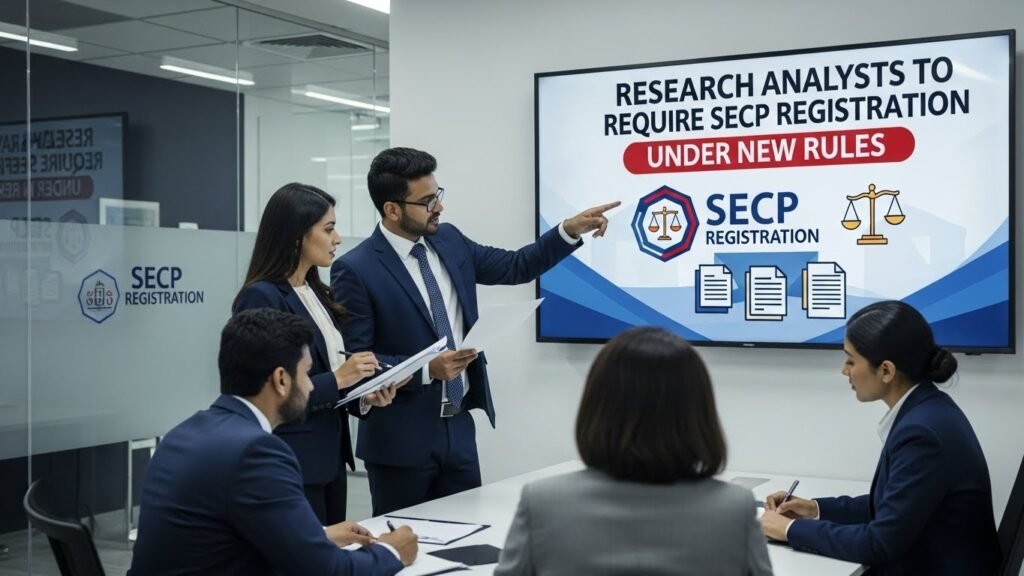
Research Analysts to Require SECP Registration Under New Rules

Research Analysts

COIN4U IN YOUR SOCIAL FEED

The announcement that research analysts to require SECP registration under new rules marks a significant shift in the regulatory landscape of capital markets. This development signals a stronger commitment by regulators to enhance transparency, accountability, and investor protection within the financial ecosystem. Research analysts play a critical role in shaping investor decisions by providing market insights, equity research, and financial forecasts. As their influence grows, so does the need for oversight to ensure ethical conduct, accuracy, and professionalism. The new requirement for SECP registration reflects an evolving understanding of how powerful financial research has become in modern markets.

In recent years, the rise of digital platforms, social media commentary, and independent research providers has blurred the line between professional analysis and informal opinion. This has increased the risk of misinformation, conflicts of interest, and market manipulation. By mandating that research analysts register with the SECP, regulators aim to establish a clear framework that separates qualified professionals from unregulated voices. This change is expected to strengthen market integrity while restoring investor confidence in published research.

Why research analysts are now required to register under new SECP rules, how these regulations work, and what they mean for analysts, firms, and investors. The discussion flows through regulatory intent, market impact, compliance expectations, and long-term implications, offering a comprehensive understanding of this important policy shift.

Understanding the Role of Research Analysts in Financial Markets

Research analysts occupy a central position in the financial markets by interpreting data, evaluating companies, and forecasting economic trends. Their reports influence investment decisions made by individuals, institutions, and policymakers. In equity markets, research analysts assess financial statements, management performance, and industry dynamics to determine valuations and recommendations. In debt markets, they evaluate creditworthiness and risk exposure.

The influence of analysts has expanded significantly with the growth of online trading and digital finance. Retail investors now rely heavily on analyst opinions when navigating complex markets. This increased reliance has amplified the responsibility analysts carry. Financial research, market analysis, and investment advisory insights are no longer niche services but mainstream tools that shape capital flows.

Given this influence, unregulated or poorly governed research practices can lead to distorted markets and investor harm. The decision that research analysts to require SECP registration under new rules reflects recognition of this risk and the need for a structured regulatory response.

Why SECP Introduced New Registration Rules

analysts

The introduction of mandatory SECP registration for research analysts stems from concerns about market transparency and investor protection. Regulators have observed cases where misleading research, undisclosed conflicts of interest, or unverified claims contributed to market volatility and financial losses. These incidents highlighted gaps in oversight and accountability.

By enforcing registration, the SECP aims to create a formal registry of qualified professionals who meet defined standards. This allows regulators to monitor activities, enforce ethical guidelines, and take disciplinary action when necessary. Regulatory compliance, investor safeguards, and market integrity are central objectives of the new framework.

The move also aligns with global regulatory trends. Many international markets already require analyst registration or licensing to ensure consistent standards. SECP’s new rules signal an effort to modernize local regulations and bring them in line with global best practices.

Scope of the New SECP Registration Requirement

The new rules clarify who qualifies as a research analyst and therefore falls under the SECP registration requirement. Generally, this includes individuals or entities that prepare and distribute research reports, investment recommendations, or analytical opinions intended for public or client consumption. This applies whether the research is distributed through traditional financial institutions or digital platforms.

The scope extends beyond large brokerage houses to include independent analysts and boutique research firms. This broad application ensures that all market participants providing influential analysis operate under the same regulatory framework. Independent research analysts, equity research firms, and financial advisory professionals are all impacted by the change.

By defining the scope clearly, SECP reduces ambiguity and ensures consistent application of the rules. This clarity helps analysts understand their obligations while preventing regulatory loopholes.

Registration Process and Compliance Expectations

SECP registration involves meeting specific eligibility criteria, submitting required documentation, and adhering to ongoing compliance obligations. Analysts are expected to demonstrate relevant qualifications, professional experience, and adherence to ethical standards. This process ensures that registered analysts possess the competence necessary to provide reliable research.

Once registered, analysts must comply with reporting and disclosure requirements. These include declaring potential conflicts of interest, maintaining transparency in research methodologies, and ensuring accuracy in published content. Professional standards, ethical research practices, and disclosure compliance form the foundation of these expectations.

Ongoing supervision by the SECP ensures that registered analysts continue to meet regulatory standards. Failure to comply may result in penalties, suspension, or revocation of registration, reinforcing accountability across the industry.

Impact on Research Analysts and Firms

The requirement that research analysts to require SECP registration under new rules introduces both challenges and opportunities. For analysts, compliance may involve additional administrative responsibilities and costs. Smaller firms and independent analysts may initially find the process demanding as they adapt to regulatory requirements.

However, registration also enhances professional credibility. Being SECP-registered signals trustworthiness and competence, which can strengthen client confidence. Over time, this may create a more level playing field where quality research stands out over unverified opinions. Professional recognition, regulated research environment, and market trust are likely benefits.

For firms, the new rules encourage stronger internal governance and compliance frameworks. While this may increase operational complexity, it also reduces reputational risk and aligns firms with long-term market sustainability.

Benefits for Investors and Market Transparency

Investors stand to gain significantly from the new registration requirements. When research analysts operate under regulatory oversight, the likelihood of biased or misleading information decreases. Investors can place greater trust in research reports, knowing they are produced by registered professionals accountable to a regulator.

Improved transparency also enhances price discovery and market efficiency. Reliable research helps investors make informed decisions, reducing speculation driven by rumors or unsubstantiated claims. Investor confidence, transparent financial markets, and fair trading practices are strengthened as a result. The SECP’s initiative demonstrates a proactive approach to safeguarding investors, particularly retail participants who may lack the resources to independently verify complex financial information.

Addressing Conflicts of Interest Through Regulation

Conflicts of interest have long been a concern in financial research. Analysts may face pressure from employers, clients, or personal investments that could influence their recommendations. The new SECP rules address this issue by requiring clear disclosure of potential conflicts.

Registered analysts must identify and disclose any relationships that could compromise objectivity. This includes financial interests, affiliations, or compensation arrangements tied to research outcomes. Conflict of interest disclosure, ethical compliance, and research independence are central to this regulatory focus. By enforcing transparency, SECP aims to ensure that investors can evaluate research with full awareness of any underlying biases, promoting fairer and more informed decision-making.

Digital Platforms and the Changing Nature of Research

The rise of digital platforms has transformed how research is created and consumed. Social media, blogs, and online forums allow analysts to reach vast audiences instantly. While this democratizes information, it also increases the risk of unverified or sensationalized content influencing markets.

The requirement for SECP registration applies regardless of the medium through which research is distributed. This ensures that analysts operating online are held to the same standards as those publishing through traditional channels. Digital financial research, online market analysis, and regulated content creation are increasingly relevant in this context. By extending oversight into the digital space, SECP acknowledges the evolving nature of financial communication and adapts regulation accordingly.

Challenges in Implementation and Industry Adaptation

SECP registration

Implementing new regulatory rules inevitably presents challenges. Analysts and firms must invest time and resources to understand compliance requirements and update internal processes. Regulators must also ensure that enforcement is fair, consistent, and transparent.

There may be initial resistance from market participants who view the rules as restrictive. However, long-term benefits often outweigh short-term inconveniences. Regulatory adaptation, industry transition, and compliance readiness are key themes during this adjustment period. Effective communication between SECP and industry stakeholders will be crucial to smooth implementation. Clear guidelines and support mechanisms can help minimize disruption while ensuring regulatory objectives are met.

Long-Term Implications for Capital Markets

In the long term, the requirement that research analysts to require SECP registration under new rules is expected to elevate the overall quality of financial research. As standards rise, markets become more efficient and resilient. Investors benefit from reliable information, while analysts gain recognition for professionalism.

The rules may also encourage talent development within the industry. Aspiring analysts will be motivated to acquire relevant qualifications and adhere to ethical standards, fostering a culture of excellence. Market development, professional growth, and sustainable finance are potential outcomes. Ultimately, stronger regulation contributes to healthier capital markets that can attract domestic and international investment, supporting broader economic growth.

Conclusion

The decision that research analysts to require SECP registration under new rules represents a meaningful step toward strengthening financial market integrity. By introducing structured oversight, SECP addresses long-standing concerns around transparency, conflicts of interest, and investor protection. While the transition may pose challenges for analysts and firms, the long-term benefits of credibility, trust, and market stability are substantial.

As financial markets grow more complex and interconnected, the role of research analysts becomes increasingly influential. Ensuring that this influence is exercised responsibly is essential for sustainable market development. The new SECP registration requirement underscores the importance of professionalism and accountability, setting a higher standard for financial research in the years to come.

FAQs

Q: What does it mean that research analysts to require SECP registration under new rules?

It means that individuals or firms providing financial research and investment analysis must formally register with the SECP, meet eligibility criteria, and comply with regulatory standards to operate legally.

Q: Who is affected by the new SECP registration requirement?

The rules affect research analysts working in brokerage firms, independent research providers, and any professionals distributing investment research or recommendations to clients or the public.

Q: How does SECP registration benefit investors?

SECP registration improves investor protection by ensuring analysts are qualified, transparent, and accountable, reducing the risk of misleading or biased research influencing investment decisions.

Q: Will this regulation limit independent research and opinions?

The regulation does not prohibit independent research but requires analysts to meet professional standards and disclose conflicts of interest, ensuring fairness and credibility without suppressing diverse viewpoints.

Q: What are the long-term effects of these new rules on the market?

In the long term, the rules are expected to enhance market transparency, strengthen investor confidence, improve research quality, and support sustainable growth in capital markets.


Explore more articles like this

Subscribe to the Finance Redefined newsletter

A weekly toolkit that breaks down the latest DeFi developments, offers sharp analysis, and uncovers new financial opportunities to help you make smart decisions with confidence. Delivered every Friday

By subscribing, you agree to our Terms of Services and Privacy Policy

READ MORE

How Blockchain Technology Transforms Supply Chain Management

blockchain supply chain software development company

COIN4U IN YOUR SOCIAL FEED

The global supply chain landscape is experiencing a revolutionary transformation, and at the heart of this change lies blockchain technology. Understanding how blockchain technology transforms supply chain management has become crucial for businesses seeking competitive advantages in today’s interconnected marketplace.blockchain supply chain software development company.

This distributed ledger technology offers unprecedented transparency, security, and efficiency improvements that address long-standing supply chain challenges. From food safety and pharmaceutical authentication to luxury goods verification and manufacturing optimization, blockchain is reshaping how companies track, verify, and manage their supply chains. As organizations worldwide grapple with increasing consumer demands for transparency and accountability, blockchain emerges as the solution that can deliver end-to-end visibility while reducing costs and enhancing trust among supply chain partners.

Understanding Blockchain Technology in Supply Chain Context

Blockchain technology represents a paradigm shift in how supply chain data is stored, verified, and shared across multiple stakeholders. Unlike traditional centralized databases, blockchain creates an immutable, distributed ledger that records every transaction and movement within the supply chain network. This technological foundation enables unprecedented levels of transparency and accountability.

The core components of blockchain technology include cryptographic hashing, consensus mechanisms, and smart contracts. These elements work together to create a tamper-proof system where every supply chain event is permanently recorded and verified by multiple network participants. This eliminates the possibility of fraudulent data manipulation while ensuring all stakeholders have access to the same accurate information.blockchain supply chain software development company.

Key Features of Blockchain in Supply Chains

Immutability stands as one of blockchain’s most valuable features for supply chain applications. Once data is recorded on the blockchain, it cannot be altered or deleted without network consensus, creating an permanent audit trail. This characteristic proves invaluable for compliance reporting, quality assurance, and dispute resolution.

Decentralization removes the need for intermediaries and single points of failure. Traditional supply chains often rely on centralized systems that can become bottlenecks or security vulnerabilities. Blockchain distributes control across the network, enhancing resilience and reducing operational risks.

Real-time visibility enables all authorized participants to access current supply chain status information simultaneously. This shared visibility eliminates information silos and reduces delays caused by manual data sharing processes.

How Blockchain Technology Transforms Supply Chain Management Operations

How Blockchain Technology Transforms Supply Chain Management Operations

The transformation begins with enhanced traceability capabilities that allow companies to track products from raw materials to final consumers. Traditional supply chains often lack visibility into multi-tier supplier networks, making it difficult to identify the source of problems when they occur. Blockchain creates a complete digital thread that connects every step in the supply chain journey.

Smart contracts automate many supply chain processes that previously required manual intervention. These self-executing contracts with predetermined conditions can automatically trigger payments, quality checks, compliance verifications, and inventory updates based on real-world events. This automation reduces processing time, eliminates human errors, and ensures consistent execution of business rules.

The technology also enables new business models based on trust and transparency. Companies can now offer consumers detailed product provenance information, supporting premium pricing for ethically sourced or sustainably produced goods. This capability particularly benefits industries where authenticity and origin verification add significant value.

Enhancing Supply Chain Transparency

Transparency represents one of the most significant benefits of blockchain implementation in supply chain management. Every participant in the network can access relevant information about product movements, quality certifications, and compliance status in real-time. This shared visibility builds trust among trading partners and enables faster response to supply chain disruptions.

Consumer-facing transparency applications allow end customers to verify product authenticity, sustainability claims, and safety certifications by scanning QR codes or accessing digital certificates. This level of transparency meets growing consumer demands for ethical consumption and helps brands differentiate themselves in competitive markets.

Regulatory compliance becomes more efficient when all required documentation and certifications are recorded on the blockchain. Auditors and regulatory bodies can access complete compliance histories without requiring extensive documentation requests from individual companies.

Industry Applications and Real-World Examples

Food and Agriculture Supply Chains

The food industry has emerged as an early adopter of blockchain technology due to stringent safety requirements and increasing consumer demand for transparency. Major retailers like Walmart have implemented blockchain systems to track produce from farms to store shelves, reducing the time needed to trace contamination sources from weeks to seconds.

These systems record critical information including farm locations, harvest dates, processing facilities, transportation conditions, and quality inspections. When food safety issues arise, companies can quickly identify affected products and implement targeted recalls, minimizing health risks and reducing waste.

Organic and fair-trade certifications benefit significantly from blockchain verification. Consumers can verify that products meet claimed standards by accessing certification records stored on the blockchain, building confidence in premium product claims.

Pharmaceutical and Healthcare

Pharmaceutical supply chains face unique challenges related to counterfeit drugs, temperature-sensitive products, and regulatory compliance. Blockchain technology addresses these concerns by creating tamper-evident records of drug manufacturing, distribution, and handling processes.

Temperature monitoring throughout cold chain logistics ensures vaccine and medication efficacy. IoT sensors integrated with blockchain systems can record continuous temperature data, automatically flagging any deviations that might compromise product quality.

Drug authentication capabilities help combat the estimated $200 billion annual loss to counterfeit medications. Each pharmaceutical product receives a unique blockchain identity that can be verified by healthcare providers and patients before consumption.

Manufacturing and Automotive

Manufacturing supply chains involve complex networks of suppliers providing components, raw materials, and sub-assemblies. Blockchain technology enables manufacturers to verify component authenticity, track quality metrics, and ensure compliance with safety standards throughout multi-tier supplier networks.

The automotive industry uses blockchain to track critical safety components from production through installation and maintenance. This capability proves essential for warranty management, recall notifications, and quality investigations.

Conflict mineral compliance requires manufacturers to verify that raw materials don’t originate from regions affected by armed conflict. Blockchain provides the transparency needed to demonstrate compliance with regulations like the Dodd-Frank Act.

Technical Implementation Considerations

Choosing the Right Blockchain Platform

Organizations must evaluate different blockchain platforms based on their specific supply chain requirements. Public blockchains like Ethereum offer maximum transparency but may face scalability and privacy concerns. Private blockchains provide better control and performance but require careful governance structures.

Hybrid blockchain solutions often provide the best balance for supply chain applications, allowing sensitive commercial information to remain private while enabling necessary transparency for compliance and consumer verification purposes.

Interoperability becomes crucial when supply chain partners use different blockchain platforms. Organizations should prioritize solutions that support cross-platform communication and data exchange standards.

Integration with Existing Systems

Successful blockchain implementation requires seamless integration with existing enterprise resource planning (ERP), warehouse management (WMS), and customer relationship management (CRM) systems. APIs and middleware solutions facilitate this integration without requiring complete system replacements.

Legacy system compatibility ensures that companies can adopt blockchain technology incrementally rather than through disruptive complete overhauls. This approach reduces implementation risks and allows for gradual staff training and process adaptation.

Data standardization across all integrated systems ensures consistent information quality and reduces integration complexity. Organizations should establish clear data governance policies before beginning blockchain implementation.blockchain supply chain software development company.

Scalability and Performance Optimization

Supply chain blockchain networks must handle high transaction volumes while maintaining acceptable performance levels. Transaction throughput, confirmation times, and network latency all impact system usability and adoption rates.

Layer 2 scaling solutions can improve blockchain performance without sacrificing security or decentralization. These solutions process transactions off-chain while maintaining the security guarantees of the underlying blockchain platform.

Consensus mechanism selection affects both performance and energy consumption. Proof-of-stake and other energy-efficient consensus mechanisms may be preferable for sustainability-conscious organizations.

Benefits and Challenges of Implementation

Benefits and Challenges of Implementation

Quantifiable Benefits

Cost reduction represents a primary driver for blockchain adoption in supply chain management. Organizations typically see 10-20% reductions in supply chain costs through improved efficiency, reduced fraud, automated processes, and enhanced supplier collaboration.

Risk mitigation capabilities help companies avoid costly supply chain disruptions, product recalls, and compliance violations. The ability to quickly identify and isolate problems prevents small issues from becoming major crises.

Customer trust and brand value increase when companies can demonstrate transparency, authenticity, and ethical sourcing practices through blockchain verification systems.

Implementation Challenges

Technical complexity requires organizations to develop new capabilities in blockchain technology, smart contract development, and distributed system management. This learning curve can slow initial implementation and increase costs.

Stakeholder coordination becomes more challenging as blockchain networks require collaboration among multiple supply chain participants. Achieving consensus on technical standards, governance policies, and cost-sharing arrangements often proves difficult.

Regulatory uncertainty in many jurisdictions creates compliance risks for early blockchain adopters. Organizations must carefully monitor evolving regulations and ensure their implementations remain compliant.

Change Management Strategies

Staff training programs should focus on both technical blockchain concepts and practical applications within existing business processes. Hands-on training with blockchain tools and interfaces helps accelerate adoption.

Pilot project approaches allow organizations to test blockchain solutions on limited supply chain segments before full-scale deployment. These pilots provide valuable learning opportunities while minimizing risks.

Partner engagement strategies should emphasize mutual benefits and shared value creation to encourage supply chain partner participation in blockchain networks.

Future Trends and Innovations

Emerging Technologies Integration

Internet of Things (IoT) integration with blockchain creates powerful combinations for supply chain monitoring and automation. IoT sensors can automatically record environmental conditions, location data, and handling events directly to the blockchain without human intervention.

Artificial intelligence and machine learning algorithms can analyze blockchain supply chain data to identify patterns, predict disruptions, and optimize routing decisions. These capabilities enhance the value of blockchain transparency by providing actionable insights.

5G connectivity will enable real-time blockchain updates and support more sophisticated IoT integrations, making supply chain monitoring more responsive and accurate.

Industry-Specific Developments

Sustainability reporting requirements are driving blockchain adoption in industries with significant environmental impacts. Carbon footprint tracking, circular economy initiatives, and ESG (Environmental, Social, Governance) compliance all benefit from blockchain transparency.

Cross-border trade facilitation through blockchain-based trade finance and documentation systems will reduce international supply chain complexity and costs. Smart contracts can automate letter of credit processing, customs declarations, and payment settlements.blockchain supply chain software development company.

Conclusion

Understanding how blockchain technology transforms supply chain management is no longer optional for forward-thinking organizations—it’s essential for maintaining competitive advantages in an increasingly transparent and accountable business environment. The technology’s ability to provide end-to-end visibility, automate complex processes through smart contracts, and build trust among supply chain partners makes it a transformative force across industries.

The evidence is clear: organizations that embrace blockchain supply chain solutions early will benefit from reduced costs, improved efficiency, enhanced compliance capabilities, and stronger customer relationships. While implementation challenges exist, the long-term benefits far outweigh the initial investment and learning curve requirements.

READ MORE:Small Business Blockchain Technology Consulting Services

Explore more articles like this

Subscribe to the Finance Redefined newsletter

A weekly toolkit that breaks down the latest DeFi developments, offers sharp analysis, and uncovers new financial opportunities to help you make smart decisions with confidence. Delivered every Friday

By subscribing, you agree to our Terms of Services and Privacy Policy

READ MORE

ADD PLACEHOLDER