












Gold Analysis 22/10 Bullish After 6% Drop

Gold Analysis

COIN4U IN YOUR SOCIAL FEED

Gold Analysis 22/10: Bullish Despite a 6% Drop (chart)” may sound counterintuitive at first glance, yet that is precisely what the price action and momentum context suggest. Over recent sessions, gold has shed roughly six percent from its local high, pressuring late longs and emboldening short-term sellers. Still, the broader structure of XAU/USD—supported by a steady uptrend on the higher time frames, resilient safe-haven demand, and persistent central bank buying—remains constructive.

The current setback looks more like a textbook bullish pullback within a larger advance than a trend break. In this comprehensive review, we unpack the multi-time-frame technicals, examine the fundamental drivers from U.S. dollar dynamics to Treasury yields, and map the risk levels that separate a healthy correction from a deeper reversal. The goal is not to chase headlines but to interpret the chart’s message, clarify the strategy, and identify high-probability levels where the risk-reward tilts back in favor of the bulls.

The Big Picture: Why a 6% Decline Can Still Be Bullish

Corrections are the price of admission in any trending market. In gold, pullbacks of five to eight percent have been common waypoints during broader cycles, often shaking out weak hands before trend resumption. The current retracement, highlighted in our Gold Analysis 22/10 review, fits that historical rhythm. On weekly charts, the primary trendline drawn from prior swing lows remains intact, and price is reacting near widely watched Fibonacci retracement zones. When momentum oscillators cool from overbought conditions without breaking structural supports, the market often resets, builds energy, and advances again.

What reinforces the constructive bias is the confluence of macro underpinnings. The Federal Reserve’s path—whether it pauses, cuts, or simply guides a slower policy trajectory—has an outsized impact on real yields and the U.S. dollar. Any hint of easing financial conditions tends to underpin gold. Meanwhile, ongoing geopolitical risk and the metal’s role as an inflation hedge continue to draw strategic allocation from institutions and reserve managers. When these forces align with favorable technicals, a dip can be opportunity rather than omen.

Weekly Structure: Trend Intact, Momentum Reset
Weekly Structure: Trend Intact, Momentum Reset

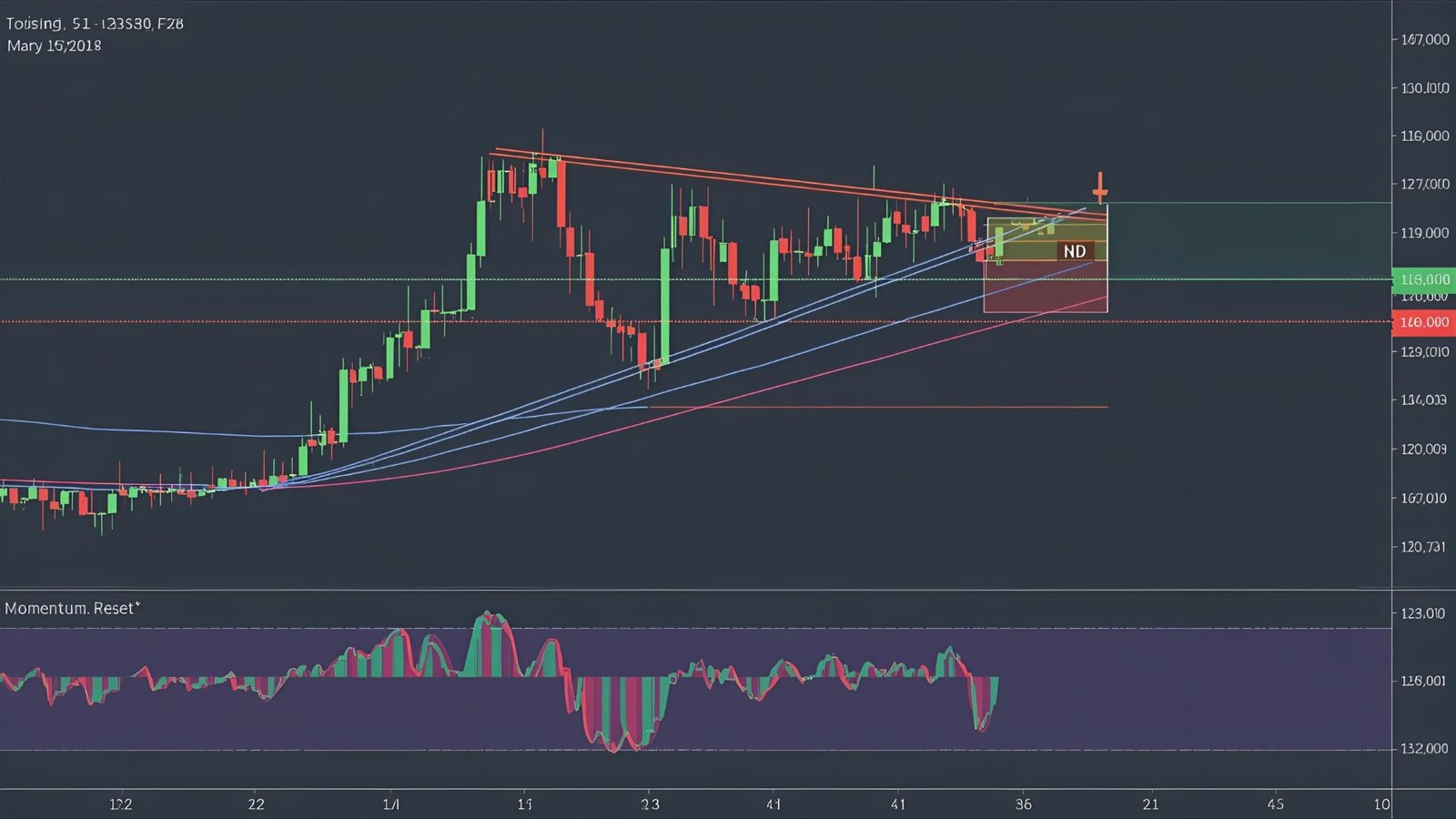
On the weekly timeframe, the chart tells a story of higher swing lows that have not been violated. Price has retreated toward a prior breakout shelf that now acts as support, an area where buying previously overcame supply. The 200-week moving average trends upward, asserting long-run bullish control, while the 50-week moving average sits above it, preserving a classic golden-cross configuration that typically develops early in durable advances.

Weekly RSI has cooled toward neutral readings after flagging overbought conditions at the last peak. This is healthy. Markets cannot sprint indefinitely, and weekly momentum resets often precede fresh legs higher. The MACD histogram has narrowed, but the signal line has not produced a firm bearish crossover below the zero line. In Gold Analysis 22/10, this combination suggests consolidation rather than capitulation.

Daily Chart: Where the Battle Is Fought

Zooming into the daily chart sharpens the tactical picture. The six percent decline has carried price into a dense cluster of reference points: a rising 50-day moving average, a 38.2% to 50% Fibonacci retracement of the prior leg, and the top of a previously broken range. This is the type of three-way confluence that often defines inflection zones. If buyers continue to defend the area on daily closes, the pullback can graduate into a higher-low—the bedrock of any uptrend.

Daily RSI has normalized into the 40–50 band, a region that frequently marks bull-market support. The MACD shows waning downside momentum, with shorter histograms that hint at stabilization. A small inside-day or a bullish engulfing session at this support would be a powerful tell that sellers are losing control. In our Gold Analysis 22/10, such a candle becomes a trigger candidate with stops set below the recent swing low.

Intraday Rhythm: Timing the Re-Entry

For traders fine-tuning entries, the four-hour and one-hour frames can reveal the first signs of a turn. During the decline, intraday price action has formed lower highs beneath a descending minor trendline. The path toward a long setup is clear: a trendline break, followed by a retest that holds, converts resistance into support. Intraday RSI patterns that shift from bear-market ceilings near 60 to bull-market floors near 40 often accompany this transition. Volume, while not always perfectly visible in spot markets, tends to expand on up-swings when the tide turns.

Key Levels: Support and Resistance to Respect

The present correction has spotlighted several levels. The first is the retracement zone around the 38.2%–50% area of the prior advance. This band aligns with the top of the last breakout range, creating a potential demand pocket. Beneath that, a rising swing-low shelf defines the line in the sand where the bullish structure would begin to erode if broken decisively on a daily close. On the topside, the path back to the prior high includes interim resistance at the descending intraday trendline and a pivot area where sellers previously defended. Clearing those obstacles on expanding momentum would confirm that the correction has run its course.

The Dollar, Yields, and Gold’s Macro Gravity

The Dollar, Yields, and Gold’s Macro Gravity

Gold’s most consistent macro counterpart is the U.S. dollar, with an inverse relationship strengthened by the role of Treasury yields. When the dollar firms and real yields push higher, non-yielding assets such as gold often correct as the opportunity cost rises. The recent six percent slide coincided with firmer yields and a resilient dollar bid. However, if incoming data suggest softening growth or disinflation, yields can ease, the dollar can soften, and gold typically finds fresh sponsorship. In Gold Analysis 22/10, we emphasize that a loosening in financial conditions, not necessarily outright rate cuts, is sufficient to stabilize XAU/USD.

Central Banks and Structural Demand

Beyond speculative flows, a powerful underpinning of this cycle has been sustained central bank buying. Reserve managers have been diversifying away from concentrated currency exposure, adding to their gold holdings as a long-term store of value. This layer of structural demand does not eliminate volatility, but it raises the floor during corrections. When combined with demand from emerging-market households and investors who view gold as a savings instrument, the market gains durable depth that can absorb temporary shocks.

Sentiment: From Euphoria to Caution—A Good Thing

Extremes in sentiment often precede turning points. At the peak before the six percent drop, positioning and commentary tilted exuberant, the kind of one-way optimism that frequently draws contrarian supply. The ensuing selloff has reset sentiment toward caution, reducing leverage and dampening exuberance. For trend traders, this is constructive. A healthy uptrend prefers a wall of worry, not a field of euphoria. The Gold Analysis 22/10 framework interprets the sentiment reset as a needed purge that preserves the bullish primary structure.

“Chart” Takeaways (Narrative)

While we cannot embed a live chart here, imagine a daily candlestick sequence that surged to a local high, flagged overbought RSI, and then retraced into a former resistance band now acting as support. An overlay of the 50-day moving average hugs price from below, while a gently rising 200-day moving average validates the longer-term trend. A descending minor trendline from the recent top caps the pullback. A decisive daily close above that line, ideally alongside a bullish MACD curl and RSI reclaiming the midline, would complete a classic pullback-and-go pattern. The narrative chart points remain the same: uptrend intact, correction contained, buyers probing for control.

Trading Plan Logic: Conditions, Not Predictions

The hallmark of a sound plan is conditionality. Instead of predicting, Gold Analysis 22/10 lays out if-then logic anchored to price. If the market defends the confluence support on daily closes and breaks the intraday trendline, then a trend-continuation long is justified. If price fails to hold the support band and carves a lower low on heavy momentum, then the bullish thesis is delayed, and the next weekly shelf becomes the focal point. This adaptability protects capital and keeps trades aligned with the actual tape rather than a fixed narrative.

See More: Best Cryptocurrency Market Analysis Tools 2025 Complete Trading

Risk Management: The Only Non-Negotiable

Even compelling setups can fail. That is why risk parameters precede entries. In a pullback-long context, the structurally sound place for stop-losses sits just beneath the defended swing low or the lower edge of the demand pocket. Position sizing should reflect the distance to that invalidation point and the trader’s maximum portfolio risk per idea. The six percent drawdown that prompted this Gold Analysis 22/10 serves as a reminder: volatility is part of the edge, but it must be harnessed. Define the risk, accept it, and let the trade work without micromanagement.

Volatility and the Anatomy of a Reversal

How do we know whether a pullback is morphing into a bear phase? Watch for the trio of lower-lows and lower-highs on the daily chart, failed retests of broken supports that convert into resistance, and momentum signatures that shift from RSI holding 40–90 to capping beneath 60 while breaking below 40. A persistent negative MACD below the zero line, combined with repeated rejections at the 20- and 50-day moving averages, would confirm a regime shift. Nothing in the current Gold Analysis 22/10 profile points to that yet, but these are the diagnostic signs that would turn caution into defense.

Seasonality and Flow Considerations

While seasonality is not destiny, gold often benefits from periods of jewelry demand and festival-driven buying in several economies. Meanwhile, flows from ETFs and managed futures can magnify moves around macro data and policy meetings. The six percent drop may have been accelerated by de-risking into event risk, but those flows can unwind just as quickly when uncertainty clears. A chart that bases along support while volatility contracts is often a coiled spring. Breaks from such bases typically travel in the direction of the dominant trend—which, in this Gold Analysis 22/10, remains upward.

Fundamentals vs. Technicals: A Productive Tension

Some traders favor fundamental analysis—inflation prints, growth trends, policy rates—while others rely on technical analysis—levels, trends, and indicators. The best Gold Analysis 22/10 integrates both. Fundamentals set the backdrop by influencing yields and currency dynamics, which in turn shape gold’s medium-term path. Technicals translate that backdrop into entry and exit points, offering disciplined ways to express the view. When the two align—easing real yields and a chart defending support—the probability of trend continuation rises.

A Word on Over-Optimization

The request for LSI keywords such as inflation hedge, safe-haven asset, U.S. dollar, Treasury yields, central bank buying, support and resistance, and breakout is sensible for discoverability, but the quality of your research and clarity of your levels matter more to real traders and investors. Over-optimizing copy cannot save a poor plan. The purpose of Gold Analysis 22/10 is to offer a reasoned map that respects uncertainty and edges probability in your favor.

Scenario Mapping: Three Paths from Here

The first and most probable scenario is trend resumption. Price defends the confluence band, breaks the intraday trendline, and starts stair-stepping higher, using minor pullbacks to form higher lows. In this case, prior highs come back into view, and momentum pushes RSI comfortably above 50 on the daily chart. The second scenario is extended consolidation. Price ranges sideways, absorbing supply between the 50-day average and the descending trendline. This frustrates both bulls and bears but allows moving averages to catch up, compress volatility, and set up a stronger breakout. The third and least favorable is trend degradation. If the lower shelf fails on a decisive daily close with heavy momentum, the market opens a path toward the next weekly demand zone. The strategy then shifts from buying dips to waiting for stabilization and evidence of accumulation.

How to Read News Without Losing the Chart

Macro headlines can be loud, but the chart is fluent in context. A hawkish surprise that does not break support is just information about positioning, not a thesis killer. Conversely, a dovish turn that fails to generate a breakout suggests fatigue rather than a hidden bid. In Gold Analysis 22/10, we treat news as a catalyst whose impact is measured by the market’s reaction at levels that already matter. This approach preserves focus and prevents headline-chasing that leads to whipsaw.

Psychology: Patience as an Edge

A six percent drop stings, especially for late entrants. But impatience to “get back to even” can be costly. Let the market confirm your bias. Require at least an intraday trendline break and a daily close reclaiming a prior pivot before scaling up. Many of the best XAU/USD trades begin when the tape transitions from fear to reluctance, not from panic to euphoria. In that corridor, risk is definable and the ladder of higher lows becomes visible.

Putting It All Together

The message of Gold Analysis 22/10: Bullish Despite a 6% Drop (chart) is straightforward. The higher-time-frame trend is intact. The daily chart is testing a meaningful confluence of support. Momentum has cooled without collapsing. Macro gravity can turn supportive if yields and the dollar soften, while structural demand from central banks and risk-averse investors remains in play. None of this guarantees immediate upside, but together these elements define a market that looks more paused than broken.

Conclusion

A sharp correction can feel like a narrative ending, but more often it is a chapter turn. The six percent decline in gold has reset sentiment, refreshed momentum, and led price into a critical support cluster where trends often recommit. Stay focused on structure, not noise. Invalidate the view if the market erases the higher-low scaffold with decisive daily closes below the shelf. Otherwise, treat stabilization and a measured reclaim of intraday trendlines as an invitation to rejoin the prevailing advance. The essence of Gold Analysis 22/10 is conditional confidence: bullish, but only as long as the chart continues to earn it.

FAQs

Q: What confirms that the pullback is over?

A pullback ends when the price closes back above the descending intraday trendline, holds a retest as new support, and pushes the daily RSI sustainably above 50. A bullish engulfing candle at support or a MACD curl can strengthen the case, but structure and closes matter most.

Q: Which levels are the most important right now?

The most important levels are the confluence band around the 38.2%–50% Fibonacci retracement of the prior leg, the rising 50-day moving average, and the recent swing low that defines invalidation. On the topside, watch the trendline cap and the prior high where supply last won.

Q: How do yields and the dollar affect gold day to day?

Higher Treasury yields and a firmer U.S. dollar generally pressure gold because they raise the opportunity cost of holding a non-yielding asset. If yields soften or the dollar retreats, gold often stabilizes or advances as financial conditions ease.

Q: Is central bank demand enough to stop declines?

No single factor guarantees support, but steady central bank buying raises the floor by adding structural demand. It does not prevent volatility; it makes deeper dips more likely to attract long-term buyers, especially near major support zones.

Q: How should risk be managed in this setup?

Define your stop-loss beneath the defended swing low or the lower edge of the demand pocket and size positions so a loss fits your overall risk plan. Let confirmation guide entries, avoid chasing, and respect invalidation if the structure breaks on a daily close.


Explore more articles like this

Subscribe to the Finance Redefined newsletter

A weekly toolkit that breaks down the latest DeFi developments, offers sharp analysis, and uncovers new financial opportunities to help you make smart decisions with confidence. Delivered every Friday

By subscribing, you agree to our Terms of Services and Privacy Policy

READ MORE

Best Cryptocurrency to Invest in 2025 Top 10 Crypto Picks for Maximum Returns

best cryptocurrency to invest in 2025

COIN4U IN YOUR SOCIAL FEED

The cryptocurrency market continues to evolve at breakneck speed, and finding the best cryptocurrency to invest in 2025 has become more crucial than ever for investors seeking substantial returns. As we navigate through an exciting year of technological advancements, regulatory clarity, and institutional adoption, the digital asset landscape presents unprecedented opportunities for both seasoned investors and newcomers alike.

With over 10,000 cryptocurrencies in existence, selecting the most promising investment options requires careful analysis of market trends, technological innovations, and real-world utility. Whether you’re looking to diversify your portfolio or make your first crypto investment, understanding which digital assets offer the greatest potential for growth in 2025 is essential for maximizing your returns while managing risk effectively.

Understanding the Crypto Investment Landscape in 2025

The cryptocurrency market has matured significantly since its inception, with institutional adoption reaching new heights and regulatory frameworks becoming clearer worldwide. Major financial institutions, corporations, and even governments are now embracing digital assets, creating a more stable foundation for long-term growth.

Market capitalization has experienced substantial growth, driven by increasing mainstream acceptance and technological improvements in blockchain infrastructure. The integration of artificial intelligence, enhanced scalability solutions, and the continued development of decentralized finance (DeFi) protocols have created new investment opportunities that weren’t available in previous years.

Environmental concerns that once plagued the industry are being addressed through innovative consensus mechanisms and sustainable mining practices. Many projects are transitioning to proof-of-stake systems, reducing energy consumption while maintaining security and decentralization.

Top Criteria for Selecting the Best Cryptocurrency to Invest in 2025

Top Criteria for Selecting the Best Cryptocurrency to Invest in 2025

Market Fundamentals and Technology Assessment

When evaluating potential cryptocurrency investments, several key factors distinguish promising projects from speculative ventures. Strong fundamentals include active development teams, clear roadmaps, and demonstrated technological innovation that addresses real-world problems.

Market adoption metrics such as daily active users, transaction volume, and developer activity provide insights into a project’s long-term viability. Projects with growing ecosystems and partnerships with established companies often demonstrate higher potential for sustained growth.

Regulatory Compliance and Legal Framework

Regulatory clarity has become increasingly important for cryptocurrency success. Projects that proactively work with regulators and maintain compliance with evolving legal frameworks are better positioned to avoid future regulatory challenges that could impact their value and utility.

The development of clear guidelines around taxation, trading, and institutional custody has created a more favorable environment for mainstream adoption. Cryptocurrencies that align with these regulatory trends are more likely to attract institutional investment and broader market acceptance.

Bitcoin (BTC) – The Digital Gold Standard

Bitcoin remains the most recognizable and widely adopted cryptocurrency, often serving as a hedge against inflation and economic uncertainty. As the first successful blockchain implementation, Bitcoin has established itself as digital gold, with many institutions adding it to their treasury reserves.

The Bitcoin network continues to evolve with technological improvements such as the Lightning Network, which enables faster and cheaper transactions. Recent developments in Bitcoin’s ecosystem, including the approval of Bitcoin ETFs and increased corporate adoption, have strengthened its position as a store of value.

Mining infrastructure has become more distributed globally, enhancing network security and resilience. The fixed supply of 21 million coins creates scarcity that many investors find attractive in an environment of increasing monetary supply from central banks.

Bitcoin Investment Considerations

Bitcoin’s volatility, while decreasing over time, still presents both opportunities and risks for investors. Dollar-cost averaging strategies have proven effective for long-term Bitcoin accumulation, helping smooth out price fluctuations while building positions over time.

The growing acceptance of Bitcoin as legal tender in various countries and its integration into traditional financial products continues to drive adoption. Payment processors and financial institutions increasingly offer Bitcoin services, expanding its utility beyond speculative investment.

Ethereum (ETH) – The Smart Contract Pioneer

Ethereum’s transition to proof-of-stake through “The Merge” has significantly improved its energy efficiency and scalability potential. As the leading smart contract platform, Ethereum hosts the majority of decentralized applications (dApps) and DeFi protocols, creating substantial network value.

The Ethereum ecosystem continues to expand with layer-2 solutions like Polygon, Arbitrum, and Optimism addressing scalability challenges while maintaining security. These developments have reduced transaction costs and improved user experience, driving increased adoption across various sectors.

Non-fungible tokens (NFTs), while experiencing market fluctuations, remain primarily built on Ethereum, contributing to network usage and fee generation. The platform’s versatility in supporting diverse applications from gaming to supply chain management demonstrates its broad utility.

Ethereum’s Growth Potential

Ethereum’s roadmap includes further upgrades focused on scalability, security, and sustainability. The implementation of sharding and continued layer-2 development promise to handle millions of transactions per second while maintaining decentralization.

Institutional adoption of Ethereum continues to grow, with enterprises exploring blockchain applications for various use cases. The platform’s established developer community and extensive documentation make it an attractive choice for building blockchain-based solutions.

Emerging Altcoins with High Growth Potential

Solana (SOL) – High-Performance Blockchain

Solana has gained significant attention for its high throughput and low transaction costs, processing thousands of transactions per second. The platform has attracted numerous DeFi projects, NFT marketplaces, and gaming applications, creating a vibrant ecosystem.

Despite experiencing network outages in the past, Solana’s development team has worked diligently to improve network stability and resilience. The platform’s focus on performance and developer-friendly tools continues to attract new projects and users.

Cardano (ADA) – Research-Driven Development

Cardano’s academic approach to blockchain development, emphasizing peer-reviewed research and formal verification, sets it apart from many competitors. The platform’s focus on sustainability and interoperability addresses key industry challenges.

The recent implementation of smart contracts on Cardano has opened new possibilities for DeFi and dApp development. While adoption has been gradual, the platform’s methodical approach to upgrades aims to ensure long-term stability and security.

Chainlink (LINK) – Oracle Infrastructure Leader

Chainlink provides essential oracle services that connect blockchain networks with real-world data, making it indispensable for many DeFi applications. The project’s partnerships with major enterprises and integration across multiple blockchain networks demonstrate its utility.

The expanding demand for reliable oracle services as DeFi and smart contract adoption grows positions Chainlink well for continued growth. The platform’s reputation for security and reliability has made it the preferred choice for many high-value applications.

DeFi Tokens and Yield Opportunities

Uniswap (UNI) – Decentralized Exchange Leader

Uniswap remains the leading decentralized exchange, facilitating billions in trading volume monthly. The platform’s automated market maker model has revolutionized cryptocurrency trading and provided a blueprint for other DEXs.

Recent upgrades to Uniswap v4 promise improved capital efficiency and reduced gas costs, potentially increasing its market share. The platform’s governance token allows holders to participate in protocol development decisions and fee distribution.

Aave (AAVE) – Lending Protocol Innovation

Aave has established itself as a premier DeFi lending protocol, offering both borrowing and lending services across multiple blockchain networks. The platform’s innovative features, such as flash loans and interest rate switching, have attracted significant total value locked (TVL).

The protocol’s expansion to layer-2 networks and continued feature development position it well for growth as DeFi adoption increases. Aave’s strong brand recognition and proven track record make it an attractive investment in the DeFi sector.

Layer-2 Solutions and Scalability Tokens

Polygon (MATIC) – Ethereum Scaling Solution

Polygon has emerged as a leading Ethereum scaling solution, offering faster transactions and lower fees while maintaining security through Ethereum’s base layer. Major applications and enterprises have adopted Polygon to improve user experience and reduce costs.

The platform’s commitment to zero-knowledge technology and interoperability positions it well for future growth. Partnerships with major brands and integration with traditional financial services demonstrate Polygon’s real-world utility.

Arbitrum (ARB) – Optimistic Rollup Technology

Arbitrum’s approach to scaling Ethereum through optimistic rollups has gained significant traction, with many popular DeFi protocols deploying on the network. The platform offers near-instant finality and significantly reduced transaction costs compared to Ethereum mainnet.

The recent launch of Arbitrum’s governance token has given users a stake in the protocol’s future development. The platform’s growing ecosystem and improving user experience continue to attract new projects and users.

Investment Strategies and Risk Management

Portfolio Diversification in Cryptocurrency

Diversification remains crucial for cryptocurrency investment success, with most experts recommending allocation across different categories such as large-cap coins, DeFi tokens, and emerging altcoins. This approach helps mitigate risks while capturing upside potential from various market segments.

Geographic and use-case diversification can further reduce risk while providing exposure to different growth opportunities. Balancing established cryptocurrencies with promising newer projects allows investors to benefit from both stability and high growth potential.

Dollar-Cost Averaging and Long-Term Strategies

Dollar-cost averaging has proven effective for cryptocurrency investment, helping smooth out volatility while building positions over time. This strategy is particularly valuable in the highly volatile crypto market, where timing perfect entries and exits is challenging.

Long-term holding strategies often outperform active trading, especially when considering transaction costs and tax implications. Investors who maintain conviction in strong projects through market cycles typically achieve better risk-adjusted returns.

Regulatory Environment and Market Outlook

Global Regulatory Developments

Regulatory clarity continues to improve worldwide, with major jurisdictions developing comprehensive frameworks for cryptocurrency oversight. Clear regulations provide certainty for institutional investors and enable broader mainstream adoption.

The approval of Bitcoin and Ethereum ETFs in major markets has created new avenues for investment and increased legitimacy. These developments signal growing acceptance of cryptocurrencies as legitimate asset classes within traditional financial systems.

Institutional Adoption Trends

Corporate treasury adoption of Bitcoin continues to grow, with companies recognizing its potential as an inflation hedge and store of value. Traditional financial institutions increasingly offer cryptocurrency services, from custody to trading platforms.

Central bank digital currencies (CBDCs) development worldwide may create both opportunities and challenges for existing cryptocurrencies. While CBDCs could drive overall digital asset adoption, they may also compete with certain use cases of existing tokens.

Technical Analysis and Market Indicators

Key Metrics for Evaluation

On-chain metrics such as active addresses, transaction volume, and network hash rate provide valuable insights into cryptocurrency adoption and security. These fundamental indicators often precede price movements and help identify long-term trends.

Market metrics including trading volume, liquidity, and correlation with traditional assets help assess investment timing and risk. Understanding these relationships enables better portfolio construction and risk management decisions.

Seasonal Patterns and Market Cycles

Cryptocurrency markets often exhibit cyclical behavior related to halving events, regulatory announcements, and macroeconomic factors. Understanding these patterns can help investors make more informed timing decisions while maintaining long-term perspectives.best cryptocurrency to invest in 2025

Historical analysis suggests that patient investors who maintain positions through complete market cycles typically achieve superior returns compared to those who attempt to time short-term movements.

Future Trends and Emerging Opportunities

Future Trends and Emerging Opportunities

Integration with Artificial Intelligence

The convergence of blockchain technology and artificial intelligence creates new investment opportunities in tokens that facilitate AI services and data sharing. Projects that successfully combine these technologies may experience significant growth as both sectors expand.best cryptocurrency to invest in 2025

Decentralized AI networks and tokenized AI services represent emerging sectors with substantial growth potential. Early-stage projects in this space may offer high returns but require careful evaluation of technical feasibility and team capabilities.

Real World Asset Tokenization

The tokenization of real-world assets including real estate, commodities, and securities represents a massive market opportunity. Platforms that facilitate this tokenization process may capture significant value as traditional assets move onto blockchain networks.

Regulatory progress in asset tokenization could unlock trillions in value transfer to blockchain networks. Projects positioned to benefit from this trend may experience substantial growth as regulatory frameworks mature.

Common Mistakes to Avoid in Cryptocurrency Investment

Emotional Decision Making

Fear of missing out (FOMO) and panic selling represent the most common costly mistakes in cryptocurrency investment. Maintaining disciplined investment approaches based on research and risk tolerance helps avoid these emotional pitfalls.best cryptocurrency to invest in 2025

Setting clear investment goals and timelines before investing helps maintain perspective during market volatility. Regular portfolio review and rebalancing based on predetermined criteria rather than market emotions typically produces better outcomes.

Inadequate Research and Due Diligence

Investing in cryptocurrencies without understanding their technology, use cases, and competitive landscape often leads to poor outcomes. Thorough research including whitepaper analysis, team evaluation, and market assessment is essential for successful investing.

Following social media hype without independent verification has led to significant losses for many investors. Relying on multiple credible sources and maintaining healthy skepticism helps avoid falling victim to misinformation or manipulation.best cryptocurrency to invest in 2025

Conclusion

Identifying the best cryptocurrency requires careful consideration of technological innovation, market adoption, regulatory compliance, and long-term utility. While Bitcoin and Ethereum continue to dominate as safe foundational investments, emerging projects in DeFi, layer-2 scaling, and real-world asset tokenization present compelling growth opportunities.

The cryptocurrency market’s maturation through institutional adoption, regulatory clarity, and technological improvements creates a more stable foundation for long-term investment. However, volatility and emerging risks require disciplined approaches focused on diversification, thorough research, and appropriate risk management.

READ MORE:Best Cryptocurrency to Invest in 2025 Top 10 Picks

Explore more articles like this

Subscribe to the Finance Redefined newsletter

A weekly toolkit that breaks down the latest DeFi developments, offers sharp analysis, and uncovers new financial opportunities to help you make smart decisions with confidence. Delivered every Friday

By subscribing, you agree to our Terms of Services and Privacy Policy

READ MORE

ADD PLACEHOLDER