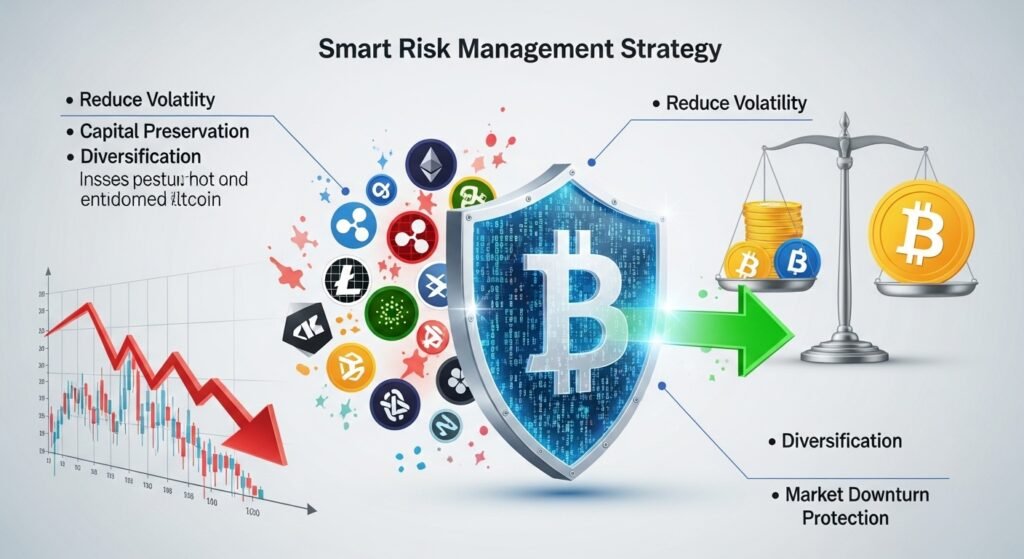
Hedging Altcoins with BTC: Smart Risk Management Strategy

Hedging Altcoins with BTC Smart Risk Management Strategy

COIN4U IN YOUR SOCIAL FEED

The strategy of hedging altcoins with BTC has become essential in today’s volatile crypto market. As altcoins continue to experience extreme price swings, traders and investors are increasingly turning to Bitcoin as a stabilizing force. Unlike speculative altcoins, Bitcoin often acts as a market anchor, making it a powerful tool for risk management.

In 2026, where uncertainty dominates crypto cycles, understanding how to hedge altcoins with BTC is no longer optional—it’s a necessity. Whether you’re holding high-risk tokens or managing a diversified portfolio, using Bitcoin as a hedge can help protect gains, minimize losses, and maintain long-term growth.

This guide explores how we approach hedging altcoins with BTC, the strategies involved, and how you can apply them effectively to manage risk in your crypto investments.

What Does Hedging Altcoins with BTC Mean?

At its core, hedging altcoins with BTC refers to reducing exposure to volatile altcoins by balancing them with Bitcoin holdings. Since Bitcoin is generally more stable than smaller cryptocurrencies, it acts as a buffer during market downturns.

When altcoins drop sharply, Bitcoin often falls less—or sometimes even rises due to capital rotation. This makes it a strategic hedge against downside risk.

Why Bitcoin Is Used as a Hedge

Bitcoin dominates the crypto market in terms of liquidity, adoption, and investor trust. It often behaves differently from altcoins during market cycles. This unique behavior allows traders to use BTC to offset potential losses. The idea behind crypto hedging strategies is simple: reduce risk without exiting the market entirely.

Why Hedging Altcoins with BTC Matters in 2026

The crypto landscape has matured, but volatility remains a constant factor. Altcoins, especially low-cap tokens, can drop 30–70% within days. This makes altcoin risk management more critical than ever.

Market Cycles and Bitcoin Dominance

Bitcoin dominance plays a major role in altcoin performance. When BTC dominance rises, altcoins typically underperform. This is where hedging altcoins with BTC becomes highly effective. During uncertain macroeconomic conditions, institutional investors often move funds into Bitcoin, further strengthening its role as a hedge.

Protection Against Market Crashes

One of the biggest advantages of Bitcoin hedging strategy is protection during crashes. Instead of selling everything into fiat, holding BTC allows you to stay invested while reducing risk exposure.

Hedging Altcoins with BTC: Core Strategies

Portfolio Rebalancing

A key method of hedging altcoins with BTC is portfolio rebalancing. This involves adjusting your allocation between altcoins and Bitcoin based on market conditions. For example, during bullish altcoin rallies, you might shift profits into BTC. When markets turn bearish, a higher BTC allocation helps preserve capital. This dynamic approach ensures that you’re not overexposed to high-risk assets.

Pair Trading with BTC

Another effective technique in hedging altcoins with BTC is trading altcoin pairs against BTC instead of USD or stablecoins.

This allows you to measure performance relative to Bitcoin. If your altcoin underperforms BTC, it may be a signal to rotate back into Bitcoin.

Using BTC as a Store of Value

Many investors treat Bitcoin as “digital gold.” By converting a portion of altcoin profits into BTC, you lock in gains while maintaining exposure to the crypto market.

This approach aligns with long-term crypto portfolio diversification strategies.

When to Hedge Altcoins with BTC

Timing plays a crucial role in successful hedging altcoins with BTC.

Signs You Should Increase BTC Exposure

Market overheating is one of the clearest signals. When altcoins surge rapidly without strong fundamentals, risk levels increase.

Another indicator is rising Bitcoin dominance. This often signals capital rotation away from altcoins.

Macroeconomic uncertainty, such as interest rate changes or global financial instability, is also a strong reason to hedge.

Avoid Over-Hedging

While crypto risk management is important, over-hedging can limit gains. If you allocate too much to BTC during a strong altcoin season, you may miss out on significant profits.

Advantages of Hedging Altcoins with BTC

The biggest benefit of hedging altcoins with BTC is risk reduction. It allows you to stay in the market while minimizing exposure to extreme volatility.

Another advantage is improved emotional control. Crypto markets can be stressful, and having a hedge reduces panic-driven decisions.

Additionally, this strategy supports long-term wealth building by protecting profits during downturns.

Risks and Limitations of BTC Hedging

While effective, hedging altcoins with BTC is not without risks.

Bitcoin itself is still volatile. Although less risky than altcoins, it can still experience significant price swings.

There is also opportunity cost. If altcoins outperform BTC significantly, your hedged portfolio may underperform.

Understanding these trade-offs is essential for effective portfolio risk management.

Advanced Techniques for Hedging Altcoins with BTC

Dynamic Allocation Models

Professional traders often use dynamic models to adjust BTC exposure based on market indicators. These include moving averages, market sentiment, and volatility metrics. This approach enhances the effectiveness of hedging altcoins with BTC by making it data-driven.

Combining BTC with Stablecoins

Some investors combine BTC hedging with stablecoin strategies. This creates a layered approach to risk management. While BTC protects against altcoin volatility, stablecoins provide full capital preservation.

Real-World Example of Hedging Strategy

Imagine holding a portfolio heavily weighted in altcoins during a market rally. As prices rise, you gradually convert a portion of profits into Bitcoin. When the market corrects, your BTC holdings retain more value compared to altcoins. This reduces overall portfolio losses. This practical example highlights how hedging altcoins with BTC works in real scenarios.

Common Mistakes to Avoid

One of the biggest mistakes is reacting emotionally instead of strategically. Panic selling altcoins into BTC during a crash often leads to poor results. Another mistake is ignoring market signals. Successful crypto hedging strategies rely on data and trends, not guesswork. Consistency is more important than timing the market perfectly.

Tools and Indicators for Better Hedging

To improve your Bitcoin hedging strategy, you can use several tools and indicators. Bitcoin dominance charts are essential for understanding market trends. Volume analysis helps identify capital flows between BTC and altcoins. On-chain metrics provide deeper insights into market behavior, helping you make informed decisions.

Future of Hedging Altcoins with BTC

As the crypto market evolves, hedging altcoins with BTC will likely become more sophisticated. Institutional adoption is increasing, bringing advanced risk management techniques into the market. AI-driven analytics and automated trading systems are also shaping the future of crypto portfolio management.  Investors who adapt to these changes will have a significant advantage.

Conclusion

In a market defined by volatility, hedging altcoins with BTC stands out as one of the most effective strategies for managing risk. By balancing high-risk altcoins with the relative stability of Bitcoin, investors can protect their portfolios while staying positioned for growth.

The key to success lies in timing, discipline, and a clear understanding of market cycles. Whether you’re a beginner or an experienced trader, integrating hedging altcoins with BTC into your strategy can significantly improve your long-term results.

Start applying hedging altcoins with BTC today to safeguard your investments and build a more resilient crypto portfolio.

See more;Crypto consolidation holds as neutral sentiment steady inflows

Explore more articles like this

Subscribe to the Finance Redefined newsletter

A weekly toolkit that breaks down the latest DeFi developments, offers sharp analysis, and uncovers new financial opportunities to help you make smart decisions with confidence. Delivered every Friday

By subscribing, you agree to our Terms of Services and Privacy Policy

READ MORE

Blockchain in Investigations Transforming Case Analysis

Blockchain in Investigations

COIN4U IN YOUR SOCIAL FEED

The world of investigations is evolving at a rapid pace. Whether it’s financial fraud, corporate disputes, cybercrime, or criminal justice, investigators are under immense pressure to deliver accurate, transparent, and verifiable results. Traditional methods often fall short when it comes to data authenticity, evidence tampering risks, or the complexity of handling vast amounts of digital records. This is where blockchain technology enters the scene.

Known primarily as the backbone of cryptocurrencies, blockchain has expanded far beyond Bitcoin and Ethereum. Today, it is being adopted across industries. Healthcare and finance to law enforcement and compliance. For investigative professionals, blockchain can supercharge your case by ensuring data integrity, providing tamper-proof records, and streamlining collaboration.

In this article, we will explore in detail how blockchain technology is revolutionizing investigations, its practical applications, and why adopting it could be a game-changer for investigative professionals worldwide.

 Blockchain Technology in Investigations

What is Blockchain?

At its core, blockchain is a decentralized digital ledger that records transactions or data across multiple computers. Each entry, called a block, is securely linked to the previous one. Creating an immutable chain of records. Because no single party controls the ledger, altering or tampering with data becomes nearly impossible.

This tamper-proof nature makes blockchain highly valuable for investigations. From securing digital evidence to validating financial transactions, investigators can rely on blockchain as a trusted source of truth.

Why Blockchain Matters in Investigative Cases

For investigators, the biggest challenge is maintaining the authenticity and chain of custody of evidence. Digital files, emails, financial transactions, or surveillance data can be manipulated without leaving a trace. With blockchain, every action is timestamped, recorded, and transparent, ensuring that evidence remains credible in court or during compliance checks.

How Blockchain Technology Can Supercharge Your Investigative Case

How Blockchain Technology Can Supercharge Your Investigative Case

Ensuring Evidence Integrity

One of the most critical aspects of an investigation is proving that the evidence collected has not been altered. Blockchain allows investigators to hash digital files such as documents, images, or videos. These unique hashes are stored on the blockchain, making it possible to verify authenticity instantly. If the evidence changes even slightly, the hash will no longer match, signaling tampering.

For example, in a cybercrime investigation, digital logs stored on a blockchain can serve as indisputable proof that no one has modified the records. This greatly strengthens the credibility of the investigation.

Securing Chain of Custody

Maintaining a clear chain of custody is essential in legal investigations. Blockchain provides a transparent and chronological record of who accessed, transferred, or reviewed a piece of evidence. Each step is immutably recorded, leaving no room for doubt.

This is especially useful in criminal justice investigations, where defense lawyers often challenge the handling of evidence. With blockchain, the chain of custody is fully verifiable, protecting investigators from disputes.

Speeding Up Cross-Border Investigations

Investigations that span multiple jurisdictions are often slowed by bureaucratic hurdles. Blockchain enables secure, real-time data sharing across borders without compromising data privacy. Investigators can collaborate with international agencies while maintaining strict security standards.

For example, in cases of money laundering or fraud, blockchain can help financial investigators trace transactions across different countries efficiently, reducing delays caused by traditional paperwork.

Enhancing Transparency and Accountability

Blockchain’s public ledger system promotes transparency by making investigation-related data accessible to authorized parties in real time. This minimizes the risk of corruption, hidden manipulations, or internal cover-ups.

For instance, compliance officers in corporate investigations can use blockchain to track company transactions and ensure accountability without solely relying on internal reports.

Real-World Applications of Blockchain in Investigations

Financial Fraud Investigations

Blockchain is particularly powerful in uncovering financial fraud. Since blockchain transactions are transparent and traceable, investigators can follow the trail of cryptocurrency transactions, detect anomalies, and connect fraudulent activities to specific individuals or organizations.

Financial institutions are already leveraging blockchain to comply with anti-money laundering (AML) regulations, making investigations more accurate and efficient.

Corporate and Compliance Investigations

In corporate settings, blockchain ensures that auditing and compliance records remain tamper-proof. Investigators can track boardroom decisions, contracts, or supply chain data on blockchain platforms. This makes it easier to hold individuals accountable for corporate misconduct.

Cybercrime and Digital Forensics

As cybercrime becomes more sophisticated, digital evidence plays a crucial role. Blockchain secures forensic logs, IP addresses, server data, and communication trails, ensuring they are admissible in court. By leveraging blockchain, cybercrime investigators can build stronger, tamper-proof cases.

Law Enforcement and Criminal Justice

Police departments and law enforcement agencies worldwide are exploring blockchain to manage criminal records, body cam footage, and evidence storage. With immutable logs, blockchain prevents evidence tampering and provides greater transparency, building public trust in law enforcement.

Benefits of Using Blockchain in Investigative Cases

Immutability and Security

Blockchain’s immutability ensures that once data is recorded, it cannot be altered or erased. This gives investigators confidence that their evidence is preserved in its original state.

Cost-Effectiveness

By reducing dependency on intermediaries, paperwork, and lengthy verification processes, blockchain lowers the overall costs of investigations. This is particularly valuable in large-scale or long-term cases.

Time Efficiency

Investigations often stall due to manual processes and fragmented data systems. Blockchain streamlines data access, verification, and sharing, saving precious time for investigators.

Strengthened Legal Admissibility

Courts increasingly recognize blockchain-based records as reliable evidence. This strengthens the legal admissibility of investigation findings, reducing the chances of evidence being dismissed.

Challenges and Limitations of Blockchain in Investigations

Legal and Regulatory Uncertainty

While blockchain offers immense potential, global legal frameworks for blockchain evidence are still evolving. Some jurisdictions may not yet accept blockchain records as admissible.

Technical Complexity

Investigators must be trained to use blockchain effectively. Without proper technical expertise, the benefits. Blockchain cannot be fully realized.

Privacy Concerns

Although blockchain ensures transparency, it may conflict with data privacy regulations like GDPR. Investigators must strike a balance between transparency and confidentiality.

Future of Blockchain in Investigative Cases

Future of Blockchain in Investigative Cases

As blockchain adoption grows, we can expect it to become a standard investigative tool. Artificial Intelligence (AI) and blockchain integration will enable automated pattern recognition, helping investigators uncover hidden connections faster. Additionally, smart contracts may be used to enforce. Compliance is automatically maintained during corporate investigations.

The future points toward a world where blockchain will not just. Support investigations, but will redefine how evidence is. Collected, stored, and presented.

See More: How Blockchain Technology Transforms Supply Chain Management

Conclusion

The rise of blockchain technology is set. Transform investigative practices across industries. From securing evidence and maintaining a chain of custody to streamlining cross-border investigations, blockchain provides a transparent, immutable, and efficient solution. While challenges such as legal frameworks and technical expertise remain, the potential benefits far outweigh the drawbacks.

If you are an investigative professional, adopting blockchain today could give you a significant advantage tomorrow. Simply put, blockchain technology can supercharge your investigative case, providing credibility, security, and efficiency like never before.

FAQs

Q: How does blockchain ensure evidence integrity in investigations?

Blockchain records data with unique cryptographic hashes. Any alteration changes the hash, making tampering easily detectable.

Q: Can blockchain be used in court as valid evidence?

Yes, in many jurisdictions, blockchain records are increasingly. Recognized as admissible due to their immutability and verifiability.

Q: How can blockchain help in financial fraud investigations?

Blockchain enables investigators to trace cryptocurrency and digital transactions transparently, identifying fraud and money laundering activities.

Q: What are the limitations of using blockchain in investigations?

Challenges include regulatory uncertainty, technical complexity, and balancing transparency with privacy laws like GDPR.

Q: Will blockchain replace traditional investigation methods?

Not entirely. Blockchain will enhance, not replace, traditional methods by adding security, transparency, and efficiency to investigative practices.

Explore more articles like this

Subscribe to the Finance Redefined newsletter

A weekly toolkit that breaks down the latest DeFi developments, offers sharp analysis, and uncovers new financial opportunities to help you make smart decisions with confidence. Delivered every Friday

By subscribing, you agree to our Terms of Services and Privacy Policy

READ MORE

ADD PLACEHOLDER