If you trade often, fees can quietly erode your returns. A difference of just 0.10% per trade adds up fast for active spot and futures fees traders, market makers, and arbitrageurs. That’s why a clear, monthly-updated comparison of the crypto exchanges with the lowest fees is essential. In this October 2025 guide, we break down base spot trading fees, maker–taker fees, VIP tier discounts, token-based fee cuts, and limited-time promotions that can push your effective rate toward zero. Where a platform publishes updated changes—like region-specific pricing in the EEA or seasonal discounts—we call those out and link to official schedules so you can verify the numbers yourself.
A quick refresher: most exchanges use maker–taker fees. Makers add liquidity with resting limit orders and usually pay lower or even negative fees at high tiers; takers remove liquidity by crossing the spread with marketable orders and usually pay a bit more. Your “real” cost is your posted rate minus any VIP tier reductions, “pay-fees-with-our-token” discounts, and maker rebates. Many platforms further differentiate spot trading fees from derivatives: perpetuals and options often have separate ladders with tighter maker rates and higher taker rates.
Below you’ll find the 10 most cost-efficient, mainstream exchanges right now—picked for their globally competitive pricing, liquidity, and transparent fee pages. For each, we summarize the entry (base) rates, popular discounts, and what it actually means for your pocket in October 2025.
How do we compare “lowest fees” fairly
We focus on three things. First, the published base maker–taker rates at the entry tier (what you’ll see before hitting VIP volume). Second, widely available discounts, such as paying in the native token (BNB, OKB, BGB, MX, etc.) or buying “points.” Third, current promos and region-specific adjustments that meaningfully change effective rates. Because fee tables change, we link to the latest official schedules or credible, recent breakdowns so you can double-check live numbers on the day you trade. For example, Binance maintains an always-on trading-fee schedule and highlights VIP tiers; OKX recently updated its fee structure for EEA users effective October 1, 2025; and MEXC is running limited 0% futures fees on specific contracts this month—these details can shift your effective cost this week, not just “on average.”
Binance: deep liquidity and easy discounts
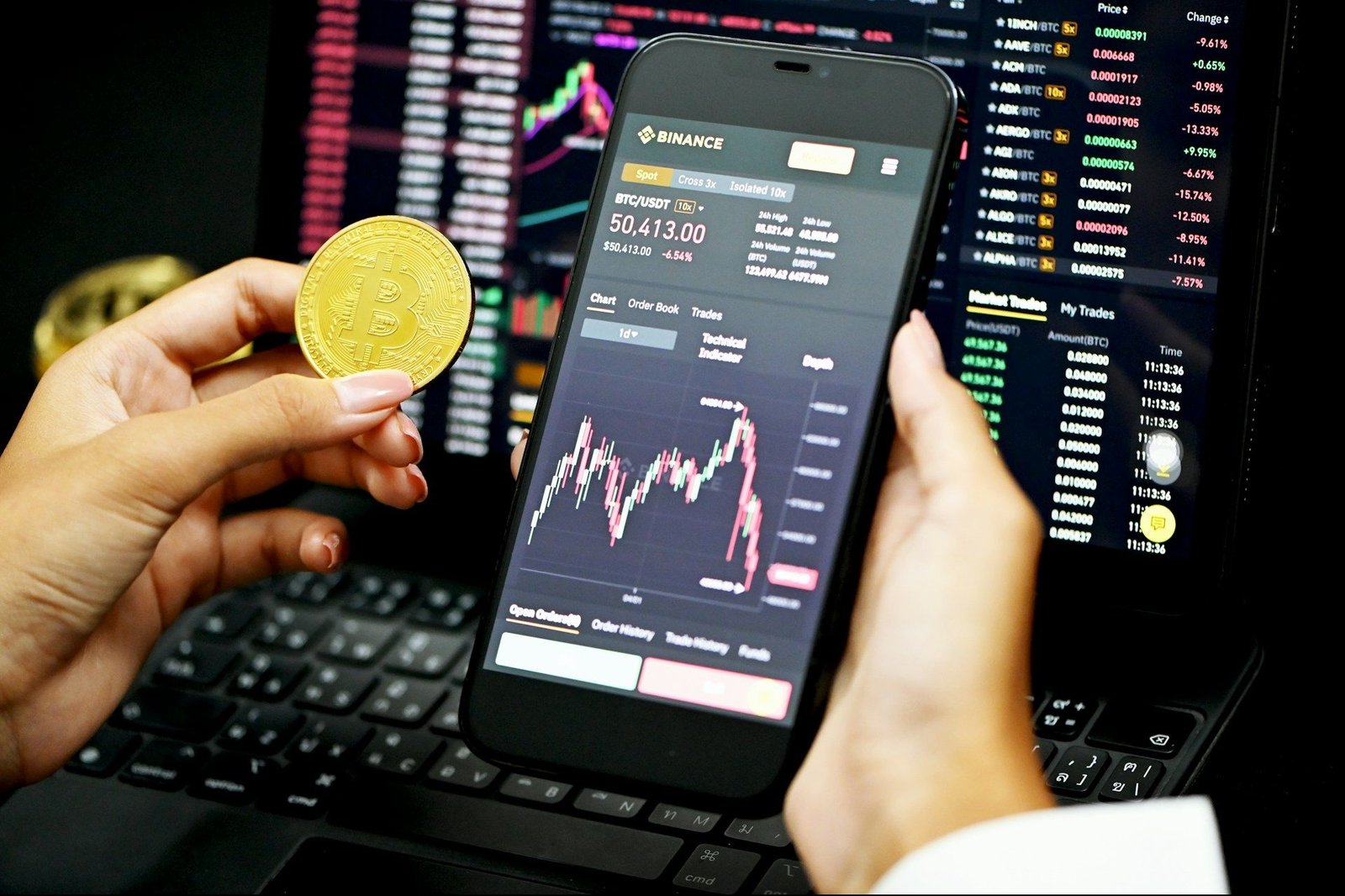
Binance’s base spot trading fees typically start at 0.10% maker / 0.10% taker, with a widely used 25% discount when you pay fees in BNB. That drops the effective spot fee to roughly 0.075% at the entry level, and further reductions apply as you climb VIP tiers by 30-day volume. Binance’s live fee schedule lays out spot, margin, and convert, and the VIP ladder updates automatically with your rolling volume. For a frequent trader, that BNB discount alone is often the difference between average and best-in-class effective rates.
Why it’s among the crypto exchanges with the lowest fees: entry-level 0.10% is already competitive, but the BNB reduction and VIP scaling push costs down further without complicated hoops. If you mostly execute taker orders, factor the BNB discount into your calculations—it meaningfully narrows the gap to maker pricing.
OKX: aggressive base pricing and region-specific updates
OKX has long been a low-fee favorite thanks to slim base maker/taker rates and OKB-based discounts. This month, OKX also rolled out an updated fee structure for EEA users effective October 1, 2025, which is worth reviewing if you reside in that region. Several current guides show base spot tiers starting around 0.06% for both maker and taker, with volume and OKB holdings reducing costs as you scale up. Always confirm the exact rate for your region and tier on the official page before you trade.
Why it’s among the lowest: low entry-level spot trading fees, transparent VIP tiers, and additional OKB discounts mean OKX regularly competes for the absolute cheapest fills—especially for active traders who can unlock higher tiers.
Bybit: lean spot fees and competitive derivatives
Bybit keeps spot trading fees tight, and its derivatives ladder is especially attractive if you primarily trade perpetuals. The exchange’s official fee structure and recent explainers outline maker/taker for spot, perpetuals, futures, and USDC options, plus VIP-based reductions and promotional discounts that come and go. If you’re comfortable with Bybit’s product set, the combination of low spot fees, liquid perps, and occasional promos makes it easy to keep effective costs low across a multi-market workflow.
Why it’s among the lowest: lean base maker–taker fees on spot, very competitive futures fees, and regular fee events that cut taker costs when you need to cross the spread.
KuCoin: broad markets with familiar 0.10% spot and token cuts
KuCoin’s fee framework mirrors the industry’s best-known pattern: a base spot trading fee around 0.10% for both maker and taker, with VIP tiers and KCS-based discounts to lower costs. Its support docs reiterate the maker–taker model and set expectations on how lower “maker” pricing rewards you for adding liquidity. For traders who value a large altcoin roster, KuCoin’s mix of markets and predictable fee ladder keeps it firmly in the “low-cost” camp.
Why it’s among the lowest: a simple, familiar 0.10% starting point, plus KCS/VIP reductions, makes KuCoin a strong value, especially if you’re placing resting limit orders to clip maker rates.
MEXC: low base, token perks—and 0% futures promos this month
MEXC’s public fee page highlights the ways holdings of MX token can trim both spot trading fees and futures fees. More importantly for October 2025, MEXC is running a limited-time 0% futures promotion on selected contracts (regional scope specified in the announcement) from October 16–31, 2025. If you’re eligible, that can bring your effective taker cost to zero on those pairs for the rest of the month, which is as low as it gets. Outside promos, MEXC’s base maker–taker is already competitive, and VIP tiers add leverage for active accounts.
Why it’s among the lowest: aggressive promotions and MX-linked discounts can make MEXC a top pick for cost-minimizing derivatives traders right now.
Bitget: straightforward 0.10% spot and discounted with BGB
Bitget’s support material lays out clear figures: spot maker–taker at 0.10% with a discount to 0.08% when paying in BGB, and competitive futures fees that start at 0.02% maker / 0.06% taker—then shrink with VIP volume. If your strategy is taker-heavy in perps, 0.06% is already decent at entry; if you can post liquidity on the maker side, 0.02% can meaningfully increase your edge, especially for high-frequency or grid-style approaches.
Why it’s among the lowest: the combination of token-based spot discounts and a tight derivatives ladder makes Bitget one of the cheapest “all-rounders” for mixed spot and futures fees.
Gate.io: points can drop effective taker fees sharply
While some reviews quote Gate.io’s legacy 0.20% spot number, today’s fee page shows that buying “points” meaningfully reduces your effective rate. With points, the base taker rate starts at 0.075%, and the platform explains how maker rebates and point costs can push the effective taker fee down even further, depending on your activity and VIP level. If you’re optimizing for taker-dominant execution, Gate’s points system deserves a look instead of judging solely by the older 0.20% headline.
Why it’s among the lowest: after accounting for points and maker rebates, effective spot trading fees can undercut many rivals—particularly for high-activity accounts that can amortize point costs.
Phemex: simple 0.10% spot, 0.01% maker on contracts
Phemex publishes a clean breakdown: spot trading fees of 0.10% for maker and taker, while contracts start at 0.01% maker / 0.06% taker. There’s also a Market Maker Incentive Program that can pay a maker rebate up to 0.005% if you qualify, plus VIP tiers that reduce both spot and derivatives costs. For traders who can reliably post liquidity, the 0.01% contract maker rate is attractively low at entry.
Why it’s among the lowest: low contract maker–taker fees right out of the gate, with a rebate path for participants who can provide liquidity at scale.
BingX: flat 0.10% spot, tight 0.02%/0.05% futures at base
BingX’s current overviews make it easy to price your strategy: spot sits at 0.10% maker/taker, and base futures fees are often quoted around 0.02% maker / 0.05% taker. That’s a lean ladder for contract traders, and, combined with a straightforward spot rate, puts BingX in the value tier for active users who don’t want to decode complex fee tables. Always verify the pair-level fee when you open a new market, as some symbols can vary.
Why it’s among the lowest: consistent, low base pricing across spot and contracts with minimal friction to unlock those numbers.
CoinEx: competitive tiers and market-maker rebates

CoinEx has been tightening its schedule for both spot and perps. Recent announcements show tiered improvements, including maker rebates for high-ranking market makers on spot and futures, while VIP 0 derivatives rates often start around 0.03% maker / 0.05% taker. Spot fees can be reduced via volume and CET-based discounts, and market makers can achieve 0% or even negative maker fees on certain tiers. If you’re an algorithmic trader providing liquidity, that rebate structure can flip fees from a cost to a revenue line.
Why it’s among the lowest: meaningful market maker rebate potential and competitive base futures fees give CoinEx one of the more attractive cost profiles if you trade programmatically.
Kraken, Coinbase, and why they’re not in this month’s “lowest” list
Kraken and Coinbase Advanced are robust, regulated options with excellent security and fiat ramps, but their entry-tier maker–taker fees are generally higher than the ten platforms above. If your priority is absolute lowest cost at low volumes, the exchanges listed earlier typically beat them on base pricing; if regulation, fiat on/off ramps, or specific jurisdictions matter more, Kraken and Coinbase Advanced remain strong choices—just know you might pay more at the start. Always check each platform’s live fee table to see whether your current monthly volume qualifies you for better tiers.
Regional pricing, token discounts, and promotions: the fine print that changes everything
A universal rule in 2025: always read the regional footnotes. OKX, for instance, updated maker–taker fees for EEA users effective October 1, 2025—terms like these matter if you travel or relocate. Similarly, token-based reductions (BNB on Binance, OKB on OKX, BGB on Bitget, MX on MEXC) materially change your effective spot trading fees—often by 20–25% at entry—so run the math on whether holding that token fits your risk tolerance. Finally, promotions can compress your cost to zero or near zero for short windows; MEXC’s 0% futures fees on selected contracts this month is a live example worth checking if you’re eligible.
How to actually pay less in October 2025 (without over-optimization)
If you mostly take liquidity, prioritize platforms with taker discounts you can realistically unlock—BNB/OKB/BGB or points. If you can post liquidity, seek exchanges with low or rebated maker rates. On derivatives, base ladders of 0.02%/0.05% or 0.02%/0.06% are already good; combining maker posting with VIP volume can push effective futures fees toward zero. And remember the “hidden” line item: withdrawals. While this article focuses on trading fees, withdrawal fees, and network costs can dwarf small differences in spot trading fees if you move funds often. Always check each market’s coin- and network-specific withdrawal table before you size up positions.
See More: Best Cryptocurrency Trading Platform 2025 Top 10 Exchanges Reviewed
Exchange-by-exchange fee snapshots (October 2025)
Binance
Base spot trading fees of roughly 0.10% maker / 0.10% taker, with a 25% BNB discount bringing the effective rate down to ~0.075% at entry; additional VIP tiers reduce costs further as your 30-day volume rises.
OKX
Low base pricing (often around 0.06%) with volume- and OKB-linked discounts. Note the EEA fee update in force from October 1, 2025—check your local schedule.
Bybit
Lean maker–taker fees across spot trading fees and perps, plus periodic promotions and VIP tiers that narrow taker costs for active accounts.
KuCoin
Familiar 0.10% based on spot for maker and taker, with reductions via VIP ladders and KCS benefits, making it cost-friendly for altcoin specialists.
MEXC
Competitive base rates, MX-token discounts, and this month’s regional 0% futures fees promo for selected contracts through October 31, 2025.
Bitget
0.10% spot at base, dropping to 0.08% when paying in BGB; futures fees typically 0.02% maker / 0.06% taker with VIP-driven reductions for high-volume traders.
Gate.io
Don’t stop at the legacy 0.20% headline; with “points,” the base taker rate lists at 0.075% and may be driven even lower when combined with maker rebates and VIP levels.
Phemex
Straightforward 0.10% spot trading fees and contract maker–taker of 0.01% / 0.06%, with a market-maker program offering up to a 0.005% maker rebate for qualified users.
BingX
Simple 0.10% spot and base futures fees around 0.02% maker / 0.05% taker, making it easy to model your cost without a maze of conditions.
CoinEx
VIP 0 derivatives around 0.03% maker / 0.05% taker, with tiered cuts and market-maker levels enabling 0% to negative maker fees on some schedules—compelling for liquidity providers.
Conclusion
In October 2025, the crypto exchanges with the lowest fees share the same DNA: tight maker–taker fees on spot, sub-0.06% futures fees for makers, transparent VIP ladders, and tangible token or points discounts. The biggest wins come from three habits. First, always check the live, region-specific fee page before you trade; base tables change and promos are time-boxed.
Second, align your execution style with the right discount—BNB/OKB/BGB for takers, or market maker rebate programs and maker-friendly ladders if you can post size. Third, re-run the math monthly: a small bump in 30-day volume, an extra token balance, or a short-term promo can shave basis points you’ll actually feel over hundreds of fills. With the ten platforms above, you can build a fee-efficient stack whether you do a few swings a week or thousands of micro-fills a day.
FAQs
Q: What are maker–taker fees, and why do they matter?
Maker–taker fees are how exchanges price trades. Makers add liquidity with resting limit orders and generally get lower (even negative) fees; takers remove liquidity with marketable orders and pay slightly more. Over time, selecting an exchange with lower taker rates (if you cross the spread) or a strong market maker rebate (if you post) can materially improve performance. For current examples and tables, see the official fee pages from Binance, OKX, and others linked in this guide.
Q: How do VIP tiers and token discounts actually reduce my cost?
Most platforms tie your fee tier to 30-day trading volume. Hitting higher tiers reduces your posted maker–taker fees. Separately, paying in the exchange’s token (BNB, OKB, BGB, MX) often grants a percentage discount on top of your tier. The combination can drop an entry-level 0.10% spot trading fee into the 0.06–0.08% range or lower, depending on the venue. Always confirm the live discount language on the fee page before you assume savings.
Q: Are there any genuine 0% trading fee opportunities right now?
Yes—temporarily. In October 2025, MEXC is advertising 0% futures fees on selected contracts through October 31 for certain regions. These windows are short, pair-specific, and geo-scoped, so read the announcement details to ensure you qualify.
Q: Which exchange is “cheapest overall” for a new trader?
There isn’t a single winner because it depends on your style. If you take liquidity on spot, look at Binance, Bitget, or Bybit with token discounts applied. Ouuu provides liquidity on Perps, Phemex, and CoinEx have attractive futures fees and market maker rebate pathways. If you’re in the EEA or SEA, check OKX and MEXC’s current region-specific updates and promos.
Q: Why aren’t Kraken or Coinbase Advanced in the “lowest fee” top 10?
They tend to have higher entry-tier maker–taker fees than the venues above. That said, both are excellent, regulated platforms with strong fiat ramps and liquidity—many traders happily pay slightly more for those strengths. If you scale into higher VIP tiers on either platform, your effective cost can still fall into a competitive zone. Review each platform’s live fee page for your current tier before deciding