
















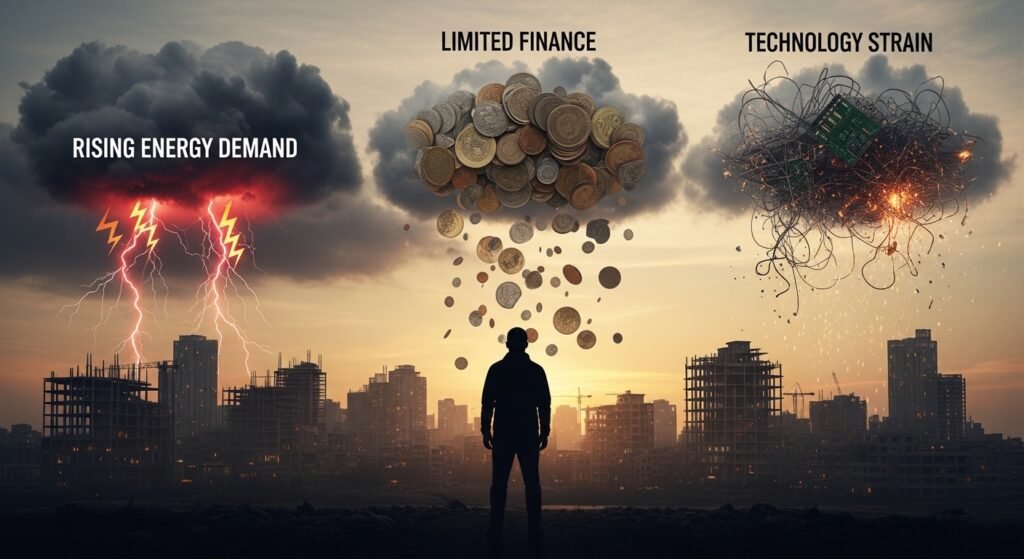
Emerging economies are facing unprecedented challenges as rising energy demand, limited financial resources, and technological constraints converge to impact growth and development. As populations expand and industrialization accelerates, these nations struggle to meet the growing need for electricity, transportation, and industrial power while contending with financing gaps and limited access to cutting-edge technology. The combined pressure of energy, finance, and technological limitations is reshaping policy priorities, business strategies, and international cooperation in many low- and middle-income countries.
Energy demand is a critical driver of economic development. Industrial production, urbanization, and consumer consumption all require reliable energy sources. However, in many emerging economies, supply often lags behind demand, leading to intermittent power, high costs, and economic inefficiencies. Limited finance compounds the problem, making large-scale energy projects, renewable integration, and modern grid expansion difficult to implement. At the same time, technological constraints prevent efficient energy generation, distribution, and storage, further straining national development agendas.
This article examines how rising energy demand, limited finance, and technological strain interact in emerging economies, explores the implications for growth and sustainability, and discusses strategies to address these complex challenges.
The Surge in Energy Demand Across Emerging Economies
Emerging economies are experiencing a rapid increase in energy demand due to demographic growth, urbanization, and industrialization. Countries across Asia, Africa, and Latin America are witnessing rising electricity consumption as households adopt modern appliances, transportation networks expand, and manufacturing sectors scale production.
The industrialization drive significantly increases energy needs. Manufacturing plants, refineries, and heavy industries require continuous and reliable energy supply. In many emerging economies, the growth of industrial clusters outpaces local energy infrastructure, causing bottlenecks in production and economic inefficiencies.
Urbanization further compounds the challenge. As cities expand, residential energy consumption rises due to increased use of lighting, heating, cooling, and electronic devices. Additionally, urban transportation networks, such as electric buses, trains, and metro systems, further elevate electricity demand.
Rural electrification is another important factor. Governments aim to provide access to electricity for remote communities, which requires significant investment in grid extension and renewable energy solutions. While these projects are essential for inclusive development, they contribute to the growing overall energy demand.
The surge in energy demand is also influenced by climate-related pressures. Extreme temperatures, droughts, and heatwaves increase the need for air conditioning, water pumping, and refrigeration, further straining existing energy systems. Emerging economies often lack resilient infrastructure to cope with these additional pressures.
Limited Finance and Its Impact on Energy Infrastructure
Financing constraints are one of the most significant barriers to meeting rising energy demand in emerging economies. Large-scale energy infrastructure projects, including power plants, grid expansion, and renewable installations, require substantial capital investment. However, many emerging economies face limited fiscal space, high public debt, and weak access to international financing.
Traditional energy projects often rely on government funding or foreign investment. Inadequate budget allocation can delay or scale back essential infrastructure development. Moreover, high-interest rates, limited credit availability, and currency volatility discourage private sector investment in energy projects.
The financial gap also affects renewable energy deployment. While solar, wind, and hydroelectric projects offer long-term sustainability and lower operational costs, initial capital expenditures remain high. Without sufficient finance, emerging economies struggle to implement these solutions at scale.
International financial institutions and development banks play a critical role in bridging funding gaps. However, bureaucratic processes, stringent requirements, and competition for limited funds can slow project implementation. Energy access programs and public-private partnerships have emerged as mechanisms to mobilize additional resources, yet financing remains a persistent constraint.
Additionally, limited finance affects energy efficiency initiatives. Investments in smart grids, energy storage, and advanced monitoring systems are often unaffordable, reducing the overall efficiency of energy use and increasing operational losses.
Technological Constraints Hindering Energy Development
Technology plays a central role in energy generation, distribution, and consumption. Emerging economies often lack access to the latest energy technologies, which exacerbates the challenges posed by rising demand and limited finance.
Outdated power generation facilities are a common issue. Many countries still rely on old thermal power plants with low efficiency and high environmental impact. Limited access to modern turbines, energy storage solutions, and grid management technologies reduces the reliability of electricity supply.
Distribution networks also suffer. Aging infrastructure leads to transmission losses, frequent blackouts, and voltage instability. Without advanced monitoring and smart grid technologies, energy operators struggle to optimize supply and minimize waste.
Technological constraints also hinder renewable energy adoption. While solar panels and wind turbines are increasingly affordable globally, integration with local grids requires sophisticated storage and balancing systems. Many emerging economies lack the technical expertise and resources to implement such systems effectively.
Furthermore, energy innovation is often constrained by limited research and development capacity. Investments in new technologies, including battery storage, microgrids, and hybrid renewable systems, are insufficient. Consequently, emerging economies face difficulties keeping pace with global technological advancements.
Interconnections Between Energy, Finance, and Technology
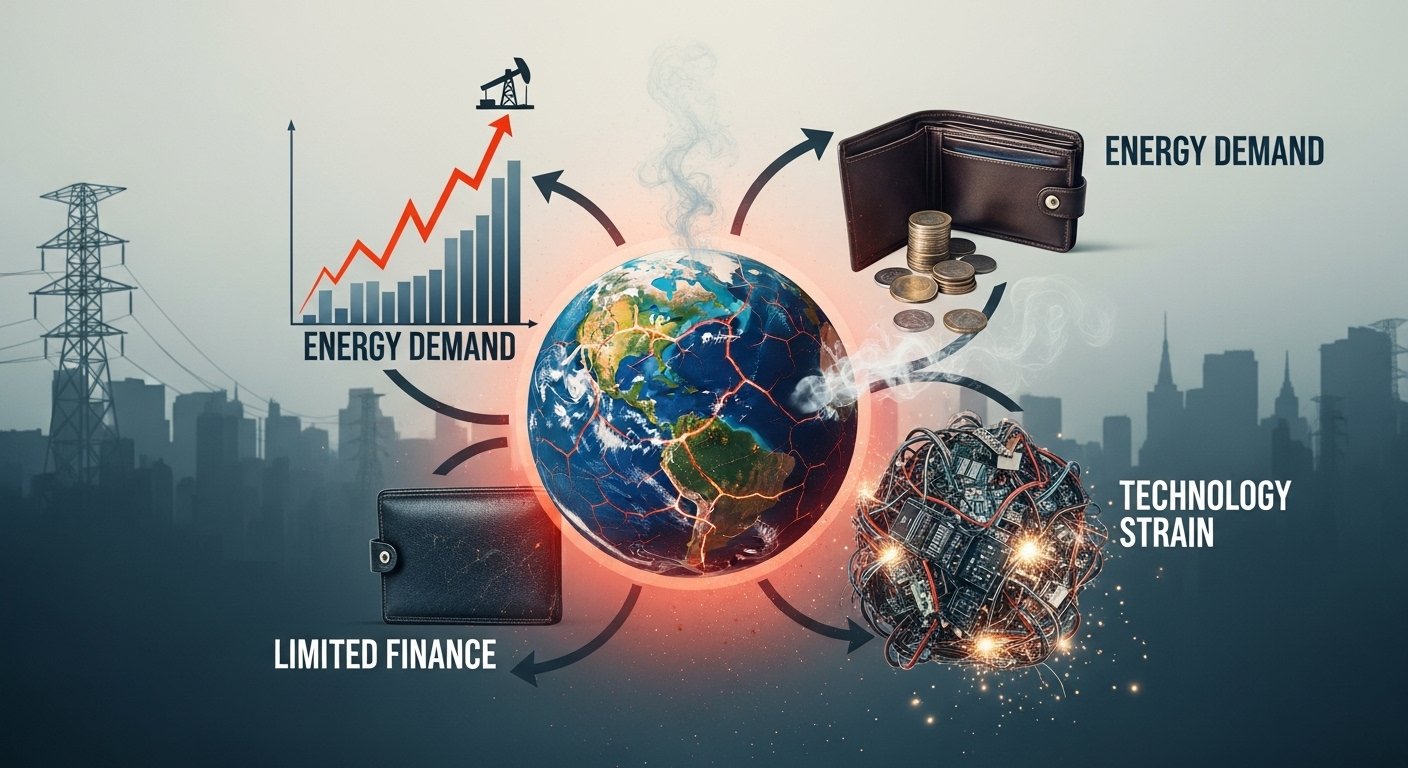
Rising energy demand, limited finance, and technological constraints are deeply interconnected. A lack of financial resources limits access to modern energy technologies, which in turn affects the ability to meet growing demand. Similarly, inefficient infrastructure and outdated technology increase operational costs, further constraining financial capacity.
For example, investing in renewable energy without advanced storage systems can result in intermittent supply, reducing economic efficiency. Similarly, outdated grids lead to higher transmission losses, increasing the cost of electricity and limiting affordability. These dynamics create a cycle where energy deficits, financial limitations, and technological gaps reinforce each other.
Breaking this cycle requires coordinated strategies that simultaneously address financial, technical, and infrastructural challenges. Solutions that integrate renewable energy, smart grids, and innovative financing models can enhance energy access while ensuring sustainability.
Policy Approaches to Mitigating Energy Strain
Emerging economies are adopting diverse policy measures to address energy challenges. Government initiatives focus on expanding infrastructure, promoting energy efficiency, and attracting private investment.
Subsidies and incentives for renewable energy adoption are increasingly common. Feed-in tariffs, tax breaks, and low-interest loans encourage investment in solar, wind, and hydro projects. Governments also aim to reduce dependence on fossil fuels, which are often expensive and environmentally damaging.
Energy sector reforms play a crucial role. Deregulation, market liberalization, and improved governance enhance efficiency and attract investment. Transparent policy frameworks help reduce risk for private investors and encourage participation in energy infrastructure development.
International collaboration is another key strategy. Multilateral institutions provide technical assistance, financial support, and policy guidance to emerging economies. Regional energy projects, such as cross-border transmission networks and shared renewable initiatives, also help optimize resources.
Capacity building and workforce development are essential for technological advancement. Training programs in energy engineering, smart grid management, and renewable integration equip local professionals with the skills needed to operate modern systems effectively.
The Role of Renewable Energy in Emerging Economies
Renewable energy presents both opportunities and challenges for emerging economies. Solar, wind, and hydroelectric power can expand energy access while reducing environmental impact. Renewable adoption is particularly attractive in regions with abundant natural resources.
Despite potential benefits, initial investment costs, technological requirements, and grid integration challenges limit widespread deployment. Financial support from international donors and private investors is often necessary to scale renewable projects effectively.
Emerging economies that successfully implement renewable energy solutions can reduce energy costs, improve grid reliability, and support sustainable development goals. Renewable energy adoption also enhances energy security, reducing dependence on imported fossil fuels and exposure to global price volatility.
Moreover, decentralized renewable systems, such as microgrids and off-grid solar solutions, provide access to remote communities. These technologies help bridge the energy gap while bypassing the limitations of centralized grids.
Economic and Social Implications of Energy Constraints
Energy shortages, financial limitations, and technological gaps have wide-ranging economic and social impacts. Industries may face production delays, higher operational costs, and reduced competitiveness. Households may experience intermittent power, affecting quality of life and productivity.
Energy scarcity can exacerbate inequality. Wealthier households and urban centers often have better access to reliable electricity, while rural or low-income populations face persistent energy deficits. These disparities affect education, healthcare, and economic opportunities.
Limited energy infrastructure also constrains industrial development. Manufacturing, mining, and service sectors may struggle to expand, limiting job creation and economic growth. High energy costs can discourage foreign investment, further slowing development.
Environmental impacts are significant as well. Reliance on inefficient fossil fuel plants contributes to air pollution, greenhouse gas emissions, and climate change vulnerability. Emerging economies face the dual challenge of meeting energy demand while transitioning toward sustainable practices.
Future Strategies for Sustainable Energy Development

Addressing the energy-finance-technology nexus requires comprehensive strategies. Emerging economies need a combination of investment, innovation, and policy reform to meet rising energy demand sustainably.
Public-private partnerships can mobilize capital, reduce risk, and accelerate infrastructure projects. Leveraging international funding and technical assistance supports large-scale initiatives while building local capacity.
Investing in modern technologies, including smart grids, energy storage, and renewable integration, enhances efficiency and reliability. Continuous innovation and adaptation to emerging technologies are crucial for long-term energy sustainability.
Policy frameworks should prioritize transparent governance, financial incentives, and regulatory clarity. Policies that balance economic growth, environmental protection, and social equity ensure inclusive development.
Community engagement is equally important. Programs promoting energy conservation, digital literacy, and local participation foster resilience and maximize the impact of infrastructure investments.
Conclusion
Rising energy demand, limited finance, and technological constraints pose significant challenges for emerging economies. The convergence of these factors affects industrial growth, social development, and environmental sustainability.
Addressing these challenges requires coordinated strategies that integrate infrastructure development, renewable energy adoption, technological innovation, and financial mobilization. Public-private partnerships, policy reform, and international collaboration are essential for creating resilient energy systems.
Emerging economies that successfully navigate this complex landscape can achieve sustainable growth, improve quality of life, and enhance energy security. Understanding and addressing the interplay between energy demand, finance, and technology is crucial for shaping a prosperous and sustainable future.
FAQs
Q: How does rising energy demand affect emerging economies’ growth prospects?
Rising energy demand directly impacts economic growth in emerging economies. Insufficient energy supply can limit industrial output, reduce productivity, and increase operational costs. Energy shortages affect households, transportation, and services, which in turn influence broader social and economic development.
Q: Why is limited finance a critical barrier to energy infrastructure development?
Limited finance constrains the ability of emerging economies to invest in energy infrastructure, renewable projects, and modern grid technologies. High upfront costs, limited access to credit, and fiscal constraints reduce project implementation capacity, delaying expansion and affecting energy access.
Q: How do technological constraints influence energy efficiency?
Technological limitations prevent the adoption of advanced generation, storage, and distribution systems. Outdated grids, inefficient power plants, and limited expertise reduce energy efficiency, increase transmission losses, and hinder the integration of renewable energy solutions.
Q: What role can renewable energy play in mitigating these challenges?
Renewable energy offers sustainable solutions to rising demand and environmental concerns. Solar, wind, and hydro power can expand energy access, reduce reliance on fossil fuels, and improve grid resilience. However, successful deployment requires financial support, technological adaptation, and policy backing.
Q: What strategies can emerging economies adopt to balance energy demand, finance, and technology?
Emerging economies can leverage public-private partnerships, international funding, and policy reforms to mobilize resources. Investments in modern infrastructure, smart grids, and renewable technologies enhance efficiency and sustainability. Capacity building and community engagement ensure long-term resilience and equitable energy access.