

















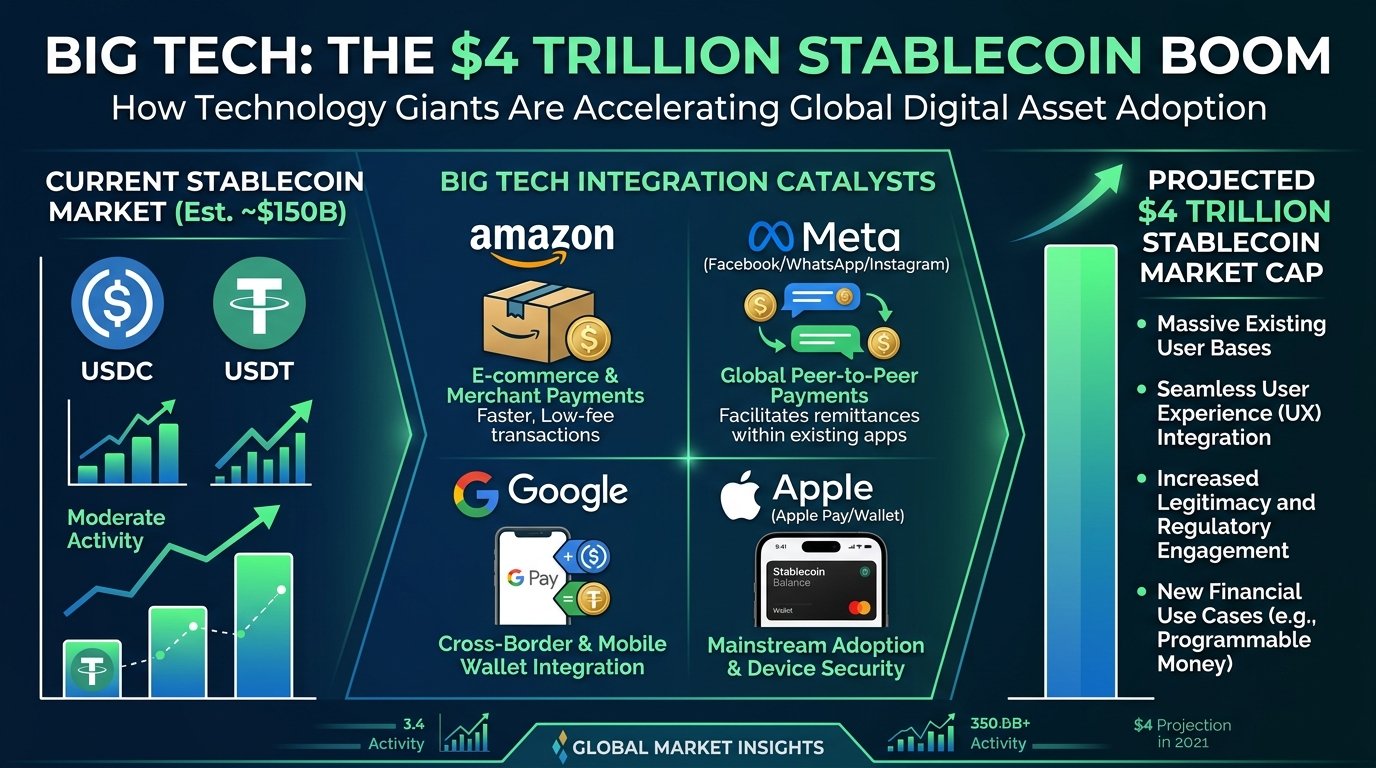
The global financial landscape is undergoing a profound transformation, and at the center of this shift lies the rapid evolution of stablecoins. According to the Bitwise Chief Investment Officer, the convergence of blockchain innovation and large-scale technology adoption could propel the stablecoin market toward an astonishing $4 trillion valuation. This bold prediction reflects not only the growing legitimacy of digital assets but also the increasing involvement of Big Tech companies in reshaping financial infrastructure.
Stablecoins, often described as the bridge between traditional finance and the crypto ecosystem, have already demonstrated their utility in payments, remittances, and decentralized finance. However, the entry of major technology corporations into this space signals a new phase of expansion. With their vast user bases, global reach, and technological expertise, these companies have the potential to accelerate adoption at an unprecedented scale.
This article explores how Big Tech could drive the stablecoin market to $4 trillion, the implications for global finance, and the opportunities and risks that lie ahead. By examining industry trends, regulatory developments, and technological advancements, we gain a deeper understanding of how this transformation could unfold in the coming years.
The Rise of Stablecoins in the Digital Economy
Stablecoins have emerged as a cornerstone of the modern digital economy. Unlike volatile cryptocurrencies, these digital assets are typically pegged to stable reserves such as fiat currencies, making them more reliable for everyday transactions. Over the past few years, the stablecoin market has grown rapidly, fueled by increasing demand for fast, low-cost, and borderless payments.
The appeal of stablecoins lies in their ability to combine the efficiency of blockchain technology with the stability of traditional currencies. This unique combination has made them a preferred choice for traders, businesses, and individuals seeking a seamless financial experience. As adoption continues to grow, stablecoins are becoming an integral part of the broader financial ecosystem.
The Bitwise CIO’s projection of a $4 trillion market highlights the immense potential of this sector. It suggests that stablecoins are no longer a niche innovation but a mainstream financial instrument capable of transforming how money moves across the globe.
How Big Tech Could Accelerate Stablecoin Adoption
Expanding User Access and Financial Inclusion
One of the most significant advantages Big Tech companies bring to the stablecoin market is their massive user base. Platforms with billions of active users can introduce stablecoin functionality directly into their ecosystems, making digital finance accessible to a wider audience. This level of integration could significantly reduce barriers to entry and drive mass adoption.
By embedding stablecoins into payment systems, social media platforms, and e-commerce networks, Big Tech firms can create a seamless user experience. This approach not only enhances convenience but also promotes financial inclusion, particularly in regions with limited access to traditional banking services.
Leveraging Advanced Technology Infrastructure
Big Tech companies are known for their advanced technological capabilities, including cloud computing, artificial intelligence, and data analytics. These resources can be leveraged to improve the efficiency, security, and scalability of stablecoin networks. As a result, the stablecoin market could experience rapid growth and innovation.
The integration of blockchain technology with existing digital infrastructure can create powerful synergies. For example, real-time transaction processing, enhanced fraud detection, and improved user interfaces can make stablecoins more attractive to both consumers and businesses.
Building Trust and Credibility
Trust is a critical factor in financial adoption, and Big Tech companies have the advantage of established brand recognition. While the crypto industry has faced skepticism in the past, the involvement of well-known technology firms can enhance credibility and encourage wider acceptance.
As these companies enter the stablecoin space, they bring with them a level of trust that can help bridge the gap between traditional finance and digital assets. This trust factor could play a crucial role in driving the stablecoin market toward the projected $4 trillion valuation.
The Role of Regulation in Shaping the Market
Regulation will play a pivotal role in determining the future of stablecoins. Governments and financial authorities around the world are increasingly focusing on creating frameworks to govern digital assets. While regulatory clarity can provide stability and encourage innovation, overly restrictive policies could hinder growth.
The involvement of Big Tech companies may accelerate the development of regulatory standards. These firms often have the resources and influence to engage with policymakers and shape the regulatory landscape. As a result, the stablecoin market could benefit from clearer guidelines and increased institutional participation.
However, regulatory challenges remain. Issues such as compliance, transparency, and consumer protection must be addressed to ensure the long-term sustainability of the market. Balancing innovation with regulation will be key to unlocking the full potential of stablecoins.
Stablecoins and the Evolution of Global Payments
Transforming Cross-Border Transactions
One of the most promising applications of stablecoins is in cross-border payments. Traditional international transfers are often slow, expensive, and complex. Stablecoins offer a faster and more cost-effective alternative, enabling near-instant transactions across borders.
As Big Tech companies integrate stablecoins into their platforms, cross-border payments could become more efficient and accessible. This transformation has the potential to reshape global commerce and facilitate economic growth.
Enhancing E-Commerce and Digital Transactions
The integration of stablecoins into e-commerce platforms can revolutionize online transactions. By reducing transaction fees and processing times, stablecoins can improve the overall shopping experience for consumers. This innovation can also benefit merchants by increasing efficiency and reducing costs.
As digital commerce continues to expand, the role of stablecoins is likely to become more prominent. The involvement of Big Tech companies can further accelerate this trend, driving widespread adoption across various industries.
The Impact on Traditional Financial Institutions
The rise of stablecoins presents both challenges and opportunities for traditional financial institutions. Banks and payment providers may face increased competition as digital assets gain popularity. However, they also have the opportunity to adapt and integrate stablecoins into their services.
Collaboration between traditional finance and Big Tech could lead to the development of hybrid financial systems. These systems can combine the strengths of both sectors, offering enhanced services to consumers and businesses. As the stablecoin market grows, traditional institutions must evolve to remain relevant in this changing landscape.
Risks and Challenges in the Stablecoin Market
Despite the promising outlook, the stablecoin market is not without risks. Concerns about security, regulatory compliance, and market stability must be addressed to ensure sustainable growth. The involvement of Big Tech companies introduces additional complexities, including data privacy and market dominance issues.
Another challenge is maintaining the stability of stablecoins themselves. Ensuring that these digital assets remain properly backed and transparent is crucial for maintaining trust. Any failure in this regard could have significant implications for the broader financial system.
Additionally, the rapid growth of the stablecoin market could lead to increased scrutiny from regulators. Addressing these challenges will require collaboration between industry stakeholders, policymakers, and technology providers.
The Future Outlook: A $4 Trillion Opportunity
The prediction that Big Tech could push the stablecoin market to $4 trillion reflects a broader trend toward digital financial transformation. As technology continues to evolve, the integration of blockchain and traditional systems is likely to accelerate.
The future of stablecoins will depend on several factors, including technological innovation, regulatory developments, and market adoption. Big Tech companies are well-positioned to drive this growth, leveraging their resources and expertise to create new opportunities.
As the market expands, stablecoins could become a fundamental component of the global financial system. This transformation has the potential to redefine how money is used, stored, and transferred, paving the way for a more inclusive and efficient financial ecosystem.
Conclusion
The Bitwise CIO’s projection of a $4 trillion stablecoin market underscores the transformative potential of this emerging sector. With the involvement of Big Tech companies, stablecoins are poised to move beyond their current role and become a central pillar of global finance.
From enhancing cross-border payments to driving financial inclusion, the impact of stablecoins is far-reaching. However, achieving this vision will require careful navigation of regulatory challenges and market risks. By fostering innovation while ensuring stability, the industry can unlock new possibilities and shape the future of finance.
As we move further into 2026, the convergence of technology and finance will continue to redefine the global economy. The rise of stablecoins, supported by Big Tech, represents a significant step toward a more connected and efficient financial world.