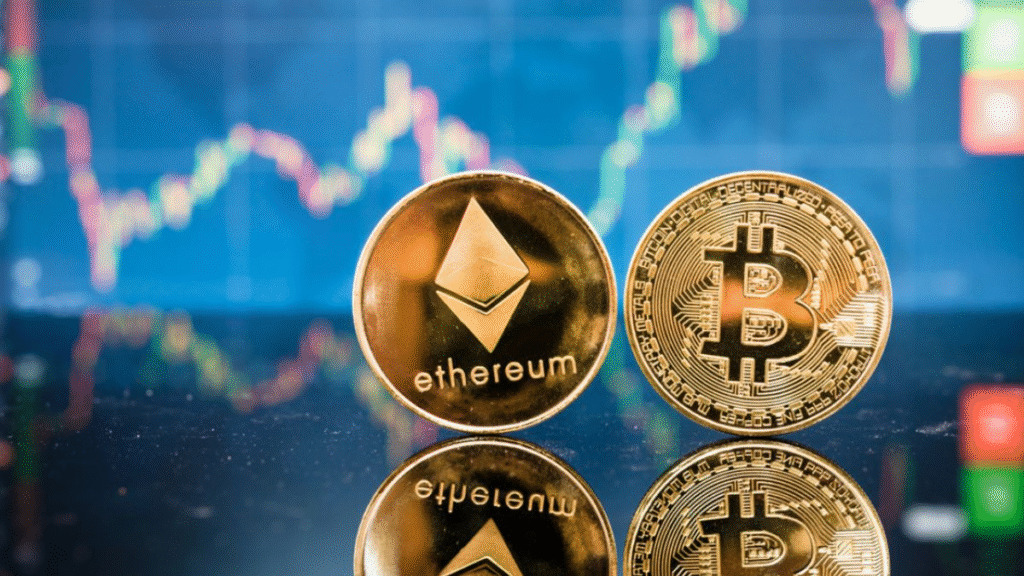
Bitcoin & Ethereum 2026 ChatGPT’s Bold Forecast

Bitcoin & Ethereum

COIN4U IN YOUR SOCIAL FEED

By 2026, the story of Bitcoin and Ethereum will be written at the intersection of technology, macroeconomics, and regulation. Bitcoin remains the benchmark for digital scarcity, while Ethereum is the programmable substrate for a new wave of internet-native finance and applications. Both networks are maturing quickly, drawing in institutions, developers, and everyday users at a scale that would have sounded ambitious only a few years ago. This article assembles a comprehensive, human-readable forecast for 2026—grounded in historical cycles, adoption curves, and plausible scenarios—so you can understand where momentum is likely to build, where risks cluster, and how the pieces may fit together.

As we explore Bitcoin and Ethereum in 2026, we’ll unpack catalysts such as the late-cycle effects of the 2024 Bitcoin halving, the impact of institutional adoption, the expanding role of Layer-2 scaling, and the growing importance of regulatory clarity. We’ll also examine potential price ranges, the health of on-chain metrics, and the competitive dynamics shaping the broader cryptocurrency market. While no prediction is destiny, a clear framework can help you read the market with more confidence and nuance.

The macro backdrop: Why 2026 is different

From tightening to normalization

Crypto prices have historically responded to global liquidity conditions. If 2022–2023 reflected tightening financial conditions, 2024–2025 represented gradual stabilization. By 2026, markets are likely contending with normalized rates, a clearer inflation path, and an investment environment that favors risk-on rotations during growth upcycles. In such a setting, Bitcoin’s scarcity narrative and Ethereum’s utility narrative can both flourish, albeit through different channels.

Given Bitcoin’s fixed supply and predictable issuance schedule, the asset historically finds tailwinds whenever real yields ease or risk appetite returns. Ethereum, by contrast, is tied to activity: the more people build, trade, borrow, lend, and create on top of it, the more demand accrues to its blockspace. In simple terms, macro normalization can support both the store-of-value case and the smart-contract platform case—just in different ways.

Institutional flows and product maturity

By 2026, we expect continued growth in institutional adoption: more diversified crypto products on brokerage platforms, deeper derivatives markets, and improved custody solutions. This maturation lowers friction for pensions, endowments, and corporates to gain exposure. Institutions tend to start with Bitcoin due to its simplicity and liquidity, then branch into Ethereum for exposure to DeFi, tokenization, and Web3 applications. This staged entry can drive sequential demand, supporting sustained liquidity across both assets.

Bitcoin in 2026: Scarcity, security, and the march of inevitability

Bitcoin in 2026: Scarcity, security, and the march of inevitability

Post-halving dynamics and supply-side tightness

The 2024 halving compressed new supply issuance. By 2026, the market will have digested two years of post-halving flow dynamics. Historically, this period aligns with renewed interest and a grind toward higher market caps as new marginal buyers compete for fewer incoming coins. If energy costs stabilize and hash rate continues its secular climb, network security remains robust while miner economics tighten, creating a supply environment where spot demand can move price more efficiently.

Demand drivers you shouldn’t ignore

Brand strength matters. Bitcoin’s memetic simplicity—“21 million,” “digital gold”—continues to resonate. Corporate treasuries seeking a non-correlated reserve asset, retail buyers seeking an inflation hedge, and wealth managers seeking diversification form a durable demand base. Across exchanges and custodians, easier fiat on-ramps, clearer tax guidelines, and better reporting tools may broaden the investor funnel. Meanwhile, the potential expansion in stablecoins and CBDCs could normalize digital money usage, indirectly validating Bitcoin as the apex non-sovereign alternative.

Price framework: Bands rather than bullseyes

Forecasting a single number invites hubris, so here’s a framework. Imagine three bands for 2026:

  • A conservative band where Bitcoin consolidates below prior cycle extremes, reflecting macro shocks or regulatory frictions that cap flows.

  • A base-case band where adoption progresses, liquidity deepens, and the asset revisits or surpasses cycle highs on gradually improving participation.

  • An upside band where a virtuous loop of institutional inflows, corporate balance-sheet buys, and global demand squeezes a thinner post-halving supply.

In every case, volatility remains intrinsic. Bitcoin’s path often meanders even when the destination looks higher. Position sizing and time horizons matter, because sudden drawdowns are part of the asset’s character.

Ethereum in 2026: The programmable economy matures

The scaling stack becomes standard

If 2020–2021 established Ethereum’s value proposition, then 2024–2025 saw the standardization of Layer-2 scaling, rollups, and data availability upgrades that lowered gas fees and expanded throughput. By 2026, the user experience should be meaningfully better: cheaper transactions, faster confirmations, and wallets that abstract away network complexity. As a result, more of DeFi, NFTs, gaming, social, and enterprise experiments should live on L2s that settle to Ethereum for security.

These upgrades don’t just improve convenience; they impact network economics. The combination of EIP-1559 style fee burns and steady ETH staking can create a supply-demand balance supportive of price—especially when usage rises. A more efficient EVM environment encourages developers to ship, which in turn attracts capital and users in a reinforcing loop.

Tokenization and real-world assets

One of the most compelling 2026 narratives is the tokenization of real-world assets—equities, bonds, funds, invoices, and real estate paper—issued and traded on Ethereum L2s with institutional-grade compliance rails. If custody, identity, and KYC tooling continue to mature, expect large asset managers and fintechs to leverage Ethereum’s settlement layer for programmable, composable products. This shift can draw traditional capital into a smart-contracts ecosystem where yield, liquidity, and transparency improve.

Price framework: Utility meets reflexivity

Ethereum’s price in 2026 will likely reflect the interplay of usage, burn dynamics, and staking. When activity climbs, base fees rise and more ETH is burned; when staking penetration grows, the float available for trading can shrink. Together, these forces can create reflexive cycles where adoption begets scarcity. A thoughtful framework uses three bands similar to Bitcoin’s, but ties the base case more explicitly to on-chain activity: more transactions, more users, higher fees, and greater net burn can translate to a sturdier floor and more robust rallies.

Bitcoin vs. Ethereum: Different assets, complementary roles
Bitcoin vs. Ethereum: Different assets, complementary roles

Store of value and programmable value

Comparing Bitcoin and Ethereum as if they’re interchangeable misses the point. Bitcoin is engineered to be minimally mutable and maximally predictable—a pristine collateral and store-of-value asset with a simple, audited issuance. Ethereum is engineered for flexibility, enabling DeFi, identity, marketplaces, NFTs, and tokenization via smart contracts. Portfolios can benefit from both: Bitcoin as a hedge against monetary debasement and systemic tail risks; Ethereum as a levered bet on the growth of on-chain economies.

Correlation, diversification, and cycles

Historically, the assets have been positively correlated during broad crypto risk-on phases, yet their on-chain metrics and adoption drivers diverge. Correlation can break during idiosyncratic events—protocol upgrades, governance debates, or regulatory headlines specific to one asset. That means diversification within crypto isn’t an oxymoron. A blended thesis—scarcity plus utility—can smooth the ride while keeping upside exposure to network effects.

Catalysts to watch in 2026

Regulatory clarity and international coordination

Clearer regulatory clarity is a force multiplier. Jurisdictions that define token categories, disclosures, and market integrity standards can attract talent and capital. By 2026, we anticipate more harmonized frameworks for exchange licensing, stablecoin issuance, and disclosures for tokenized assets. Bitcoin benefits from legal classification as a commodity-like asset; Ethereum benefits when frameworks for DeFi and Layer-2 ecosystems are well-defined. Consistent rules lower perceived risk premiums and draw institutional allocators off the sidelines.

Enterprise-grade wallet and identity infrastructure

Better wallets and identity rails reduce friction. Expect expanded support for passkeys, account abstraction, and recovery mechanisms that let users operate without seed-phrase anxiety. A 2026 wallet may route your transaction to the cheapest L2, batch approvals safely, and sign with human-readable prompts—bringing Web2 polish to Web3 interactions. When friction drops, adoption rises, and fees accrue to Ethereum’s settlement layer, with knock-on benefits to both ETH and BTC via overall market growth.

The stablecoin and payments bridge

Dollar-denominated stablecoins are the connective tissue between the fiat world and on-chain value exchange. In 2026, more merchants, fintechs, and payroll platforms may integrate stablecoin rails for instant settlement and lower fees. This makes crypto useful even for non-speculative users. As stablecoin float grows, it deepens crypto liquidity, supports DeFi money markets, and normalizes on-chain commerce—positive second-order effects for Ethereum activity and Bitcoin’s role as apex collateral.

Risk map: What could go wrong

Macro downside and liquidity shocks

A negative growth shock, a credit event, or resurgent inflation could drain risk appetite globally. In such scenarios, Bitcoin and Ethereum can both sell off, even if their long-term theses remain intact. Crypto markets are still reflexive and sentiment-driven, so risk management remains essential.

Adverse regulation and fragmented rules

Patchwork or adversarial regulation can push liquidity offshore, hamper compliant on-ramps, and discourage enterprise adoption. While some jurisdictions may lead with constructive frameworks, inconsistency across major markets could slow institutional inflows and developer momentum.

Technical, security, or UX failures

Despite progress, crypto still faces MEV externalities, bridge risks, and smart-contract exploits. A major exploit or high-profile L2 failure could dent confidence and suppress activity. Likewise, if the UX gap persists—confusing fees, opaque errors, recovery challenges—mainstream adoption can lag expectations.

A data-driven look at 2026: What healthy markets might exhibit

For Bitcoin: supply trends and network health

In a constructive 2026, we would expect to see increasing hash rate, steady growth in long-term holder supply, and declining exchange balances as coins move to cold storage or custodial solutions for institutions. Transaction volumes that trend sideways to up, along with a resilient fee market during busy periods, would indicate robust utilization. Durable demand from corporate treasuries and wealth platforms would likely coincide with deepening derivatives liquidity, narrowing spreads, and healthier basis dynamics.

For Ethereum: usage, fees, and burn

On Ethereum, a healthy 2026 would exhibit growing L2 transactions, lower median gas fees on L2s with occasional L1 spikes during peak demand, and consistent fee burn offsetting or exceeding issuance. Rising unique addresses interacting with applications, increased ETH staking participation with liquid staking derivatives, and diversified application categories—DeFi, gaming, identity, NFTs—would suggest durable growth. If tokenization volumes rise and enterprise chains settle back to Ethereum, that’s a signal of the network’s gravitational pull.

See More: Ethereum Price Test Whales Stir Market Sentiment

Price outlook 2026: Framing realistic ranges

Bitcoin: plausible scenarios

A cautious yet constructive base case envisions Bitcoin maintaining a market structure characterized by higher lows versus prior cycles. In this scenario, institutional allocations broaden, exchange-traded vehicles deepen liquidity, and macro conditions are not hostile. Upside scenarios revolve around a flywheel of inflows and scarcity, while downside scenarios revolve around regulatory or macro shocks that suppress risk appetite. The lesson is to think in scenarios and time horizons, not point estimates.

Ethereum: utility-anchored appreciation

For Ethereum, the base case aligns with activity-led appreciation. As L2s absorb mainstream traffic, the settlement layer gains revenue, the burn remains material, and the narrative of programmable money deepens. Upside scenarios involve significant expansion in real-world asset issuance, mainstream consumer apps, and cross-border payments. Downside scenarios involve technical setbacks, competitive L1/L2 pressure, or weak app demand that keeps fees and burn soft.

How builders and investors can prepare

For builders: focus on production-grade UX

The fastest way to onboard the next 100 million users is to make crypto feel invisible. Prioritize account abstraction, social recovery, fiat on-ramps, and guardrails that prevent common signing mistakes. Build around Layer-2 scaling to keep costs predictable, and consider modular architectures that let you swap components as infrastructure improves. If your app survives fee spikes, abstracts chains, and speaks the language of non-crypto users, you’re positioned for the 2026 market.

For investors: thesis > ticker

A robust 2026 approach emphasizes thesis-driven allocation. For Bitcoin, the thesis is digital scarcity with global liquidity. For Ethereum, the thesis is smart-contracts and networked cash flows from usage. Map your conviction, risk tolerance, and time horizon to position sizing. Use on-chain analytics to monitor exchange balances, L2 throughput, burn rates, and staking participation as health indicators. Diversification across the cryptocurrency market remains sensible, but avoid over-optimization; clarity beats complexity.

Competitive pressure and the multichain reality

Ethereum’s moat and challengers

Competitors will continue to chase Ethereum’s developer mindshare with promises of higher throughput or cheaper fees. But moats don’t hinge solely on transactions per second. They form around tooling, standards, liquidity, and culture. Ethereum’s EVM compatibility, battle-tested tooling, and massive developer ecosystem remain meaningful. That said, multichain is the pragmatic reality. Bridges, intent-based routing, and shared security models will knit ecosystems together, with Ethereum positioned as the settlement nucleus if it continues to lead in security and composability.

Bitcoin’s expanding utility without compromising core design

Bitcoin’s design resists change for a reason: it protects the asset’s monetary premium. Yet utility layers such as Lightning and sidechains can add throughput for payments and new use cases while preserving base-layer conservatism. In 2026, expect continued experimentation in ways that extend Bitcoin’s reach—without diluting its core value proposition of immutable, scarce collateral.

Ethical and environmental considerations

Energy narratives and mining innovation

Bitcoin mining’s energy footprint will remain a talking point. The nuance: miners are increasingly incentivized to seek stranded, renewable, or off-peak energy to improve margins. Flexible load profiles can even help balance grids. As reporting improves and miners compete on sustainability metrics, the narrative can shift from burden to opportunistic co-location with clean energy.

Ethereum’s proof-of-stake maturation

Since its transition to proof-of-stake, Ethereum’s energy profile dropped dramatically, making it more legible to ESG-conscious institutions. By 2026, staking frameworks, slashing insurance, and enterprise-grade validators should be mainstream, lowering operational risk and enabling more participants to secure the network.

Education and consumer protection: The bridge to mainstream

Clarity breeds confidence

The biggest unlock for mainstream adoption is confidence. Clear disclosures, safer default wallet settings, sensible KYC flows for DeFi interfaces, and audit-first culture can save users from avoidable losses. In 2026, winning applications will use plain language, set expectations about risk, and emphasize user rights and recovery. When people understand what they’re signing and how they can recover, they’re likelier to stay.

Conclusion

Bitcoin and Ethereum arrive in 2026 as complementary pillars of a digitizing financial system. Bitcoin’s strength is elegant scarcity and global liquidity; Ethereum’s is the programmable economy built atop a secure, scalable settlement layer. With improving regulatory clarity, expanding institutional adoption, and significant progress in Layer-2 scaling, both assets have realistic paths to deeper market integration and higher valuations—tempered by the ever-present risks of macro shocks, policy shifts, and technical failures. For long-term participants, success in 2026 will come from understanding what each asset truly is, watching the right on-chain metrics, and aligning strategy with thesis and time horizon. None of this is financial advice, but a framework for thinking clearly in a market that rewards clarity.

FAQs

Q: Is Bitcoin still the best hedge against inflation in 2026?

Bitcoin’s finite supply and global liquidity preserve its hedge narrative, particularly over multi-year horizons. Short-term moves can still correlate with risk assets during liquidity shocks, but the long-run case for digital scarcity remains intact as adoption broadens and issuance declines post-halving. For many allocators, Bitcoin functions as a non-sovereign store of value within a diversified portfolio.

Q: What gives Ethereum an edge over other smart-contract platforms?

Ethereum’s edge is network effects: the largest developer base, mature tooling, deep liquidity, and standardized primitives. With Layer-2 scaling and account abstraction, user experience keeps improving. Competitors may post higher raw throughput, but Ethereum’s composability and security—plus the gravitational pull of its EVM ecosystem—remain difficult to replicate.

Q: How important are stablecoins to Bitcoin and Ethereum’s outlook?

Extremely. Stablecoins provide the bridge from fiat to crypto, enabling instant settlement and powering DeFi markets. As their usage expands in commerce and remittances, on-chain liquidity deepens, benefiting Ethereum activity and indirectly supporting Bitcoin via broader market participation and liquidity depth across exchanges.

Q: What on-chain metrics should I watch in 2026?

For Bitcoin, keep an eye on hash rate, exchange balances, and long-term holder trends. For Ethereum, track L2 transaction counts, gas fees, fee burn versus issuance, ETH staking participation, and active addresses. These signals help assess whether adoption and network health are trending in a supportive direction.

Q: Will regulation help or hurt crypto by 2026?

Clear rules tend to help by reducing uncertainty and encouraging institutional adoption. Jurisdictions that implement sensible market integrity standards, disclosures, and stablecoin frameworks are likely to attract builders and capital. Fragmented or punitive approaches can dampen innovation, but the global competitive landscape often rewards regulatory clarity with increased economic activity.


Explore more articles like this

Subscribe to the Finance Redefined newsletter

A weekly toolkit that breaks down the latest DeFi developments, offers sharp analysis, and uncovers new financial opportunities to help you make smart decisions with confidence. Delivered every Friday

By subscribing, you agree to our Terms of Services and Privacy Policy

READ MORE

Best Payment Processing Software for Small Business in 2025 – Complete Guide

COIN4U IN YOUR SOCIAL FEED

Choosing the best payment processing software for small business can make or break your customer experience and bottom line. With over 33.2 million small businesses in the United States alone, the competition for seamless payment solutions has never been fiercer. Whether you’re running a local coffee shop, an e-commerce store, or a service-based business, having the right payment processing system is crucial for accepting credit cards, digital wallets, and online payments efficiently.

The modern small business landscape demands payment solutions that go beyond simple transaction processing. Today’s entrepreneurs need integrated systems that handle everything from inventory management to customer relationship management, all while maintaining PCI compliance and protecting sensitive customer data. Finding the best payment processing software for small business means evaluating factors like transaction fees, integration capabilities, security features, and scalability options that will grow with your company.

Why Small Businesses Need Reliable Payment Processing Software

Small businesses face unique challenges when it comes to payment processing. Unlike large corporations with dedicated IT departments and substantial budgets, small business owners need solutions that are both powerful and user-friendly. The right payment processing software can streamline operations, reduce manual errors, and provide valuable insights into customer purchasing behaviors.

Payment processing software serves multiple critical functions for small businesses:

Modern consumers expect flexibility in how they pay. A comprehensive payment system allows you to accept various payment methods including credit cards, debit cards, mobile payments like Apple Pay and Google Pay, bank transfers, and even cryptocurrency in some cases. This versatility can significantly impact your sales volume and customer satisfaction rates.

Security and compliance represent another crucial aspect. Payment Card Industry Data Security Standard (PCI DSS) compliance isn’t optional – it’s mandatory for any business handling credit card transactions. The best payment processing solutions handle these compliance requirements automatically, protecting both your business and your customers from data breaches and fraud.

Integration capabilities can transform your business operations. When your payment system integrates seamlessly with your accounting software, inventory management system, and customer relationship management (CRM) platform, you eliminate duplicate data entry and gain real-time insights into your business performance.

Key Features to Look for in Payment Processing Software

Key Features to Look for in Payment Processing Software
When evaluating payment processing solutions, several core features distinguish exceptional platforms from mediocre ones. Understanding these features helps you make an informed decision that aligns with your business needs and growth objectives.

Transaction Processing Speed and Reliability

Speed matters in payment processing. Customers expect quick, seamless transactions whether they’re shopping online or standing at your checkout counter. Look for solutions that process transactions in under three seconds and offer 99.9% uptime guarantees. Slow or unreliable payment systems can lead to abandoned carts, frustrated customers, and lost revenue.

Real-time processing capabilities enable immediate transaction verification and faster fund transfers to your business account. Some processors offer same-day or next-day deposits, which can significantly improve your cash flow management.

Multi-Channel Payment Acceptance

Omnichannel capabilities allow you to accept payments across various touchpoints. Whether customers want to pay in-store, online, through a mobile app, or over the phone, your payment system should handle all scenarios seamlessly. This flexibility is particularly important for businesses operating both physical locations and online stores.

Mobile payment compatibility has become essential as contactless payments surge in popularity. Ensure your chosen solution supports NFC payments, QR code transactions, and mobile wallet integrations.

Security and Fraud Protection

Advanced security features protect your business from costly chargebacks and fraudulent transactions. Look for solutions offering tokenization, encryption, and advanced fraud detection algorithms that analyze transaction patterns in real-time.

PCI compliance management should be handled automatically by your payment processor, reducing your compliance burden and associated costs. The best solutions provide detailed security reports and notifications about potential threats.

Top Payment Processing Software for Small Businesses

The payment processing landscape offers numerous options, each with unique strengths and target audiences. Here’s a comprehensive analysis of the leading solutions that consistently rank as the best payment processing software for small business operations.

Square: The All-in-One Solution

Square has revolutionized payment processing for small businesses by offering a comprehensive ecosystem of tools that go far beyond simple transaction processing. What started as a small square card reader has evolved into a complete business management platform.

Square’s pricing structure is transparent and competitive. They charge 2.6% + 10¢ for in-person transactions and 2.9% + 30¢ for online payments, with no monthly fees for basic plans. This straightforward pricing model makes it easy for small business owners to predict their processing costs.

The platform’s strength lies in its integration capabilities. Square offers point-of-sale systems, inventory management, employee scheduling, customer relationship management, and even lending services. This comprehensive approach means you can manage your entire business through a single platform.

Hardware options include everything from basic card readers to full-featured point-of-sale terminals. Square’s hardware is known for its reliability and ease of use, making it particularly attractive to businesses without technical expertise.

Stripe: The Developer-Friendly Choice

Stripe dominates the online payment processing space with its robust API and extensive customization options. While it requires more technical knowledge to implement, the flexibility and scalability make it ideal for businesses with unique requirements or rapid growth plans.

Stripe’s pricing is competitive at 2.9% + 30¢ for online transactions, with additional fees for international payments and currency conversions. The platform excels at handling complex payment scenarios, subscription billing, and marketplace transactions.

Integration possibilities with Stripe are virtually limitless. The platform connects with hundreds of business tools, e-commerce platforms, and custom applications. This flexibility makes it the preferred choice for businesses that need tailored payment solutions.

Advanced features include sophisticated fraud detection, detailed analytics, and support for over 135 currencies. Stripe also offers specialized products for subscription businesses, marketplaces, and platforms.

PayPal Business: The Trusted Brand

PayPal’s brand recognition provides immediate customer trust and confidence. Many consumers already have PayPal accounts, making checkout processes faster and reducing friction in the payment experience.

PayPal’s fee structure varies depending on transaction type and volume. Standard rates are 2.9% + $0.30 for online transactions, with reduced rates available for higher-volume merchants. They also offer competitive rates for in-person transactions through their card readers.

The platform offers multiple payment acceptance methods including PayPal payments, credit cards, debit cards, and PayPal Credit. This variety can increase conversion rates by providing customers with their preferred payment options.

International capabilities are particularly strong with PayPal, supporting transactions in over 200 markets and 25 currencies. This makes it an excellent choice for businesses with global customer bases.

Authorize.Net: The Established Player

Authorize.Net has been serving businesses since 1996 and offers a mature, feature-rich platform that handles complex payment scenarios with ease. Their experience in the industry translates to robust fraud prevention tools and reliable transaction processing.

Pricing includes a monthly gateway fee of $25 plus per-transaction fees starting at 2.9% + $0.30. While this monthly fee might seem high for very small businesses, the advanced features and reliability justify the cost for many merchants.

Advanced fraud detection includes customizable filters, velocity checks, and integration with third-party fraud prevention services. These features help businesses minimize chargebacks and fraudulent transactions.

Reporting and analytics capabilities provide detailed insights into transaction patterns, helping businesses optimize their payment processes and identify growth opportunities.

Comparing Transaction Fees and Pricing Models

Understanding payment processing fees is crucial for selecting the most cost-effective solution for your business. Different pricing models work better for different business types and transaction volumes.

Flat-Rate Pricing

Flat-rate pricing charges the same percentage for all transactions, regardless of card type or transaction method. This model offers predictability and simplicity, making it easy to calculate processing costs. Square and Stripe both use flat-rate pricing models.

Advantages of flat-rate pricing include transparency, easy budgeting, and no need to understand complex interchange rates. This pricing model works particularly well for businesses with average transaction values and diverse payment methods.

Disadvantages can include higher costs for businesses with large transaction volumes or those primarily accepting lower-cost debit cards. High-volume merchants might save money with interchange-plus pricing models.

Interchange-Plus Pricing

Interchange-plus pricing charges the actual interchange rate set by card networks plus a fixed markup from the processor. This transparent model often results in lower overall costs for businesses with higher transaction volumes.

Benefits include lower overall costs for high-volume merchants, complete transparency in pricing, and the ability to see exactly what you’re paying for each transaction component. Authorize.Net and many traditional merchant service providers use this model.

Challenges include complexity in understanding costs and variable monthly expenses that depend on your customer’s payment preferences. This model works best for established businesses with predictable transaction patterns.

Tiered Pricing

Tiered pricing categorizes transactions into qualified, mid-qualified, and non-qualified tiers with different rates for each category. While this model can offer competitive rates for qualified transactions, it often lacks transparency.

Most modern payment processors avoid tiered pricing due to its complexity and potential for hidden fees. Small businesses generally benefit more from flat-rate or interchange-plus models.

Integration Capabilities and Third-Party Compatibility

The ability to integrate your payment processing system with existing business tools can dramatically improve operational efficiency and provide valuable business insights.

E-commerce Platform Integration

Popular e-commerce platforms like Shopify, WooCommerce, Magento, and BigCommerce all offer extensive integration options with major payment processors. The best payment processing software for small business should seamlessly connect with your online store platform.

Native integrations typically offer the most reliable performance and easiest setup process. Look for payment processors that are officially supported by your e-commerce platform provider.

Custom integrations might be necessary for unique business requirements or proprietary systems. Stripe excels in this area with its comprehensive API documentation and developer resources.

Accounting Software Integration

Automatic synchronization between your payment processor and accounting software eliminates manual data entry and reduces errors. Popular accounting platforms like QuickBooks, Xero, and FreshBooks offer direct integrations with most major payment processors.

Real-time transaction data helps maintain accurate financial records and simplifies tax preparation. Some integrations even automatically categorize transactions and generate financial reports.

Reconciliation features help identify discrepancies between your payment processor records and bank deposits, making month-end accounting processes much more efficient.

CRM and Marketing Tool Integration

Customer data synchronization allows you to track purchasing behaviors, identify valuable customers, and create targeted marketing campaigns. Integration with CRM platforms like Salesforce, HubSpot, or Mailchimp can significantly enhance your marketing effectiveness.

Automated marketing triggers can be set up based on payment events. For example, you might automatically send thank-you emails after purchases or trigger abandoned cart recovery campaigns for incomplete transactions.

Security Features and PCI Compliance

Security remains a top priority for any business handling customer payment information. The best payment processing software for small business must provide robust security measures that protect both merchant and customer data.

PCI DSS Compliance

PCI DSS compliance is mandatory for any business that processes, stores, or transmits credit card information. The Payment Card Industry Data Security Standard includes specific requirements for data encryption, access controls, and security monitoring.

Compliance levels vary based on transaction volume, with Level 1 merchants (over 6 million transactions annually) facing the most stringent requirements. Most small businesses fall into Level 4 (fewer than 20,000 e-commerce transactions or 1 million other transactions annually).

Managed compliance solutions offered by payment processors can significantly reduce the burden on small business owners. Many processors handle PCI compliance requirements automatically, providing necessary security measures and documentation.

Fraud Prevention Tools

Machine learning algorithms analyze transaction patterns in real-time to identify potentially fraudulent activities. Advanced systems consider factors like transaction location, purchase patterns, and customer behavior to flag suspicious transactions.

Address Verification Service (AVS) compares billing addresses with credit card company records to verify cardholder identity. This simple check can prevent many fraudulent transactions without impacting legitimate customers.

Card Verification Value (CVV) checks provide additional security for card-not-present transactions by verifying the three or four-digit security code on credit cards.

Data Encryption and Tokenization

End-to-end encryption protects sensitive data during transmission from the point of capture to the payment processor. This security measure ensures that even if data is intercepted, it remains unreadable without proper decryption keys.

Tokenization replaces sensitive payment data with unique tokens that have no value outside the payment system. This approach minimizes the risk of data breaches because actual payment information is never stored in your business systems.

Customer Support and Service Quality

Reliable customer support becomes crucial when payment processing issues arise. The best payment processing software for small business should offer multiple support channels and responsive service to minimize downtime and resolve problems quickly.

Implementation and Setup Process

The ease of implementing new payment processing software can significantly impact your business operations during the transition period. The best solutions offer streamlined setup processes and comprehensive support during implementation.

Account Setup Requirements

Business documentation typically includes tax identification numbers, business licenses, bank account information, and owner identification. Having these documents ready can speed up the approval process significantly.

Underwriting processes vary between processors, with some offering instant approval for low-risk businesses while others require detailed review processes. Understanding timeline expectations helps plan your implementation schedule.

Testing environments allow you to verify integration and functionality before processing live transactions. Take advantage of sandbox environments to ensure everything works correctly.

Training and Onboarding

Staff training ensures your team can effectively use new payment processing systems. Look for processors that offer comprehensive training materials and ongoing education resources.

Implementation support might include dedicated account managers, technical consultants, or specialized implementation teams. This support can be invaluable for businesses with complex requirements or limited technical expertise.

Mobile Payment Solutions and Contactless Options

Mobile Payment Solutions and Contactless Options

Mobile and contactless payment options have become essential for modern businesses, particularly following the COVID-19 pandemic’s impact on consumer payment preferences.

NFC and Contactless Payment Support

Near Field Communication (NFC) technology enables tap-to-pay transactions using contactless credit cards, mobile wallets, and wearable devices. This technology offers faster checkout experiences and enhanced security compared to traditional magnetic stripe transactions.

EMV chip compatibility provides additional security for contact-based transactions while maintaining backward compatibility with older payment methods. The best payment processors support both contactless and chip-based transactions seamlessly.

Mobile Wallet Integration

Apple Pay, Google Pay, and Samsung Pay have gained widespread adoption among consumers who appreciate the convenience and security these platforms provide. Your payment processing solution should support these popular mobile wallet options.

QR code payments offer an alternative contactless option that works with any smartphone camera. Some processors offer proprietary QR code systems while others integrate with established platforms like PayPal or Venmo.

Scalability and Growth Considerations

Choosing payment processing software that can grow with your business prevents costly migrations and integration challenges as your company expands.

Volume Handling Capabilities

Transaction volume limits vary significantly between processors. While basic plans might handle thousands of transactions monthly, enterprise solutions can process millions of transactions with consistent performance.

Peak load handling becomes important during seasonal sales, promotional events, or viral marketing campaigns. Ensure your chosen processor can handle sudden traffic spikes without performance degradation.

Feature Expansion Options

Advanced features like subscription billing, marketplace functionality, or international payments might not be needed initially but could become crucial as your business evolves. Choose processors that offer these capabilities as add-on options.

API capabilities provide flexibility for custom integrations and unique business requirements. Even if you don’t need custom development initially, having API access ensures future flexibility.

Conclusion

Selecting the best payment processing software for small business requires careful consideration of your specific needs, budget, and growth plans. Whether you choose Square’s comprehensive ecosystem, Stripe’s developer-friendly platform, PayPal’s trusted brand recognition, or Authorize.Net’s advanced features, the key is finding a solution that aligns with your business objectives and provides room for growth.

The right payment processing system will streamline your operations, improve customer satisfaction, and provide valuable insights into your business performance. Take time to evaluate the features, pricing, and support options of different processors before making your decision.

READ MORE:Top Digital Banking Platforms for Small Business Owners

Explore more articles like this

Subscribe to the Finance Redefined newsletter

A weekly toolkit that breaks down the latest DeFi developments, offers sharp analysis, and uncovers new financial opportunities to help you make smart decisions with confidence. Delivered every Friday

By subscribing, you agree to our Terms of Services and Privacy Policy

READ MORE

ADD PLACEHOLDER