























Ant UBS & Blockchain-Based Tokenized Deposits

Blockchain-Based Tokenized

COIN4U IN YOUR SOCIAL FEED

UThe race to modernize money is no longer theoretical. Around the world, leading financial institutions are actively rolling out blockchain-based tokenized deposits that turn ordinary bank balances into programmable, always-on digital money.

On one side, Ant International is collaborating closely with HSBC to launch tokenized deposit services for real-time treasury and cross-border payments in Hong Kong and beyond, using its blockchain-powered Whale platform. On the other hand, UBS is driving a parallel wave of experimentation in Europe and Switzerland, completing the first legally binding inter-bank payment using tokenized bank deposits on a public blockchain alongside PostFinance and Sygnum Bank under the Swiss Bankers Association.

Taken together, these initiatives show how large global players such as Ant International and UBS are effectively “teaming up” at an ecosystem level to make blockchain-based tokenized deposits a practical reality. They are not merely talking about digital assets and distributed ledger technology (DLT); they are already moving real money, for real clients, under real regulation.

What Are Blockchain-Based Tokenized Deposits?

At their core, tokenized deposits are simply traditional banks. Deposits are represented as digital tokens on a blockchain. Instead of changing the nature of the money itself, they change the rails it travels on.

In a conventional setup, when a company sends money internationally, that payment hops through correspondent banks, batch systems, and cut-off times. Settlement may take days, and treasury teams juggle reconciliation, FX risk, and liquidity buffers. With blockchain-based tokenized deposits, the process looks very different. A corporation’s cash balance at a bank is mirrored as on-chain tokens issued by that bank.

When the company initiates a payment or internal transfer, the bank converts a portion of the deposit into a token on its DLT platform, the token moves across the blockchain almost instantly to the recipient’s wallet or account representation, and the bank updates its core ledger so that the token and the underlying deposit stay perfectly synchronized.

It is easy to confuse tokenized deposits, stablecoins, and central bank digital currencies (CBDCs), but they play different roles. Stablecoins are typically issued by private entities and may be backed by reserves; they are not direct claims on a bank deposit account unless specifically structured that way.

CBDCs are digital money issued by central banks, representing a claim on the central bank itself. Blockchain-based tokenized deposits remain a claim on a commercial bank, just like a normal deposit. The novelty is that the claim is represented and moved as a token on a blockchain.

Ant International’s Role: From Digital Payments to On-Chain Treasury
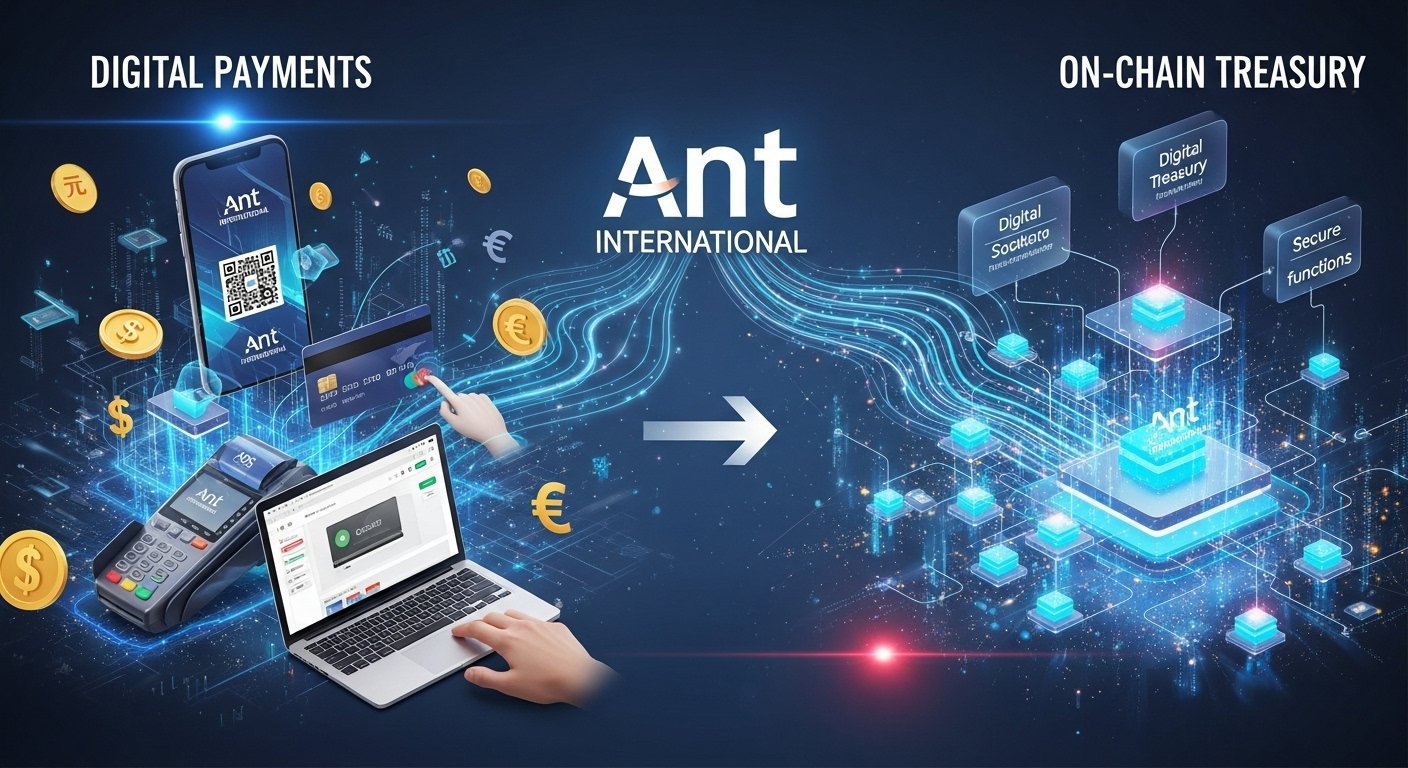
Ant International’s Role From Digital Payments to On-Chain Treasury

Ant International is best known as the global arm of Ant Group, building digital payment and embedded finance solutions across Asia, Europe, the Middle East, and Latin America. In recent years, it has quietly become a powerhouse in blockchain-based treasury management.

A central piece of the story is Ant’s Whale platform, described as a next-generation treasury system that uses blockchain, advanced encryption, and AI to move funds between Ant’s entities in real time. On Whale, intragroup balances and cash pools can be represented as on-chain tokens, enabling instant internal transfers between entities, 24/7 liquidity management, real-time fund tracking and reconciliation, and privacy-preserving verification using technologies like.

Zero-knowledge proofs and homomorphic encryption. By 2024, more than a third of Ant International’s transactions were already being processed on-chain via Whale, and the platform now supports multiple tokenized assets from banks worldwide, including treasury tokens and other digital money formats. This made Ant International a natural first-mover client for a bank-led tokenized deposit service.

In May 2025, Ant International became the first client of HSBC’s new Tokenised Deposit Service (TDS) in Hong Kong. TDS is Hong Kong’s first bank-led, blockchain-based settlement service, enabling real-time, always-on HKD and USD payments between corporate wallets at HSBC Hong Kong. The service allows instant intra-group fund transfers for Ant, using Whale as the front-end treasury interface.

UBS and Swiss Banks: Tokenized Deposits on Public Blockchains

While Ant International is pushing the frontier in Asia through partnerships such as TDS, UBS is at the center of a European push to prove that tokenized bank deposits work even on public blockchains. Under the umbrella of the Swiss Bankers Association (SBA), UBS, PostFinance, and Sygnum Bank conducted a feasibility study to test tokenized deposit payments across institutions.

The pilot executed what the SBA and Reuters described as Switzerland’s first legally binding payment using bank deposits on a public blockchain. Here, the tokens represented deposit claims held at the respective banks but were transacted on the Ethereum blockchain. The legal structure ensured that each token was effectively a digital representation of a payment instruction; underlying settlement took place in conventional bank money.

This proof-of-concept showed several important things: tokenized deposits could. Move between different banks, not just inside one institution’s private system. Legal enforceability was achieved under Swiss law, and 24/7 programmable payments were possible using smart.

Contracts that could orchestrate escrow and interbank settlement logic with minimal manual intervention. Wheree Ant and HSBC focus on corporate treasury and cross-border flows, UBS’s work proves that public blockchain infrastructure can also support regulated, tokenized deposit payments between multiple banks.

Why Ant International and UBS Matter for Global Finance

So why does it matter that Ant International and UBS are both advancing. Blockchain-based tokenized deposits, even. If they are not formally. Partnered with each other? The answer is that they are complementary pioneers. At opposite ends of the financial spectrum—one rooted in. High-volume digital payments and fintech ecosystems, the other in global investment banking and capital markets. Together, their projects help establish tokenized deposits as a credible, scalable building block for the future of money.

From a corporate and institutional perspective, blockchain-based tokenized deposits address several long-standing pain points. They enable continuous, 24/7 settlement, unlocking treasury teams to move HKD, USD, or other currencies at any time, beyond traditional cut-offs. nlock programmable money, allowing smart contracts to control cash pooling, auto-sweeping, condition-based disbursements, just-in-time funding, or escrow-like settlement. They can reduce counterparty and liquidity risk by creating a shared, synchronized view of obligations across institutions, making it easier to monitor exposures and reducing the chance of disputes or delayed settlements that tie up capital.

In short, blockchain-based tokenized deposits merge the trust and regulatory clarity of traditional bank money with the efficiency of DLT-based settlement.

The practical implications go well beyond bank back offices. For large corporates, especially multinationals, tokenized deposits mean simpler global liquidity management, fewer trapped balances, lower buffer requirements, real-time FX and cash visibility, and the ability to plug treasury management systems directly into programmable payment flows. SMEs and digital-first businesses, particularly those integrated with platforms like Ant’s ecosystem, these initiatives promise faster, cheaper cross-border payments without needing to understand the underlying blockchain complexity. Fintechs and DeFi projects, regulated tokenized bank money offers a bridge between the traditional financial system and on-chain liquidity pools, opening up new product designs that combine stable, regulated value with innovative smart contract logic.

Challenges on the Road to Mainstream Adoption
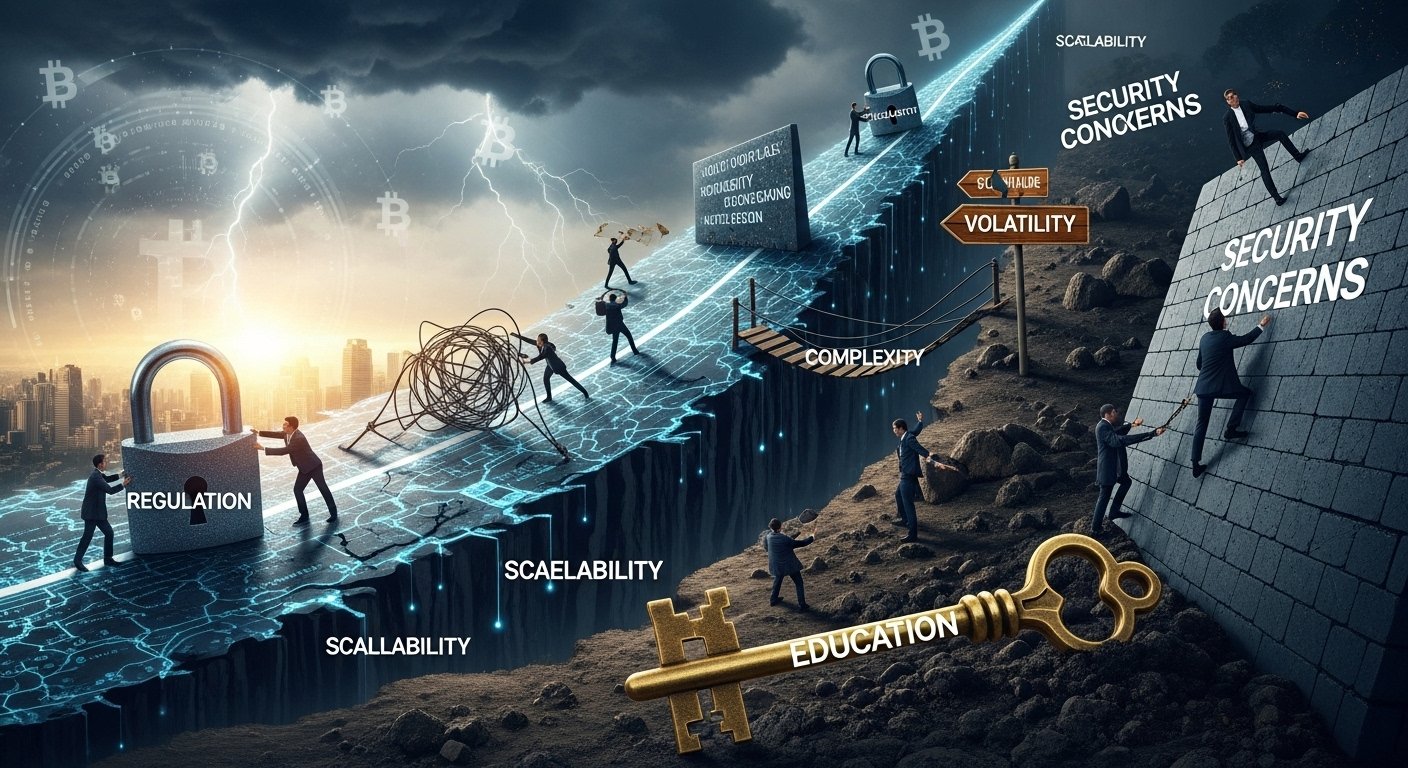
Challenges on the Road to Mainstream Adoption

Regulators are cautiously supportive but demand clarity. Tokenized deposits sit at the intersection of payments law, securities regulation, and banking supervision. Authorities must ensure that on-chain. Representations of. Deposits are. Fully backed by. And synchronized with off-chain balances.

AML/CFT rules are robust. Enforced even on. Public or semi-public blockchains and smart contracts. Failures or bugs do not compromise customer claims. Projects like the UBS-led Swiss pilot and HSBC’s TDS roll-out are therefore. Heavily structured to prove legal enforceability and regulatory compliance, not just technical feasibility.

Interoperability is another hurdle. Ant’s Whale platform already connects to multiple bank-issued tokenized assets, and UBS emphasizes a blockchain-agnostic design. UBS Tokenize, but the industry still lacks unified standards for how tokenized deposits should be. Modeled, transferred, and redeemed across diverse networks. This is where industry groups, central banks, and standards bodies—often inspired by live experiments from firms like Ant International and UBS—will play a crucial role.

On a more practical level, banks and corporates need specialized talent in blockchain engineering, cybersecurity, and smart contract auditing. They also need robust governance frameworks to manage keys, wallets, and access control for high-value tokenized money. And integration between core banking systems, DLT platforms, and treasury/ERP systems so that workflows feel seamless to end users.

Ant International’s experience with Whale, where a third or more of intra-group transactions now run on-chain. Shows that this transformation is possible but requires sustained investment over multiple years. For UBS and its peer Swiss banks, running tokenized deposit trials on public networks demands equally stringent governance. Using public infrastructure does not mean compromising on confidentiality or control. It means building the right cryptographic and operational safeguards on top.

See More: Best Cryptocurrency to Invest in 2025 Top 10 Crypto Picks for Maximum Returns

The Future of Blockchain-Based Tokenized Deposits

Looking ahead, the work of Ant International, UBS, and their banking partners points toward a future where.  Blockchain-based tokenized deposits become a core part of everyday finance, not a niche experimentSeveral trends are likely to unfold. First, there will be a wider geographic rollout. HSBC has already begun expanding its tokenized deposit service beyond. Hong Kong to support cross-border transactions, and Ant International is positioning itself as a. Tech-connector for AI- and blockchain-enabled liquidity solutions across more markets. Second, deeper integration with real-world assets (RWA) will emerge.

UBS’s work on tokenized funds and tokenized securities shows how. Tokenized deposits can become part of a broader on-chain capital markets stack. Imagine a world where a corporation issues tokenized commercial paper, receives proceeds as. Tokenized deposits and settle suppliers or investors entirely on-chain. Third, the ecosystem likely to develop will feature coexistence with CBDCs and stablecoins. Rather than one model “winning,” a layered ecosystem will emerge where CBDCs support wholesale or inter-bank settlement. Tokenized deposits handle most regulated corporate and retail flows, while. Tablecoins serve as flexible, sometimes more risky, instruments in open crypto markets.

Explore more articles like this

Subscribe to the Finance Redefined newsletter

A weekly toolkit that breaks down the latest DeFi developments, offers sharp analysis, and uncovers new financial opportunities to help you make smart decisions with confidence. Delivered every Friday

By subscribing, you agree to our Terms of Services and Privacy Policy

READ MORE

Best Personal Loan Rates Bad Credit Compare Top Options

best personal loan rates for bad credit

COIN4U IN YOUR SOCIAL FEED

Finding the best personal loan rates for bad credit can feel overwhelming when traditional banks keep turning you down. Whether you’re dealing with unexpected medical bills, home repairs, or debt consolidation, having bad credit shouldn’t prevent you from accessing affordable financing options. The good news is that numerous lenders specialize in helping borrowers with less-than-perfect credit scores secure competitive rates and favorable terms.

In this comprehensive guide, we’ll explore the top lenders offering the best personal loan rates for bad credit, share proven strategies to improve your approval odds, and provide insider tips to help you secure the lowest possible interest rates. With the right approach and knowledge, you can find affordable personal loan options even with a credit score below 600.

What Constitutes Bad Credit for Personal Loans?

Before diving into the best personal loan rates for bad credit, it’s essential to understand what lenders consider “bad credit.” Most financial institutions categorize credit scores as follows:

  • Excellent Credit: 750-850
  • Good Credit: 700-749
  • Fair Credit: 650-699
  • Poor Credit: 550-649
  • Bad Credit: Below 550

However, many lenders extend their definition of bad credit to include scores below 630. If your FICO score falls within this range, you’ll likely need to explore specialized lenders who focus on bad credit borrowers rather than traditional banks.

Your credit score impacts more than just approval odds. It directly influences the interest rates, loan terms, and maximum loan amounts lenders will offer. Understanding your credit position helps set realistic expectations and guides you toward the most suitable lending options.

Top Lenders Offering the Best Personal Loan Rates for Bad Credit

Top Lenders Offering the Best Personal Loan Rates for Bad Credit

Traditional Online Lenders

Avant stands out as one of the most accessible options for borrowers seeking the best personal loan rates for bad credit. They accept credit scores as low as 580 and offer loans ranging from $2,000 to $35,000. Interest rates typically range from 9.95% to 35.99%, with repayment terms from 24 to 60 months. Avant’s streamlined application process and quick funding make it an attractive choice for emergency situations.

OneMain Financial specializes in serving borrowers with fair to poor credit. They offer both secured and unsecured personal loans with amounts ranging from $1,500 to $20,000. While their interest rates can be higher than some competitors, they provide the advantage of local branch locations and personalized service. OneMain considers factors beyond credit scores, including employment history and income stability.

LendingPoint caters specifically to borrowers with credit scores between 580 and 680. They offer loan amounts from $2,000 to $25,000 with competitive rates considering the target demographic. LendingPoint’s automated underwriting system provides quick decisions, often within minutes of application submission.

Credit Union Options

Credit unions frequently offer the most competitive rates for bad credit personal loans. Navy Federal Credit Union extends membership to military families and offers personal loans with rates as low as 7.49% APR for qualified members. PenFed Credit Union provides similar benefits with slightly broader membership requirements.

Local credit unions often provide the most personalized approach to lending. They consider your relationship history, local employment stability, and overall financial picture rather than relying solely on credit scores. This holistic approach often results in better rates and more flexible terms than traditional banks.

Peer-to-Peer Lending Platforms

Prosper and LendingClub revolutionized personal lending by connecting borrowers directly with individual investors. These platforms often accommodate credit scores as low as 600 and offer competitive rates through their auction-style lending process. Borrowers create listings detailing their loan purpose and financial situation, allowing investors to fund loans based on perceived risk and return potential.

Understanding Interest Rates and Terms

APR vs. Interest Rate

When comparing the best personal loan rates for bad credit, focus on the Annual Percentage Rate (APR) rather than just the stated interest rate. APR includes all loan costs, including origination fees, processing charges, and other associated expenses. This comprehensive figure provides a more accurate comparison between different loan offers.

Most bad credit personal loans carry APRs ranging from 18% to 36%, significantly higher than rates offered to borrowers with excellent credit. However, these rates often beat credit card interest rates and payday loan alternatives, making personal loans a more affordable debt solution.

Loan Term Considerations

Longer repayment terms reduce monthly payments but increase total interest paid over the loan’s lifetime. Conversely, shorter terms mean higher monthly payments but less total interest expense. When evaluating the best personal loan rates for bad credit, consider your budget constraints and long-term financial goals.

Most lenders offer terms ranging from 24 to 84 months for bad credit borrowers. Choose the shortest term you can comfortably afford to minimize total borrowing costs while ensuring manageable monthly payments.

Strategies to Secure Better Rates

Improve Your Credit Score Before Applying

Even small credit score improvements can significantly impact loan rates and terms. Focus on paying down existing credit card balances, ensuring all payments are current, and disputing any inaccurate information on your credit reports. A 50-point credit score increase could potentially save thousands in interest charges.

Consider becoming an authorized user on a family member’s account with excellent payment history. This strategy can boost your credit score relatively quickly if the primary account holder maintains responsible credit habits.

Consider a Co-signer

Adding a co-signer with excellent credit dramatically improves your chances of securing the best personal loan rates for bad credit. The co-signer assumes equal responsibility for loan repayment, reducing the lender’s risk and often resulting in significantly lower interest rates and better terms.

Choose co-signers carefully, as missed payments will negatively impact both credit profiles. Ensure clear communication about payment responsibilities and maintain transparency throughout the loan term.

Provide Collateral When Possible

Secured personal loans use assets like savings accounts, certificates of deposit, or vehicles as collateral. This additional security allows lenders to offer more competitive rates, even to borrowers with bad credit. While risking asset loss if you default, secured loans often provide the pathway to the best personal loan rates for bad credit.

Alternative Lending Options

Online Marketplace Lenders

Upstart uses artificial intelligence and alternative data points like education and employment history to evaluate loan applications. This innovative approach often benefits borrowers whose credit scores don’t reflect their true creditworthiness. Upstart offers loans from $1,000 to $50,000 with competitive rates for their target demographic.

Best Egg provides personal loans specifically designed for credit improvement. They offer financial education resources alongside competitive loan products, helping borrowers understand and improve their credit profiles while accessing needed funding.

Community Development Financial Institutions (CDFIs)

CDFIs focus on serving underserved communities and often provide more flexible underwriting standards than traditional lenders. These nonprofit organizations prioritize financial inclusion and may offer some of the best personal loan rates for bad credit available in certain geographic areas.

Research CDFIs operating in your area through the CDFI Fund’s online directory. These institutions often provide additional financial counseling and education services to help improve your long-term financial health.

Application Process and Documentation

Application Process and Documentation

Required Documentation

Prepare necessary documentation before beginning your application process. Most lenders require proof of income, employment verification, bank statements, and identification documents. Having these materials readily available speeds up the application and approval process.

Self-employed borrowers may need additional documentation, including tax returns, profit and loss statements, and business bank account records. Prepare comprehensive financial records to demonstrate income stability and repayment capacity.

Pre-qualification Benefits

Many lenders offer pre-qualification processes that provide estimated loan terms without impacting your credit score. This soft credit check allows you to compare multiple offers and identify the best personal loan rates for bad credit before submitting formal applications.

Use pre-qualification tools from multiple lenders to understand your options fully. This approach helps you make informed decisions and avoid unnecessary hard credit inquiries that could further impact your credit score.

Red Flags to Avoid

Predatory Lending Practices

Be cautious of lenders requiring upfront fees, guaranteeing approval regardless of credit history, or pressuring you into immediate decisions. Legitimate lenders never guarantee approval without reviewing your financial information or demand payment before loan funding.

Research any unfamiliar lender thoroughly through the Better Business Bureau and state regulatory agencies. Read customer reviews and verify licensing in your state before providing personal financial information.

Unrealistic Rate Promises

While seeking the best personal loan rates for bad credit, remain realistic about available options. Extremely low rates advertised for bad credit borrowers often come with hidden fees, variable rate structures, or require excellent credit despite marketing claims.

Focus on reputable lenders with transparent fee structures and realistic rate ranges for your credit profile. Legitimate lenders provide clear terms and conditions without hidden surprises.

Building Credit for Future Borrowing

Responsible Loan Management

Successfully managing your personal loan builds positive payment history and demonstrates creditworthiness to future lenders. Make all payments on time and consider setting up automatic payments to avoid missed due dates.

Avoid taking on additional debt while repaying your personal loan unless absolutely necessary. Focus on improving your overall financial picture to qualify for better rates on future borrowing needs.

Long-term Financial Planning

Use your personal loan experience as a stepping stone toward better financial health. Create a budget that accommodates loan payments while building emergency savings to avoid future borrowing for unexpected expenses.

Consider working with a nonprofit credit counseling agency to develop comprehensive debt management strategies and improve your long-term financial outlook.

Conclusion

Finding the best personal loan rates for bad credit requires research, patience, and strategic planning. While your options may be more limited than borrowers with excellent credit, competitive rates and favorable terms remain accessible through specialized lenders, credit unions, and alternative platforms.

Start by checking your credit score and exploring pre-qualification offers from multiple lenders. Compare APRs, terms, and fees to identify the most suitable option for your financial situation. Remember that successfully managing a personal loan can improve your credit profile and open doors to better borrowing opportunities in the future.

Don’t let bad credit prevent you from accessing the financing you need. Take action today by researching the lenders mentioned in this guide and beginning the pre-qualification process. With the right approach and information, you can secure the best personal loan rates for bad credit and take an important step toward achieving your financial goals.

Explore more articles like this

Subscribe to the Finance Redefined newsletter

A weekly toolkit that breaks down the latest DeFi developments, offers sharp analysis, and uncovers new financial opportunities to help you make smart decisions with confidence. Delivered every Friday

By subscribing, you agree to our Terms of Services and Privacy Policy

READ MORE

ADD PLACEHOLDER