Supply chains have become increasingly complex in our interconnected global economy, making transparency and traceability more critical than ever before. Traditional supply chain management systems often struggle with fragmented data, lack of visibility, and trust issues between multiple stakeholders. This is where blockchain supply chain management software emerges as a revolutionary solution, offering unprecedented transparency, security, and efficiency.
Modern blockchain supply chain management software provides real-time tracking, immutable records, and enhanced collaboration across the entire supply network. Companies worldwide are recognizing the transformative potential of implementing blockchain technology to streamline their operations, reduce costs, and build consumer trust through verifiable product authenticity.
Understanding Blockchain Technology in Supply Chain Management
Blockchain technology fundamentally transforms how supply chain data is stored, shared, and verified across multiple parties. Unlike traditional centralized databases, blockchain creates a distributed ledger that records every transaction and movement of goods in an immutable, chronological chain of blocks. This revolutionary approach eliminates the need for intermediaries while ensuring data integrity and transparency.
The decentralized nature of blockchain means that no single entity controls the information, making it virtually impossible to manipulate or falsify records. Each participant in the supply chain network has access to the same version of truth, creating unprecedented visibility from raw material sourcing to final product delivery.
Smart contracts, programmable agreements that automatically execute when predetermined conditions are met, further enhance efficiency by automating routine processes such as payments, quality checks, and compliance verification. This automation reduces human error, speeds up transactions, and ensures consistent enforcement of business rules.
Key Components of Blockchain Supply Chain Systems
Modern blockchain supply chain platforms incorporate several essential components that work together to create comprehensive tracking and management solutions. Digital identities are assigned to every product, batch, or shipment, creating unique fingerprints that follow items throughout their journey.
IoT sensors and devices collect real-time data about location, temperature, humidity, and other critical parameters, automatically updating the blockchain with accurate environmental conditions. This integration ensures that quality standards are maintained and provides evidence of proper handling throughout the supply chain.
Cryptographic hashing secures all data entries, making it computationally infeasible to alter historical records without detection. This security feature builds trust among supply chain partners and provides reliable evidence for compliance audits and regulatory requirements.
Top Features of Blockchain Supply Chain Management Software
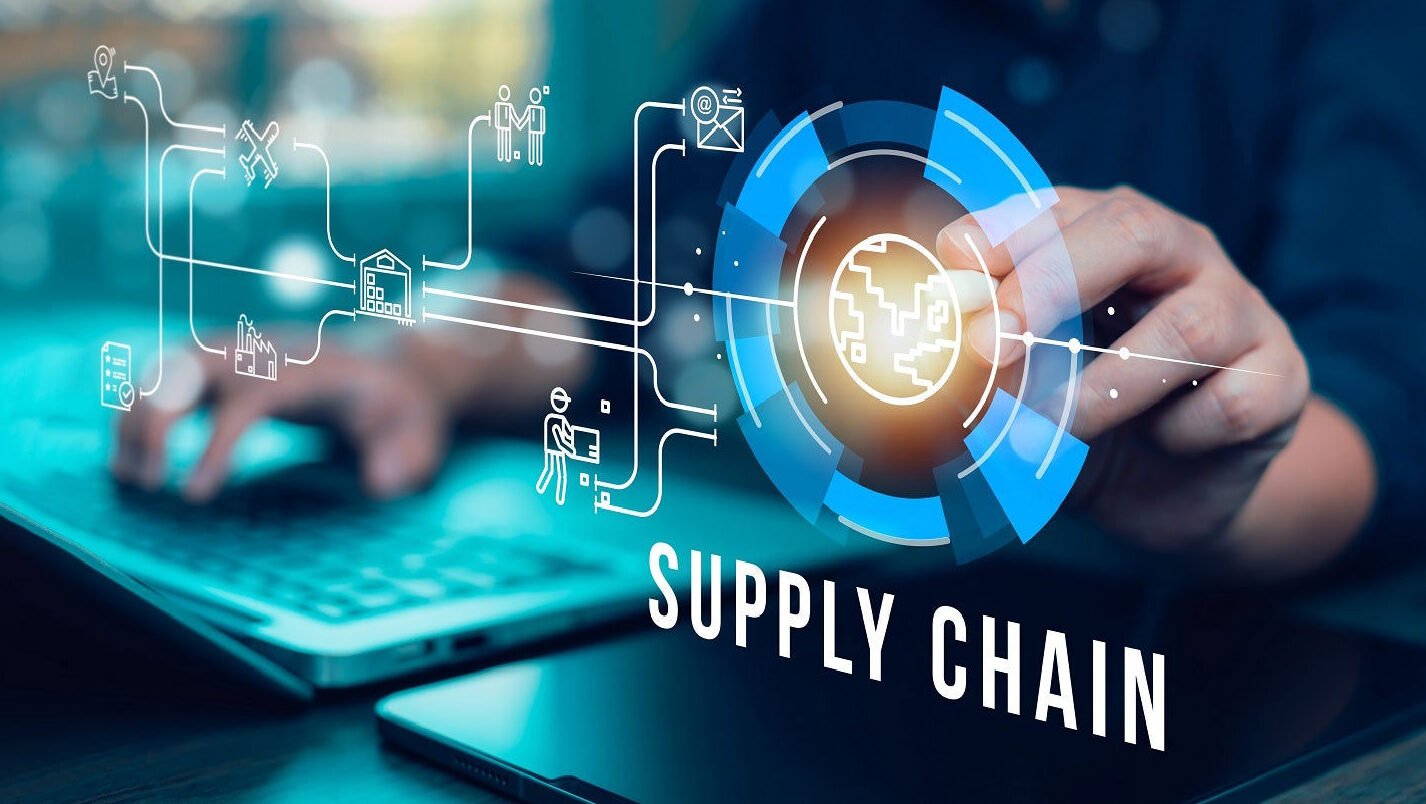
Real-Time Tracking and Visibility
Advanced blockchain supply chain management software provides comprehensive real-time visibility across entire supply networks. Stakeholders can track products from manufacturing facilities through distribution centers to retail locations with pinpoint accuracy. This transparency enables proactive decision-making and rapid response to potential disruptions.
GPS integration and IoT connectivity ensure continuous monitoring of shipments, providing instant alerts when deviations occur. Temperature-sensitive pharmaceuticals, perishable foods, and high-value electronics benefit significantly from this constant surveillance, reducing spoilage and theft.
The immutable nature of blockchain records means that all tracking data remains permanently accessible, creating detailed audit trails for compliance purposes and dispute resolution. This feature proves invaluable for industries with strict regulatory requirements such as pharmaceuticals, food safety, and aerospace manufacturing.
Enhanced Security and Data Integrity
Blockchain technology employs advanced cryptographic techniques to secure supply chain data against tampering and unauthorized access. Each transaction receives a unique cryptographic signature that validates its authenticity and prevents modification of historical records.
Multi-signature verification requires consensus from multiple network participants before making changes, adding an extra layer of security against fraudulent activities. This collaborative approach ensures that no single party can manipulate critical supply chain information.
Zero-knowledge proofs enable selective data sharing, allowing companies to prove certain facts without revealing sensitive business information. This privacy-preserving feature facilitates collaboration while maintaining competitive advantages and protecting proprietary data.
Automated Compliance and Documentation
Smart contracts automate compliance checking and documentation processes, reducing manual workload while improving accuracy. Regulatory requirements, quality standards, and certification protocols can be programmed into the system, triggering automatic verification at each supply chain milestone.
Digital certificates and compliance documents are stored directly on the blockchain, eliminating the risk of document loss or forgery. Auditors and regulators can access verified compliance records instantly, streamlining inspection processes and reducing administrative burden.
Automated reporting generates compliance dashboards and regulatory submissions in real-time, ensuring that companies maintain continuous adherence to industry standards and government regulations.
Leading Blockchain Supply Chain Management Software Platforms
Enterprise-Grade Solutions
Several established technology companies offer comprehensive blockchain supply chain management software designed for large-scale enterprise deployment. IBM Food Trust leads the market with its proven track record of successfully tracking billions of products across global supply chains.
Walmart, Unilever, and Nestlé have implemented IBM’s solution to enhance food safety and traceability, demonstrating the platform’s capability to handle massive transaction volumes. The system integrates seamlessly with existing ERP systems and provides user-friendly interfaces for supply chain professionals.
Microsoft Azure Blockchain Workbench provides a development framework for creating custom supply chain applications on cloud infrastructure. This platform offers scalability, security, and integration capabilities that support complex multi-party business processes.
Specialized Industry Solutions
VeChain focuses specifically on luxury goods authentication and anti-counterfeiting, providing blockchain-based solutions for fashion, wine, and pharmaceutical industries. Their platform combines blockchain technology with NFC chips and QR codes to create tamper-proof product verification systems.
Ambrosus targets the food and pharmaceutical sectors with temperature monitoring and quality assurance capabilities. Their IoT-integrated blockchain platform ensures cold chain integrity and provides real-time alerts for temperature excursions that could compromise product quality.
OriginTrail specializes in supply chain data interoperability, enabling seamless data exchange between different blockchain networks and legacy systems. This approach addresses the challenge of connecting multiple supply chain partners who may use different technologies.
Implementation Strategies for Blockchain Supply Chain Software
Assessment and Planning Phase
Successful blockchain supply chain implementation begins with comprehensive assessment of current processes, pain points, and strategic objectives. Companies must evaluate their existing technology infrastructure, partner relationships, and regulatory requirements to develop appropriate implementation strategies.
Stakeholder analysis identifies all parties who will interact with the blockchain system, including suppliers, manufacturers, distributors, retailers, and regulatory bodies. Understanding each stakeholder’s technical capabilities and business requirements ensures that the chosen solution meets everyone’s needs.
Pilot project selection focuses on specific use cases that demonstrate clear value propositions and manageable complexity. Starting with limited scope allows organizations to gain experience, validate benefits, and build confidence before expanding to broader applications.
Technical Integration Considerations
Integration with existing ERP, WMS, and CRM systems requires careful planning to ensure seamless data flow and minimal disruption to ongoing operations. APIs and middleware solutions facilitate communication between blockchain platforms and legacy systems.
Data migration strategies address the challenge of transferring historical supply chain information to blockchain platforms while maintaining data integrity and accessibility. Phased migration approaches minimize risks and allow for thorough testing at each stage.
Scalability planning ensures that the chosen blockchain platform can handle projected transaction volumes and network growth. Performance testing validates system capacity under realistic load conditions and identifies potential bottlenecks.
Change Management and Training
User adoption represents one of the most critical factors in blockchain implementation success. Comprehensive training programs educate supply chain professionals about blockchain concepts, system functionality, and new processes.
Change management strategies address resistance to new technologies and help organizations transition from traditional paper-based or centralized digital systems. Clear communication about benefits, training support, and gradual rollout minimize disruption and build user confidence.
Partner onboarding processes ensure that suppliers and other network participants can successfully connect to and interact with blockchain platforms. Standardized procedures and technical support facilitate smooth integration across the entire supply chain network.
Benefits of Blockchain Supply Chain Management Software
Improved Transparency and Traceability
Blockchain technology creates unprecedented visibility across complex supply chains, enabling stakeholders to track products from origin to final destination. This transparency builds consumer trust and enables rapid response to quality issues or safety concerns.
End-to-end traceability supports sustainability initiatives by providing verifiable information about environmental impact, labor practices, and sourcing policies. Consumers increasingly demand this transparency, making it a competitive advantage for forward-thinking companies.
Product authentication capabilities combat counterfeiting by providing immutable proof of authenticity and ownership history. Luxury goods, pharmaceuticals, and electronics benefit significantly from blockchain-based anti-counterfeiting measures.
Cost Reduction and Efficiency Gains
Automation of manual processes through smart contracts reduces administrative costs and eliminates time-consuming paperwork. Automated compliance checking, payment processing, and quality verification streamline operations while reducing human error.
Reduced intermediation costs result from direct peer-to-peer transactions and automated verification processes. Traditional third-party verification services become unnecessary when blockchain provides cryptographic proof of authenticity and compliance.
Faster dispute resolution occurs through access to immutable transaction records and clear audit trails. Disagreements about delivery dates, product quality, or payment terms can be resolved quickly using blockchain evidence.
Enhanced Risk Management
Real-time monitoring and alerts enable proactive risk management by identifying potential issues before they escalate into major disruptions. Temperature excursions, delivery delays, and quality deviations trigger immediate notifications to relevant stakeholders.
Supply chain resilience improves through better visibility into supplier networks and alternative sourcing options. Companies can identify single points of failure and develop contingency plans based on comprehensive supply chain mapping.
Fraud prevention mechanisms built into blockchain platforms protect against document forgery, product substitution, and other fraudulent activities. Cryptographic verification ensures that all transactions are legitimate and authorized.
Industry Applications and Use Cases
Food and Beverage Industry
Food safety represents one of the most compelling applications for blockchain supply chain management software. Contamination incidents require rapid identification of affected products and their distribution paths to prevent public health crises.
Walmart’s implementation of blockchain technology reduced the time required to trace contaminated lettuce from weeks to seconds, demonstrating the life-saving potential of this technology. Similar applications help dairy companies track milk from farm to store, ensuring quality and authenticity.
Organic and fair-trade certification verification becomes more reliable through blockchain documentation of farming practices, processing methods, and certification status. Consumers can scan QR codes to access complete product histories and verify claims about organic or ethical sourcing.
Pharmaceutical and Healthcare
Drug authentication and anti-counterfeiting represent critical applications for blockchain technology in healthcare. Counterfeit medications pose serious health risks and cost the industry billions of dollars annually.
Cold chain monitoring ensures that temperature-sensitive medications maintain their efficacy throughout the distribution process. Blockchain records of temperature data provide indisputable evidence of proper handling and storage conditions.
Clinical trial data integrity benefits from blockchain’s immutable record-keeping capabilities. Research data cannot be altered or falsified, ensuring the reliability of clinical trial results and regulatory submissions.
Manufacturing and Automotive
Component authentication and quality assurance become more reliable through blockchain tracking of parts and materials throughout the manufacturing process. Automotive recalls can be executed more precisely by identifying specific vehicles containing defective components.
Conflict mineral reporting requirements are simplified through blockchain documentation of mineral sourcing and processing. Companies can demonstrate compliance with regulations while supporting ethical sourcing initiatives.
Intellectual property protection benefits from blockchain timestamps and ownership records. Design files, patents, and trade secrets receive immutable proof of creation and ownership dates.
Challenges and Considerations
Technical and Scalability Issues
Blockchain networks face throughput limitations that may not accommodate high-volume supply chain transactions without careful architecture planning. Public blockchains typically process far fewer transactions per second than traditional databases.
Energy consumption concerns, particularly with proof-of-work consensus mechanisms, raise sustainability questions about blockchain adoption. Companies must balance the benefits of immutable records with environmental impact considerations.
Interoperability challenges arise when different supply chain partners use incompatible blockchain platforms or legacy systems. Standardization efforts and bridge technologies help address these connectivity issues.
Regulatory and Legal Considerations
Data privacy regulations such as GDPR create compliance challenges for blockchain implementations. The immutable nature of blockchain conflicts with requirements for data deletion and modification rights.
Cross-border data transfer restrictions may limit the effectiveness of global supply chain blockchain networks. Companies must navigate varying national regulations regarding data storage and transmission.
Legal frameworks for blockchain evidence and smart contract enforcement continue evolving, creating uncertainty about dispute resolution and liability issues.
Cost and ROI Evaluation
Implementation costs for blockchain supply chain management software can be substantial, including technology licenses, system integration, training, and ongoing maintenance expenses. Companies must carefully evaluate return on investment projections.
Network effects mean that blockchain value increases as more participants join, but early adopters bear higher costs and risks. Convincing supply chain partners to invest in blockchain technology requires clear value propositions.
Measuring ROI can be challenging when benefits include intangible factors such as brand reputation, consumer trust, and risk mitigation. Traditional financial metrics may not capture the full value of blockchain implementation.
Future Trends and Developments
Integration with Emerging Technologies
Artificial intelligence and machine learning integration will enhance blockchain supply chain platforms by providing predictive analytics, anomaly detection, and automated decision-making capabilities. AI algorithms can analyze blockchain data to identify patterns and optimize supply chain operations.
Internet of Things (IoT) device proliferation will generate increasingly granular supply chain data, creating more comprehensive and accurate blockchain records. 5G networks will enable real-time IoT connectivity and data transmission.
Digital twin technology combined with blockchain creates virtual representations of physical supply chains, enabling simulation and optimization of logistics operations. These digital models help companies test scenarios and improve efficiency.
Regulatory Evolution
Government blockchain initiatives are emerging worldwide, with some countries developing national blockchain strategies and regulatory frameworks. China’s Blockchain Service Network and the EU’s blockchain partnership indicate growing official support.
Industry standardization efforts led by organizations like GS1 and ISO are developing common protocols for blockchain supply chain applications. These standards will improve interoperability and reduce implementation complexity.
Central bank digital currencies (CBDCs) may integrate with supply chain blockchains to enable seamless trade finance and cross-border payments. This integration could streamline international commerce and reduce transaction costs.
Conclusion
Blockchain supply chain management software represents a transformative technology that addresses critical challenges in modern supply chain operations. From enhanced transparency and traceability to automated compliance and fraud prevention, blockchain solutions offer compelling benefits for organizations across diverse industries.
The technology’s ability to create immutable records, facilitate trustless collaboration, and automate processes through smart contracts positions it as a crucial tool for competitive advantage in increasingly complex global supply chains. While implementation challenges exist, including technical considerations, regulatory compliance, and cost factors, the long-term benefits often justify the investment.
LEARN MORE:Blockchain Implementation for Small Businesses 2025 Complete Guide












































 Decentralisation is one of the most important things about blockchain. Blockchain networks use methods like Proof of Work (PoW) and Proof of Stake (PoS) to reach agreement. This is different from traditional systems that are governed by a single authority. These systems make sure that each transaction is checked equally and independently, which greatly lowers the chance of fraud or manipulation.