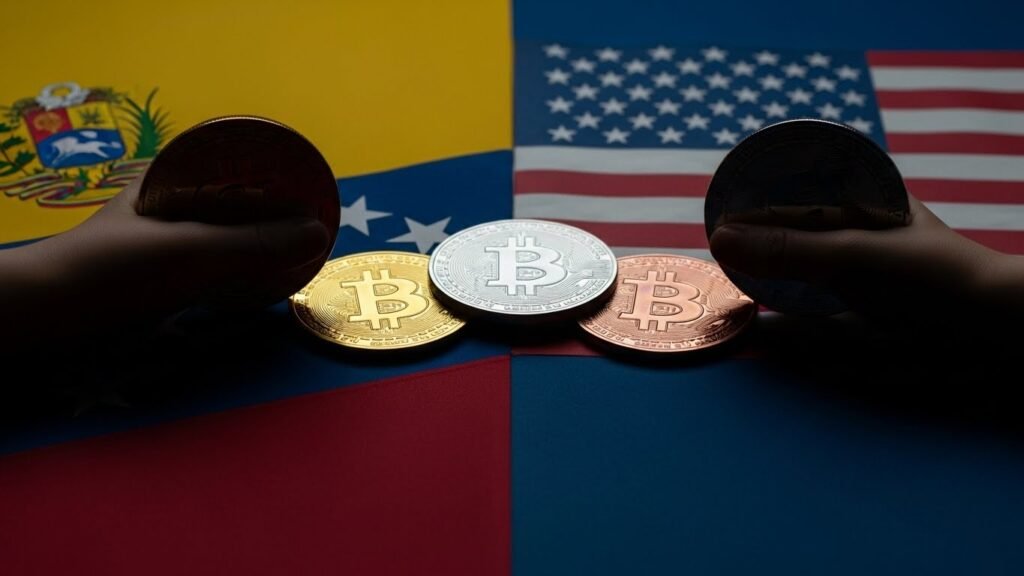


































The cryptocurrency regulatory future is one of the hottest debated topics in the world of digital finance. As the global economy rapidly embraces blockchain-based systems, the need for clear and consistent regulations has never been more pressing. Governments, financial institutions, and technology innovators are all grappling with the same question: how can we balance innovation with investor protection, financial stability, and economic growth?
Cryptocurrencies like Bitcoin (BTC), Ethereum (ETH), and emerging stablecoins have transformed how people view money. No longer confined to traditional banking systems, digital assets have introduced a new era of decentralized finance (DeFi), cross-border payments, and tokenized economies. Yet, this innovation comes with growing concerns over money laundering, fraud, and consumer safety.
The result is a global regulatory tug-of-war — a delicate dance between fostering innovation and enforcing accountability. The cryptocurrency regulatory future truly hangs in the balance, and the decisions made today will define the digital economy for decades to come.
The Current State of Cryptocurrency Regulations
A Patchwork of Global Policies
Cryptocurrency regulation today is far from uniform. Different countries have adopted dramatically different approaches — from outright bans to open embrace. The United States, for example, has struggled with defining whether cryptocurrencies should be classified as securities, commodities, or something entirely new. The Securities and Exchange Commission (SEC) continues to pursue enforcement actions against exchanges and projects, while the Commodity Futures Trading Commission (CFTC) asserts overlapping jurisdiction.
In contrast, Europe has taken a more structured approach. The Markets in Crypto-Assets (MiCA) regulation, approved by the European Union, provides a comprehensive legal framework for crypto assets and stablecoins across its member states. This has positioned the EU as a global leader in regulatory clarity, attracting businesses seeking a predictable environment.
Meanwhile, Asian nations like Japan, Singapore, and South Korea have developed clear licensing systems for crypto exchanges, while China has banned most forms of crypto trading and mining altogether. This patchwork landscape highlights the uncertainty that still clouds the cryptocurrency regulatory future.
The United States: Regulation Through Enforcement
In the U.S., the crypto industry has long complained about “regulation by enforcement.” Instead of establishing clear rules, regulators often penalize companies retroactively. The SEC vs. Ripple case, which revolved around whether XRP was a security, became a defining moment. While Ripple achieved a partial victory, the case revealed the deep confusion around existing securities laws.
The lack of comprehensive legislation has pushed many crypto firms to relocate abroad or limit their offerings in the U.S. However, new legislative proposals like the Digital Commodity Exchange Act (DCEA) and the Responsible Financial Innovation Act aim to bring clarity. Still, political divisions and differing agency priorities make progress slow.
The cryptocurrency regulatory future in the U.S. depends largely on how lawmakers define digital assets and which agencies gain oversight. Until then, uncertainty will continue to plague innovation and investment.
Europe’s Bold Step Toward Clarity
Europe’s MiCA regulation, set to be fully implemented by 2025, marks a pivotal moment for global crypto governance. Unlike the U.S., which has multiple agencies claiming authority, the EU’s unified framework creates transparency for businesses and consumers alike.
MiCA covers stablecoins, exchange licensing, consumer protection, and anti-money laundering (AML) requirements. It also introduces passporting rights, allowing licensed crypto companies to operate across all EU member states. This makes the European Union one of the most attractive jurisdictions for crypto firms seeking long-term stability.
The success or failure of MiCA could heavily influence the cryptocurrency regulatory future worldwide. If the system proves effective in preventing fraud while supporting innovation, other regions may follow its lead.
Asia’s Diverging Paths in Crypto Regulation

Asia’s regulatory approach to cryptocurrency varies widely. Japan was among the first countries to legally recognize Bitcoin as a form of payment, creating a clear licensing framework for exchanges. This has allowed it to maintain a vibrant, regulated market.
Singapore, on the other hand, focuses on being a global crypto hub, emphasizing anti-money laundering compliance and responsible innovation. The Monetary Authority of Singapore (MAS) regulates crypto service providers under the Payment Services Act, ensuring robust standards while still encouraging blockchain development.
However, China has taken a hardline stance. In 2021, it banned all crypto transactions and mining activities, citing risks to financial stability and excessive energy consumption. Despite this, Chinese innovation in blockchain technology and central bank digital currencies (CBDCs) continues at a rapid pace, showcasing how regulation can redirect innovation rather than halt it entirely.
This diversity of approaches demonstrates how the cryptocurrency regulatory future will not be shaped by a single model but rather by regional philosophies and priorities.
The Role of Stablecoins in Shaping Regulation
Stablecoins — cryptocurrencies pegged to fiat currencies like the U.S. dollar — have become a major regulatory focus. Coins like Tether (USDT) and USD Coin (USDC) play a crucial role in digital markets, facilitating liquidity and reducing volatility. However, concerns over their reserves, transparency, and potential impact on financial systems have regulators on high alert.
Governments see stablecoins as a bridge between traditional finance and crypto markets. Yet, they also pose systemic risks if not properly managed. The collapse of TerraUSD (UST) in 2022 highlighted how algorithmic stablecoins can destabilize markets.
As a result, many countries are introducing stablecoin-specific regulations that mandate transparency, reserve audits, and redemption rights. These rules could either legitimize stablecoins as mainstream financial instruments or stifle them through overregulation. Either way, they will play a critical role in determining the cryptocurrency regulatory future.
Central Bank Digital Currencies (CBDCs): A Government Response
One of the most profound developments influencing the cryptocurrency regulatory future is the rise of Central Bank Digital Currencies (CBDCs). Unlike decentralized cryptocurrencies, CBDCs are government-backed digital currencies designed to modernize payments and maintain monetary sovereignty.
Countries like China (with its digital yuan), India, and the European Union are leading the charge, experimenting with state-issued digital currencies. These initiatives aim to offer the convenience of crypto while retaining government control over the financial system.
However, CBDCs raise major privacy and surveillance concerns. Critics argue that they could give governments unprecedented access to individual financial data, undermining one of crypto’s core principles — decentralization.
The competition between decentralized cryptocurrencies and centralized CBDCs will heavily shape the future of digital finance and global monetary policy.
DeFi and the Regulatory Challenge
Decentralized Finance (DeFi) represents one of the biggest challenges for regulators. By removing intermediaries, DeFi platforms enable users to lend, borrow, and trade assets directly on the blockchain. While this promotes financial inclusion and innovation, it also creates regulatory blind spots.
There’s no central entity to hold accountable, and transactions often occur across jurisdictions. This complicates efforts to enforce anti-money laundering (AML) and know-your-customer (KYC) rules.
To address this, regulators are exploring new frameworks that combine on-chain transparency with off-chain compliance. Innovations like decentralized identity verification and smart contract audits could provide a balance between oversight and autonomy.
The cryptocurrency regulatory future will depend heavily on how governments integrate DeFi into existing financial systems without undermining its decentralized nature.
The U.S. Election Factor: Politics and Crypto Policy
The upcoming U.S. elections are expected to play a major role in shaping the cryptocurrency regulatory landscape. Political candidates increasingly use crypto as a policy talking point, with some supporting innovation-friendly regulation and others calling for stricter oversight.
Pro-crypto lawmakers argue that blockchain technology can boost economic competitiveness and financial inclusion. Meanwhile, skeptics focus on the risks of illicit finance and consumer harm.
The eventual balance of power in Congress and the White House could determine whether the U.S. becomes a leader or a laggard in global crypto innovation. The world watches closely, as America’s decisions often set precedents for global financial markets.
The Industry’s Role: Self-Regulation and Standards
While governments debate, the crypto industry itself is taking steps toward self-regulation. Major exchanges, blockchain foundations, and payment providers are implementing internal compliance standards, transparency reports, and security protocols that mirror traditional financial best practices.
Organizations like the Crypto Market Integrity Coalition (CMIC) and the Blockchain Association are advocating for responsible innovation. By creating voluntary codes of conduct and working with policymakers, the industry aims to build public trust and reduce the risk of overregulation.
Self-regulation will likely remain a cornerstone of the cryptocurrency regulatory future, especially in areas where government frameworks lag behind technological advancement.
Investor Protection and Market Transparency
As crypto adoption grows, protecting investors becomes a central regulatory priority. Scams, rug pulls, and exchange collapses have tarnished the industry’s reputation. Regulators now emphasize transparency, requiring exchanges to disclose proof of reserves and ensure customer asset segregation.
Efforts to create global crypto accounting standards and auditing frameworks are gaining momentum. This focus on transparency will not only protect investors but also attract institutional participation, paving the way for a more mature market.
A well-regulated ecosystem can help dispel skepticism and foster sustainable growth — reinforcing the importance of achieving balance in the cryptocurrency regulatory future.
The Environmental Debate and Regulation
Cryptocurrency mining, especially Bitcoin’s proof-of-work (PoW) model, has drawn criticism for its environmental impact. Governments and environmental agencies are now considering carbon taxes, green mining initiatives, and renewable energy incentives.
At the same time, the shift toward proof-of-stake (PoS) consensus mechanisms, as seen with Ethereum 2.0, demonstrates that sustainability and innovation can coexist. Future regulations may include sustainability reporting requirements for mining firms and blockchain projects.
Environmental concerns will remain a defining factor in the cryptocurrency regulatory future, particularly as global climate commitments intensify.
Looking Ahead: The Balance Between Innovation and Control

The future of cryptocurrency regulation will hinge on finding the right balance between innovation and control. Overregulation could drive innovation underground or offshore, while a lack of oversight could invite fraud and instability.
Countries that strike this balance — offering clarity, consumer protection, and room for innovation — will likely lead the next wave of digital financial growth. Collaboration between governments, developers, and investors will be essential.
In the end, the cryptocurrency regulatory future isn’t just about controlling digital assets. It’s about defining how societies will interact with money, technology, and trust in the decades to come.
See More: Cryptocurrency Basics for Beginners Guide 2025 Learn How to Start Safely
Conclusion
The cryptocurrency regulatory future truly hangs in the balance, suspended between opportunity and uncertainty. The world stands at a defining moment — one where decisions made by regulators and innovators will shape the next chapter of global finance.
Whether crypto becomes fully integrated into the mainstream or remains a parallel financial system depends on the frameworks being written today. Achieving clarity, fairness, and innovation together will be the key to unlocking the true potential of the blockchain era.
FAQs
Q: Why is cryptocurrency regulation important?
Regulation ensures transparency, protects investors, and prevents illegal activities like fraud and money laundering. It also fosters trust, enabling mainstream adoption.
Q: How will stablecoin regulations affect the crypto market?
Stablecoin rules will determine how digital dollars function within the financial system. Transparent reserves and audits could legitimize stablecoins and attract institutional investors.
Q: What is MiCA and why is it significant?
MiCA (Markets in Crypto-Assets) is the EU’s comprehensive crypto regulation. It provides clarity for businesses and sets global standards for consumer protection and compliance.
Q: Could overregulation harm crypto innovation?
Yes. Excessive or unclear regulations can push startups abroad or discourage innovation. Balanced policies are essential to support both safety and growth.
Q: What role will CBDCs play in the future of crypto?
CBDCs may coexist with cryptocurrencies, offering government-backed digital money while decentralized assets continue to power innovation in DeFi and digital ownership.