













How to Invest in Bitcoin Safely in 2024 A Beginner’s Guide

how to invest in bitcoin safely in 2024

COIN4U IN YOUR SOCIAL FEED

Are you wondering how to invest in bitcoin safely in 2024 as a complete beginner? You’re not alone. With Bitcoin’s growing mainstream acceptance and institutional adoption, millions of new investors are seeking secure ways to enter the cryptocurrency market. However, the digital asset space can be overwhelming for newcomers, filled with technical jargon and potential security risks.

This comprehensive guide will walk you through every step of investing in Bitcoin safely, from choosing reputable exchanges to implementing robust security measures. Whether you’re looking to make your first Bitcoin purchase or want to ensure your current investment strategy is secure, we’ll cover essential topics including wallet selection, dollar-cost averaging, and common mistakes to avoid. By the end of this article, you’ll have the knowledge and confidence to start your Bitcoin investment journey with peace of mind.

Understanding Bitcoin Before You Invest

Before diving into how to invest in Bitcoin safely in 2024, it’s crucial to understand what Bitcoin is. Bitcoin is a decentralized digital currency that operates on blockchain technology, allowing peer-to-peer transactions without intermediaries like banks. Created in 2009 by the pseudonymous Satoshi Nakamoto, Bitcoin has evolved from an experimental technology to a legitimate asset class recognized by major financial institutions.

The key characteristics that make Bitcoin unique include its limited supply of 21 million coins, its decentralized nature, and its potential as both a store of value and medium of exchange. However, Bitcoin’s price volatility means it carries inherent risks that traditional investments may not have.

How to Invest in Bitcoin Safely 2024: Step-by-Step Process

Choose a Reputable Bitcoin Exchange

The first step in learning how to invest in bitcoin safely is selecting a trustworthy cryptocurrency exchange. Not all platforms are created equal, and choosing the wrong one could put your funds at risk.

Top-rated exchanges for beginners include:

  • Coinbase Pro (now Advanced Trade) – Known for regulatory compliance and user-friendly interface
  • Kraken – Offers robust security features and competitive fees
  • Gemini – Regulated exchange with strong institutional backing
  • Binance.US – Low fees with extensive cryptocurrency options

When evaluating exchanges, consider factors such as regulatory compliance, security track record, fees, available payment methods, and customer support quality. Always verify that your chosen exchange is properly licensed in your jurisdiction.

Set Up Secure Account Verification

Once you’ve selected an exchange, proper account setup is essential for safe Bitcoin investing. This process typically involves:

Identity Verification Requirements:

  • Government-issued photo ID
  • Proof of address (utility bill or bank statement)
  • Phone number verification
  • Email confirmation

Enable all available security features during setup, including two-factor authentication (2FA) using apps like Google Authenticator or Authy. Avoid SMS-based 2FA when possible, as it’s more vulnerable to SIM swapping attacks.

Secure Bitcoin Storage Solutions

Hot Wallets vs. Cold Wallets

Understanding wallet types is fundamental to how to invest in Bitcoin safely in 2024. Bitcoin wallets fall into two main categories:
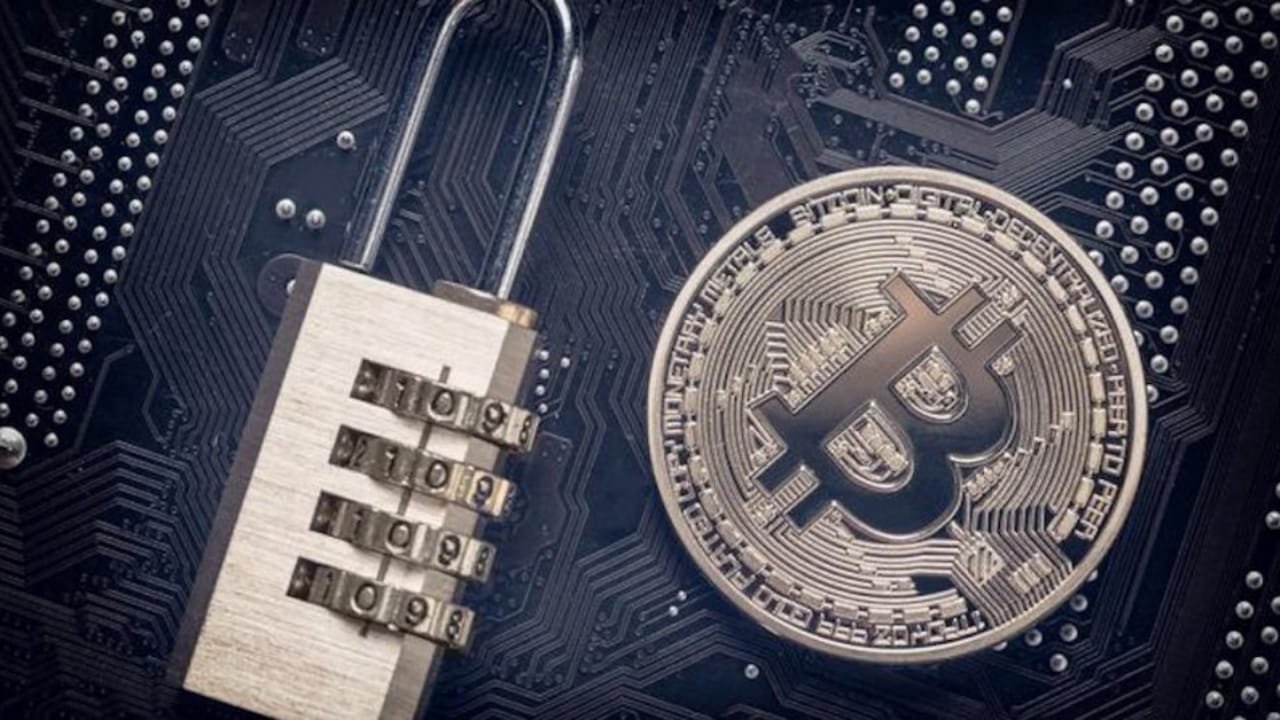
Secure Bitcoin Storage Solutions

Hot Wallets (Internet-connected):

  • Exchange wallets – Convenient but less secure
  • Mobile wallets – Good for small amounts and frequent transactions
  • Desktop wallets – More secure than mobile but still online

Cold Wallets (Offline storage):

  • Hardware wallets – Physical devices like Ledger or Trezor
  • Paper wallets – Private keys printed on paper
  • Air-gapped computers – Dedicated offline devices

For significant Bitcoin investments, hardware wallets offer the best balance of security and usability. Popular options include the Ledger Nano X, Trezor Model T, and KeepKey.

Best Practices for Wallet Security

Implementing proper security measures is non-negotiable when learning how to invest in bitcoin safely:

  1. Never share your private keys – Your private keys are essentially your Bitcoin ownership proof
  2. Create secure backups – Store recovery phrases in multiple secure locations
  3. Use strong, unique passwords – Consider using a reputable password manager
  4. Keep software updated – Regular updates patch security vulnerabilities
  5. Test with small amounts first – Always verify wallet functionality before large transfers

Smart Investment Strategies for Bitcoin

Dollar-Cost Averaging (DCA)

Dollar-cost averaging is one of the safest approaches when considering how to invest in bitcoin safely in 2024. This strategy involves making regular, fixed-dollar purchases regardless of Bitcoin’s price, which helps reduce the impact of volatility over time.

Benefits of DCA include:

  • Reduces timing risk
  • Lowers average purchase price over time
  • Removes emotional decision-making
  • Works well for long-term investors

For example, instead of investing $1,200 at once, you might invest $100 monthly for 12 months, potentially achieving a better average price.

Portfolio Allocation and Risk Management

Financial experts generally recommend limiting cryptocurrency exposure to 5-10% of your total investment portfolio. This conservative approach allows you to benefit from Bitcoin’s growth potential while maintaining overall portfolio stability.

Consider your risk tolerance, investment timeline, and financial goals when determining your Bitcoin allocation. Never invest money you cannot afford to lose completely.

Common Mistakes to Avoid

Security Pitfalls

When learning how to invest in bitcoin safely, avoiding these common mistakes is crucial:

  • Leaving funds on exchanges long-term – Only keep trading amounts on exchanges
  • Using weak passwords – Implement strong, unique passwords for all accounts
  • Falling for phishing scams – Always verify URLs and email addresses
  • Sharing private information publicly – Never discuss your holdings on social media
  • Not backing up wallets properly – Multiple secure backup locations are essential

Investment Errors

  • FOMO buying during peaks – Emotional investing often leads to losses
  • Panic selling during dips – Market volatility is normal for Bitcoin
  • Not researching exchanges – Due diligence prevents costly mistakes
  • Ignoring tax implications – Keep detailed records for tax reporting

Understanding Bitcoin Taxes and Regulations

Tax treatment of Bitcoin varies by jurisdiction, but most countries consider it a taxable asset. In the United States, Bitcoin is treated as property for tax purposes, meaning:
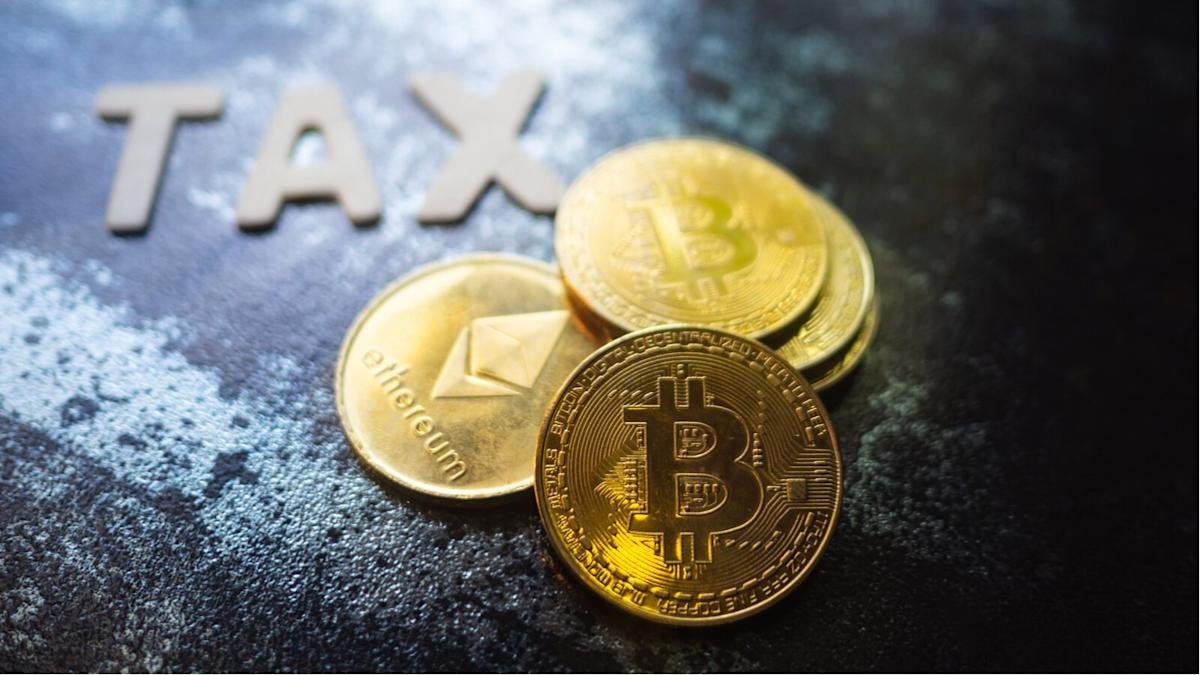
Understanding Bitcoin Taxes and Regulations

  • Capital gains taxes apply to profitable sales
  • Mining rewards are taxed as income
  • Detailed record-keeping is required
  • Professional tax advice is recommended

Suggested outbound link: For comprehensive tax guidance, consult the IRS’s official cryptocurrency tax guidance at irs.gov.

Suggested internal link anchor text: “Best cryptocurrency tax software for 2024” – Link to a related article about crypto tax tools.

Advanced Security Measures

Multi-Signature Wallets

For large Bitcoin holdings, multi-signature (multisig) wallets provide additional security by requiring multiple private keys to authorize transactions. This setup protects against single points of failure and is especially useful for business or family Bitcoin storage.

Estate Planning for Bitcoin

Consider how your Bitcoin assets will be handled in case of incapacity or death. This includes:

  • Secure storage of recovery information
  • Clear instructions for beneficiaries
  • Legal documentation of digital assets
  • Regular updates to estate plans

Conclusion

Learning how to invest in bitcoin safely in 2024 requires careful planning, proper security measures, and ongoing education. By following the strategies outlined in this guide—choosing reputable exchanges, implementing robust security practices, using dollar-cost averaging, and avoiding common mistakes—you can significantly reduce the risks associated with Bitcoin investing.

Remember that Bitcoin investing should be part of a diversified portfolio, and you should never invest more than you can afford to lose. As the cryptocurrency landscape continues evolving, staying informed about best practices and regulatory changes will help protect your investments.


Explore more articles like this

Subscribe to the Finance Redefined newsletter

A weekly toolkit that breaks down the latest DeFi developments, offers sharp analysis, and uncovers new financial opportunities to help you make smart decisions with confidence. Delivered every Friday

By subscribing, you agree to our Terms of Services and Privacy Policy

READ MORE

Ethereum Price Forecast ETH eyes $4,500 after $4.1K burst

Ethereum Price Forecast ETH

COIN4U IN YOUR SOCIAL FEED

The second week of October 2025 opened with Ethereum pressing back above the psychologically important $4,000 line, briefly tapping the $4,100 region amid renewed volatility. The move arrived as short-seller Kerrisdale Capital published a high-profile short report on BitMine Immersion Technologies (BMNR), an ether-treasury company chaired by Tom Lee, calling its business model a relic and disclosing a short position. In quick succession, crypto media amplified the thesis, BitMine shares swung, and traders debated whether the episode would dent or deepen demand for ETH itself. The immediate market takeaway: despite noisy equity-side headlines, ETH’s spot price reclaimed the $4.1K handle and held key technical supports, keeping the medium-term uptrend intact.

In this comprehensive Ethereum price forecast, we unpack what the BitMine saga actually means for ETH, map the crucial technical analysis levels that traders are watching, dig into on-chain metrics, and assess macro and regulatory tailwinds. You’ll also find scenario analysis with near-, mid-, and long-term targets, a risk checklist, and answers to the most common questions. Throughout, we’ll weave in LSI keywords that matter for discoverability, such as ETH price prediction, Ethereum technical analysis, on-chain data, staking, Layer-2 scaling, and ETF flows, while keeping the prose natural and readable.

Why Ethereum tapped $4,100: unpacking the week’s catalysts

The headline event on the equity side was Kerrisdale Capital’s short report on BitMine Immersion Technologies (BMNR), an ether-treasury player that has rapidly accumulated ETH through share issuance and capital raises. Kerrisdale alleged the strategy was unsustainable, disclosed a short position, and compared the playbook to the earlier “issue shares to buy crypto” model. Crypto outlets and mainstream finance sites quickly circulated the story, noting sharp swings in BMNR and challenging the premium to net asset value narrative. Crucially, this was a stock-specific critique rather than a structural attack on Ethereum’s network economics.

Meanwhile, ETH itself traded resiliently. Across early October, coverage highlighted spot levels between $4,000 and $4,140, with sentiment buoyed by steady network activity and a constructive risk backdrop. Even as some analysts cautioned about near-term supply upticks or ETF outflows, spot ETH reclaimed $4K and probed higher, reflecting buyers’ willingness to defend prior support.

The BitMine effect on ETH demand is indirect—not destiny

Why didn’t ETH slide on the short-seller headlines? Two reasons stand out. First, while BitMine’s purchases can add marginal demand when active, its stock volatility and valuation premium are equity-market phenomena. Second, Ethereum’s **fundamentals—staking, fee burn mechanics

And the growth of Layer-2s—**are network-level forces that don’t disappear because one treasury strategy faces scrutiny. As a result, the Ethereum price reaction remained anchored to broader crypto liquidity and macro risk flows rather than a single corporate balance-sheet trajectory. Media accounts even underscored that BitMine’s high-beta equity swings were separable from ETH’s steadier spot drift.

Technical view: the levels that define the next 4–8 weeks

Technical view: the levels that define the next 4–8 weeks

From a price-action perspective, Ethereum has printed a classic “reclaim and retest” sequence above $4,000. Traders who rely on Ethereum technical analysis are watching three zones:

Immediate support: $3,900–$4,000

This is the shelf reclaimed during the rally. A daily close back below $3,900 would weaken the bull case, inviting tests into the mid-$3,800s where prior demand appeared during September’s choppy tape. Several weekly outlooks pointed to $3,825–$3,900 as the first line of defense.

Pivot resistance: $4,240–$4,300

The first ceiling overhead is clustered around $4,240–$4,300. It coincides with late-spring supply and the lower bound of a summer distribution range. A strong daily close above this area opens $4,450–$4,500 as the next magnet. Near-term commentary flagged roughly $4,260 as a key decision point.

Expansion targets: $4,500 and $4,800

A clean breakout could extend toward $4,500, where round-number psychology and measured-move projections converge. If momentum remains, $4,800—a zone associated with prior weekly supply—comes into view. On the downside, failure to hold $3,900 risks a slide toward $3,700–$3,750, a deeper but still technically constructive retrace if buyers reappear.

On-chain and structural context: supply, staking, and L2 throughput

Supply dynamics and burn

Ethereum’s post-Merge design means base fees are burned, partially offsetting issuance from validator rewards. While the net supply can trend slightly inflationary during low-fee periods, episodes of elevated transaction demand revive the burn and tighten supply.

Recent commentary noted short-term increases in circulating supply, but that snapshot didn’t negate the network’s capacity to swing deflationary during busy fee regimes. The market’s message the past week: marginal supply upticks alone did not cap the ETH price advance back over $4,000.

Staking and lock-ups

With more than a quarter of all ETH staked and subject to various lock-ups and restaking strategies, tradable float is structurally narrower than in prior cycles. Liquid staking derivatives add flexibility, but risk budgets and yield opportunities still keep large slices of ETH in semi-sticky hands. That background helps explain why ETH price prediction models often give outsized weight to demand bursts: when spot buyers return, the available supply to absorb them is thinner than it appears.

L2 scaling and real usage

The surge in Layer-2 throughput—rollups that batch transactions and settle on mainnet—continues to migrate activity to lower-cost rails, supporting developer adoption and broader utility. As L2s improve UX and interchangeability, usage feeds back into mainnet settlement fees and, during frenetic periods, the burn. That dynamic remains a long-term bullish pillar for Ethereum regardless of any single company’s treasury behavior.

Macro tailwinds and headwinds: liquidity, policy, and ETFs

Liquidity and risk appetite

Crypto’s autumn tone has benefited from friendlier liquidity conditions and waning inflation concerns relative to last year. When real yields soften and the dollar cools, risk assets typically get breathing room. ETH’s resilience around $4,000–$4,100 echoes that cross-asset story. A sudden rebound in real yields or a dollar squeeze would be a warning sign for bulls.

Policy and regulatory clarity

Regulatory headlines matter most through the lens of exchange-traded products and custody clarity. Ether-linked instruments and improved institutional access can channel allocators into ETH without direct wallet friction.

While flows wax and wane week to week, the structural impact is to broaden the buyer base over time. Short-term outflows, as some analysts have noted, can create noisy dips that technical buyers fade rather than secular regime changes.

So what does the BitMine short mean for ETH—really?

Kerrisdale’s thesis targets BitMine’s equity valuation and financing mechanics, not Ethereum’s core technology or adoption. In fact, earlier mainstream coverage chronicled how BitMine’s stock had skyrocketed as it ramped its ETH treasury, a trajectory that naturally invites skepticism about premium-to-NAV dynamics.  Whether the short proves prescient on BMNR is a separate bet from ETH’s network value. For crypto investors, the practical takeaway is to separate company-specific risks from protocol-level fundamentals.

Ethereum price forecast (near term): $3,900–$4,500 base case

Given the reclaimed $4,000 level, the base case for the next 2–6 weeks is a consolidation between $3,900 support and $4,300–$4,500 resistance, with occasional wicks through either boundary. Momentum-ignition above $4,260 would argue for a trending move into the mid-$4Ks. Conversely, a loss of $3,900 on volume would likely send ETH to $3,700–$3,750, where dip buyers will have a chance to prove they’re serious. This mapping stays consistent with recent technical discussions that flagged these bands. Bullish breakout scenario

A powerful daily close above $4,300 that sticks for several sessions could catalyze a move toward $4,500, with extension risk into $4,700–$4,800 if liquidity and ETF flows cooperate. Look for rising open interest, positive funding that doesn’t overheat, and expanding spot volumes to validate the breakout.

Range-and-fade scenario

If ETH stalls repeatedly near $4,240–$4,300, a “sell the rip” regime could dominate, with traders fading strength toward $4.3K and buying weakness near $3.9K until a catalyst knocks the market out of balance. In range regimes, patience and disciplined entries generally beat prediction bravado.

Bearish rollover scenario

A decisive close below $3,900 that converts the level back into resistance warns of a deeper retracement. In that case, $3,700 becomes the first demand zone, followed by $3,600. Bears would want macro risk to turn hostile—think a rising dollar or hotter inflation print—to sustain downside.

Medium-term outlook (3–6 months): $3,600–$5,000 path with skew to the upside

What could push ETH to $4,800–$5,000?

Three ingredients typically power Ethereum advances: network utilization, on-chain liquidity, and macro risk tolerance. If Layer-2 usage accelerates into the holiday period, fees and burn could tighten supply. If ETF inflows stabilize after a choppy stretch, allocators may re-risk into ETH, chasing beta and smart-contract exposure. And if macro risk remains benign, a multi-month push to the $4,800–$5,000 band is plausible. Coverage in early October already highlighted $4,100–$4,140 trades; extending that impulse with better breadth is the bull script.

What caps the upside?

The chief cap is supply overhead from prior congestion zones and profit-taking near the mid-$4Ks. If funding overheats and perpetuals lead spot, blow-off risk rises. Also, structural supply can transiently tick up when base fees are low, softening the deflationary narrative until activity rebounds. Analysts have recently pointed to such short-term supply increases—these don’t end the cycle, but they can slow it.

What breaks the range lower?

A meaningful policy shock, a liquidity squeeze, or a sharp deterioration in risk assets would do it. In that world, a retest of $3,600–$3,700 becomes likely, with bulls hoping for a higher-low structure on the weekly chart.

Long-term lens (6–18 months): adoption flywheels versus competition

Adoption flywheels

Ethereum’s long-run case rests on being the settlement layer for a growing universe of DeFi, tokenization, stablecoins, and consumer apps that need credible neutrality and deep liquidity. The composability of smart contracts and relentless iteration on scaling pull more builders in. If the L2 ecosystem keeps compounding and on-chain liquidity deepens, ETH accrues value as the indispensable bandwidth token of that economy.

Competitive and regulatory risks

The flip side is competition—other L1s improving throughput/UX—and regulatory uncertainty in key jurisdictions. While ETF approvals and custody clarity help, policy remains uneven globally. Those cross-currents mean ETH price predictions beyond a few quarters are best framed as scenario ranges rather than point targets.

How to interpret Kerrisdale vs. BitMine within an ETH portfolio

How to interpret Kerrisdale vs. BitMine within an ETH portfolio

For investors, the practical lesson is to separate protocol health from corporate wrappers. Short-seller research, whether right or wrong on a given stock, can refine how the market values equity vehicles that hold crypto. But the Ethereum network lives underneath those wrappers. Earlier reporting chronicled the astonishing rise—and volatility—of BitMine’s stock price as it pursued an ether-treasury strategy, while more recent headlines show that scrutiny is rising. ETH, for its part, has so far traded through the noise, tapping $4.1K and reasserting technical control. Risk checklist for this forecast

See More:  Crypto Dip Bitcoin Ethereum & XRP Struggle Today

Conculsion

Ethereum weathered a noisy week in which a short-seller targeted a high-beta ETH-treasury stock. The network’s fundamentals didn’t change, and ETH pushed back through $4,000, tagging $4,100 and keeping the bull case alive. The near-term Ethereum price forecast favors a $3,900–$4,500 range with topside skew if buyers can crack $4,260–$4,300. Medium-term, $4,800–$5,000 comes into view if Layer-2 usage, ETF access, and macro liquidity line up. Equity narratives will continue to flare, but protocol-level adoption and technical structures still lead the dance.

FAQs

Q: Did Kerrisdale’s BitMine short cause ETH to rally to $4,100?

No. Kerrisdale’s report targeted BitMine’s equity valuation and financing model. ETH’s price strength came from broader market dynamics; the report was a stock-specific catalyst, not a network critique. ETH traded back over $4,000–$4,140 on its own order flow.

Q: What price levels matter most right now for Ethereum?

Support sits at $3,900–$4,000; resistance clusters around $4,240–$4,300. A breakout opens $4,500, while a breakdown risks $3,700–$3,750. These levels line up with recent technical commentary.

Q: Are ETF flows helping or hurting ETH in October?

Flows have been mixed, with some notes of outflows and supply increases. Over a longer arc, broader access via exchange-traded products remains a structural positive for liquidity and adoption, even if weekly prints are noisy.

Q: Does BitMine’s strategy affect Ethereum’s long-term value?

Only indirectly. Company treasuries can add marginal demand when they buy, but Ethereum’s value is driven by network usage, on-chain liquidity, staking, and Layer-2 scaling—not any one firm’s balance sheet. Reports on BitMine’s rapid rise (and volatility) underscore equity risk rather than protocol risk.

Q: What’s a reasonable year-ahead range for ETH?

With healthy adoption and benign macro, a $3,600–$5,000 range is reasonable, skewed upward if breakouts sustain and on-chain activity expands. Adverse macro or policy shocks could keep ETH anchored nearer the mid-$3Ks. This is a scenario framework, not financial advice.

Explore more articles like this

Subscribe to the Finance Redefined newsletter

A weekly toolkit that breaks down the latest DeFi developments, offers sharp analysis, and uncovers new financial opportunities to help you make smart decisions with confidence. Delivered every Friday

By subscribing, you agree to our Terms of Services and Privacy Policy

READ MORE

ADD PLACEHOLDER