

































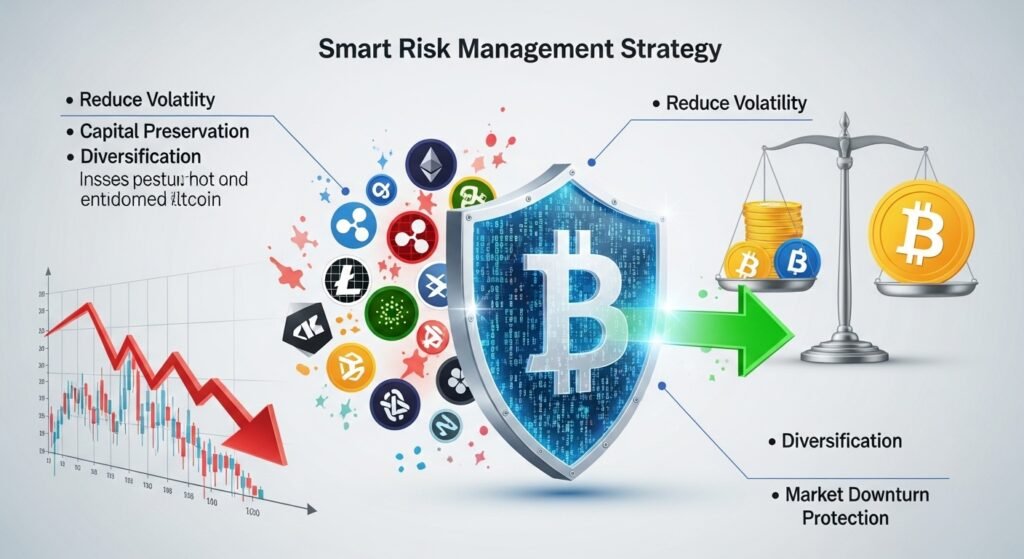
The strategy of hedging altcoins with BTC has become essential in today’s volatile crypto market. As altcoins continue to experience extreme price swings, traders and investors are increasingly turning to Bitcoin as a stabilizing force. Unlike speculative altcoins, Bitcoin often acts as a market anchor, making it a powerful tool for risk management.
In 2026, where uncertainty dominates crypto cycles, understanding how to hedge altcoins with BTC is no longer optional—it’s a necessity. Whether you’re holding high-risk tokens or managing a diversified portfolio, using Bitcoin as a hedge can help protect gains, minimize losses, and maintain long-term growth.
This guide explores how we approach hedging altcoins with BTC, the strategies involved, and how you can apply them effectively to manage risk in your crypto investments.
What Does Hedging Altcoins with BTC Mean?
At its core, hedging altcoins with BTC refers to reducing exposure to volatile altcoins by balancing them with Bitcoin holdings. Since Bitcoin is generally more stable than smaller cryptocurrencies, it acts as a buffer during market downturns.
When altcoins drop sharply, Bitcoin often falls less—or sometimes even rises due to capital rotation. This makes it a strategic hedge against downside risk.
Why Bitcoin Is Used as a Hedge
Bitcoin dominates the crypto market in terms of liquidity, adoption, and investor trust. It often behaves differently from altcoins during market cycles. This unique behavior allows traders to use BTC to offset potential losses. The idea behind crypto hedging strategies is simple: reduce risk without exiting the market entirely.
Why Hedging Altcoins with BTC Matters in 2026
The crypto landscape has matured, but volatility remains a constant factor. Altcoins, especially low-cap tokens, can drop 30–70% within days. This makes altcoin risk management more critical than ever.
Market Cycles and Bitcoin Dominance
Bitcoin dominance plays a major role in altcoin performance. When BTC dominance rises, altcoins typically underperform. This is where hedging altcoins with BTC becomes highly effective. During uncertain macroeconomic conditions, institutional investors often move funds into Bitcoin, further strengthening its role as a hedge.
Protection Against Market Crashes
One of the biggest advantages of Bitcoin hedging strategy is protection during crashes. Instead of selling everything into fiat, holding BTC allows you to stay invested while reducing risk exposure.
Hedging Altcoins with BTC: Core Strategies
Portfolio Rebalancing
A key method of hedging altcoins with BTC is portfolio rebalancing. This involves adjusting your allocation between altcoins and Bitcoin based on market conditions. For example, during bullish altcoin rallies, you might shift profits into BTC. When markets turn bearish, a higher BTC allocation helps preserve capital. This dynamic approach ensures that you’re not overexposed to high-risk assets.
Pair Trading with BTC
Another effective technique in hedging altcoins with BTC is trading altcoin pairs against BTC instead of USD or stablecoins.
This allows you to measure performance relative to Bitcoin. If your altcoin underperforms BTC, it may be a signal to rotate back into Bitcoin.
Using BTC as a Store of Value
Many investors treat Bitcoin as “digital gold.” By converting a portion of altcoin profits into BTC, you lock in gains while maintaining exposure to the crypto market.
This approach aligns with long-term crypto portfolio diversification strategies.
When to Hedge Altcoins with BTC
Timing plays a crucial role in successful hedging altcoins with BTC.
Signs You Should Increase BTC Exposure
Market overheating is one of the clearest signals. When altcoins surge rapidly without strong fundamentals, risk levels increase.
Another indicator is rising Bitcoin dominance. This often signals capital rotation away from altcoins.
Macroeconomic uncertainty, such as interest rate changes or global financial instability, is also a strong reason to hedge.
Avoid Over-Hedging
While crypto risk management is important, over-hedging can limit gains. If you allocate too much to BTC during a strong altcoin season, you may miss out on significant profits.
Advantages of Hedging Altcoins with BTC
The biggest benefit of hedging altcoins with BTC is risk reduction. It allows you to stay in the market while minimizing exposure to extreme volatility.
Another advantage is improved emotional control. Crypto markets can be stressful, and having a hedge reduces panic-driven decisions.
Additionally, this strategy supports long-term wealth building by protecting profits during downturns.
Risks and Limitations of BTC Hedging
While effective, hedging altcoins with BTC is not without risks.
Bitcoin itself is still volatile. Although less risky than altcoins, it can still experience significant price swings.
There is also opportunity cost. If altcoins outperform BTC significantly, your hedged portfolio may underperform.
Understanding these trade-offs is essential for effective portfolio risk management.
Advanced Techniques for Hedging Altcoins with BTC
Dynamic Allocation Models
Professional traders often use dynamic models to adjust BTC exposure based on market indicators. These include moving averages, market sentiment, and volatility metrics. This approach enhances the effectiveness of hedging altcoins with BTC by making it data-driven.
Combining BTC with Stablecoins
Some investors combine BTC hedging with stablecoin strategies. This creates a layered approach to risk management. While BTC protects against altcoin volatility, stablecoins provide full capital preservation.
Real-World Example of Hedging Strategy
Imagine holding a portfolio heavily weighted in altcoins during a market rally. As prices rise, you gradually convert a portion of profits into Bitcoin. When the market corrects, your BTC holdings retain more value compared to altcoins. This reduces overall portfolio losses. This practical example highlights how hedging altcoins with BTC works in real scenarios.
Common Mistakes to Avoid
One of the biggest mistakes is reacting emotionally instead of strategically. Panic selling altcoins into BTC during a crash often leads to poor results. Another mistake is ignoring market signals. Successful crypto hedging strategies rely on data and trends, not guesswork. Consistency is more important than timing the market perfectly.
Tools and Indicators for Better Hedging
To improve your Bitcoin hedging strategy, you can use several tools and indicators. Bitcoin dominance charts are essential for understanding market trends. Volume analysis helps identify capital flows between BTC and altcoins. On-chain metrics provide deeper insights into market behavior, helping you make informed decisions.
Future of Hedging Altcoins with BTC
As the crypto market evolves, hedging altcoins with BTC will likely become more sophisticated. Institutional adoption is increasing, bringing advanced risk management techniques into the market. AI-driven analytics and automated trading systems are also shaping the future of crypto portfolio management. Investors who adapt to these changes will have a significant advantage.
Conclusion
In a market defined by volatility, hedging altcoins with BTC stands out as one of the most effective strategies for managing risk. By balancing high-risk altcoins with the relative stability of Bitcoin, investors can protect their portfolios while staying positioned for growth.
The key to success lies in timing, discipline, and a clear understanding of market cycles. Whether you’re a beginner or an experienced trader, integrating hedging altcoins with BTC into your strategy can significantly improve your long-term results.
Start applying hedging altcoins with BTC today to safeguard your investments and build a more resilient crypto portfolio.
See more;Crypto consolidation holds as neutral sentiment steady inflows