












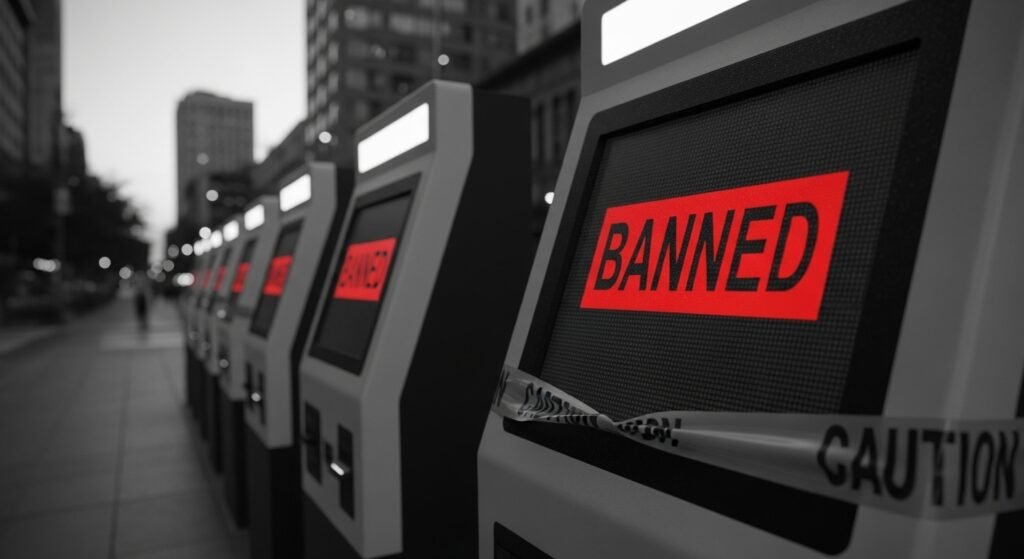
Cryptocurrency Kiosks Banned in St Paul Next Month

Cryptocurrency Kiosks Banned

COIN4U IN YOUR SOCIAL FEED

takenSt. Paul is on the verge of a major shift in how residents can access digital assets. Under a proposed ordinance, cryptocurrency kiosks – often called crypto ATMs or Bitcoin ATMs – will be prohibited from operating within the city, with the ban slated to take effect as early as next month after the final City Council vote. The move comes in response to mounting evidence that these machines play a significant role in crypto-related scams targeting vulnerable residents, especially seniors.

Across St. Paul, there are roughly 80–90 virtual currency kiosks, typically tucked into everyday locations like gas stations, grocery stores, laundromats and corner shops. For some residents, these machines have offered convenient cash-to-crypto access. For others, they have become a gateway to devastating financial losses after being manipulated by scammers posing as government officials, law enforcement or tech support.

The proposed St. Paul ordinance would create a new chapter in the city’s legislative code that outright bans the use and placement of virtual currency kiosks. City leaders argue that, while cryptocurrency itself will remain legal, removing Bitcoin kiosks from high-traffic locations is necessary to protect the public and reduce fraud. Critics, including industry representatives and retail trade associations, warn that a blanket ban could push crypto users to less regulated channels and create a confusing patchwork of local rules.

As the city prepares for the final council vote, residents and businesses alike are asking what this means for the future of cryptocurrency in St. Paul. Will the ban truly curb scams? How will it affect legitimate crypto users? And could other cities follow St. Paul’s lead?

Why St. Paul is targeting cryptocurrency kiosks

City officials did not arrive at “Cryptocurrency kiosks banned in St. Paul beginning next month” overnight. The ordinance is the culmination of months of discussion, testimony and a growing body of data showing how crypto ATMs are used in fraud schemes.

According to figures cited in the ordinance, the FBI received nearly 150,000 complaints involving cryptocurrency in 2024, with about $9.3 billion in reported losses. Of those, nearly 11,000 complaints and roughly $246–257 million in losses were tied specifically to transactions at cryptocurrency kiosks.

The Minnesota numbers are particularly striking. In 2024, around 1,852 victims in Minnesota reported losses connected to crypto, totalling more than $91 million, much of it linked to kiosk transactions.

Local officials and consumer advocates describe a familiar pattern. Scammers call victims pretending to be law enforcement, bank fraud departments or government agencies. They claim there is a warrant, a frozen account or a relative in crisis. The victim is told to withdraw cash, go to a Bitcoin kiosk, scan a QR code and deposit the money. Once the transaction is processed, the funds are effectively irreversible, and the victim is left with little recourse.

St. Paul’s City Council President and other supporters of the ban argue that, in practice, crypto ATMs offer “zero public benefit” compared to their outsized role in fraud, especially for seniors and financially vulnerable residents.

How the new St. Paul crypto kiosk ban works

How the new St. Paul crypto kiosk ban works

At the heart of the initiative is a clear and simple rule: no more cryptocurrency kiosks in St. Paul. The proposed ordinance would add Chapter 297 to the city’s legislative code, prohibiting both the placement and operation of virtual currency kiosks within city limits.

Defining “virtual currency kiosks”

The ordinance refers to these machines as virtual currency kiosks or cryptocurrency kiosks, but in everyday language, they are the Bitcoin ATMs and crypto vending machines seen near cash registers and ATM clusters. These devices allow users to insert cash and receive cryptocurrency in a digital wallet, or in some cases, to sell crypto for cash.

Under the proposed law, such machines would no longer be allowed to operate in St. Paul, whether they dispense Bitcoin, Ethereum, Litecoin or other digital assets. The ban targets the machines themselves, not the underlying technology of blockchain or cryptocurrency.

Not a total ban on cryptocurrency

One of the most important clarifications is that St. Paul is not banning cryptocurrency as an asset or technology. Residents will still be able to buy and sell crypto through:

Traditional centralised exchanges and investment apps.
Peer-to-peer platforms that comply with state and federal law.
Custodial services are offered by licensed money transmitters and financial institutions.

What will change is the availability of walk-up, cash-based cryptocurrency access points in local stores. By removing crypto ATMs, the city hopes to cut off what it sees as a primary on-ramp for scammers rather than a vital tool for everyday investors.

Timeline: Why “beginning next month” matters

The phrase “Cryptocurrency kiosks banned in St. Paul beginning next month” reflects the expected timeline laid out in council discussions. The ordinance has already been introduced and advanced, and the City Council is scheduled to take a final vote. If adopted, the law would take effect after a short waiting period, placing the practical start of the ban in the following month.

That said, the exact effective date will ultimately depend on the final form of the ordinance and when it is formally adopted and published. For residents and businesses, the key takeaway is that the window to operate or use cryptocurrency kiosks in St. Paul is closing rapidly.

The rise of crypto ATM scams in Minnesota

St. Paul’s proposed ban is part of a wider response across Minnesota to the rapid growth of crypto ATM fraud.

The Minnesota Department of Commerce reports that there are about 90 registered cryptocurrency machines in St. Paul and more than 300 statewide. These kiosks are concentrated in high-traffic spaces like liquor stores, small grocers and gas stations.

Law enforcement agencies across the Twin Cities have documented hundreds of thousands – and in some cities, millions – of dollars in losses tied to virtual currency machines. In Forest Lake alone, police say victims have lost more than $300,000 in schemes involving crypto kiosks over the past two years, while other cities like Woodbury and White Bear Lake have reported substantial losses as well.

Scammers rely on a combination of urgency and fear. A typical script might involve a phone call from someone claiming to be a “detective” or “IRS agent” who says the victim will be arrested unless they pay immediately. The caller then guides the victim step-by-step: drive to a particular store, find the Bitcoin ATM, scan a QR code and deposit thousands in cash. The scammer sometimes stays on the line for the entire transaction, making it hard for store employees or bystanders to intervene.

In one widely discussed incident, a St. Paul city attorney in plain clothes reportedly prevented a large loss by noticing two elderly residents attempting to send a significant sum at a kiosk and stepping in before the transaction was completed. Stories like this have fueled the push to declare cryptocurrency kiosks banned in St. Paul beginning next month as a direct fraud-prevention measure.

Consumer protection vs. financial innovation

Consumer protection vs. financial innovation

Supporters of the ban frame it as a necessary step in consumer protection. The ordinance cites limited local law enforcement resources and the difficulty of recovering funds once they move through cross-border, pseudonymous cryptocurrency networks. From this perspective, eliminating crypto ATMs is a way to reduce harm in an area where investigations are complex and recovery is rare.

Advocacy groups like AARP and the Better Business Bureau have also highlighted the emotional and psychological toll of these scams. Victims not only lose money; they often feel shame and fear, making them less likely to report the crime or seek help.

On the other side, kiosk operators and some retail associations argue that the machines do serve a legitimate financial purpose. Representatives from companies like Bitcoin Depot note that they are licensed under Minnesota law, use transaction monitoring tools and implement safeguards such as warnings on screens and transaction limits. State-level rules that took effect in August 2024 already require disclosures and consumer protections for licensed operators.

From their point of view, a total ban overshoots the mark, punishing compliant businesses as well as bad actors. Retail groups worry that customers who rely on Bitcoin kiosks for remittances or small-scale investments will simply travel to neighbouring cities, creating a patchwork of local rules that is harder to enforce and less transparent for consumers.

Impact on everyday crypto users in St. Paul

For residents who have become accustomed to using crypto ATMs as a quick bridge between cash and digital assets, the headline “Cryptocurrency kiosks banned in St. Paul beginning next month” is not just a policy update; it is a practical lifestyle change.

Many Bitcoin ATM users fall into two broad groups. Some are already active in the crypto ecosystem and simply prefer to use cash or want an extra layer of privacy. Others are less experienced investors who were drawn in by word of mouth or online promotions and found the kiosk interface to be more approachable than setting up an online exchange account.

Once the ban takes effect, these users will need to rely on:

Online exchanges that require traditional bank accounts and identity verification.
Licensed money services businesses that offer crypto purchases via apps or websites.
Peer-to-peer platforms that connect buyers and sellers directly.

For tech-savvy investors, this shift may be minor. For underbanked residents, lack reliable internet access or are wary of online platforms, the loss of in-store crypto ATMs may feel like a reduction in financial inclusion. This tension between fraud prevention and access to digital finance is at the core of the St. Paul debate.

See More: Cryptocurrency and Digital Commerce Regulation Guide

What the ban means for local retailers and operators

The St. Paul cryptocurrency kiosk ban will also reshape the relationship between kiosk operators and local businesses that host the machines.

For many small retailers, Bitcoin kiosks have become another revenue stream, similar to traditional ATMs or lottery machines. They earn commissions or rental fees and sometimes benefit from increased foot traffic. Losing these machines may not be catastrophic, but it does remove a source of ancillary income in a competitive retail environment.

Industry groups like the Minnesota Retailers Association, Minnesota Grocers Association and the Minnesota Service Station and Convenience Store Association have expressed concerns in letters to the Council. They argue that the ban could:

Encourage customers to visit stores in neighbouring cities that still host crypto ATMs.
>Create a fragmented regulatory landscape, making it harder for both businesses and consumers to understand where and how they can legally use cryptocurrency kiosks.
Send a message that St. Paul is hostile to financial technology innovation, potentially discouraging future fintech investment in the city.

Kiosk operators stress that they are already subject to state licensing rules, anti-money-laundering requirements and consumer protection obligations. In their view, targeted enforcement against fraudulent operators and improved education would be preferable to a sweeping ban that lumps all machines together.

Minnesota’s broader crypto regulatory landscape

The move to declare cryptocurrency kiosks banned in St. Paul beginning next month does not happen in a vacuum. Minnesota has been steadily tightening its approach to digital asset oversight.

On August 1, 2024, a new Minnesota crypto law took effect, requiring virtual currency. Companies operating in the state to be licensed and adhere to specific consumer protection rules. These include mandatory disclosure of key terms, transaction limits for new customers and refunds. Obligations for certain fraud cases involving first-time users.

Meanwhile, other Minnesota cities are taking different approaches. Stillwater and several suburbs around the Twin Cities have debated a range of options, from detailed registration and. Fee structures for crypto kiosks to outright bans, similar to what St. Paul is considering.

St. Paul’s ordinance is therefore both a local response and part of a broader regional experiment in virtual currency regulation. If the ban significantly reduces fraud reports in the city, it could become a model for other municipalities. If it simply pushes scams across city lines, pressure may grow for more coordinated state or. Federal action targeting crypto ATM fraud directly rather than via city-by-city bans.

Staying safe with cryptocurrency after the kiosk ban

Even with crypto kiosks banned in St. Paul, cryptocurrency scams will not disappear overnight. They may simply shift to online platforms, social media investment schemes or phishing attacks. That makes crypto education and digital literacy more important than ever.

Residents considering any form of cryptocurrency transaction should be especially wary of urgent payment demands. No legitimate government agency, court, utility or bank will ever ask you to pay fees. Fines or “protect your money” by moving funds through a Bitcoin ATM or crypto transfer. This red flag remains valid even if the caller knows personal details about you or a family member.

Before sending any money, it is crucial to independently verify the request. That could mean hanging up, finding the official phone number of your bank or the government. Agency in question and calling them directly, rather than using the number given by the caller. For second opinions, organisations like the Better Business Bureau and the Minnesota Department of Commerce offer hotlines and scam-tracking tools.

For those who still want exposure to Bitcoin and other cryptocurrencies, using a reputable. Regulated platforms are far safer than responding to unsolicited pitches or instructions from strangers. Reading reviews, checking licensing status and starting with small test transactions can all help reduce risk. Whether or not crypto ATMs are available in your neighbourhood.

The future of cryptocurrency access in St. Paul

As the ordinance moves toward final adoption, St. Paul is effectively betting that. Removing physical crypto kiosks will reduce one of the most visible pathways for scammers to exploit residents. If the ban is implemented next month as anticipated, the city will become one. The largest U.S. municipalities to take such a strong stand against crypto ATMs in retail locations.

In the short term, residents can expect to see Bitcoin kiosks gradually disappear from gas stations, groceries and convenience stores. In the medium term, policymakers will be watching the data closely: Do fraud reports fall? Do victims report fewer incidents involving kiosks? Or do scammers quickly pivot to other methods?

For the broader crypto industry, St. Paul’s move is another sign. That local regulations are tightening, particularly where consumer harm is easy to document. Companies that want to serve everyday users may need to invest more heavily in compliance, user education. And transparent safeguards to reassure regulators that digital asset access can be offered safely.

For now, though, the message from city leaders is clear. In their view, the cost of allowing virtual currency kiosks to operate in high-traffic public spaces outweighs their benefits. As a result, cryptocurrency kiosks in St. Paul beginning next month is more than a headline. It marks a new chapter in the city’s cautious relationship with digital money and sets the stage for continued debate. About how best to balance innovation with protection in the age of crypto.


Explore more articles like this

Subscribe to the Finance Redefined newsletter

A weekly toolkit that breaks down the latest DeFi developments, offers sharp analysis, and uncovers new financial opportunities to help you make smart decisions with confidence. Delivered every Friday

By subscribing, you agree to our Terms of Services and Privacy Policy

READ MORE

Supply Chain Blockchain Technology Implementation Tips

blockchain technology for supply chain management

COIN4U IN YOUR SOCIAL FEED

In today’s interconnected global economy, supply chain transparency and efficiency have become critical competitive advantages. Blockchain technology for supply chain management emerges as the game-changing solution that addresses decades-old challenges including counterfeiting, lack of transparency, and inefficient tracking systems. This revolutionary technology creates an immutable, transparent ledger that tracks products from origin to consumer, fundamentally transforming how businesses manage their supply chains. Companies implementing blockchain technology for supply chain management report up to 30% reduction in logistics costs and 50% improvement in traceability accuracy. As we move into 2025, understanding and implementing this technology isn’t just an option—it’s becoming essential for competitive survival in the global marketplace.

Blockchain Technology for Supply Chain Management

Blockchain technology for supply chain management represents a distributed ledger system that creates permanent, unalterable records of every transaction, movement, and change within a supply chain network. Unlike traditional centralized databases, this technology distributes information across multiple nodes, ensuring no single point of failure or manipulation.

The core principle involves creating digital “blocks” of information that contain transaction data, timestamps, and cryptographic hashes linking them to previous blocks. When applied to supply chains, each product movement, quality check, or ownership transfer becomes a permanent record that all authorized parties can access but none can alter.

This immutable nature addresses fundamental supply chain challenges that have plagued businesses for decades. Traditional supply chain management relies on paper-based documentation and centralized databases vulnerable to manipulation, loss, or corruption. Blockchain eliminates these vulnerabilities by creating a transparent, tamper-proof system where every stakeholder maintains synchronized records.

Key Components of Blockchain Supply Chain Systems

Modern blockchain supply chain implementations incorporate several essential components working in harmony. Smart contracts automate verification processes, triggering actions when predetermined conditions are met. For example, payment releases automatically when delivery confirmation occurs, or quality alerts activate when temperature sensors detect deviations during cold chain transport.

Digital identity management ensures only authorized parties access specific information levels. Suppliers might view their segment data while retailers access comprehensive product histories. This granular permission system maintains confidentiality while enabling necessary transparency.

Consensus mechanisms validate transactions before recording them permanently. Multiple network participants must agree on transaction validity, preventing fraudulent entries or unauthorized changes. This democratic validation process ensures data integrity across the entire network.

Benefits of Implementing Blockchain in Supply Chain Operations

Benefits of Implementing Blockchain in Supply Chain Operations

The advantages of blockchain technology for supply chain management extend far beyond simple tracking improvements. Organizations implementing these systems experience transformational changes across multiple operational areas.

Enhanced Transparency and Traceability

Transparency represents perhaps the most significant benefit blockchain brings to supply chain management. Every product component, manufacturing process, and transportation event becomes visible to authorized stakeholders in real-time. This visibility enables rapid response to quality issues, regulatory compliance verification, and consumer trust building.

Food industry implementations demonstrate this benefit clearly. When contamination occurs, traditional systems require days or weeks to identify affected products and trace distribution paths. Blockchain-enabled systems accomplish the same task in minutes, potentially saving lives and minimizing economic damage.

Luxury goods manufacturers leverage this transparency to combat counterfeiting. Each authentic product receives a unique blockchain identity that consumers can verify through smartphone applications. This authentication process protects brand value while ensuring consumer safety.

Reduced Fraud and Counterfeiting

Counterfeiting costs global businesses over $500 billion annually, with traditional anti-fraud measures proving inadequate against sophisticated criminal operations. Blockchain technology for supply chain management creates virtually unbreakable authentication systems that eliminate counterfeit product entry into legitimate supply chains.

The pharmaceutical industry particularly benefits from these fraud prevention capabilities. Counterfeit medications pose serious health risks while undermining legitimate manufacturer revenues. Blockchain implementation creates tamper-evident packaging linked to immutable digital records, making counterfeiting economically unfeasible.

Diamond certification represents another successful anti-fraud application. Each diamond receives blockchain documentation proving authenticity, origin, and ethical mining practices. Consumers can verify these claims independently, creating market pressure for responsible sourcing practices.

Improved Efficiency and Cost Reduction

Operational efficiency improvements from blockchain implementation often exceed initial expectations. Automated verification processes eliminate manual documentation requirements, reducing labor costs and human error rates. Smart contracts automatically execute payments, quality checks, and compliance verifications without human intervention.

Inventory management becomes more precise through real-time visibility into product locations and conditions. This accuracy reduces safety stock requirements while minimizing stockout situations. Some companies report inventory holding cost reductions exceeding 25% following blockchain implementation.

Administrative costs decrease significantly as blockchain eliminates intermediary verification requirements. Banks, auditors, and certification agencies traditionally required for transaction validation become unnecessary, directly reducing operational expenses.

Real-World Applications Across Industries

Food and Agriculture Supply Chains

The food industry leads blockchain adoption due to increasing consumer demands for transparency and regulatory requirements for traceability. Major retailers now require suppliers to implement blockchain tracking systems, creating market pressure for widespread adoption.

Walmart’s blockchain initiative tracks leafy greens from farm to store shelf, reducing contamination investigation time from weeks to seconds. This capability enables surgical product recalls affecting only contaminated batches rather than entire product categories.

Organic certification verification through blockchain prevents fraud while reducing certification costs. Farmers document growing practices, inspector visits, and certification renewals on immutable ledgers that retailers and consumers can verify independently.

Pharmaceutical and Healthcare

Pharmaceutical supply chain integrity directly impacts patient safety, making blockchain implementation critical for industry stakeholders. Drug authentication, cold chain monitoring, and regulatory compliance documentation benefit significantly from blockchain technology.

Clinical trial data integrity represents another crucial application. Blockchain ensures research data remains unaltered while enabling regulatory access for approval processes. This transparency builds public trust in pharmaceutical research while protecting proprietary information.

Medical device tracking throughout their lifecycle becomes possible through blockchain implementation. From manufacturing to patient implantation, every device interaction creates permanent records enabling rapid recalls if safety issues emerge.

Automotive and Manufacturing

Automotive manufacturers implement blockchain technology for supply chain management to track component origins, ensure quality standards, and enable rapid recall responses. With modern vehicles containing thousands of components from dozens of suppliers, traditional tracking systems prove inadequate.

Quality control improvements through blockchain enable predictive maintenance programs. Component performance data throughout manufacturing and usage lifecycles identifies failure patterns before they cause safety issues.

Sustainability reporting becomes more accurate through blockchain documentation of supplier environmental practices. Carbon footprint calculations, recycling rates, and ethical sourcing claims receive immutable verification that regulators and consumers can trust.

Fashion and Luxury Goods

Fashion industry blockchain implementations address sustainability concerns and authenticity verification. Fast fashion’s environmental impact receives increasing scrutiny, making transparent sourcing documentation essential for brand reputation management.

Luxury goods authentication protects both brand value and consumer investments. High-value items like watches, handbags, and jewelry receive blockchain certificates of authenticity that transfer with ownership, maintaining resale value.

Labor practice documentation through blockchain addresses growing consumer concerns about worker treatment. Suppliers document working conditions, wage payments, and safety compliance on immutable ledgers that brands and consumers can access.

Implementation Challenges and Solutions

Technical Infrastructure Requirements

Implementing blockchain technology for supply chain management requires significant technical infrastructure investments. Legacy systems integration poses particular challenges as existing databases, ERP systems, and communication protocols must interface with blockchain networks.

Scalability concerns arise when transaction volumes exceed blockchain network capacity. Traditional blockchain networks process limited transactions per second, potentially creating bottlenecks in high-volume supply chains. Layer-2 solutions and private blockchain networks address these limitations through increased processing capacity.

Interoperability between different blockchain networks requires careful planning. Supply chains often involve partners using different blockchain platforms, necessitating bridge technologies or standardized protocols for seamless communication.

Organizational Change Management

Successful blockchain implementation requires comprehensive organizational change management addressing employee training, process redesign, and cultural adaptation. Traditional supply chain professionals must develop new skills while adapting to increased transparency levels.

Stakeholder buy-in becomes crucial as blockchain benefits require network-wide participation. Individual companies cannot realize full blockchain advantages without supplier and customer engagement, making collaboration essential for success.

Privacy concerns require careful balance between transparency benefits and confidential information protection. Businesses must determine appropriate information sharing levels while maintaining competitive advantages and protecting sensitive data.

How to Choose the Right Blockchain Platform

Public vs. Private Blockchain Networks

Blockchain platform selection significantly impacts implementation success and ongoing operational effectiveness. Public blockchains offer maximum transparency and decentralization but may lack scalability and privacy controls required for enterprise supply chain applications.

Private blockchain networks provide greater control over access permissions and transaction speeds but sacrifice some decentralization benefits. Consortium blockchains offer middle-ground solutions where multiple organizations share network control while maintaining privacy from external parties.

Hybrid approaches combining public and private elements enable customized solutions meeting specific industry requirements. Sensitive business information remains on private networks while public verification occurs on transparent networks.

Essential Features for Supply Chain Applications

Successful blockchain platforms for supply chain management must support specific features essential for operational effectiveness. Smart contract capabilities enable automated verification and payment processes, reducing manual intervention requirements while ensuring compliance.

IoT device integration allows real-time data collection from sensors monitoring product conditions during transportation and storage. Temperature, humidity, location, and shock sensors provide continuous monitoring that blockchain permanently records.

Mobile accessibility ensures field personnel can access and update blockchain records using smartphones or tablets. User-friendly interfaces encourage adoption while reducing training requirements for non-technical users.

Future Trends and Innovations

Future Trends and Innovations

Integration with Artificial Intelligence

Artificial intelligence integration with blockchain technology for supply chain management creates powerful analytical capabilities. Machine learning algorithms analyze blockchain data patterns to predict disruptions, optimize routing, and identify quality issues before they escalate.

Predictive analytics using blockchain historical data enable proactive supply chain management. AI systems forecast demand fluctuations, identify potential supplier issues, and recommend inventory adjustments based on comprehensive blockchain records.

Automated decision-making through AI-blockchain integration reduces response times to supply chain disruptions. Smart contracts triggered by AI analysis automatically reroute shipments, adjust orders, or notify stakeholders of potential issues.

Sustainability and Environmental Impact

Environmental sustainability becomes increasingly important for supply chain management, with blockchain technology enabling accurate carbon footprint tracking and verification. Each transportation mode, manufacturing process, and energy source contributes to comprehensive environmental impact calculations.

Circular economy implementations benefit from blockchain tracking throughout product lifecycles. From initial manufacturing through multiple use phases to final recycling, blockchain creates permanent records enabling optimized resource utilization.

Regulatory compliance for environmental standards becomes more manageable through blockchain documentation. Automated reporting systems generate compliance reports using immutable blockchain data, reducing administrative burdens while ensuring accuracy.

Step-by-Step Implementation Guide

Phase 1: Assessment and Planning

Successful blockchain implementation begins with comprehensive assessment of current supply chain operations, identifying specific pain points that blockchain technology can address. Stakeholder mapping determines all parties requiring system access while defining their permission levels and data requirements.

Cost-benefit analysis quantifies expected returns on blockchain investment, including efficiency gains, fraud reduction, and regulatory compliance improvements. Timeline development establishes realistic implementation phases while managing business disruption risks.

Technology requirements assessment evaluates existing IT infrastructure capacity for blockchain integration. Network bandwidth, server capacity, and security protocols require evaluation to ensure adequate performance levels.

Phase 2: Pilot Program Development

Pilot program selection focuses on specific supply chain segments where blockchain benefits are most apparent and measurable. Limited scope pilots reduce implementation risks while demonstrating value to stakeholders.

Success metrics definition establishes clear measurement criteria for pilot program evaluation. Key performance indicators should include transparency improvements, cost reductions, and operational efficiency gains.

Stakeholder training programs prepare participants for blockchain system usage while addressing concerns about operational changes. User feedback during pilot phases informs full-scale implementation planning.

Phase 3: Full-Scale Deployment

Full-scale deployment expands successful pilot programs across entire supply chain networks. Phased rollouts manage implementation complexity while maintaining operational continuity during transition periods.

Integration testing ensures blockchain systems interface properly with existing business applications. ERP systems, inventory management platforms, and financial systems require seamless integration for operational effectiveness.

Performance monitoring establishes ongoing system optimization through continuous measurement of key performance indicators. Regular assessment identifies improvement opportunities while ensuring system reliability.

Conclusion

Blockchain technology for supply chain management represents more than just technological advancement—it’s a fundamental shift toward transparency, efficiency, and trust in global commerce. Organizations that embrace this technology today position themselves as industry leaders while those who delay risk competitive disadvantage in increasingly transparent markets.

The evidence overwhelmingly supports blockchain adoption for supply chain optimization. From fraud reduction and operational efficiency to regulatory compliance and consumer trust building, blockchain delivers measurable benefits across multiple business dimensions. Implementation challenges, while significant, are manageable through proper planning and phased deployment approaches.

As we advance through 2025, blockchain technology for supply chain management will become increasingly essential for competitive success. Early adopters enjoy first-mover advantages while establishing market leadership positions that will be difficult for competitors to challenge.

Explore more articles like this

Subscribe to the Finance Redefined newsletter

A weekly toolkit that breaks down the latest DeFi developments, offers sharp analysis, and uncovers new financial opportunities to help you make smart decisions with confidence. Delivered every Friday

By subscribing, you agree to our Terms of Services and Privacy Policy

READ MORE

ADD PLACEHOLDER