











































The blockchain industry is no stranger to bold claims about scalability, decentralization, and performance. Yet few conversations have sparked as much debate as Bryan Pellegrino’s recent discussion about Xero’s unified blockchain system and the evolution of zero-knowledge technology. As the co-founder and CEO of LayerZero Labs, Bryan Pellegrino has positioned himself at the forefront of interoperability, scalability, and next-generation blockchain architecture.
In a space dominated by fragmented layer structures, rollups, bridges, and competing execution environments, Pellegrino’s vision challenges conventional assumptions. He argues that the industry has misunderstood layer two security, overcomplicated architectural design, and underestimated the transformative impact of zk technology. According to him, Xero’s unified blockchain system removes artificial separation between layers, eliminates redundant validator work, and introduces a fundamentally more efficient way to process transactions.
This article explores Bryan Pellegrino’s perspective in depth, examining how Xero operates as a single integrated system, why layer two security is often misunderstood, and how zero-knowledge proofs could unlock unprecedented throughput. Along the way, we will analyze the broader implications for blockchain scalability, decentralized infrastructure, cross-chain interoperability, and the future of Web3.
The Significance of a Unified Blockchain System
At the heart of Bryan Pellegrino’s argument lies a simple yet powerful idea: blockchain systems should function as one cohesive entity rather than as a stack of loosely connected layers. Xero’s unified blockchain system eliminates the need for separate organizations managing different layers of the stack.
Traditional architectures typically separate execution, settlement, and data availability across multiple networks. This separation often introduces complexity, governance fragmentation, and security trade-offs. Pellegrino contends that this layered approach has become unnecessarily convoluted. Instead of independent entities deploying layer twos and owning parts of the stack, Xero integrates all components into a single, unified structure.
This design philosophy ensures that the underlying chain owns every aspect of the system. There is no separate operator controlling a rollup or intermediary protocol acting as a bridge. By eliminating external dependencies, Xero reduces attack surfaces and simplifies governance.
The implications are significant. In a unified blockchain model, trust assumptions become clearer, coordination improves, and the overall system becomes more resilient. For developers and users alike, this means fewer hidden risks and more predictable behavior. In a world increasingly concerned with on-chain security, this unified structure may represent a meaningful evolution.
Eliminating Layer Separation and Structural Complexity
Layer separation was initially introduced to address scalability concerns. Layer one networks struggled with throughput, leading to the rise of layer two solutions designed to offload execution. However, Bryan Pellegrino argues that this approach created new problems.
When execution and settlement occur in different environments, users must trust additional components. Validators, sequencers, and bridge operators add complexity. Each additional layer introduces governance overhead and potential vulnerabilities.
Xero’s unified blockchain system challenges this paradigm by removing artificial separation. Instead of stitching together multiple layers, the system is designed as one coherent architecture. This approach minimizes the risk of misaligned incentives between layers.
The result is a more streamlined ecosystem. Developers no longer need to account for multiple security assumptions or compatibility challenges across execution environments. By consolidating infrastructure, Xero reduces the friction often associated with multi-chain ecosystems and layered blockchain stacks.
Deep Expertise in Virtual Machines and Architectures
One of the distinguishing factors behind LayerZero Labs’ progress is its deep exploration of various virtual machines and architectural models. Bryan Pellegrino has emphasized that few organizations have examined as many VMs and execution frameworks in such detail.
Understanding different virtual machines is critical in today’s blockchain environment. From EVM-compatible chains to alternative execution engines, each VM presents unique trade-offs in performance, programmability, and security. LayerZero Labs’ broad exposure enables it to identify inefficiencies that others may overlook.
This depth of knowledge allows the team to innovate across boundaries rather than remaining confined to a single ecosystem. By studying diverse architectures, they have been able to design systems that transcend traditional limitations. Such expertise is especially relevant in discussions about modular blockchain design, execution environments, and scalability frameworks.
Misconceptions About Layer Two Security

Perhaps one of the most controversial statements from Bryan Pellegrino concerns layer two security. A widely held belief in the blockchain community is that layer twos inherit the security of their underlying layer ones. Pellegrino firmly disputes this assumption.
While layer twos may settle data or proofs on a base chain, they operate with distinct components such as sequencers or validators. These additional actors introduce separate trust models. As a result, layer twos do not automatically inherit the full security guarantees of layer one.
This misconception can have serious implications. Investors and developers may overestimate the safety of layer two solutions, assuming that they are as secure as the base chain. Pellegrino argues that this belief oversimplifies complex security architectures.
Understanding the nuanced relationship between layer one and layer two networks is essential for evaluating risk. In the broader context of crypto security models and decentralized consensus mechanisms, clarity around these assumptions is critical.
Strategic Shift Toward Asset-Centric Blockchains
Another key insight from Bryan Pellegrino involves the strategic priorities of blockchain networks. He notes that chains ultimately care more about attracting and retaining assets than about maintaining relationships with service providers.
Assets drive network activity, liquidity, and value creation. Infrastructure is important, but it exists to support assets. Recognizing this dynamic influenced the decision to pivot toward launching a dedicated layer one solution.
By focusing on asset ownership and control within a unified system, Xero aligns infrastructure incentives with economic activity. This asset-centric perspective reflects broader trends in decentralized finance, liquidity management, and tokenized economies.
When chains prioritize assets, they optimize for trustless interactions and seamless transfers. This shift may redefine how networks compete and collaborate in the Web3 landscape.
The Game-Changing Potential of zk Technology
Zero-knowledge technology stands at the core of Xero’s innovation. Bryan Pellegrino describes zk technology as transformative because it eliminates replication, the most expensive aspect of traditional blockchain systems.
In conventional blockchains, every node downloads every transaction and performs identical computations. This replication ensures consensus but dramatically limits throughput. Zero-knowledge proofs change this dynamic by compressing computational work into succinct proofs.
Instead of each validator re-executing every transaction, the network verifies a proof that guarantees correctness. This approach significantly reduces redundant work and unlocks higher performance levels.
The efficiency gains from zk technology extend beyond raw speed. They improve resource utilization, lower hardware requirements, and enhance scalability. Within the broader narrative of zero-knowledge proofs, cryptographic compression, and privacy-preserving computation, this represents a fundamental breakthrough.
Achieving Two Million Transactions Per Second
LayerZero Labs reportedly achieved throughput of two million transactions per second. This benchmark, if sustained in production environments, dramatically surpasses current industry standards.
For context, many leading blockchains process tens or hundreds of transactions per second. Even ambitious scalability roadmaps often project incremental improvements over several years. Achieving millions of transactions per second signals a step-change in capability.
High throughput is essential for mainstream adoption. Applications such as decentralized exchanges, gaming platforms, and enterprise systems require performance comparable to traditional financial infrastructure. By demonstrating such scale, Xero positions itself as a contender in the race for high-performance blockchain networks.
However, throughput alone is not sufficient. Sustainability, decentralization, and security must accompany performance gains. Pellegrino’s emphasis on unified architecture suggests that these metrics are addressed holistically.
Ethereum’s Scalability Roadmap and Industry Context
Current zk implementations often focus on addressing Ethereum’s scalability limitations. Ethereum processes a limited number of transactions per second compared to global payment systems. Long-term plans aim to reach significantly higher throughput in the coming decade.
Bryan Pellegrino highlights the trade-offs inherent in these efforts. Solving scalability within existing frameworks may require compromises in decentralization or complexity. In contrast, Xero’s unified blockchain system attempts to redesign the architecture from the ground up.
Separating execution from verification is a crucial concept in this discussion. By decoupling these functions, blockchain systems can optimize performance without sacrificing integrity. This separation underpins many zk-based designs and aligns with broader research in blockchain performance optimization.
Zero-Knowledge Proofs as Data Compression
A key insight from Pellegrino is that zero-knowledge proofs function primarily as a form of compression. Rather than focusing solely on privacy, zk proofs compress computational work into compact representations.
This compression dramatically reduces the amount of data nodes must process. Instead of downloading and executing every transaction, validators verify concise proofs that encapsulate entire batches.
In practical terms, this reduces bandwidth requirements and computational overhead. It also enables more efficient synchronization for new nodes joining the network. Within the realm of cryptographic verification and scalable consensus protocols, this compression mechanism is one of the most powerful innovations in recent years.
Institutional Adoption and Scalability Demands
Institutional players have historically hesitated to adopt blockchain technology due to scalability constraints. Concerns about throughput, latency, and reliability have limited enterprise participation.
According to feedback shared by Bryan Pellegrino, institutions now recognize that high-performance blockchain systems may meet their operational requirements. Achieving millions of transactions per second opens the door to real-world financial integration.
This alignment between institutional needs and blockchain capabilities represents a pivotal moment. As enterprise blockchain adoption accelerates, unified systems like Xero could bridge the gap between decentralized networks and traditional finance.
The ability to combine scalability, security, and decentralization will determine whether blockchain transitions from niche experimentation to global infrastructure.
The Role of AI in Engineering Innovation
Beyond blockchain architecture, Bryan Pellegrino also addressed the growing influence of artificial intelligence in engineering workflows. AI tools can significantly enhance productivity, but they require oversight and iteration.
Blindly relying on AI-generated code may produce suboptimal results. Instead, experienced engineers must guide AI systems, refining outputs and ensuring quality. This collaborative approach raises the overall skill level within organizations.
In the context of blockchain development, where precision and security are paramount, human judgment remains essential. The combination of AI acceleration and expert oversight may drive faster innovation across smart contract development, protocol engineering, and distributed systems research.
The Future of Unified Blockchain Architecture
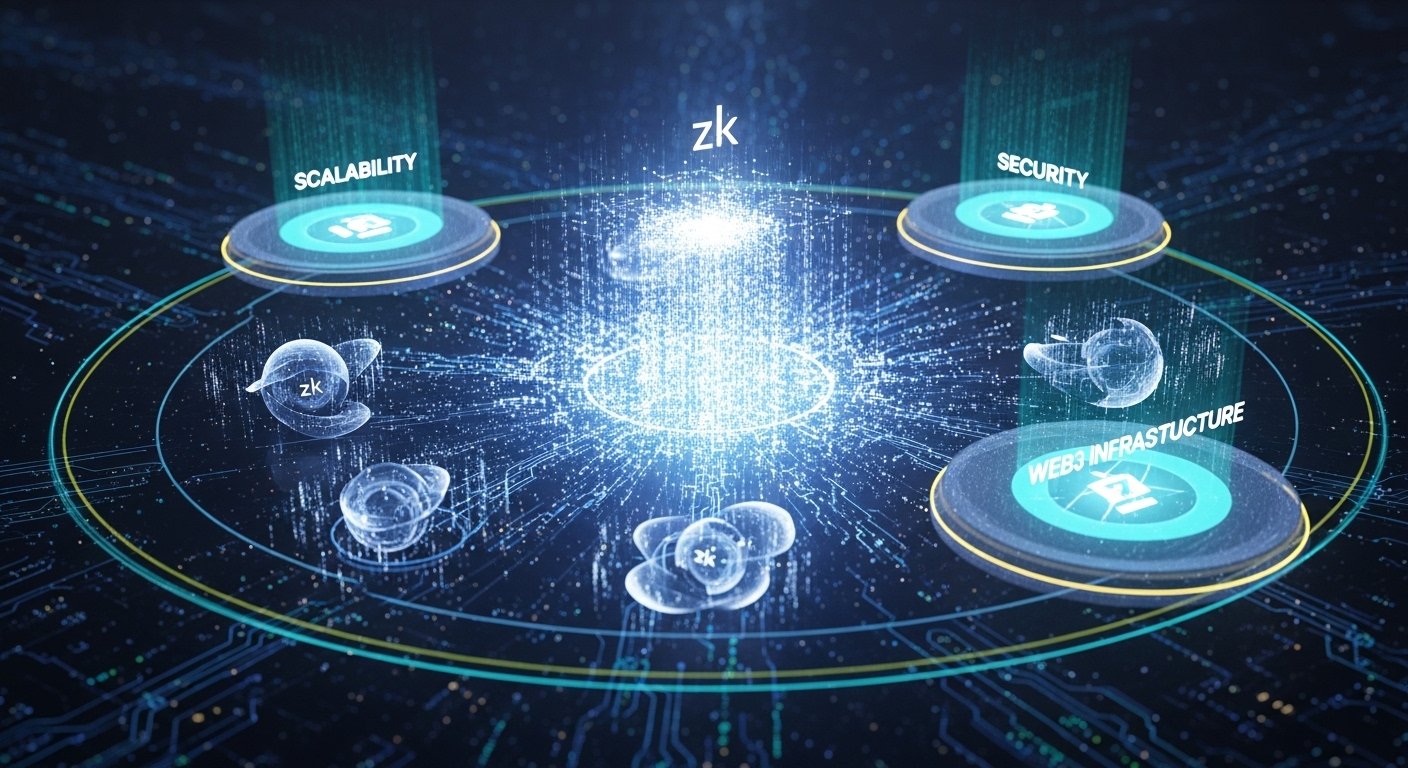
The broader vision articulated by Bryan Pellegrino revolves around trustless community interactions within a unified framework. Instead of patching together disparate layers, Xero aims to function as one integrated system.
This philosophy challenges prevailing assumptions about modularity and separation. While modular design has advantages, excessive fragmentation can undermine efficiency and clarity.
A unified blockchain system simplifies governance, reduces external dependencies, and aligns incentives. By combining high throughput with zk-based compression, it aspires to overcome the scalability trilemma.
As the blockchain industry matures, architectural decisions made today will shape the next decade of development. Xero’s approach may represent a turning point in how networks balance performance and decentralization.
Conclusion
Bryan Pellegrino’s insights into Xero’s unified blockchain system highlight a bold rethinking of blockchain architecture. By eliminating layer separation, challenging misconceptions about layer two security, and leveraging zk technology to remove replication, Xero aims to redefine scalability.
The reported achievement of two million transactions per second underscores the potential of this approach. More importantly, the emphasis on unified governance, asset-centric design, and cryptographic compression addresses structural inefficiencies that have long constrained the industry.
As blockchain evolves from experimental infrastructure to institutional-grade technology, unified systems may become increasingly attractive. Whether Xero ultimately reshapes the landscape remains to be seen, but the ideas presented by Bryan Pellegrino undeniably push the conversation forward.
FAQs
Q: How does Xero’s unified blockchain system differ from traditional layer one and layer two architectures?
Xero’s unified blockchain system differs fundamentally because it does not rely on separate entities managing different layers of execution, settlement, or verification. Traditional architectures often split these responsibilities across multiple networks or rollups, which introduces additional trust assumptions and complexity. In contrast, Xero integrates all components into a single coherent system, reducing fragmentation and aligning governance, security, and performance under one framework.
Q: Why does Bryan Pellegrino argue that layer twos do not inherit layer one security?
Bryan Pellegrino explains that layer twos operate with their own sequencers, validators, or governance mechanisms, which means they introduce separate trust models. While they may settle data on a layer one chain, they do not automatically inherit its full security guarantees. This distinction is important for developers and investors evaluating the risk profiles of different blockchain solutions.
Q: What makes zero-knowledge technology so transformative for blockchain scalability?
Zero-knowledge technology is transformative because it eliminates replication by compressing computational work into succinct proofs. Instead of every node reprocessing every transaction, validators verify compact proofs that confirm correctness. This reduces redundant computation, enhances throughput, and significantly improves efficiency, making large-scale adoption more feasible.
Q: How does achieving two million transactions per second impact blockchain adoption?
Reaching two million transactions per second demonstrates that blockchain infrastructure can potentially match or exceed traditional financial systems in throughput. This level of performance addresses one of the primary barriers to institutional adoption. High throughput combined with security and decentralization could enable mainstream applications across finance, gaming, and enterprise sectors.
Q: What role will unified blockchain systems play in the future of Web3?
Unified blockchain systems may streamline governance, reduce vulnerabilities, and simplify developer experiences. By integrating execution, verification, and settlement into one cohesive architecture, they can minimize complexity while maximizing efficiency. As Web3 matures, such systems could provide the foundation for scalable, secure, and trustless global networks.