

































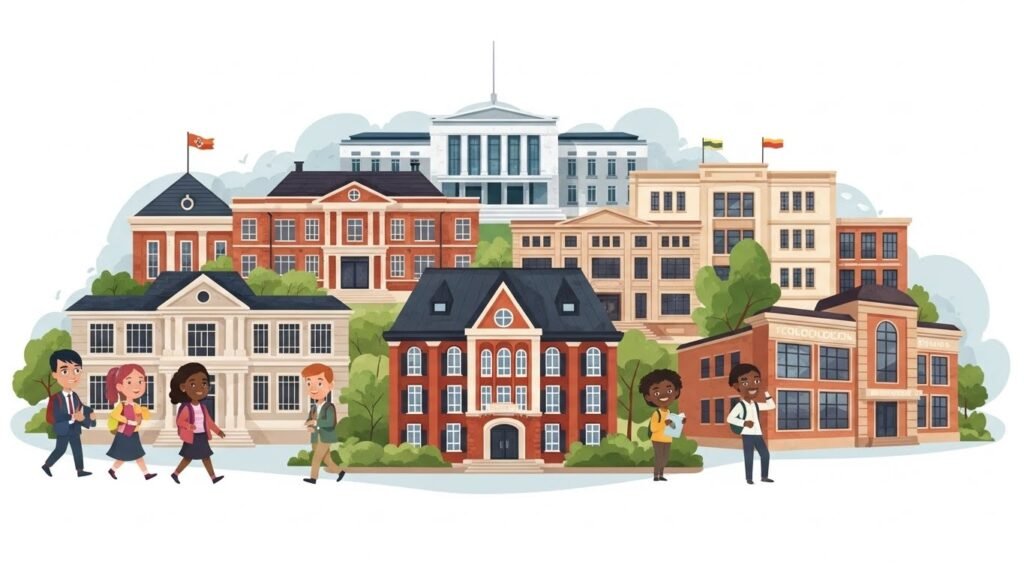
Education at scale has become one of the defining transformations of modern civilization. What began as small, localized efforts to teach basic literacy and numeracy has expanded into vast systems capable of educating millions, and in some cases tens of millions, of learners simultaneously. The journey from near-universal basic schooling to the world’s largest university system reflects not only policy ambition but also social change, technological innovation, and economic necessity. Education at scale is no longer simply about access to classrooms; it is about building resilient structures that deliver quality learning across diverse populations, geographies, and socioeconomic backgrounds.
Over the past century, governments and institutions have increasingly recognized that widespread education is essential for national development, social mobility, and global competitiveness. As populations grew and economies became more knowledge-driven, the demand for higher education surged. This led to the emergence of mass education models and, eventually, university systems that operate on an unprecedented scale. Understanding how education at scale evolved helps illuminate the challenges and opportunities facing today’s learners and policymakers.
This article explores the historical roots of near-universal basic schooling, the expansion into mass higher education, and the rise of the world’s largest university systems. It examines the structural, technological, and social forces that enabled education at scale while highlighting the implications for the future of global learning.
The Origins of Near-Universal Basic Schooling
Early Efforts Toward Mass Literacy
The concept of educating entire populations is relatively recent in human history. For centuries, formal education was limited to elites, religious institutions, or specific trades. The push toward near-universal basic schooling gained momentum during the industrial era, when governments realized that a literate and numerate workforce was essential for economic growth and civic participation. Education at scale initially focused on primary schooling, ensuring that children acquired foundational skills necessary for participation in modern society.
Compulsory education laws marked a turning point. By mandating school attendance, states laid the groundwork for large-scale education systems. These policies required significant investment in teacher training, school infrastructure, and standardized curricula. While early implementations varied in quality, they established the principle that education was a public good rather than a privilege.
The spread of basic schooling also played a crucial role in shaping national identity. Shared curricula and common languages helped unify diverse populations, reinforcing the social importance of education at scale.
Standardization and System Building
Standardization was a key enabler of education at scale. Governments introduced uniform curricula, grade levels, and assessment methods to manage growing student populations efficiently. This approach allowed education systems to expand rapidly while maintaining a baseline level of consistency.
Teacher training institutions emerged to supply qualified educators capable of delivering standardized content. Textbooks and teaching materials were mass-produced, reducing costs and ensuring uniformity. These developments transformed schooling from a collection of local initiatives into coordinated national systems.
While standardization enabled scalability, it also introduced challenges related to flexibility and inclusivity. Balancing efficiency with responsiveness to local needs became an ongoing tension within large education systems.
Transition From Basic Schooling to Mass Secondary Education
Expanding Access Beyond Primary Levels
As near-universal basic schooling became a reality in many countries, attention shifted toward secondary education. Economic changes, particularly the growth of skilled labor markets, increased demand for higher levels of education. Education at scale evolved to include adolescents, extending learning pathways beyond primary school.
Secondary education systems required more specialized teachers, diverse subject offerings, and expanded facilities. Governments invested heavily in infrastructure to accommodate rising enrollment. This expansion represented a significant step toward lifelong learning, preparing students for both higher education and skilled employment.
The move toward mass secondary education also highlighted disparities in access and outcomes. Addressing these gaps became a central concern for policymakers committed to equitable education at scale.
Curriculum Diversification and Tracking
To manage diverse student needs, secondary education systems introduced differentiated pathways, including academic, technical, and vocational tracks. This diversification allowed education at scale to serve multiple economic and social objectives simultaneously.
While tracking increased efficiency, it also raised questions about equity and mobility. Ensuring that all students had meaningful opportunities regardless of background became a critical issue as education systems grew larger and more complex.
The Rise of Mass Higher Education

From Elite Universities to Open Access
Higher education was once the domain of a small elite. Universities focused on advanced scholarship and professional training for limited numbers of students. However, economic globalization and technological advancement transformed the role of universities, driving demand for mass higher education.
Education at scale entered the university sector as governments expanded access through public universities, open admissions policies, and financial support programs. Enrollment surged, and universities adapted by increasing capacity, standardizing courses, and leveraging technology.
This shift redefined the purpose of higher education. Universities became engines of social mobility and innovation, tasked with educating large segments of the population while maintaining academic standards.
Structural Innovations in University Systems
To accommodate mass enrollment, university systems adopted new organizational models. Multi-campus institutions, centralized administration, and modular degree structures enabled scalability. Education at scale in higher education required balancing autonomy and coordination across campuses and faculties.
Distance learning and evening programs further expanded access, allowing working adults to pursue degrees. These innovations laid the foundation for even larger systems capable of serving millions of learners.
The World’s Largest University Systems
Defining Scale in Higher Education
The world’s largest university systems are characterized by massive enrollment, extensive geographic reach, and diversified academic offerings. These systems often serve as national or regional hubs for higher learning, integrating teaching, research, and community engagement.
Education at scale within these systems relies on efficient governance, robust funding models, and advanced technology. Centralized policies coexist with local flexibility, enabling institutions to respond to diverse student needs while maintaining coherence. Such systems demonstrate that scale does not necessarily preclude quality, provided that investment and innovation remain priorities.
Technology as a Catalyst for Expansion
Technology has been instrumental in enabling the world’s largest university systems. Digital platforms support online learning, distance education, and blended learning models, dramatically increasing reach. Learning management systems, virtual classrooms, and digital libraries allow institutions to serve students across vast distances.
Technology also enhances administrative efficiency, from enrollment management to assessment and data analytics. These tools are essential for sustaining education at scale without compromising learner support. The integration of technology continues to redefine what is possible in large-scale higher education.
Challenges of Education at Scale
Maintaining Quality and Relevance
One of the primary challenges of education at scale is ensuring consistent quality. As systems grow, maintaining high teaching standards, relevant curricula, and meaningful assessment becomes increasingly complex. Large student-to-teacher ratios can strain resources and reduce personalized support.
Addressing this challenge requires continuous investment in faculty development, curriculum обновление, and quality assurance mechanisms. Education at scale must prioritize learning outcomes alongside access. Relevance is equally important. Aligning education with labor market needs and societal challenges ensures that large systems remain responsive and impactful.
Equity and Inclusion in Large Systems
Equity remains a central concern in education at scale. Expanding access does not automatically guarantee equal outcomes. Students from disadvantaged backgrounds may face barriers related to preparation, resources, and support.
Large university systems must implement targeted interventions, such as financial aid, academic support services, and inclusive pedagogy, to promote success for all learners. Equity-focused policies are essential for realizing the full potential of education at scale.
The Role of Policy and Governance
National Strategies for Scalable Education
Government policy plays a decisive role in shaping education at scale. National strategies define funding priorities, regulatory frameworks, and long-term goals. Coordinated planning ensures that expansion aligns with economic and social objectives.
Effective governance balances central oversight with institutional autonomy. This balance enables innovation while maintaining accountability across large systems. Policy coherence is particularly important as education systems grow more complex and interconnected.
Financing Education at Scale
Sustainable financing underpins education at scale. Public funding, tuition models, and partnerships all contribute to supporting large systems. Ensuring affordability while maintaining quality requires careful financial planning. Innovative funding mechanisms, including performance-based allocations and public-private collaboration, can enhance system resilience. Financial sustainability remains a critical factor in the long-term success of large education systems.
The Future of Education at Scale
Lifelong Learning and Flexible Pathways
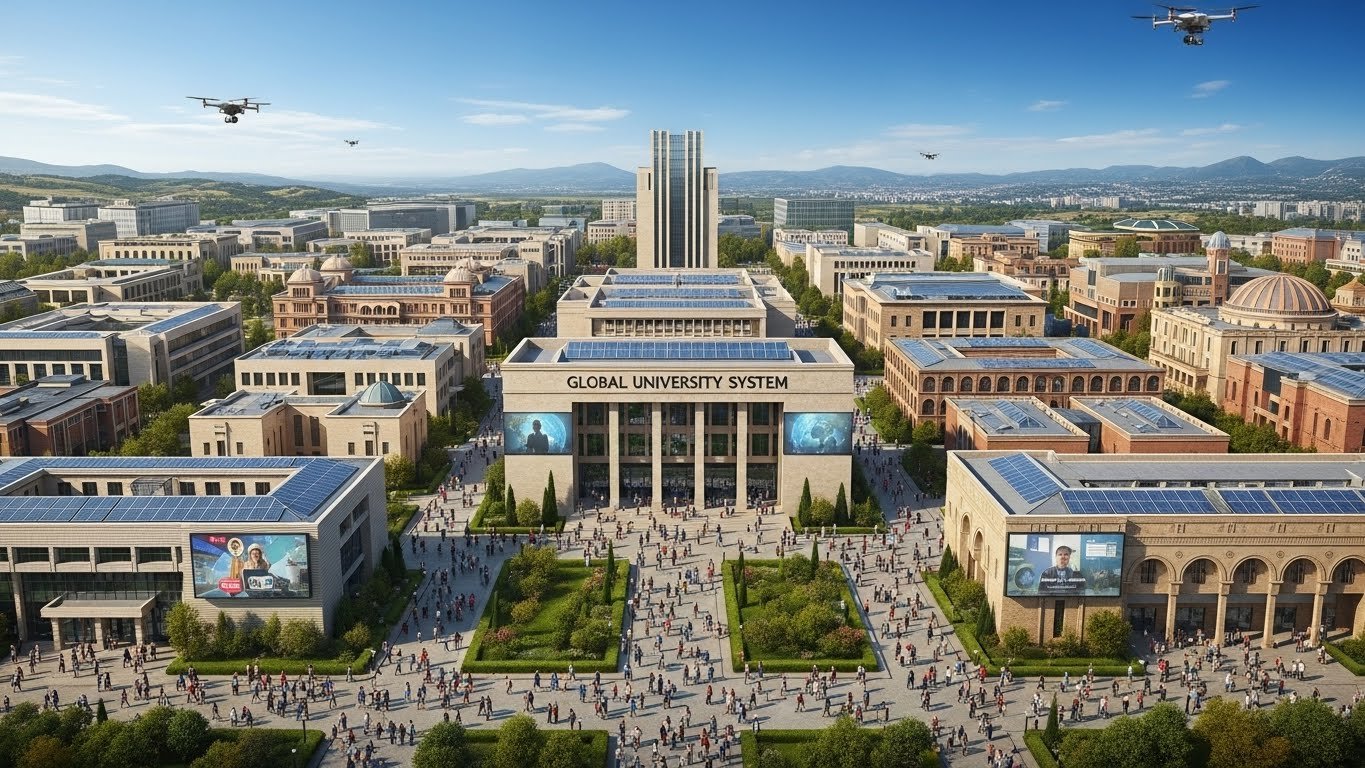
The future of education at scale extends beyond traditional degree programs. Lifelong learning is becoming essential in rapidly changing economies. Large university systems are increasingly offering micro-credentials, short courses, and flexible pathways to support continuous skill development. These innovations expand the scope of education at scale, making learning accessible throughout the lifespan. Flexibility and adaptability will define the next phase of scalable education.
Global Collaboration and Knowledge Sharing
As education systems grow, international collaboration becomes more important. Sharing best practices, research, and technology enhances the effectiveness of education at scale worldwide. Global networks of universities contribute to knowledge exchange and innovation, reinforcing the role of large systems in addressing global challenges.
Conclusion
Education at scale represents one of humanity’s most ambitious and transformative endeavors. The journey from near-universal basic schooling to the world’s largest university systems reflects decades of policy commitment, institutional innovation, and societal change. While challenges related to quality, equity, and sustainability persist, the achievements of scalable education systems are undeniable.
As technology advances and global needs evolve, education at scale will continue to adapt. By prioritizing inclusion, relevance, and lifelong learning, large education systems can empower individuals and societies alike. The future of global learning depends on how effectively education at scale balances access with excellence.
FAQs
Q: How did education at scale begin with basic schooling?
Education at scale began with government-led efforts to provide compulsory primary education, focusing on literacy and numeracy to support economic development and civic participation across entire populations.
Q: What factors enabled the expansion from basic schooling to mass higher education?
Economic transformation, demand for skilled labor, policy reforms, and institutional innovations enabled education systems to expand beyond basic schooling into mass secondary and higher education.
Q: How do the world’s largest university systems manage such large student populations?
They rely on centralized governance, standardized processes, advanced technology, and diversified delivery models such as online and blended learning to manage scale effectively.
Q: What are the main challenges of education at scale today?
Key challenges include maintaining quality, ensuring equity and inclusion, securing sustainable funding, and keeping curricula relevant to changing societal and labor market needs.
Q: What role will technology play in the future of education at scale?
Technology will continue to expand access through digital learning platforms, support personalized education at scale, and enable lifelong learning opportunities for diverse global populations.