

Does Bitcoin and XRP Benefit From Sanction-Driven De-Dollarization? The US-Venezuela Case

crypto adoption

COIN4U IN YOUR SOCIAL FEED

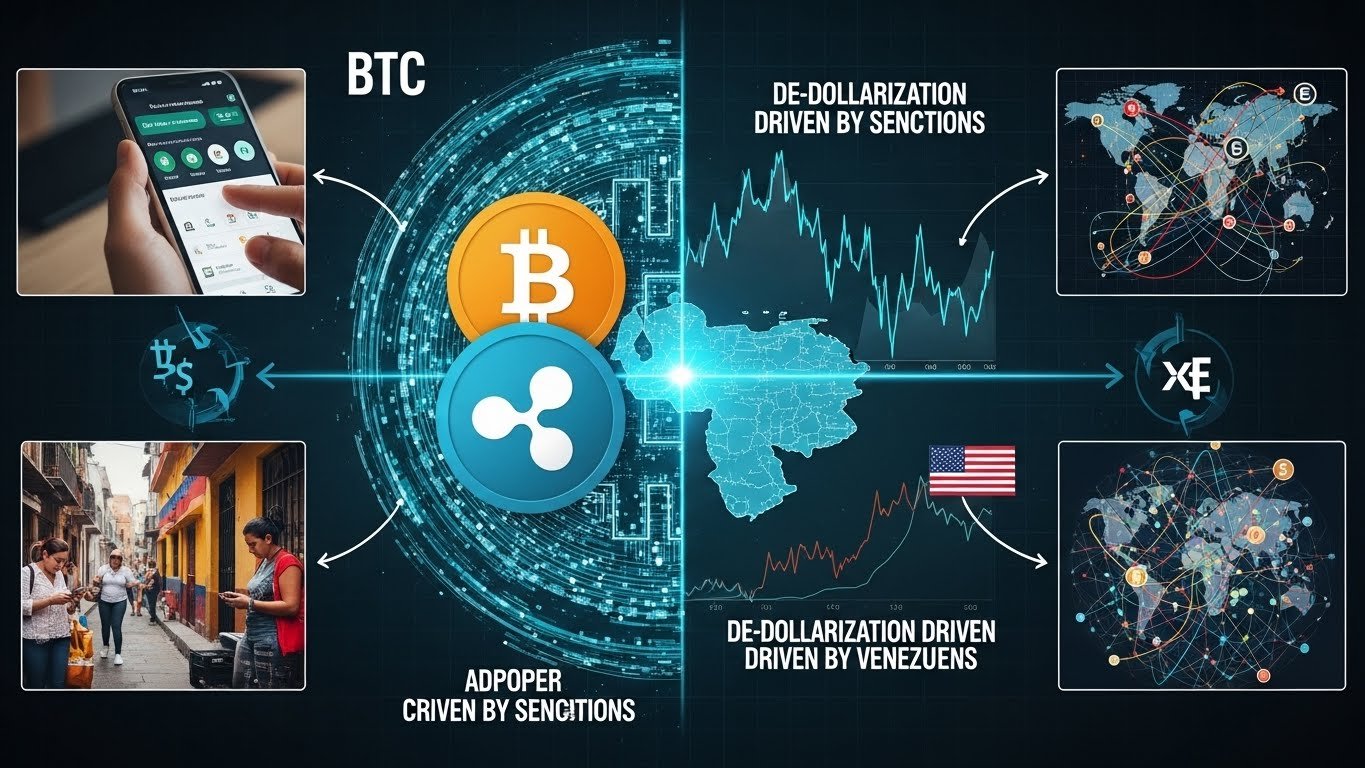
The global financial system is undergoing a slow but profound transformation as geopolitical tensions, economic sanctions, and shifting power dynamics challenge the dominance of the US dollar. One of the most debated outcomes of this transformation is sanction-driven de-dollarization, a process in which countries seek alternatives to dollar-based trade and finance. Within this evolving landscape, cryptocurrencies have emerged as potential tools for bypassing traditional financial rails. The question many investors and policymakers are asking is whether Bitcoin and XRP benefit from sanction-driven de-dollarization, particularly when examining real-world cases such as the long-standing US-Venezuela standoff.

The US-Venezuela case provides a compelling lens through which to analyze this issue. Venezuela has faced years of economic sanctions that restrict access to global banking systems, limit dollar liquidity, and complicate international trade. In response, the country has explored alternative payment mechanisms, experimented with digital assets, and sought ways to reduce reliance on the US dollar. This environment naturally raises interest in decentralized assets like Bitcoin and network-focused solutions like XRP.

Understanding whether Bitcoin and XRP benefit from sanction-driven de-dollarization requires a nuanced analysis. It is not simply about price movements or speculative interest but about structural shifts in how value is transferred, stored, and settled across borders. This article explores the dynamics of de-dollarization, the unique roles of Bitcoin and XRP, and how the US-Venezuela case illustrates broader global trends shaping the future of digital finance.

Understanding Sanction-Driven De-Dollarization

Sanction-driven de-dollarization occurs when countries targeted by economic sanctions actively seek to reduce their dependence on the US dollar and dollar-based financial systems. Sanctions often limit access to international payment networks, freeze assets, and restrict trade settlement in dollars. As a result, affected nations look for alternative currencies, bilateral trade agreements, or non-traditional financial instruments.

In the case of Venezuela, sanctions have constrained oil exports, foreign reserves, and access to global banking infrastructure. These restrictions have accelerated efforts to explore non-dollar settlement mechanisms. De-dollarization trends are not unique to Venezuela but are increasingly visible across regions facing similar pressures.

The broader implication of sanction-driven de-dollarization is a gradual diversification of the global monetary system. While the US dollar remains dominant, its exclusivity is being challenged. This creates potential openings for alternative assets, including cryptocurrencies, to play a supporting or complementary role in international finance.

The US-Venezuela Case as a Catalyst for Change

The US-Venezuela relationship highlights how sanctions can reshape financial behavior. Venezuela’s economy, heavily reliant on oil exports, has historically depended on dollar-denominated transactions. Sanctions disrupted this model, forcing the country to explore unconventional solutions.

Cryptocurrencies entered the conversation as tools for cross-border transactions and value storage outside traditional banking systems. While state-led initiatives have faced mixed results, the broader population and private actors have shown increasing interest in decentralized alternatives. This environment provides a real-world testing ground for understanding crypto adoption under sanctions.

The US-Venezuela case also illustrates the limitations of centralized financial control. When access to dollars is restricted, the appeal of borderless digital assets increases. This does not automatically translate into widespread adoption, but it does create conditions where cryptocurrencies become more relevant.

Bitcoin’s Role in a De-Dollarizing World

Bitcoin and XRP

Bitcoin is often positioned as a neutral, decentralized asset that operates independently of any single government. In the context of sanction-driven de-dollarization, Bitcoin’s core attributes become particularly relevant. Its fixed supply, censorship resistance, and global accessibility make it attractive to individuals and entities seeking alternatives to dollar-based systems.

For countries like Venezuela, Bitcoin offers a way to store value outside the domestic currency, which has suffered from severe inflation. It also provides a mechanism for cross-border transfers that are less reliant on traditional intermediaries. These characteristics support the argument that Bitcoin benefits from de-dollarization, at least in specific contexts.

However, Bitcoin’s volatility and scalability challenges limit its use as a primary settlement currency for large-scale trade. While it may serve as a hedge or supplemental asset, its role in replacing the dollar entirely remains constrained. The US-Venezuela case shows that Bitcoin’s benefits are more pronounced at the individual and small-business level rather than at the state level.

XRP and Its Position in Cross-Border Finance

XRP occupies a different niche within the cryptocurrency ecosystem. Designed to facilitate fast and low-cost cross-border payments, XRP aims to improve the efficiency of international settlements rather than replace existing currencies outright. In a de-dollarizing environment, this positioning offers unique advantages.

For countries facing sanctions, efficient settlement mechanisms are critical. XRP’s ability to act as a bridge asset between different currencies aligns with the needs of markets seeking alternatives to dollar-based correspondent banking. This supports the view that XRP use cases in sanctions could expand as traditional payment channels become less accessible.

The US-Venezuela case highlights the potential appeal of such solutions, although regulatory and infrastructure challenges remain. XRP’s effectiveness depends on institutional adoption and integration with existing financial systems, which can be complicated under sanctions. Nonetheless, its design aligns closely with the practical needs of cross-border trade in a fragmented financial landscape.

Comparing Bitcoin and XRP in De-Dollarization Scenarios

While both Bitcoin and XRP may benefit from sanction-driven de-dollarization, they do so in fundamentally different ways. Bitcoin functions as a store of value and a censorship-resistant network, while XRP focuses on transaction efficiency and liquidity management.

In the Venezuelan context, Bitcoin’s decentralized nature makes it more accessible to individuals seeking financial autonomy. XRP, on the other hand, is more relevant for institutions and payment providers looking to maintain cross-border operations despite restrictions. This distinction underscores the importance of understanding Bitcoin vs XRP de-dollarization roles rather than viewing them as direct competitors.

The coexistence of these assets reflects a broader trend toward financial pluralism. Different tools serve different needs, and de-dollarization does not imply a single replacement for the dollar but a mosaic of alternatives.

Geopolitical Implications of Crypto Adoption

The intersection of sanctions, de-dollarization, and cryptocurrency adoption has significant geopolitical implications. As countries explore alternatives to the dollar, the influence of US monetary policy may gradually diminish at the margins. Cryptocurrencies contribute to this shift by offering non-sovereign options for value transfer.

The US-Venezuela case demonstrates how geopolitical pressure can accelerate experimentation with digital assets. While this does not immediately undermine the dollar’s dominance, it introduces new variables into global finance. Geopolitics and cryptocurrency are becoming increasingly intertwined as states reassess their financial strategies.

This dynamic also raises questions about regulation and control. Governments may seek to balance the benefits of crypto innovation with concerns about capital flight, compliance, and financial stability. The outcome of this balancing act will shape how cryptocurrencies evolve within a de-dollarizing world.

Economic Realities and Adoption Barriers

Despite the theoretical benefits, practical barriers limit the extent to which Bitcoin and XRP can benefit from sanction-driven de-dollarization. Infrastructure gaps, regulatory uncertainty, and technological literacy remain significant challenges, particularly in developing economies.

In Venezuela, inconsistent internet access and regulatory ambiguity complicate widespread crypto adoption. Volatility also poses risks for users relying on cryptocurrencies for daily transactions. These factors highlight that crypto adoption challenges cannot be ignored when assessing real-world impact.

Nevertheless, incremental progress continues. Each instance of successful use reinforces confidence and builds experience, gradually lowering barriers to entry. Over time, these small steps contribute to a broader shift in financial behavior.

The Role of Public Perception and Trust

Public perception plays a crucial role in determining whether Bitcoin and XRP benefit from de-dollarization. Trust in traditional institutions often erodes under sanctions and economic hardship, creating space for alternative systems. Cryptocurrencies can fill this gap, but only if users perceive them as reliable and secure.

In Venezuela, trust in the local currency has declined sharply, increasing openness to alternatives. Bitcoin’s global reputation as a decentralized asset enhances its appeal, while XRP’s association with efficiency and speed supports its use in payments. Crypto trust and adoption are deeply interconnected and shaped by lived economic experiences.

Building trust requires education, transparency, and consistent performance. As more people become familiar with digital assets, their role in de-dollarization scenarios becomes more tangible.

Long-Term Outlook for Bitcoin and XRP
sanction-driven

Looking ahead, the relationship between sanction-driven de-dollarization and cryptocurrency adoption is likely to deepen. Bitcoin and XRP are positioned to benefit, but within specific parameters. Bitcoin’s role as a hedge and alternative store of value may strengthen, while XRP’s utility in cross-border settlements could expand where infrastructure and regulation allow.

The US-Venezuela case serves as an early indicator rather than a definitive blueprint. Other countries may follow different paths based on their economic structures and political objectives. Future of de-dollarization and crypto will likely involve a combination of digital assets, regional currencies, and new financial technologies. The key takeaway is that cryptocurrencies are no longer peripheral to discussions of global finance. They are increasingly part of strategic considerations, particularly in environments shaped by sanctions and monetary constraints.

Conclusion

So, does Bitcoin and XRP benefit from sanction-driven de-dollarization? The evidence suggests that they do, but in nuanced and context-dependent ways. The US-Venezuela case illustrates how sanctions can accelerate interest in alternatives to the dollar, creating opportunities for both decentralized and utility-focused digital assets.

Bitcoin benefits as a store of value and a censorship-resistant network, particularly for individuals seeking financial autonomy. XRP benefits through its potential to facilitate efficient cross-border payments in a fragmented financial system. Neither asset replaces the dollar outright, but both contribute to a more diversified and resilient global monetary landscape.

As de-dollarization trends continue to evolve, Bitcoin and XRP are likely to remain relevant components of the conversation. Their ultimate impact will depend on technological progress, regulatory clarity, and the willingness of users and institutions to embrace new financial paradigms.

FAQs

Q: How do economic sanctions encourage de-dollarization in countries like Venezuela?

Sanctions restrict access to dollar-based financial systems, forcing countries to seek alternative currencies and payment methods. This pressure accelerates de-dollarization by reducing reliance on the US dollar for trade and reserves.

Q: Why is Bitcoin often associated with sanction-driven de-dollarization?

Bitcoin’s decentralized nature allows it to operate outside traditional financial systems, making it attractive in environments where access to banks and dollars is limited due to sanctions.

Q: In what ways can XRP support cross-border transactions under sanctions?

XRP is designed to enable fast and low-cost cross-border settlements. In sanction-affected regions, it can act as a bridge asset to improve transaction efficiency when traditional correspondent banking is constrained.

Q: Does the US-Venezuela case prove that cryptocurrencies can replace the dollar?

The case shows that cryptocurrencies can supplement existing systems but does not prove they can fully replace the dollar. Their role is complementary rather than substitutional at this stage.

Q: What factors will determine whether Bitcoin and XRP benefit more from de-dollarization in the future?

Key factors include regulatory clarity, technological infrastructure, user education, and global economic conditions. These elements will shape how effectively cryptocurrencies integrate into de-dollarizing financial systems.


Explore more articles like this

Subscribe to the Finance Redefined newsletter

A weekly toolkit that breaks down the latest DeFi developments, offers sharp analysis, and uncovers new financial opportunities to help you make smart decisions with confidence. Delivered every Friday

By subscribing, you agree to our Terms of Services and Privacy Policy

READ MORE

Blockchain Implementation for Small Businesses 2025 Complete Guide

blockchain implementation for small businesses 2025

COIN4U IN YOUR SOCIAL FEED

The landscape of business technology is rapidly evolving, and blockchain implementation for small businesses 2025 represents one of the most significant opportunities for competitive advantage. As we move deeper into the digital age, small and medium enterprises (SMEs) are discovering that blockchain technology isn’t just for tech giants and cryptocurrency enthusiasts. This revolutionary technology offers tangible benefits that can transform how small businesses operate, from enhancing security and transparency to reducing operational costs and building customer trust.

Small businesses that embrace blockchain implementation for small businesses 2025 are positioning themselves at the forefront of innovation. Unlike previous years when blockchain seemed complex and expensive, today’s solutions are becoming more accessible, user-friendly, and cost-effective for smaller operations. The key lies in understanding which blockchain applications align with your business needs and how to implement them strategically without overwhelming your existing systems or budget.

What Is Blockchain Technology and Why It Matters for Small Businesses

Blockchain technology functions as a decentralized digital ledger that records transactions across multiple computers in a way that makes the records extremely difficult to alter, hack, or manipulate. Think of it as a digital filing cabinet that multiple trusted parties can access simultaneously, where each file is linked to the previous one, creating an unbreakable chain of information.

For small businesses, this technology offers unprecedented levels of security, transparency, and efficiency. Traditional business processes often involve multiple intermediaries, lengthy verification procedures, and significant paperwork. Blockchain eliminates many of these friction points by creating a single source of truth that all parties can trust without requiring a central authority.

The global blockchain market is projected to grow from $67.3 billion in 2024 to over $163 billion by 2029, with small and medium enterprises representing a rapidly growing segment of adopters. This growth indicates that early adopters will gain significant competitive advantages over businesses that wait to implement these technologies.

Key Benefits of Blockchain Implementation for Small Businesses 2025

Key Benefits of Blockchain Implementation for Small Businesses 2025

Enhanced Security and Data Protection

Small businesses are increasingly targeted by cybercriminals because they often lack the robust security infrastructure of larger corporations. Blockchain implementation provides military-grade security through cryptographic protection and decentralized storage. When data is stored on a blockchain, it becomes virtually impossible for hackers to compromise the entire system because they would need to simultaneously attack multiple nodes across the network.

This enhanced security is particularly valuable for businesses handling sensitive customer information, financial data, or proprietary business processes. The immutable nature of blockchain records means that once information is recorded, it cannot be altered without leaving a clear audit trail, providing exceptional accountability and transparency.

Improved Supply Chain Management and Traceability

Modern consumers increasingly demand transparency about the products they purchase, from sourcing to delivery. Blockchain technology enables small businesses to provide complete traceability of their products throughout the supply chain. Each step in the production and distribution process can be recorded on the blockchain, creating an unalterable record of a product’s journey.

This capability is especially valuable for businesses in food production, organic products, artisanal goods, or any industry where authenticity and quality verification are crucial selling points. Customers can scan a QR code and see exactly where their product came from, when it was made, and how it reached them.

Streamlined Payment Processing and Reduced Transaction Costs

Traditional payment processing involves multiple intermediaries, each taking a percentage of the transaction value. Blockchain-based payment systems can significantly reduce these costs by eliminating intermediaries and enabling direct peer-to-peer transactions. For small businesses operating on thin profit margins, these savings can be substantial.

Additionally, blockchain payments can be processed 24/7 without waiting for bank clearing times, improving cash flow and customer satisfaction. International transactions that traditionally take days and involve high fees can be completed in minutes with minimal costs.

Smart Contracts for Automated Business Processes

Smart contracts are self-executing contracts with terms directly written into code. They automatically execute when predetermined conditions are met, eliminating the need for intermediaries and reducing the potential for disputes. For small businesses, smart contracts can automate various processes including payments, delivery confirmations, service agreements, and compliance reporting.

Consider a small consulting firm that uses smart contracts to automatically release payments when project milestones are completed and verified. This automation reduces administrative overhead, ensures timely payments, and builds trust with clients through transparent, automated processes.

Practical Applications of Blockchain for Different Small Business Sectors

Retail and E-commerce Applications

Small retailers can leverage blockchain technology to combat counterfeit products, verify authentic goods, and build customer trust. Product authentication becomes seamless when each item has a unique blockchain identifier that customers can verify independently. This capability is particularly valuable for businesses selling luxury goods, organic products, or artisanal items where authenticity is a key value proposition.

E-commerce platforms can implement blockchain-based loyalty programs that are interoperable across different businesses, creating more valuable and flexible reward systems for customers. These programs can also provide detailed analytics about customer behavior while maintaining privacy through blockchain’s cryptographic features.

Service-Based Business Implementation

Professional service firms including legal practices, accounting firms, and consulting businesses can use blockchain technology to create tamper-proof records of their work, client communications, and deliverables. This creates an indisputable audit trail that can be valuable for compliance, dispute resolution, and quality assurance.

Time tracking and billing can be automated through smart contracts that record work completion and automatically generate invoices, reducing administrative overhead and ensuring accurate, transparent billing practices.

Manufacturing and Production Benefits

Small manufacturers can implement blockchain solutions to track raw materials, monitor production processes, and verify quality standards. This creates comprehensive documentation that can be valuable for regulatory compliance, quality control, and customer assurance.

Step-by-Step Guide to Blockchain Implementation for Small Businesses

Phase 1: Assessment and Planning

The first step in successful blockchain implementation involves conducting a thorough assessment of your current business processes to identify areas where blockchain technology can provide the most value. Not every business process benefits from blockchain implementation, so it’s crucial to focus on areas where the technology’s core strengths—transparency, security, and decentralization—address specific business challenges.

Begin by mapping your current workflows and identifying pain points such as manual verification processes, multiple intermediaries, trust issues with partners or customers, or high transaction costs. These areas typically offer the best opportunities for blockchain implementation.

Create a detailed implementation timeline that phases the rollout over several months, allowing your team to adapt gradually and learn from each phase before proceeding to the next. This approach minimizes disruption to existing operations while maximizing learning opportunities.

Phase 2: Technology Selection and Partner Evaluation

Selecting the right blockchain platform and implementation partners is crucial for success. Popular platforms for small business implementation include Ethereum for smart contracts, Hyperledger Fabric for private blockchain networks, and various blockchain-as-a-service (BaaS) platforms that reduce technical complexity.

Evaluate potential technology partners based on their experience with similar businesses, their approach to training and support, and their ability to scale solutions as your business grows. Look for partners who offer comprehensive support including initial setup, staff training, ongoing maintenance, and future upgrades.

Consider starting with pilot projects that allow you to test blockchain solutions on a small scale before full implementation. This approach reduces risk while providing valuable insights into how the technology integrates with your existing systems and processes.

Phase 3: Staff Training and Change Management

Successful blockchain implementation requires comprehensive staff training and effective change management strategies. Your team needs to understand not just how to use new blockchain-based systems, but also why these changes benefit the business and its customers.

Develop training programs that cater to different roles within your organization. Technical staff may need detailed training on blockchain platforms and smart contract development, while customer service representatives need to understand how to explain blockchain benefits to customers and troubleshoot common issues.

Create internal champions who can advocate for blockchain adoption and help other team members navigate the transition. These individuals should receive advanced training and be available to provide ongoing support as your team adapts to new processes.

Cost Analysis and ROI Expectations for 2025

Cost Analysis and ROI Expectations for 2025

Initial Implementation Investments

The cost of blockchain implementation for small businesses varies significantly based on the complexity of applications and the level of customization required. Basic blockchain integration for simple applications like payment processing or document verification can range from $5,000 to $25,000 for initial setup and first-year operations.

More complex implementations involving custom smart contracts, supply chain integration, or comprehensive business process automation typically require investments between $25,000 and $100,000.

Many blockchain-as-a-service platforms offer subscription-based pricing models that spread costs over time and include ongoing support, updates, and maintenance. These models can be particularly attractive for small businesses because they provide predictable monthly expenses rather than large upfront investments.

Expected Return on Investment Timeframes

Most small businesses implementing blockchain solutions see measurable returns within 12 to 18 months, with the timeline varying based on the specific applications deployed. Businesses focusing on cost reduction through automated processes and reduced intermediary fees often see returns more quickly than those implementing blockchain for competitive differentiation or new revenue streams.

Payment processing improvements typically deliver immediate cost savings, while supply chain transparency and customer trust benefits may take longer to translate into increased sales but often provide more substantial long-term value.

Track key performance indicators including transaction costs, processing times, customer satisfaction scores, and operational efficiency metrics to measure the impact of your blockchain implementation accurately.

Common Challenges and How to Overcome Them

Technical Integration Difficulties

One of the most significant challenges in blockchain implementation is integrating new blockchain systems with existing business software and processes.

Address integration challenges by working with experienced blockchain consultants who understand both blockchain technology and traditional business systems. Plan for gradual integration rather than attempting to replace all systems simultaneously, allowing time to resolve compatibility issues and train staff on new processes.

Consider using hybrid approaches that gradually transition processes to blockchain while maintaining existing systems for non-blockchain functions. This approach reduces risk while allowing your business to benefit from blockchain advantages in specific areas.

Regulatory Compliance and Legal Considerations

Blockchain technology operates in a rapidly evolving regulatory environment, and small businesses must ensure their implementations comply with applicable laws and regulations. Different industries and jurisdictions have varying requirements for data protection, financial transactions, and record-keeping that may impact blockchain implementation strategies.

Work with legal advisors who understand both blockchain technology and your industry’s regulatory requirements. Stay informed about regulatory developments that may impact your blockchain implementations, and design systems with flexibility to adapt to changing requirements.

Document your blockchain processes thoroughly to demonstrate compliance with regulatory requirements and facilitate audits or inspections. Clear documentation also helps staff understand compliance responsibilities and reduces the risk of inadvertent violations.

Staff Resistance and Adoption Issues

Introducing new technology often faces resistance from staff members who are comfortable with existing processes and concerned about learning new systems. This resistance can significantly impact the success of blockchain implementation if not addressed proactively.

Involve staff members in the planning and implementation process to build buy-in and address concerns early. Provide clear explanations of how blockchain technology will improve their work processes and benefit the overall business, emphasizing opportunities for professional development and increased job security through new skills.

Implement comprehensive training programs that accommodate different learning styles and technical comfort levels. Provide ongoing support and create opportunities for staff to share their experiences and learn from each other as they adapt to new blockchain-based processes.

Future Trends and Opportunities in Small Business Blockchain Adoption

Emerging Blockchain Technologies for SMEs

The blockchain technology landscape continues to evolve rapidly, with new developments specifically designed to address small business needs.

Artificial intelligence integration with blockchain technology is creating new opportunities for automated decision-making, predictive analytics, and enhanced security. These AI-enhanced blockchain solutions can provide small businesses with enterprise-level capabilities at affordable prices.

Green blockchain initiatives are addressing environmental concerns while providing cost-effective solutions for small businesses. Proof-of-stake consensus mechanisms and energy-efficient blockchain platforms are making blockchain adoption more sustainable and socially responsible.

Industry-Specific Blockchain Solutions

Specialized blockchain solutions tailored to specific industries are becoming more prevalent, making implementation easier for small businesses in targeted sectors. Healthcare blockchain solutions address HIPAA compliance while enabling secure patient data sharing. Real estate blockchain platforms streamline property transactions and title management.

Supply chain blockchain platforms specific to agriculture, manufacturing, and retail are providing turnkey solutions that small businesses can implement quickly without extensive custom development.

Conclusion

The opportunity for blockchain implementation for small businesses 2025 has never been more accessible or promising. As technology costs decrease and solutions become more user-friendly, small businesses.That act now will gain significant competitive advantages over those who delay adoption. The key to success lies in starting with focused applications that address specific business challenges while building toward more comprehensive implementations over time.

The businesses that will thrive in the coming years are those that embrace technological.Innovation while maintaining focus on customer value and operational efficiency. Blockchain technology offers the perfect combination of cutting-edge innovation and practical business benefits that can transform how small businesses operate, compete, and grow.

LEARN MORE:How Blockchain Technology Transforms Supply Chain Management

Explore more articles like this

Subscribe to the Finance Redefined newsletter

A weekly toolkit that breaks down the latest DeFi developments, offers sharp analysis, and uncovers new financial opportunities to help you make smart decisions with confidence. Delivered every Friday

By subscribing, you agree to our Terms of Services and Privacy Policy

READ MORE

ADD PLACEHOLDER