


























Elliptic Reports 700% Surge in Cryptocurrency Outflows from Iran Following Airstrikes

Cryptocurrency Outflows

COIN4U IN YOUR SOCIAL FEED

The global financial world once again witnesses how geopolitical crises and digital asset flows intersect, as blockchain analytics firm Elliptic revealed a staggering 700% surge in cryptocurrency outflows from Iran following recent US‑Israeli airstrikes on Tehran and other key locations. This dramatic spike, which occurred almost instantly after the first military strikes, has raised urgent questions about capital flight, financial stability, sanctions evasion, and the evolving role of cryptocurrencies in times of international strife. According to Elliptic’s on‑chain data analysis, Iran’s largest cryptocurrency exchange Nobitex experienced an unprecedented jump in outgoing transaction volume. How digital assets often serve as both a financial lifeline and a controversial tool during crises that disrupt traditional banking systems. The surge highlights broader patterns of economic behavior under duress and the complex dynamics of digital finance in regions facing intense geopolitical pressure.

Understanding the Elliptic Report and Its Immediate Context

In the wake of coordinated US and Israeli airstrikes against targets within Iran, blockchain monitoring firm Elliptic released a detailed report showing that transaction volumes leaving Iranian crypto exchange Nobitex spiked by 700% within minutes of the initial attacks. This kind of reaction illustrates how global events can instantly affect crypto markets and investor behavior, especially in jurisdictions where traditional economic channels are already constrained. Elliptic’s analysis points to substantial movement of digital assets from within Iran to offshore platforms . Users rapidly sought to preserve value or move funds beyond the reach of local controls.

Nobitex, which processed approximately $7.2 billion in crypto transactions in 2025 and serves millions of users, plays a central role in Iran’.  Its prominence means that large fluctuations in activity on the platform — such as the sudden outflows documented — can offer significant insights into how economic participants respond to political shocks and security threats. In this case, the surge in outflows signals emergency financial behaviors that extend far beyond normal market movements.

What the 700% Surge Reveals About Capital Flight and Crisis Response

The 700% surge in crypto outflows from Iran’s largest exchange isn’t merely a statistical anomaly; it reflects deeper patterns tied to how individuals and institutions seek to protect assets during crisis. When faced with heightened risk — whether from potential exchange shutdowns, fear of asset seizure, or collapsing financial infrastructure — market participants often turn to digital assets as a relatively fast and borderless means of moving value. Cryptocurrencies like Bitcoin and stablecoins provide an alternative avenue to shift funds abroad, bypassing the slower, regulated banking system.

This phenomenon is frequently referred to as capital flight, where value rapidly exits a country in response to economic instability or political upheaval. In Iran’s case, the fear of crackdown, international isolation, or further financial sanctions can drive both retail holders and larger participants to convert local currency into cryptoassets and transfer them to foreign wallets or exchanges that are perceived as safer or more accessible.

Furthermore, the speed of these transactions — with volumes jumping within minutes of airstrikes — shows how digital financial systems can react to real‑world events far more quickly than traditional mechanisms. The real‑time nature of blockchain makes it possible to observe these patterns almost instantly, giving analysts like those at Elliptic invaluable tools to monitor and understand global capital movements.

The Role of Cryptocurrencies in Sanctions and Financial Restrictions

Iran’s enduring struggle with international sanctions has made cryptocurrencies a recurring topic in discussions about financial resilience and evasion. Over the past years, digital assets have offered a way for Iranians to engage in global trade and preserve economic value despite strict limitations on cross‑border transactions and banking access. Elliptic’s report underscores this delicate balance by showing how crypto flows can accelerate sharply in times of heightened economic stress, potentially circumventing traditional banking restrictions.

While some observers view this as a natural response to financial isolation, others express concern that such movements could undermine sanctions enforcement and create avenues for illicit activity. Cryptocurrencies do not inherently distinguish legitimate financial transfers from those aimed at evading regulatory oversight, and blockchain analytics firms like Elliptic often find themselves at the center of efforts to trace and interpret these flows. Their work reveals not only the raw data of movement but also the broader implications for compliance, regulation, and international financial security.

How the Airstrikes Triggered an Immediate Crypto Market Reaction

The catalyst for this latest surge in activity was the sudden escalation of conflict following US and Israeli military actions, which created an acute sense of uncertainty throughout Iran’s financial and economic landscape. In situations where domestic banking becomes unreliable or inaccessible, digital assets often emerge as an alternative means to protect wealth or ensure liquidity. As news of the airstrikes spread and concerns over government response and economic fallout grew, Iranian crypto users began converting rials to digital assets and withdrawing them from Nobitex at an extraordinary pace.

This response also coincides with past patterns noted in Elliptic’s data, where crypto outflows spiked during earlier episodes of domestic unrest, such as widespread protests and government‑imposed internet blackouts. These patterns illustrate how geopolitical and domestic stressors can interact with financial technology, creating even greater volatility in asset flows.

Mapping Outflows: Where Are the Funds Going?
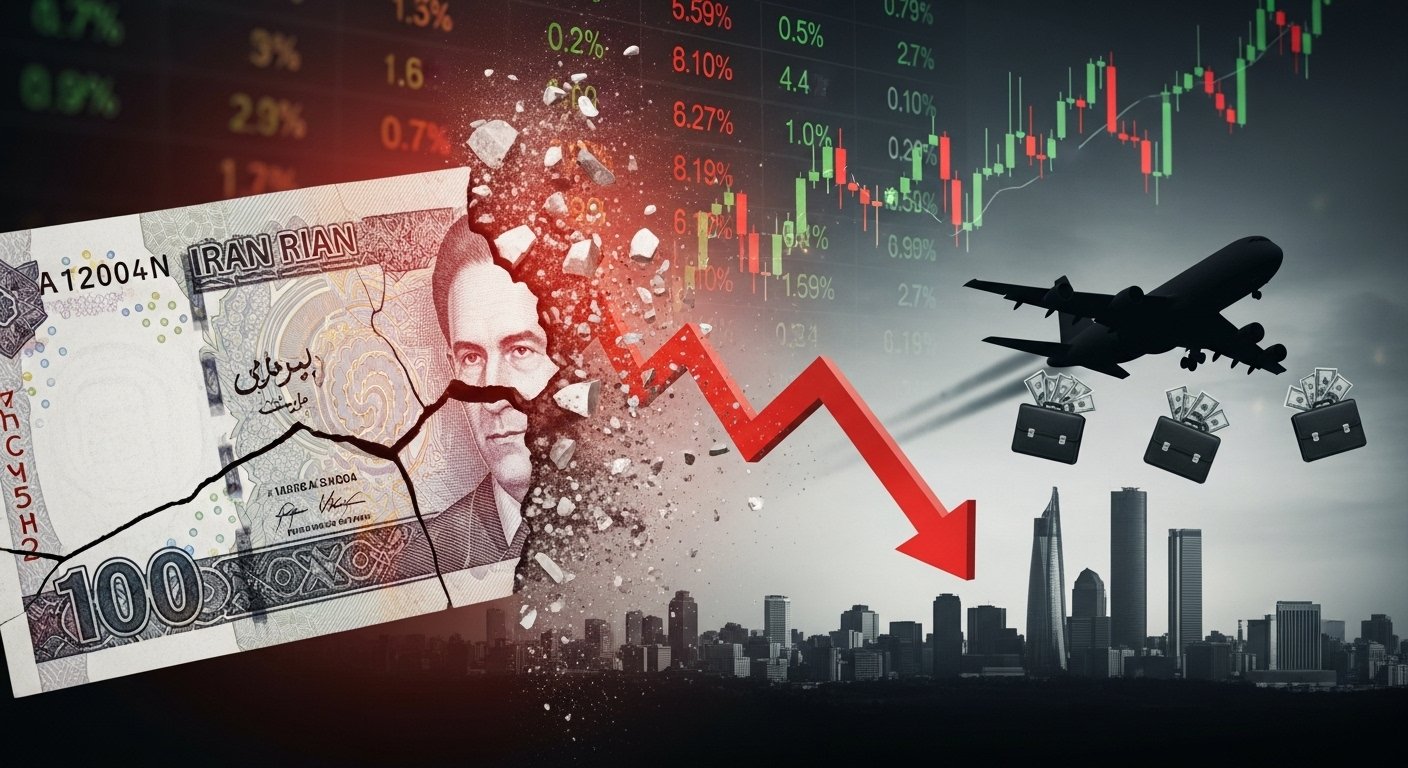
geopolitical tension.

Elliptic’s tracing work indicates that much of the outflow from Nobitex did not dissipate but was instead redirected to overseas exchanges that have historically received funds from Iranian accounts. This suggests that participants were not merely liquidating into local cash but actively seeking jurisdictions and platforms where their assets could be stored or traded in a more stable environment.

The flow of funds to foreign exchanges raises significant questions about international liquidity, regulatory compliance, and tracking mechanisms. While crypto’s transparency allows on‑chain tracing of movements, identifying the ultimate owners and intent behind transfers remains challenging, especially when assets move through multiple wallets and platforms. This creates both opportunities and complications for authorities and financial analysts striving to maintain oversight in an increasingly digital world.

Broader Implications for Iran’s Economy and the Crypto Sector

The recent outflow surge could have lasting implications for Iran’s domestic financial ecosystem and the global crypto market. If confidence in local financial infrastructure continues to erode, more users may turn to digital assets as a long‑term store of value or hedge against instability. At the same time, increased outflows can strain liquidity on local exchanges. Lead to price disparities between regional trading pairs, and create distinct market dynamics that are sensitive to geopolitical shifts.

Moreover, the international community is likely to scrutinize such movements more closely, as large‑scale transfers in times of conflict raise concerns about compliance with sanctions regimes and the potential for misuse of digital assets. Blockchain analytics firms like Elliptic will continue to play a vital role in monitoring and interpreting these trends, offering insights that help shape regulatory responses and compliance practices worldwide.

What This Means for Traders, Regulators, and Ordinary Citizens

For crypto traders, a 700% spike in outflows serves as a stark reminder of how quickly market dynamics can change in response to geopolitical tension. Volatility is often magnified in such scenarios, and traders must weigh not only traditional market signals but also broader political developments that could influence asset flows.

Regulators, on the other hand, face the ongoing challenge of balancing financial freedom with compliance, ensuring that digital asset platforms cannot be exploited for illicit finance or sanctions evasion. Elliptic’s work highlights the importance of transparent on‑chain analysis and collaborative regulatory frameworks to detect and deter suspicious movements.

For ordinary citizens in Iran, these trends reflect deeper concerns about economic stability, access to financial services, and the role of digital currencies in everyday life. When traditional banking can no longer guarantee safety or accessibility, alternative systems like blockchain technology become more than an investment — they become a vital part of economic survival.

Conclusion

The 700% surge in cryptocurrency outflows from Iran following the recent airstrikes — as reported by Elliptic — underscores the profound impact that geopolitical events can have on financial behavior, particularly within the realm of digital assets. This dramatic increase illuminates how crisis conditions catalyze rapid capital movement, demonstrating both the power and risk inherent in cryptocurrency markets. From potential capital flight and sanctions implications to the resilience of blockchain infrastructure. The situation offers a vivid example of digital finance’s evolving role in global economics and international relations. As the world watches these trends unfold, it remains clear that the intersection of geopolitics and crypto will continue to shape financial landscapes far into the future.

FAQs

Q: What exactly caused the 700% surge in cryptocurrency outflows from Iran’s Nobitex after the airstrikes?

The 700% surge in cryptocurrency outflows from Iran’s Nobitex exchange was triggered almost immediately after coordinated US and Israeli airstrikes targeted Iranian infrastructure, creating severe uncertainty about the stability of local financial systems. Blockchain analytics firm Elliptic reported that within minutes users began rapidly converting rials into cryptoassets and withdrawing them to external wallets or offshore exchanges, indicating an urgent effort to move capital out of the country and bypass traditional financial disruptions.

Q: Why would people use cryptocurrencies instead of traditional banking systems during geopolitical crises?

In times of geopolitical crisis or economic instability, cryptocurrencies offer unique advantages, including faster settlement, lower barriers to cross‑border transfers, and the ability to operate independently of centralized banking systems. In a situation where banking infrastructure might be compromised or access restricted due to sanctions, sanctions evasion . Government controls, digital assets like Bitcoin and stablecoins become a viable alternative for preserving and relocating value quickly.

Q: Does a spike in crypto outflows always indicate illegal activity or sanctions evasion?

Not necessarily. While spikes in crypto outflows can raise regulatory concerns — especially in contexts where sanctions are in place — they do not inherently prove illegal activity. Sudden increases in withdrawals can stem from a wide range of motivations, including fear of financial instability, hedge against currency devaluation. Relocation of savings, or shifts into self‑custody wallets. Blockchain analysis helps distinguish patterns, but context is crucial in interpreting intent.

Q: How do analytics firms like Elliptic trace where funds go after leaving an exchange?

Analytics firms such as Elliptic track on‑chain transaction data, which records every transfer of cryptocurrency on public blockchains. By following the path of digital assets through multiple wallet addresses and exchanges, they can identify . When funds move from local exchanges like Nobitex to foreign platforms. This tracing helps determine flow patterns, identify common destination points, and alert regulators to suspicious movements associated with sanctions or illicit finance.

Q: What might the long‑term impact of this surge be on Iran’s economy and global crypto markets?

In the long term, a 700% surge in outflows may signal ongoing capital flight and declining confidence in domestic financial infrastructure, potentially pushing more Iranian users toward decentralized finance and crypto solutions. For global markets, sustained large‑scale movements from high‑stress jurisdictions could increase volatility. Trigger regulatory scrutiny, and influence how exchanges worldwide handle compliance and monitoring of international flows. This scenario highlights the growing importance of robust blockchain analytics and international cooperation to balance financial freedom with security.


Explore more articles like this

Subscribe to the Finance Redefined newsletter

A weekly toolkit that breaks down the latest DeFi developments, offers sharp analysis, and uncovers new financial opportunities to help you make smart decisions with confidence. Delivered every Friday

By subscribing, you agree to our Terms of Services and Privacy Policy

READ MORE

Best Cryptocurrency Exchange for Beginners

best cryptocurrency exchange for beginners

COIN4U IN YOUR SOCIAL FEED

Starting your cryptocurrency journey can feel overwhelming with hundreds of trading platforms available today. Finding the best cryptocurrency exchange for beginners is crucial for a safe and successful entry into the digital asset world. Whether you’re looking to buy your first Bitcoin, explore altcoins, or understand blockchain technology, choosing the right platform will significantly impact your trading experience.

The cryptocurrency market has evolved dramatically, with exchanges now offering user-friendly interfaces, educational resources, and robust security measures specifically designed for newcomers. In this comprehensive guide, we’ll explore the top cryptocurrency exchanges that cater to beginners, analyzing their features, fees, security protocols, and ease of use. By the end of this article, you’ll have all the information needed to confidently select the best cryptocurrency exchange for beginners that aligns with your trading goals and risk tolerance.

What Makes the Best Cryptocurrency Exchange for Beginners?

When evaluating cryptocurrency exchanges for newcomers, several critical factors distinguish the best platforms from mediocre ones. Understanding these elements will help you make an informed decision and avoid common pitfalls that many beginners encounter.

User-Friendly Interface and Navigation

The best cryptocurrency exchange for beginners must prioritize simplicity without sacrificing functionality. New traders need intuitive dashboards that clearly display account balances, trading pairs, and market information. Complex charts and advanced trading tools should be optional features rather than overwhelming primary interfaces.

Look for exchanges that offer guided tutorials, tooltips, and clear labeling of all functions. The registration process should be straightforward, with step-by-step verification procedures that don’t intimidate newcomers to the crypto space.

Educational Resources and Support

Top-tier beginner exchanges invest heavily in educational content. This includes comprehensive learning centers, video tutorials, glossaries of cryptocurrency terms, and market analysis tools. Some platforms even offer simulated trading environments where beginners can practice without risking real money.

Customer support quality is equally important. The best exchanges provide multiple contact methods including live chat, email support, and comprehensive FAQ sections. Response times should be reasonable, and support staff should be knowledgeable about both technical issues and basic cryptocurrency concepts.

Security Features and Regulatory Compliance

Security cannot be compromised when selecting a cryptocurrency exchange. Beginners are often targets for scams and phishing attempts, making robust security measures essential. Look for exchanges that implement:

  • Two-factor authentication (2FA)
  • Cold storage for user funds
  • SSL encryption for all transactions
  • Regular security audits
  • Insurance coverage for digital assets
  • Regulatory compliance in your jurisdiction

Top 7 Best Cryptocurrency Exchanges for Beginners in 2025

Top 7 Best Cryptocurrency Exchanges for Beginners in 2025

1. Coinbase: The Most Beginner-Friendly Platform

Coinbase consistently ranks as the best cryptocurrency exchange for beginners due to its exceptional user experience and comprehensive educational programs. The platform offers a clean, intuitive interface that makes buying, selling, and storing cryptocurrencies straightforward for newcomers.

Key Features:

  • Simple buy/sell interface with bank account integration
  • Coinbase Earn program offering free crypto for learning
  • Mobile app with full functionality
  • FDIC insurance on USD deposits
  • Support for 100+ cryptocurrencies

Pros:

  • Excellent for first-time crypto buyers
  • Strong regulatory compliance
  • Educational resources and tutorials
  • User-friendly mobile application

Cons:

  • Higher fees compared to advanced exchanges
  • Limited advanced trading features
  • Geographic restrictions in some regions

Fee Structure: Coinbase charges a spread of approximately 0.5% for cryptocurrency purchases, plus additional fees ranging from 1.49% for bank transfers to 3.99% for debit card purchases.

Binance.US: Comprehensive Trading with Beginner Support

Binance.US offers an excellent balance between beginner-friendly features and advanced trading capabilities. The platform provides both basic and professional trading interfaces, allowing users to grow their skills over time.

Key Features:

  • Dual interface options (Basic and Advanced)
  • Extensive cryptocurrency selection
  • Educational academy with free courses
  • Low trading fees
  • Mobile app with simplified trading

Pros:

  • Competitive fee structure
  • Wide selection of cryptocurrencies
  • Both spot and futures trading
  • Strong security measures

Cons:

  • Interface can be overwhelming initially
  • Limited customer support
  • Not available in all US states

Kraken: Security-Focused Exchange with Educational Support

Kraken has built a reputation as one of the most secure cryptocurrency exchanges while maintaining accessibility for beginners. The platform offers extensive educational resources and a tiered verification system that allows users to start trading quickly.

Key Features:

  • Industry-leading security protocols
  • Kraken Learn educational platform
  • Multiple order types for skill development
  • 24/7 customer support
  • Staking opportunities for passive income

Pros:

  • Excellent security track record
  • Comprehensive customer support
  • Educational content library
  • Reasonable fee structure

Cons:

  • Interface less intuitive than competitors
  • Limited payment methods
  • Verification process can be lengthy

4. Gemini: Regulated and Trustworthy

Founded by the Winklevoss twins, Gemini emphasizes regulatory compliance and security. The platform offers a clean interface designed specifically for beginners while maintaining professional-grade security standards.

Key Features:

  • FDIC insurance on USD deposits
  • Gemini Earn for passive income
  • Dollar-cost averaging features
  • Mobile app with simplified trading
  • Regulatory compliance focus

Pros:

  • Strong regulatory standing
  • Insurance coverage for digital assets
  • User-friendly mobile app
  • Educational resources

Cons:

  • Limited cryptocurrency selection
  • Higher fees than some competitors
  • Geographic restrictions

eToro: Social Trading Platform

eToro combines cryptocurrency trading with social investing features, making it an interesting option for beginners who want to learn from experienced traders. The platform’s copy trading feature allows newcomers to mirror successful investors’ strategies.

Key Features:

  • Social trading and copy investing
  • No commission cryptocurrency trading
  • Educational webinars and content
  • User-friendly interface
  • Demo account for practice trading

Pros:

  • Learn from experienced traders
  • Zero commission on crypto trades
  • Practice account available
  • Social features for community learning

Cons:

  • Limited cryptocurrency selection
  • Withdrawal fees can be high
  • Not available in all regions

6. Crypto.com: Comprehensive Crypto Ecosystem

Crypto.com offers a complete cryptocurrency ecosystem including exchange services, a debit card, and various earning opportunities. The platform provides excellent mobile apps and educational resources for beginners.

Key Features:

  • Crypto.com Visa card with rewards
  • Earn products for passive income
  • Comprehensive mobile app
  • Educational content library
  • Wide range of cryptocurrencies

Pros:

  • All-in-one crypto platform
  • Attractive reward programs
  • Strong mobile experience
  • Multiple earning opportunities

Cons:

  • Complex fee structure
  • Some features require significant investment
  • Customer support can be slow

7. Robinhood: Commission-Free Crypto Trading

While primarily known as a stock trading app, Robinhood has expanded to offer commission-free cryptocurrency trading. The platform’s familiar interface makes it appealing to beginners already comfortable with traditional investing.

Key Features:

  • Commission-free trading
  • Familiar stock trading interface
  • Easy integration with stock portfolio
  • Mobile-first design
  • No minimum investment requirements

Pros:

  • No trading commissions
  • Simple, familiar interface
  • Easy portfolio diversification
  • Beginner-friendly design

Cons:

  • Limited cryptocurrency selection
  • No wallet transfers initially
  • Basic charting tools
  • Limited educational resources

Essential Features to Look for When Choosing Your First Exchange

Security Measures and Insurance

Security should be your top priority when selecting a cryptocurrency exchange. The best cryptocurrency exchange for beginners implements multiple layers of security to protect user funds and personal information.

Look for exchanges that store the majority of user funds in cold storage, offline wallets that are immune to hacking attempts. Two-factor authentication should be mandatory, not optional. Some exchanges also offer insurance coverage for digital assets stored on their platform.

Fee Structure and Transparency

Understanding fee structures is crucial for beginners who may not realize how trading costs can impact their profits. The best exchanges provide clear, transparent fee schedules without hidden charges.

Consider these fee types:

  • Trading fees (maker/taker fees)
  • Deposit and withdrawal fees
  • Spread charges on instant purchases
  • Network fees for blockchain transactions

Available Payment Methods

Beginners need convenient ways to fund their accounts. Look for exchanges that support multiple payment methods including:

  • Bank transfers (ACH)
  • Debit and credit cards
  • PayPal or other digital wallets
  • Wire transfers for larger amounts

Each payment method typically has different fees and processing times, so consider your preferences and financial situation.

Customer Support Quality

Quality customer support is essential, especially for beginners who may encounter technical issues or have questions about cryptocurrency trading. The best exchanges offer:

  • Multiple contact methods (chat, email, phone)
  • Comprehensive FAQ sections
  • Educational resources and tutorials
  • Reasonable response times
  • Knowledgeable support staff

Getting Started: Step-by-Step Guide to Your First Crypto Purchase

Account Creation and Verification

Creating your first cryptocurrency exchange account is straightforward on most beginner-friendly platforms. Start by visiting your chosen exchange’s website and clicking the registration button.

You’ll need to provide basic information including your name, email address, and create a strong password. Most exchanges require identity verification to comply with regulatory requirements. Have these documents ready:

  • Government-issued photo ID (driver’s license or passport)
  • Proof of address (utility bill or bank statement)
  • Social Security number (for US residents)

The verification process typically takes 24-48 hours, though some exchanges offer instant verification for smaller transaction limits.

Setting Up Security Features

Before making your first cryptocurrency purchase, enable all available security features:

  1. Two-Factor Authentication (2FA): Use an authenticator app rather than SMS when possible
  2. Strong Password: Create a unique password for your exchange account
  3. Email Notifications: Enable alerts for all account activities
  4. Withdrawal Whitelist: Restrict withdrawals to pre-approved addresses

Making Your First Purchase

Once your account is verified and secured, you’re ready to buy cryptocurrency. Most beginner exchanges offer simplified purchase interfaces:

  1. Select Payment Method: Choose how you’ll fund your purchase
  2. Choose Cryptocurrency: Start with major cryptocurrencies like Bitcoin or Ethereum
  3. Enter Amount: Decide how much you want to invest
  4. Review and Confirm: Double-check all details before completing the transaction

Storing Your Cryptocurrency

After purchasing cryptocurrency, you have two main storage options:

Exchange Wallets: Convenient for active trading but less secure for long-term storage. The exchange controls your private keys, meaning you don’t have complete control over your funds.

Personal Wallets: More secure for long-term storage. Hardware wallets offer the highest security for larger amounts, while mobile and desktop wallets provide a balance of security and convenience.

Common Mistakes Beginners Make and How to Avoid Them

Falling for Scams and Phishing Attempts

Cryptocurrency beginners are frequent targets for scammers. Common scams include:

  • Fake exchange websites with similar URLs
  • Phishing emails requesting login credentials
  • “Get rich quick” investment schemes
  • Fake customer support representatives

Always verify website URLs, never share your login credentials, and be skeptical of unsolicited investment opportunities.

Emotional Trading and FOMO

Fear of missing out (FOMO) drives many beginners to make impulsive trading decisions. Successful cryptocurrency investing requires patience and strategy. Consider these approaches:

  • Dollar-cost averaging to reduce timing risk
  • Setting investment limits before trading
  • Avoiding emotional decisions based on short-term price movements
  • Developing a long-term investment strategy

Neglecting Security Best Practices

Security oversights can result in significant financial losses. Essential security practices include:

  • Using unique passwords for exchange accounts
  • Enabling two-factor authentication
  • Regularly updating software and apps
  • Being cautious with public Wi-Fi for trading activities

Advanced Features for Growing Traders

Advanced Features for Growing Traders

Staking and Earning Opportunities

As you become more comfortable with cryptocurrency, many exchanges offer opportunities to earn passive income through staking. This process involves holding certain cryptocurrencies to support blockchain networks in exchange for rewards.

Popular staking options include:

  • Ethereum 2.0 staking
  • Cardano (ADA) staking
  • Polkadot (DOT) staking
  • Various DeFi lending protocols

Dollar-Cost Averaging (DCA) Tools

Dollar-cost averaging involves making regular, smaller purchases regardless of price fluctuations. This strategy helps reduce the impact of volatility and removes emotional decision-making from investing.

Many exchanges now offer automated DCA features that allow you to:

  • Set up recurring purchases
  • Customize purchase amounts and frequency
  • Track your average cost basis over time
  • Adjust or cancel schedules as needed

Educational Programs and Certifications

The best cryptocurrency exchange for beginners often provides comprehensive educational programs. These may include:

  • Free online courses covering blockchain basics
  • Certification programs for advanced concepts
  • Webinars with industry experts
  • Market analysis and trading tutorials

Regulatory Landscape and Compliance

Understanding the regulatory environment is crucial for beginner cryptocurrency traders. The landscape varies significantly by country and continues to evolve rapidly.

United States Regulations

In the US, cryptocurrency exchanges must comply with various federal and state regulations:

  • Register as Money Service Businesses (MSB)
  • Implement Anti-Money Laundering (AML) procedures
  • Follow Know Your Customer (KYC) requirements
  • Comply with state-specific licensing requirements

International Considerations

If you’re trading internationally or traveling, be aware that cryptocurrency regulations vary by country. Some nations have banned cryptocurrency trading entirely, while others have embraced digital assets with comprehensive regulatory frameworks.

Conclusion

Selecting the best cryptocurrency exchange for beginners is a crucial first step in your digital asset journey. The platforms discussed in this guide offer different strengths, from Coinbase’s user-friendly interface to Binance.US’s comprehensive trading features and Kraken’s security focus.

Remember that the ideal exchange depends on your specific needs, location, and investment goals. Start with one of these beginner-friendly platforms, focus on learning the basics, and prioritize security above all else. As your knowledge and confidence grow, you can explore more advanced features and potentially migrate to different platforms that better suit your evolving needs.

Explore more articles like this

Subscribe to the Finance Redefined newsletter

A weekly toolkit that breaks down the latest DeFi developments, offers sharp analysis, and uncovers new financial opportunities to help you make smart decisions with confidence. Delivered every Friday

By subscribing, you agree to our Terms of Services and Privacy Policy

READ MORE

ADD PLACEHOLDER