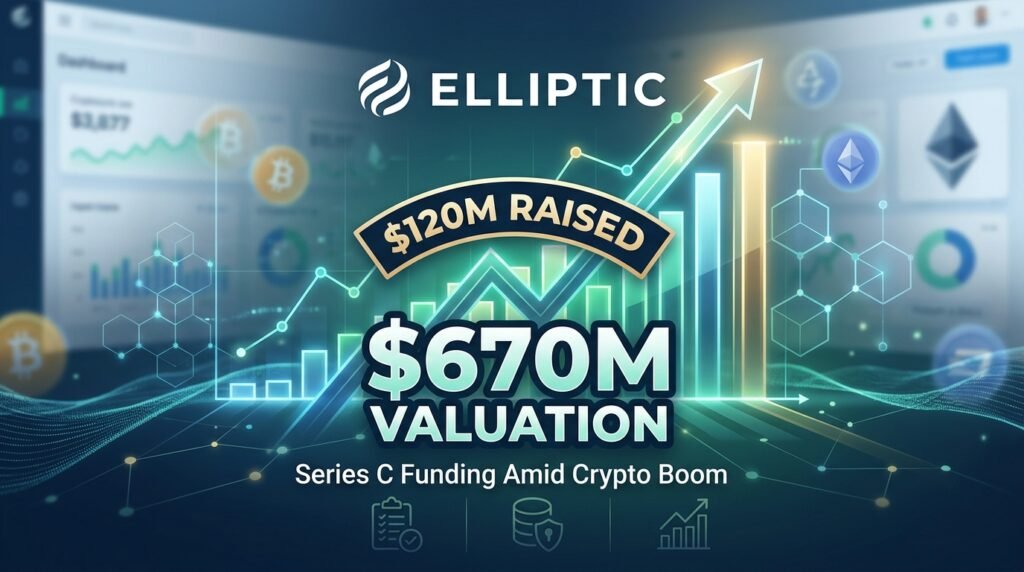
Elliptic Raises $120M at $670M Valuation Amid Crypto Boom

Elliptic Raises $120M at $670M Valuation Amid Crypto Boom

COIN4U IN YOUR SOCIAL FEED

The cryptocurrency industry continues to evolve at an extraordinary pace, and with that growth comes an increasing demand for compliance, security, and blockchain intelligence. One of the latest companies to capitalize on this rapidly expanding market is Elliptic, which recently raised $120 million at a valuation of $670 million. The funding round highlights how critical crypto compliance and blockchain analytics have become as governments, regulators, exchanges, and financial institutions intensify their focus on digital asset transparency.

The latest investment in Elliptic reflects a broader transformation occurring across the crypto ecosystem. As cryptocurrencies gain mainstream adoption, the need for sophisticated anti-money laundering tools, fraud detection systems, and transaction monitoring platforms has grown substantially. Investors are increasingly backing companies that provide the infrastructure necessary to make crypto safer and more compliant with global regulations.

Elliptic has established itself as one of the leading blockchain analytics firms in the world. Its software helps organizations trace cryptocurrency transactions, identify suspicious activity, and comply with anti-money laundering regulations. The company’s growing relevance comes at a time when governments worldwide are tightening oversight of digital assets and demanding stronger compliance frameworks from crypto businesses.

This funding round is not just a financial milestone for Elliptic. It also represents a major signal about the future direction of the cryptocurrency industry. The market is shifting from a largely unregulated environment toward a more structured and institution-friendly ecosystem. Companies capable of bridging the gap between innovation and regulation are becoming increasingly valuable.

The Rise of Blockchain Analytics in the Crypto Industry

Blockchain analytics has become one of the most essential sectors within the digital asset economy. In the early years of cryptocurrency, many users believed blockchain transactions were anonymous and impossible to trace. Over time, however, blockchain intelligence firms demonstrated that public ledgers could actually provide unprecedented transparency when paired with advanced analytics tools.

Companies like Elliptic have built sophisticated systems capable of tracking wallet addresses, mapping transaction flows, and identifying illicit financial activity. These capabilities are now vital for cryptocurrency exchanges, banks, fintech firms, and government agencies attempting to reduce fraud and comply with regulations.

The rise in cybercrime, ransomware attacks, and crypto-related scams has further accelerated demand for blockchain monitoring solutions. Criminal organizations increasingly use digital assets to move funds across borders quickly, making compliance technology more important than ever. As a result, blockchain analytics companies are becoming indispensable partners for businesses operating in the crypto space.

Elliptic’s latest funding round demonstrates how investors see long-term value in this sector. The company is positioned at the intersection of crypto innovation and financial regulation, two forces that are shaping the future of global finance.

Why Investors Are Betting Big on Elliptic

The decision to invest $120 million into Elliptic reflects strong confidence in the company’s business model and future growth potential. Investors recognize that regulatory compliance is no longer optional for crypto businesses. Instead, it has become a core requirement for survival and expansion.

Financial institutions entering the digital asset market need reliable tools to ensure compliance with global anti-money laundering standards. Governments also require blockchain intelligence platforms to investigate illegal transactions and monitor sanctioned entities. Elliptic’s technology addresses these needs directly, making it an attractive investment opportunity.

Another major factor driving investor confidence is the growing institutional adoption of cryptocurrencies. Large banks, hedge funds, and payment providers are increasingly integrating digital assets into their operations. These institutions demand enterprise-grade compliance systems before participating in the market at scale.

Elliptic’s ability to provide transaction monitoring, wallet screening, and forensic investigation tools gives it a strong competitive advantage. The company has built a reputation for accuracy, reliability, and innovation, helping it secure partnerships with major organizations worldwide.

The valuation of $670 million also indicates that the blockchain analytics industry itself is becoming a highly lucrative market. Investors expect continued expansion as regulatory pressure intensifies and crypto adoption increases globally.

How Elliptic Became a Leader in Crypto Compliance

Founded in 2013, Elliptic entered the blockchain analytics industry at a time when cryptocurrency compliance tools were still in their infancy. The company recognized early that digital assets would eventually require the same level of regulatory oversight as traditional finance.

Over the years, Elliptic developed advanced machine learning algorithms and blockchain monitoring technologies capable of analyzing massive volumes of transaction data. These tools help businesses identify high-risk wallet addresses, track suspicious activities, and comply with evolving regulations.

The company’s success also stems from its ability to adapt quickly to new blockchain networks and emerging digital asset trends. As decentralized finance, NFTs, and cross-chain ecosystems gained popularity, Elliptic expanded its analytics capabilities to cover these rapidly evolving sectors.

Another key strength is the company’s focus on global compliance standards. Cryptocurrency regulations differ significantly across jurisdictions, and businesses operating internationally need solutions capable of meeting diverse legal requirements. Elliptic’s platform helps organizations navigate these complex regulatory landscapes efficiently.

Its growing client base includes crypto exchanges, financial institutions, regulators, and law enforcement agencies. This broad adoption has strengthened Elliptic’s reputation as a trusted provider of blockchain intelligence solutions.

The Growing Importance of Crypto Regulation

The cryptocurrency market has experienced explosive growth over the last decade, but regulatory uncertainty has remained one of its biggest challenges. Governments worldwide are now working to create clearer frameworks for digital assets, and compliance technology firms are playing a central role in that transition.

Regulators are increasingly concerned about money laundering, terrorist financing, tax evasion, and sanctions violations involving cryptocurrencies. This has led to stricter requirements for exchanges and financial service providers operating in the digital asset sector.

Blockchain analytics companies like Elliptic help bridge the gap between innovation and regulation. Their tools allow businesses to monitor transactions, assess risk exposure, and maintain transparency without undermining the decentralized nature of blockchain technology.

The increasing focus on regulation is also driving consolidation within the crypto industry. Smaller companies lacking sufficient compliance infrastructure may struggle to survive, while firms with strong regulatory capabilities are more likely to attract institutional partnerships and investor confidence.

Elliptic’s funding round arrives at a time when compliance solutions are becoming critical infrastructure for the entire crypto economy. The company’s growth reflects how regulation is reshaping the digital asset landscape.

Competition in the Blockchain Analytics Market

Although Elliptic is one of the leading players in blockchain analytics, the industry has become increasingly competitive. Several firms are racing to dominate the crypto compliance market as demand for blockchain intelligence tools continues to rise.

Major competitors include Chainalysis and TRM Labs, both of which have secured substantial funding and built strong relationships with government agencies and financial institutions.

Despite this competition, Elliptic maintains several strategic advantages. The company has a long operational history, deep expertise in blockchain forensics, and strong international reach. Its platform supports multiple blockchain networks and offers advanced risk analysis capabilities tailored to enterprise clients.

The market itself is large enough to support multiple major players. As crypto adoption expands, the demand for compliance technology is expected to increase dramatically. Exchanges, banks, payment companies, and regulators all require sophisticated monitoring systems to manage digital asset risks effectively.

Competition is also driving innovation across the industry. Companies are investing heavily in artificial intelligence, predictive analytics, and cross-chain monitoring tools to stay ahead of evolving threats. Elliptic’s new funding will likely accelerate its product development efforts and strengthen its competitive position.

Institutional Adoption Is Fueling Demand

Elliptic Raises $120M at $670M Valuation Amid Crypto Boom

Institutional interest in cryptocurrencies has surged over the past few years. Major financial firms, publicly traded companies, and asset managers are increasingly exploring digital assets as part of their investment strategies and financial services offerings.

This institutional adoption has created enormous demand for compliance and security solutions. Traditional financial institutions operate under strict regulatory requirements and cannot participate in the crypto market without robust risk management systems.

Elliptic’s blockchain analytics platform provides the infrastructure needed to support institutional participation in digital assets. By offering transaction monitoring, sanctions screening, and fraud detection tools, the company enables organizations to engage with crypto while maintaining regulatory compliance.

The expansion of crypto-related financial products has also contributed to this demand. Spot Bitcoin ETFs, crypto custody services, decentralized finance platforms, and stablecoin payment systems all require enhanced compliance capabilities.

As more institutions enter the market, the importance of blockchain intelligence will continue to grow. Elliptic’s latest funding round positions the company to capitalize on this long-term trend and expand its influence across the global financial sector.

The Role of Artificial Intelligence in Blockchain Analytics

Artificial intelligence is becoming increasingly important in blockchain analytics and crypto compliance. The sheer volume of cryptocurrency transactions occurring across multiple blockchain networks makes manual monitoring impossible at scale.

Elliptic uses advanced AI and machine learning systems to analyze transaction patterns, identify suspicious behavior, and assess risk exposure in real time. These technologies help businesses detect illicit activities more efficiently while reducing false positives.

AI-powered analytics also improve the speed and accuracy of investigations. Law enforcement agencies and compliance teams can trace complex transaction flows across multiple wallets and blockchains more effectively using automated tools.

As cybercriminals adopt increasingly sophisticated methods, blockchain analytics firms must continuously enhance their technologies to stay ahead of emerging threats. The integration of artificial intelligence is becoming essential for maintaining effective crypto compliance systems.

The new funding will likely support Elliptic’s investment in AI research and development. Expanding these capabilities could strengthen the company’s position as a leading provider of blockchain intelligence solutions.

How the Funding Could Shape Elliptic’s Future

The $120 million investment provides Elliptic with significant resources to accelerate growth and expand its operations globally. The company is expected to invest heavily in product development, international expansion, and talent acquisition.

One major area of focus will likely be expanding blockchain coverage. As new networks and decentralized applications emerge, compliance providers must adapt quickly to maintain effective monitoring capabilities.

Elliptic may also pursue strategic partnerships with financial institutions, regulators, and crypto service providers. Building stronger relationships across the industry could help the company increase adoption of its platform and strengthen its market position.

Another potential area of expansion is decentralized finance compliance. DeFi platforms present unique regulatory challenges due to their permissionless and decentralized nature. Developing advanced monitoring tools for DeFi ecosystems could become a major growth opportunity for blockchain analytics firms.

The funding also enhances Elliptic’s ability to compete with larger rivals in a rapidly evolving industry. By strengthening its technology and expanding globally, the company could position itself as a dominant force in crypto compliance infrastructure.

The Broader Impact on the Crypto Ecosystem

Elliptic’s funding round carries implications far beyond a single company. It reflects a broader shift toward institutional maturity within the cryptocurrency industry.

In the past, many crypto enthusiasts viewed regulation as a threat to decentralization and innovation. Today, however, a growing number of businesses recognize that compliance is necessary for mainstream adoption and long-term sustainability.

Blockchain analytics firms help create trust within the digital asset ecosystem by improving transparency and reducing financial crime risks. Their work supports the integration of cryptocurrencies into traditional financial systems while helping regulators gain confidence in the industry.

The increasing investment in compliance technology also suggests that the crypto market is entering a new phase of development. Rather than focusing solely on speculative trading, the industry is building foundational infrastructure capable of supporting large-scale global adoption.

Elliptic’s success highlights how companies providing regulatory and security solutions are becoming some of the most valuable players in the blockchain economy.

Challenges Facing Blockchain Analytics Firms

Despite strong growth prospects, blockchain analytics companies also face significant challenges. Privacy concerns remain one of the biggest issues in the industry. Critics argue that excessive transaction monitoring could undermine the principles of financial privacy and decentralization associated with cryptocurrencies.

Blockchain analytics firms must balance compliance requirements with user privacy protections. Maintaining transparency while respecting legitimate privacy concerns is a delicate challenge that will likely become more important as regulations evolve.

Another challenge involves the rapid pace of technological innovation within crypto. New blockchain protocols, privacy coins, and decentralized applications constantly emerge, requiring analytics firms to update their systems continuously.

Cybersecurity threats also pose risks to the industry. As compliance platforms handle sensitive financial data, maintaining robust security infrastructure is critical.

Finally, regulatory uncertainty remains a persistent challenge. Different countries continue to adopt varying approaches to cryptocurrency regulation, making global compliance increasingly complex.

Despite these obstacles, Elliptic’s funding round suggests that investors remain highly optimistic about the long-term future of blockchain analytics and crypto compliance.

Conclusion

The announcement that Elliptic raised $120 million at a $670 million valuation marks a significant milestone for both the company and the broader cryptocurrency industry. The investment highlights the growing importance of blockchain analytics, crypto compliance, and digital asset security as cryptocurrencies continue moving toward mainstream adoption.

Elliptic has positioned itself as a key player in the evolving financial landscape by providing advanced tools that help organizations navigate regulatory challenges and combat financial crime. Its technology supports exchanges, banks, regulators, and institutions seeking to operate safely within the crypto ecosystem.

The funding also reflects broader trends shaping the industry, including increased institutional adoption, stronger regulatory oversight, and rising demand for blockchain intelligence solutions. As digital assets become more integrated into global finance, companies like Elliptic are likely to play an even more important role in ensuring transparency, compliance, and trust.

With substantial new capital and growing market demand, Elliptic appears well-positioned to expand its influence and continue shaping the future of crypto compliance infrastructure.


Explore more articles like this

Subscribe to the Finance Redefined newsletter

A weekly toolkit that breaks down the latest DeFi developments, offers sharp analysis, and uncovers new financial opportunities to help you make smart decisions with confidence. Delivered every Friday

By subscribing, you agree to our Terms of Services and Privacy Policy

READ MORE

Best Cryptocurrency Trading Platform 2025 Expert Guide

best cryptocurrency trading platform 2025

COIN4U IN YOUR SOCIAL FEED

The cryptocurrency market continues to evolve rapidly, and finding the best cryptocurrency trading platform 2025 offers can make the difference between successful trading and costly mistakes. With over 500 exchanges operating globally, choosing the right platform requires careful consideration of security features, trading fees, available cryptocurrencies, and user experience.

Whether you’re a beginner taking your first steps into digital currency trading or an experienced trader looking for advanced features, selecting the optimal trading platform is crucial for your investment success. The landscape has shifted dramatically since 2024, with new regulations, enhanced security measures, and innovative trading tools reshaping how we approach cryptocurrency trading.

In this comprehensive guide, we’ll examine the top cryptocurrency trading platforms available in 2025, analyzing their strengths, weaknesses, and unique features. You’ll discover which platforms excel in different areas, from low fees and extensive coin selections to robust security measures and user-friendly interfaces.

What Makes the Best Cryptocurrency Trading Platform in 2025?

The cryptocurrency trading landscape has matured significantly, with platforms now offering sophisticated features that cater to diverse trading needs. The best cryptocurrency trading platform 2025 standards include several critical factors that distinguish exceptional platforms from mediocre ones.

Security remains the paramount concern for crypto traders. Top-tier platforms now implement multi-layered security protocols, including cold storage for the majority of funds, two-factor authentication, and advanced encryption methods. The best platforms maintain insurance coverage for digital assets and have never experienced major security breaches.

User interface and experience have become increasingly important as cryptocurrency adoption grows. Leading platforms offer intuitive designs that accommodate both novice and experienced traders, with customizable dashboards, real-time market data, and comprehensive charting tools.

Fee structures vary significantly across platforms, making cost comparison essential. The most competitive platforms offer transparent fee schedules with volume-based discounts, while some provide zero-fee trading for specific cryptocurrency pairs or trading methods.

Key Features to Look for in 2025

Regulatory compliance has become a defining characteristic of reputable trading platforms. The best exchanges maintain proper licensing in multiple jurisdictions and adhere to strict compliance standards, including Know Your Customer (KYC) and Anti-Money Laundering (AML) procedures.

Trading options and tools significantly impact platform suitability for different trader types. Advanced platforms offer spot trading, margin trading, futures contracts, options trading, and automated trading bots. The variety of order types, including market orders, limit orders, stop-loss orders, and advanced order types, provides traders with greater control over their strategies.

Customer support quality often determines user satisfaction, especially during volatile market periods. Premium platforms provide 24/7 customer support through multiple channels, including live chat, email, and phone support, with response times typically under two hours.

Top 10 Best Cryptocurrency Trading Platforms for 2025

Top 10 Best Cryptocurrency Trading Platforms for 2025

1. Advanced Trading Features and Professional Tools

Professional cryptocurrency trading platforms have evolved to offer sophisticated tools previously available only to institutional traders. These platforms provide advanced charting capabilities, real-time market analysis, and algorithmic trading options that appeal to serious traders.

The integration of artificial intelligence and machine learning algorithms helps traders identify patterns and opportunities in volatile markets. Many platforms now offer automated trading strategies, portfolio rebalancing tools, and risk management features that execute trades based on predetermined parameters.

Mobile accessibility remains crucial, with leading platforms offering full-featured mobile applications that mirror desktop functionality. These apps provide push notifications for price alerts, portfolio updates, and market news, ensuring traders stay connected to markets regardless of location.

2. Security-First Cryptocurrency Exchanges

Security-focused platforms implement multiple layers of protection to safeguard user funds and personal information. These exchanges typically store 95% or more of customer funds in offline cold storage, making them inaccessible to online attacks.

Advanced security measures include biometric authentication, IP address whitelisting, and withdrawal address whitelisting. Some platforms offer additional security features such as multi-signature wallets and hardware security key integration for enhanced account protection.

Insurance coverage has become a standard feature among top-tier exchanges, with some platforms maintaining coverage exceeding $100 million to protect against potential losses from security breaches or internal fraud.

3. Low-Fee Trading Platforms

Cost-conscious traders gravitate toward platforms offering competitive fee structures and transparent pricing. The most attractive fee models include volume-based discounts, maker-taker fee schedules, and zero-fee promotions for new users or specific trading pairs.

Some platforms have revolutionized fee structures by eliminating trading fees entirely for certain activities, instead generating revenue through spread markups or premium service subscriptions. These innovative models particularly benefit high-frequency traders and large-volume participants.

Fee comparison tools and calculators help traders estimate costs across different platforms, making it easier to identify the most cost-effective option based on individual trading patterns and volume requirements.

Beginner-Friendly Crypto Trading Platforms

User-Friendly Interface Design

Beginner-focused platforms prioritize simplicity without sacrificing essential functionality. These exchanges feature clean, intuitive interfaces that guide new users through account setup, identity verification, and their first cryptocurrency purchases.

Educational resources integrated directly into trading platforms help newcomers understand cryptocurrency fundamentals, trading concepts, and risk management principles. Many platforms offer demo accounts or virtual trading environments where beginners can practice without risking real money.

Simplified buying and selling processes, including one-click purchasing options and recurring investment features, make cryptocurrency trading accessible to users with limited technical knowledge or trading experience.

Educational Resources and Support

Comprehensive educational programs set leading platforms apart from competitors. These resources include video tutorials, webinars, trading guides, and market analysis reports that help users develop trading skills and market understanding.

Community features such as social trading, copy trading, and discussion forums create environments where beginners can learn from experienced traders and share insights with peers facing similar challenges.

Customer onboarding processes at top platforms include personalized guidance, account setup assistance, and ongoing support to ensure new users feel confident navigating the platform and executing their first trades.

Advanced Trading Features and Professional Tools

Margin Trading and Leverage Options

Sophisticated trading platforms offer margin trading capabilities that allow experienced traders to amplify their positions using borrowed funds. Leverage ratios vary significantly across platforms, with some offering up to 100:1 leverage for certain cryptocurrency pairs.

Risk management tools integrated into margin trading interfaces help traders monitor their positions, set stop-loss orders, and manage liquidation risks. Advanced platforms provide real-time margin requirements, profit and loss calculations, and position sizing recommendations.

Professional traders appreciate platforms that offer cross-margin and isolated margin options, allowing for flexible risk management strategies across multiple positions and trading pairs.

Derivatives and Futures Trading

The cryptocurrency derivatives market has expanded dramatically, with leading platforms now offering futures contracts, perpetual swaps, and options trading for major cryptocurrencies. These instruments provide opportunities for hedging, speculation, and advanced trading strategies.

Futures trading platforms typically offer both monthly and quarterly contract expirations, with settlement in either cryptocurrency or fiat currency. Advanced order types, including bracket orders and trailing stops, give traders precise control over their derivatives positions.

Options trading has gained popularity among sophisticated investors seeking defined risk exposure and income generation strategies. Platforms offering crypto options provide various strike prices and expiration dates across multiple underlying assets.

Mobile Trading Apps and Accessibility

Cross-Platform Compatibility

Modern cryptocurrency trading demands seamless access across desktop computers, smartphones, and tablets. Leading platforms ensure consistent functionality and user experience across all devices, with synchronized accounts and real-time data updates.

Mobile applications have evolved beyond basic trading to include advanced features such as portfolio analytics, market research tools, and social trading capabilities. Push notifications keep traders informed of important market movements and account activities.

Web-based platforms offer universal accessibility without requiring software downloads, making them particularly useful for traders who frequently switch between different devices or operating systems.

Real-Time Market Data and Alerts

Instant access to market information becomes critical during volatile trading periods. Top platforms provide real-time price feeds, order book data, and trading volume statistics across all supported cryptocurrencies.

Customizable alert systems notify traders of significant price movements, technical indicator signals, and market events that could impact their positions. Advanced alert options include email notifications, SMS messages, and in-app push notifications.

Market analysis tools integrated into mobile applications include technical indicators, chart pattern recognition, and sentiment analysis data that help traders make informed decisions while away from their primary trading setups.

Security and Regulatory Compliance

Insurance and Fund Protection

Insurance coverage has become a standard expectation among cryptocurrency traders, with leading platforms maintaining policies that protect customer funds against various risks including cybersecurity breaches and internal fraud.

Cold storage practices ensure that the majority of customer funds remain offline and inaccessible to potential attackers. Hot wallet reserves typically contain only the minimum necessary funds to facilitate daily trading and withdrawal activities.

Regular security audits conducted by independent third-party firms provide transparency and assurance regarding platform security practices and fund protection measures.

Regulatory Compliance Standards

Compliance with local and international regulations demonstrates platform credibility and long-term viability. Licensed exchanges typically offer greater legal protections and regulatory oversight compared to unregulated alternatives.

Know Your Customer (KYC) and Anti-Money Laundering (AML) procedures, while sometimes inconvenient, provide important protections for both platforms and users by preventing illegal activities and maintaining regulatory compliance.

Transparent reporting and regular compliance updates help users understand regulatory changes that might affect their trading activities or account access.

Fees and Cost Analysis

Trading Fee Structures

Understanding fee structures across different platforms enables traders to optimize their costs based on trading frequency and volume. Most exchanges employ maker-taker fee models that reward liquidity providers with lower fees compared to liquidity takers.

Volume-based fee discounts incentivize higher trading activity by offering reduced rates to traders who exceed specific monthly or annual trading thresholds. Some platforms provide additional discounts for users who hold native exchange tokens.

Hidden fees, including deposit and withdrawal charges, currency conversion costs, and inactivity fees, can significantly impact overall trading costs and should be carefully considered when comparing platforms.

Hidden Costs and Charges

Withdrawal fees vary dramatically across platforms and cryptocurrencies, with some exchanges charging fixed fees while others use percentage-based structures. Network transaction fees, particularly for Bitcoin and Ethereum, can add substantial costs during periods of high network congestion.

Currency conversion charges apply when trading between different base currencies or when depositing and withdrawing fiat currencies. These costs can be particularly significant for international traders or those dealing with multiple currencies.

Inactivity fees, account maintenance charges, and premium feature subscriptions represent additional costs that should be factored into platform selection decisions, especially for casual or infrequent traders.

Customer Support and User Experience

Customer Support and User Experience

Response Times and Support Quality

Exceptional customer support becomes crucial during market volatility when traders need immediate assistance with urgent issues. Leading platforms maintain 24/7 support availability through multiple channels including live chat, email, and phone support.

Response time metrics, including average first response time and resolution time, provide measurable indicators of support quality. Premium platforms typically achieve first response times under two hours and complete resolution within 24 hours for most issues.

Support team expertise and training ensure representatives can handle technical trading questions, account security concerns, and platform navigation assistance with accuracy and professionalism.

Community and Educational Resources

Active trading communities foster knowledge sharing and peer support among platform users. Discussion forums, social trading features, and expert analysis create environments where traders can improve their skills and stay informed about market developments.

Educational content libraries including video tutorials, trading guides, and market analysis reports help users maximize platform features and develop effective trading strategies.

Regular webinars, workshops, and educational events provide opportunities for users to interact with trading experts and stay current with market trends and platform updates.

Future Trends in Cryptocurrency Trading Platforms

Emerging Technologies and Features

Artificial intelligence and machine learning integration continue revolutionizing cryptocurrency trading platforms. These technologies power automated trading strategies, market prediction models, and personalized trading recommendations based on individual user behavior and preferences.

Decentralized exchange (DEX) integration allows centralized platforms to offer hybrid services that combine the security and control benefits of decentralized trading with the convenience and features of centralized platforms.

Social trading and copy trading features enable less experienced traders to follow and replicate the strategies of successful traders, democratizing access to profitable trading approaches.

Regulatory Developments

Evolving regulatory frameworks worldwide influence platform operations, available services, and user access requirements. Platforms that proactively adapt to regulatory changes maintain competitive advantages and ensure long-term viability.

Central Bank Digital Currency (CBDC) support preparation positions platforms for potential integration with government-issued digital currencies as they become available in various jurisdictions.

Enhanced compliance tools and reporting capabilities help platforms meet increasing regulatory requirements while maintaining user privacy and trading efficiency.

Conclusion

Selecting the best cryptocurrency trading platform 2025 requires careful evaluation of your specific trading needs, experience level, and investment goals. The platforms highlighted in this guide represent the current leaders in security, functionality, and user experience, each offering unique advantages for different types of traders.

Whether you prioritize low fees, advanced trading tools, beginner-friendly interfaces, or maximum security, the cryptocurrency exchange landscape now offers specialized solutions for every trading style and experience level. The continued evolution of regulatory frameworks and technological innovations ensures that trading platforms will continue improving their services throughout 2025.

Take time to research multiple platforms, compare their features and fees, and consider starting with demo accounts or small investments before committing significant funds. The best cryptocurrency trading platform 2025 for your needs is the one that aligns with your trading goals, risk tolerance, and technical requirements while providing reliable access to the cryptocurrencies you want to trade.

Explore more articles like this

Subscribe to the Finance Redefined newsletter

A weekly toolkit that breaks down the latest DeFi developments, offers sharp analysis, and uncovers new financial opportunities to help you make smart decisions with confidence. Delivered every Friday

By subscribing, you agree to our Terms of Services and Privacy Policy

READ MORE

ADD PLACEHOLDER