For over half a decade, the Ethereum blockchain has operated under a seemingly immutable law: every standard transaction requires a minimum of 21,000 gas units. This baseline has been the bedrock of wallet functionality, transaction processing, and user expectations across the entire Ethereum ecosystem. However, recent developments in Ethereum’s upgrade roadmap are poised to disrupt this long-standing rule, reshaping how users interact with their digital assets and fundamentally altering the economics of blockchain transactions.
The 21,000 gas minimum wasn’t arbitrary—it was designed to prevent spam, protect network resources, and establish a predictable baseline for transaction costs. Wallet developers built their entire infrastructure around this constant, users came to expect it, and exchanges integrated it into their fee calculations. Yet as Ethereum technology continues to evolve through successive network upgrades, the conditions that necessitated this rigid requirement are changing. The upcoming upgrade represents a pivotal moment where the rules governing Ethereum wallet operations are being rewritten.
Understanding this shift is crucial for anyone invested in Ethereum, whether you’re a casual user, a professional trader, or a developer building on the network. The implications extend far beyond mere technical curiosity—they affect transaction fees, wallet design, network security, and the fundamental economics of Ethereum transactions. This article explores what’s happening, why it matters, and what you need to know about the future of Ethereum gas mechanics.
The History and Purpose of the 21,000 Gas Rule
The 21,000 gas baseline has been a cornerstone of Ethereum’s design since the network’s inception. To understand why this change is significant, we must first comprehend why this rule existed in the first place and what problems it was designed to solve.
Why Ethereum Implemented the 21,000 Gas Minimum
When Vitalik Buterin and the Ethereum Foundation designed the network, they needed mechanisms to prevent abuse and ensure the network remained functional under various conditions. The 21,000 gas minimum served multiple critical functions. First, it created a baseline cost for all transactions, making spam attacks economically unfeasible. A malicious actor attempting to flood the network with millions of trivial transactions would face a significant cost barrier, protecting the network from denial-of-service attacks.
Second, the gas requirement standardized transaction processing. Wallet developers, exchange operators, and users could rely on this constant when calculating fees and planning transactions. This predictability was essential for building reliable infrastructure in the early days of Ethereum, when understanding the network’s behavior was paramount to adoption. The rule essentially said: “No matter what you’re doing on Ethereum, this is the absolute minimum it will cost you in computational resources.”
Third, the 21,000 gas unit threshold helped establish economic incentives around validator behavior and network participation. By requiring a minimum expenditure, Ethereum ensured that validators had consistent baseline rewards, making network participation economically viable and encouraging decentralization. The rule created order in what could have been chaos—a predictable framework upon which an entire ecosystem could be built.
How Wallets and Applications Relied on This Rule
Over the years, virtually every wallet and application built on Ethereum incorporated the 21,000 gas minimum into their systems. Mobile wallets used it to estimate fees, hardware wallet manufacturers built it into their firmware, and decentralized finance platforms relied on it for fee calculations. The rule became so fundamental that developers stopped questioning it—it was simply how Ethereum transactions worked.
This dependency meant that wallet design evolved with certain assumptions baked in. User interfaces displayed gas fees assuming this minimum, smart contract developers estimated costs with this baseline in mind, and security audits verified that protocols could function within these constraints. The rule became invisible precisely because it was so universal—users expected every transaction to cost at least 21,000 gas units, and systems were designed accordingly.
The Limitations of the Current System
Despite its historical importance, the 21,000 gas rule has increasingly become a limitation rather than a protection, particularly as Ethereum’s ecosystem has matured and network conditions have evolved significantly.
How Rising Gas Fees Impact Small Transactions
The most obvious limitation of the 21,000 gas baseline is its effect on transaction economics. When Ethereum gas prices spike during periods of network congestion, the baseline cost becomes prohibitively expensive for small transactions. If gas prices reach 100 gwei per unit—not uncommon during busy periods—a simple transfer suddenly costs 2.1 million wei, or approximately $0.63 at current Ethereum prices. While this seems modest, it makes microtransactions economically unviable.
This creates a market inefficiency. Users who want to transfer small amounts of tokens or cryptocurrency find themselves paying fees that dwarf the transaction value. A person wanting to send $5 worth of ETH might pay $3-5 in fees, an untenable situation that pushes users toward layer-two solutions or other blockchains. The 21,000 gas minimum was designed for an era when such scenarios were unimaginable, yet they’ve become routine in modern Ethereum operations.
The Problem with Wallet Dependency
Every wallet in the Ethereum ecosystem has been forced to adapt to the 21,000 gas requirement, creating technical debt and inflexibility. Wallets must inform users that even the simplest transaction has this baseline cost, which complicates user experience design. Mobile wallets struggle to explain to non-technical users why sending cryptocurrency costs so much, and this friction has likely prevented mainstream adoption.
Furthermore, the rule prevents innovation in transaction design. Developers cannot optimize transactions below this threshold, even if the actual computational work required is minimal. A blockchain transaction that requires only 5,000 gas units worth of computation still costs 21,000, representing 76% waste. This inefficiency has motivated users and developers to seek alternatives, which has fragmented the ecosystem and reduced the network effects that make Ethereum valuable.
Layer-Two Solutions and Fragmentation
The limitations of the 21,000 gas rule have directly driven the explosion of layer-two scaling solutions like Arbitrum and Optimism. These systems exist partly because users and developers grew frustrated with the inflexibility of Ethereum’s base layer. While layer-two solutions provide genuine benefits, they also fragment the ecosystem, distribute liquidity across multiple chains, and complicate the user experience.
Ironically, by maintaining the 21,000 gas minimum, Ethereum inadvertently created the conditions that made layer-two solutions necessary, which then reduced some transaction volume on the main network. Breaking this rule could recover some of this activity while enabling more diverse transaction types on the base layer.
The Upcoming Upgrade: What’s Changing
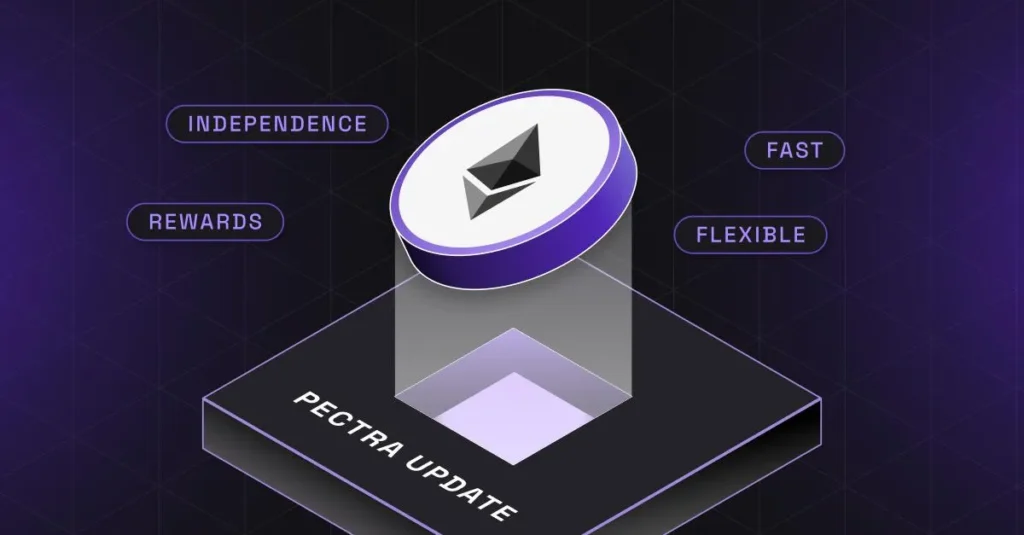
The Ethereum Foundation and core developers have recognized that the 21,000 gas baseline is no longer serving its original purpose and is instead creating unnecessary constraints. The upcoming upgrade introduces significant changes to how gas mechanics function, effectively dismantling the rigid rule that has governed Ethereum wallet transactions for years.
The Technical Mechanism of the Change
The upgrade introduces dynamic base fee adjustment for intrinsic gas costs, which eliminates the fixed 21,000 gas minimum and replaces it with a more nuanced system. Rather than a universal baseline, transaction costs would be calculated based on actual computational requirements, with different transaction types potentially requiring different minimums.
This change is enabled by improvements to Ethereum’s execution layer, particularly enhancements to how the network calculates intrinsic gas costs—the fixed gas charges applied to every transaction type before any variable costs are incurred. The new system introduces transaction-type-specific baselines, meaning a simple value transfer might require only 15,000 gas, while a more complex operation might require 25,000 gas, based on actual resource consumption.
The technical implementation involves modifying the Ethereum Virtual Machine (EVM) to evaluate transaction contents more granularly and assign gas costs that more accurately reflect computational reality. This isn’t arbitrary—every reduction in the baseline is backed by analysis demonstrating that the transaction truly requires less computational work than previously assumed.
Impact on Different Transaction Types
Different Ethereum transaction types will be affected differently by this change. Standard ETH transfers might see their intrinsic gas cost reduced from 21,000 to approximately 15,000 gas units, making simple transactions significantly cheaper. This change alone could substantially improve the economics of cryptocurrency transactions for basic users.
Token transfers using the ERC-20 standard, which require more complex computation due to smart contract execution, might maintain higher gas baselines or see only modest reductions. However, even small percentage reductions compound over time, especially for users executing thousands of transactions annually. More exotic transaction types—such as complex smart contract interactions or batch operations—may see more significant changes as the network fine-tunes costs to actual requirements.
Timeline and Implementation
The upgrade is scheduled to roll out in phases over the coming months. The Ethereum development team has emphasized that this change will be implemented carefully, with extensive testing on testnets before mainnet deployment. This phased approach allows developers to monitor for unintended consequences and adjust parameters if necessary.
Early estimates suggest that the first phase of the upgrade could reduce baseline transaction costs by 10-30% for standard transfers, with further optimizations possible in subsequent releases. The actual impact will depend on network conditions and how developers adapt their applications to the new gas mechanics.
Implications for Wallet Developers and Users
The end of the 21,000 gas rule will necessitate significant adjustments across the Ethereum ecosystem, but these changes will ultimately benefit users and developers who can adapt effectively.
How Wallet Software Must Adapt
Wallet developers face the task of updating their applications to accommodate variable intrinsic gas costs. This isn’t merely a code change—it requires reconsidering fundamental assumptions baked into wallet logic. Fee estimation algorithms will need to become more sophisticated, calculating costs based on transaction type rather than applying a universal multiplier to a fixed baseline.
Modern wallets like MetaMask, Trust Wallet, and hardware wallet firmware will require updates to display accurate fee information under the new system. The good news is that this change actually simplifies fee estimation in many ways, as gas costs will more accurately reflect actual blockchain resource consumption. Users will see more honest pricing that doesn’t include the 10-30% overhead that currently exists.
Benefits for Different User Segments
Retail users executing simple transfers will experience immediate benefits through lower transaction fees. A user sending ETH across the network might pay 30% less in fees for the exact same operation, making frequent small transactions economically viable again. This could reinvigorate use cases like salary payments, allowances, and micropayments that became impractical under the old system.
Developers building on Ethereum gain newfound flexibility in application design. Previously, developers designing applications had to work within the constraints imposed by the 21,000 gas baseline. The new system allows for more creative transaction design, potentially enabling new use cases that simply weren’t economically feasible before.
Traders and power users of decentralized finance platforms benefit through cascading reductions in fees. Since many sophisticated transactions reference standard intrinsic gas costs in their calculations, reductions in these baselines automatically flow through to these users’ transactions. This could meaningfully reduce the cost of swaps, lending operations, and yield farming strategies.
User Communication Challenges
Despite the benefits, wallet developers and cryptocurrency exchanges face significant communication challenges. Non-technical users don’t understand that the 21,000 gas rule is disappearing—they simply know their transaction costs are changing. Clear communication about why fees are decreasing and what it means for their transactions will be essential to maintain user confidence.
Wallets that clearly explain the upgrade and its implications will have a competitive advantage. Those that silently implement changes without user communication risk confusion or loss of trust. This represents both a challenge and an opportunity for wallet providers to educate their user base about Ethereum’s technical evolution.
Broader Implications for Ethereum’s Future
Beyond immediate wallet and transaction impacts, the end of the 21,000 gas rule signals important shifts in how Ethereum will evolve as a platform and network.
Security and Network Resilience
A frequently asked question is whether removing the 21,000 gas baseline compromises network security. Security analysts have concluded that it doesn’t, for several important reasons. First, the network still maintains gas costs for all transactions; they’re simply more accurate. A malicious actor flooding the network with transactions still faces economic costs, just as before.
Second, the move actually enhances network resilience by eliminating artificial inefficiencies. By matching gas costs more closely to actual computational work, the network becomes harder to attack through transactions that exploit the old overhead. Third, other mechanisms—including validator incentives, consensus protocols, and fee markets—provide robust protection against abuse. The 21,000 gas minimum was redundant protection, and removing it doesn’t materially reduce security.
Competition with Layer-Two Solutions
The upgrade addresses one of the primary reasons users have migrated to layer-two scaling solutions. By reducing base layer transaction costs, Ethereum becomes more competitive with these alternatives. Some transaction volume may migrate back from Arbitrum and Optimism to Ethereum’s main network, particularly for use cases where finality and main-chain settlement are valuable.
This doesn’t mean layer-two solutions will become obsolete—they provide genuine benefits through different trade-offs between cost and finality. However, it does mean that Ethereum’s base layer becomes more viable for a broader range of use cases, potentially increasing the overall Ethereum ecosystem’s value capture.
The Broader Precedent for Rule Changes
The willingness of the Ethereum development community to reconsider and modify what was once considered an immutable rule demonstrates the network’s ability to evolve. This sets an important precedent: Ethereum’s rules are optimized for the current context, not sacred laws. As conditions change and the network learns, rules can be revisited and improved.
This flexibility is both a strength and a source of concern for some observers. It demonstrates Ethereum’s technical adaptability but also raises questions about what other “fundamental rules” might be reconsidered in the future. The consensus required to implement such changes—approval from developers, validators, and community members—provides important guardrails against arbitrary modifications.
What Users and Developers Should Do Now
As the upgrade approaches, stakeholders should take steps to prepare for the changes ahead.
Staying Informed About Implementation
Developers should monitor official Ethereum Foundation communications and core developer discussions for updates about the upgrade timeline and technical details. Following reputable sources like ethereum.org and participating in community forums helps ensure you understand what’s happening and when.
Testing on Testnets
Developers should prioritize testing their applications on public testnets once the upgrade is available for testing. This allows for early identification of any unexpected interactions or edge cases. Wallet developers, in particular, should thoroughly test fee estimation algorithms and user interface updates to ensure smooth transitions.
Updating Infrastructure

Exchanges, custodians, and infrastructure providers should begin planning updates to their systems. While the changes are backward compatible—old transactions still work fine—taking advantage of new capabilities requires deliberate updates. Planning ahead ensures smooth transitions and allows organizations to communicate changes to their users effectively.
Conclusion
The end of the 21,000 gas rule marks an important step in Ethereum’s evolution. Making the network more efficient and adaptable. The main benefit is lower transaction costs for basic operations, while developers gain greater flexibility and efficiency. This upgrade removes outdated limitations without compromising Ethereum’s security or decentralization. As Ethereum continues to mature, more improvements and optimizations can be expected, helping create a faster and user-friendly blockchain.
Frequently Asked Questions
Q. Will removing the 21,000 gas rule make Ethereum less secure?
No, removing the 21,000 gas minimum does not compromise Ethereum’s security. The network maintains gas costs for all transactions, which continue to provide economic protection against spam and abuse. The change simply aligns gas costs more accurately with actual computational requirements.
Q. How much will my transaction fees actually decrease?
For simple ETH transfers, fees could decrease by 20-35% depending on specific network conditions and gas prices. More complex transactions involving smart contracts may see smaller percentage reductions but still benefit from lower intrinsic gas costs
Q. Do I need to do anything to my wallet for this upgrade?
Most wallet providers will update their software automatically or through routine updates. You generally won’t need to do anything special, though it’s good practice to keep your wallet software updated.
Q. Will this affect my tokens or smart contracts?
No, this upgrade does not affect your tokens or the operation of existing smart contracts. All previously deployed contracts continue to function exactly as before. The change only affects how Ethereum calculates intrinsic gas costs for new transactions.
Q. Could Ethereum change other “fundamental rules” in the future?
Theoretically yes, though any such changes would require extensive community consensus and testing. The Ethereum governance process—which involves developers, validators, and community members—provides important safeguards against arbitrary modifications.