













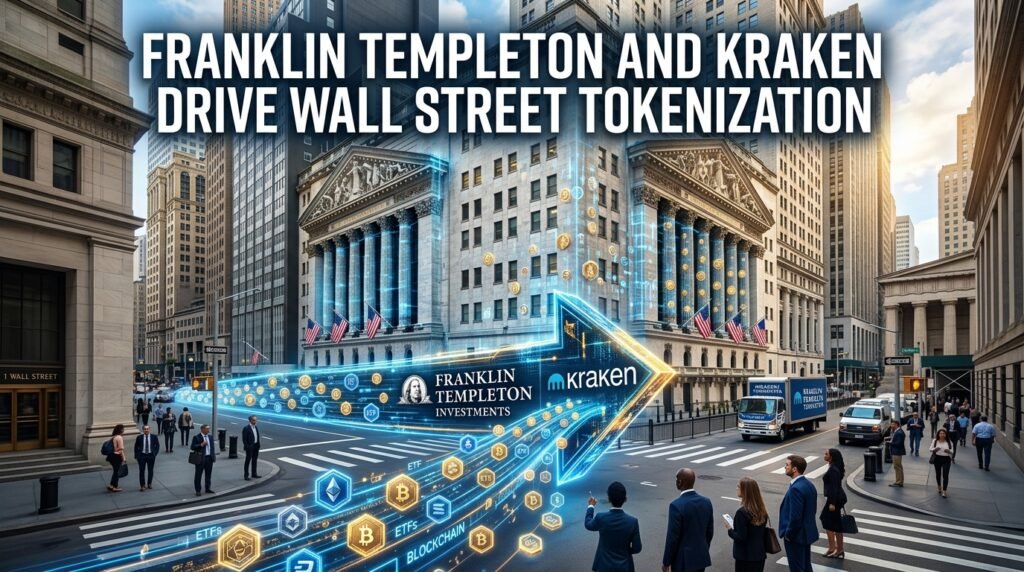
Franklin Templeton and Kraken Drive Wall Street Tokenization

Franklin Templeton and Kraken Drive Wall Street Tokenization

COIN4U IN YOUR SOCIAL FEED

The financial world is entering a transformative era where traditional assets are increasingly merging with blockchain technology. One of the latest developments accelerating this evolution is the partnership between Franklin Templeton and Kraken’s Payward. Their collaboration to tokenize Wall Street assets reflects a growing movement toward digital finance, decentralized infrastructure, and blockchain-powered investment products. As institutional adoption expands, this partnership could redefine how investors access stocks, bonds, funds, and other traditional financial instruments.

The concept of tokenization has been discussed for years, but the involvement of major financial institutions now signals that the idea is moving from theory into practical implementation. Franklin Templeton, a globally recognized asset manager, has already demonstrated strong interest in blockchain innovation. Kraken, through its parent company Payward, has become one of the most influential crypto infrastructure firms in the industry. Together, they are aiming to bridge traditional finance with digital asset markets in a way that could reshape capital markets.

This partnership comes at a critical moment for the crypto industry. Institutional investors are increasingly demanding compliant and regulated blockchain solutions. Meanwhile, financial firms are exploring how tokenized assets can improve liquidity, reduce settlement times, and open access to global markets. By combining Franklin Templeton’s expertise in asset management with Kraken’s blockchain infrastructure, the collaboration has the potential to accelerate the adoption of tokenized securities worldwide.

The Rise of Asset Tokenization in Modern Finance

Asset tokenization refers to the process of converting ownership rights of traditional assets into blockchain-based digital tokens. These tokens can represent stocks, bonds, real estate, commodities, or even private equity holdings. The growing interest in tokenization is driven by the promise of enhanced efficiency, transparency, and accessibility.

Traditional financial systems often rely on intermediaries, lengthy settlement periods, and expensive operational structures. Blockchain technology introduces a decentralized ledger that can streamline transactions while reducing costs. Through tokenization, investors may gain access to fractional ownership opportunities that were previously difficult or impossible to obtain.

The partnership between Franklin Templeton and Kraken’s Payward highlights how tokenization is becoming more than just a crypto-native concept. It is evolving into a practical solution for Wall Street institutions seeking modernization. As blockchain infrastructure matures, tokenized financial products are likely to become increasingly common across global markets.

Another major factor fueling tokenization is the rise of institutional demand. Hedge funds, banks, and asset managers are now exploring blockchain-based solutions to improve market efficiency. Regulatory frameworks are also gradually evolving, creating clearer pathways for compliant tokenized asset offerings. This combination of technological progress and institutional interest is laying the foundation for a new financial ecosystem.

Why Franklin Templeton Is Embracing Blockchain Technology

Franklin Templeton has emerged as one of the most forward-thinking traditional asset managers in the blockchain space. Unlike many financial institutions that initially viewed crypto with skepticism, Franklin Templeton has actively explored distributed ledger technology for years.

The company launched blockchain-based investment products and participated in digital asset initiatives well before institutional crypto adoption became mainstream. Its willingness to innovate has positioned it as a leader among traditional financial firms entering the tokenization market.

One of the key reasons Franklin Templeton supports blockchain technology is the efficiency it can bring to financial operations. Traditional systems often involve multiple layers of intermediaries, which increase both costs and transaction times. Blockchain-based settlement mechanisms can significantly streamline these processes while improving transparency.

The company also recognizes the long-term potential of digital assets. As younger generations become more comfortable with blockchain-based finance, institutions must adapt to evolving investor expectations. Tokenized products can offer greater accessibility, faster transactions, and enhanced liquidity, making them attractive to both retail and institutional investors.

Franklin Templeton’s partnership with Kraken’s Payward demonstrates its commitment to staying ahead of financial innovation trends. By collaborating with a major crypto infrastructure provider, the asset management giant is positioning itself for the next phase of digital finance evolution.

Kraken’s Payward and Its Expanding Institutional Role

Kraken has built a reputation as one of the most trusted cryptocurrency exchanges globally. Through its parent company, Payward, the firm has expanded beyond retail crypto trading into institutional services, custody solutions, and blockchain infrastructure development.

Institutional participation in crypto markets requires reliable infrastructure, regulatory compliance, and secure custody systems. Kraken’s experience in these areas makes it an ideal partner for traditional financial institutions seeking blockchain integration.

Payward’s collaboration with Franklin Templeton reflects a broader trend where crypto-native firms are increasingly partnering with established Wall Street companies. This convergence between traditional finance and digital asset platforms is accelerating the mainstream adoption of blockchain technology.

Kraken’s infrastructure capabilities could play a central role in facilitating tokenized securities trading, settlement, and custody. By leveraging blockchain networks, tokenized assets may eventually trade continuously rather than being restricted to traditional market hours. This could introduce a more efficient and globally accessible investment environment.

The partnership also strengthens Kraken’s position as a key institutional player in the digital asset industry. As regulatory clarity improves, crypto infrastructure providers with strong compliance records are likely to attract more collaborations with traditional financial giants.

How Tokenized Wall Street Assets Could Transform Investing
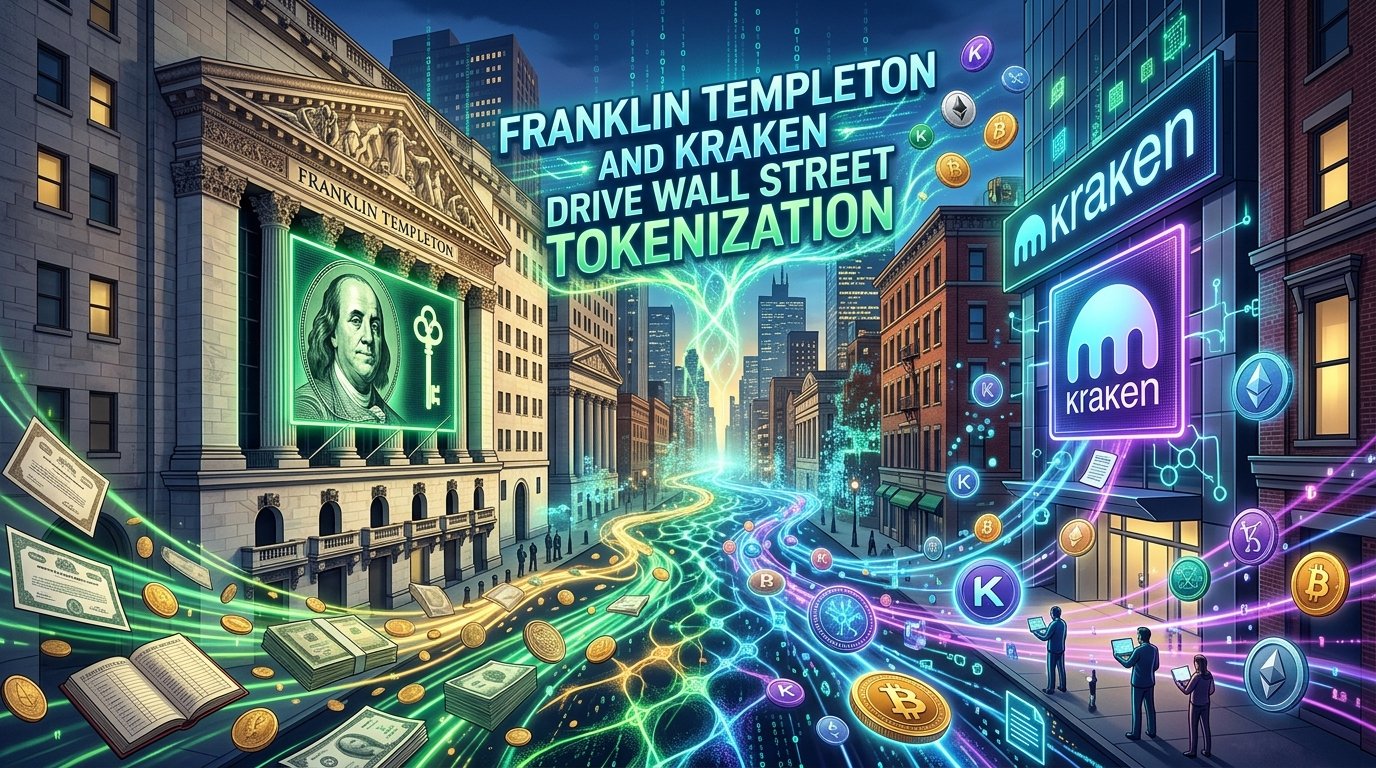
Franklin Templeton and Kraken Drive Wall Street Tokenization

The tokenization of Wall Street assets has the potential to fundamentally change how investors interact with financial markets. Traditional investment systems have long faced issues related to settlement delays, market accessibility, and liquidity fragmentation. Blockchain technology offers solutions to many of these inefficiencies.

One of the biggest advantages of tokenized assets is fractional ownership. Investors could potentially buy small portions of expensive financial products, making high-value assets more accessible to a broader audience. This democratization of investing could attract millions of new participants into global financial markets.

Another important benefit is faster settlement. Traditional securities transactions can take days to finalize due to clearinghouse processes and intermediary involvement. Blockchain-based systems can enable near-instant settlement, reducing operational risks and improving market efficiency.

Tokenized assets may also increase global market participation. Since blockchain networks operate continuously, investors from different regions could access tokenized securities without relying on conventional market hours. This could create a more interconnected and liquid financial ecosystem.

Transparency is another major advantage. Blockchain ledgers provide immutable transaction records that enhance accountability and reduce the likelihood of fraud. For institutional investors, this added transparency can improve trust and compliance capabilities.

As Franklin Templeton and Kraken push forward with tokenization initiatives, these benefits may gradually become integrated into mainstream finance.

Regulatory Challenges Facing Tokenized Securities

Despite the excitement surrounding tokenization, regulatory uncertainty remains one of the biggest obstacles to widespread adoption. Financial authorities around the world are still determining how tokenized securities should be classified and regulated.

Traditional securities laws were not designed for blockchain-based financial products. As a result, regulators must balance innovation with investor protection. Compliance requirements related to custody, trading platforms, anti-money laundering standards, and investor disclosures remain complex.

The partnership between Franklin Templeton and Kraken’s Payward could help establish industry standards for compliant tokenization. Since both firms operate within regulated financial environments, their collaboration may provide a model for future institutional blockchain initiatives.

Governments and regulators are gradually recognizing the importance of digital asset innovation. Several jurisdictions are already introducing frameworks designed specifically for tokenized securities and blockchain-based financial products. These developments could encourage more institutions to enter the market.

However, regulatory fragmentation across countries remains a challenge. Different legal definitions and compliance rules can complicate cross-border tokenized asset trading. Achieving global interoperability will likely require coordinated regulatory efforts.

Institutional Adoption Signals a Major Market Shift

The involvement of major institutions like Franklin Templeton indicates that blockchain adoption is moving beyond speculation and into mainstream finance. Institutional participation often acts as a catalyst for broader market acceptance, infrastructure development, and regulatory progress.

In previous years, many traditional financial firms viewed crypto primarily as a speculative asset class. Today, the focus is increasingly shifting toward blockchain’s utility in financial infrastructure. Tokenization, smart contracts, and decentralized settlement systems are becoming serious areas of exploration for institutional investors.

The Franklin Templeton and Kraken partnership reflects this changing mindset. Rather than competing with blockchain technology, traditional finance is beginning to integrate it into existing systems. This evolution could eventually lead to hybrid financial models where digital assets and traditional securities coexist seamlessly.

Institutional adoption also increases credibility within the broader market. Large financial firms conduct extensive due diligence before adopting new technologies. Their participation signals growing confidence in blockchain’s long-term viability.

As more institutions embrace tokenization, competition among financial firms could intensify. Asset managers, banks, and exchanges may accelerate blockchain investments to avoid falling behind in the digital finance race.

The Future of Wall Street on Blockchain

The tokenization of Wall Street assets could represent one of the most significant financial transformations of the coming decade. While the industry remains in its early stages, the involvement of companies like Franklin Templeton and Kraken suggests that tokenized finance is gaining serious momentum.

In the future, investors may interact with financial markets through blockchain-powered platforms that operate around the clock. Tokenized stocks, bonds, ETFs, and alternative assets could become widely accessible to retail and institutional investors alike.

Smart contracts may automate complex financial processes, reducing administrative burdens and operational costs. Decentralized finance infrastructure could also integrate with traditional markets, creating entirely new investment opportunities.

The growth of tokenized finance could further blur the boundaries between traditional banking, crypto exchanges, and asset management firms. Companies capable of combining regulatory compliance with blockchain innovation are likely to emerge as industry leaders.

While challenges related to regulation, scalability, and interoperability still exist, the direction of the industry appears increasingly clear. Blockchain technology is gradually becoming embedded within the foundations of modern finance.

Competition in the Tokenized Asset Market

The partnership between Franklin Templeton and Kraken’s Payward is part of a larger competitive landscape where financial institutions are racing to establish leadership in tokenized finance. Major banks, fintech companies, and crypto firms are all investing heavily in blockchain infrastructure.

Several global institutions have already launched pilot programs involving tokenized bonds, digital securities, and blockchain-based settlement systems. This growing competition is accelerating innovation across the financial sector.

Crypto-native firms bring technical expertise and blockchain infrastructure, while traditional institutions contribute regulatory experience and established investor networks. Partnerships between these two sectors may become increasingly common as tokenization adoption expands.

Competition could also drive improvements in scalability, security, and user experience. As firms attempt to attract institutional investors, the quality and reliability of blockchain-based financial services are likely to improve significantly.

The tokenized asset market may eventually become one of the largest sectors within digital finance. Analysts increasingly believe that trillions of dollars in traditional assets could migrate onto blockchain networks over the next decade.

Conclusion

The collaboration between Franklin Templeton and Kraken’s Payward represents another major milestone in the evolution of blockchain-based finance. By working together to tokenize Wall Street assets, the two firms are contributing to a broader transformation that could redefine how global financial markets operate.

Tokenization offers compelling advantages, including faster settlement, increased liquidity, improved transparency, and broader market accessibility. As institutional interest continues to grow, blockchain technology is becoming increasingly integrated into mainstream financial systems.

While regulatory challenges and infrastructure limitations remain important considerations, the momentum behind tokenized finance continues to strengthen. Partnerships between traditional financial institutions and crypto infrastructure providers are likely to play a critical role in shaping the future of digital investing.

The financial industry is entering a new era where blockchain and traditional finance no longer exist as separate ecosystems. Instead, they are converging into a more efficient, accessible, and globally connected financial framework. The Franklin Templeton and Kraken partnership may ultimately be remembered as one of the key steps toward bringing Wall Street fully onto the blockchain.


Explore more articles like this

Subscribe to the Finance Redefined newsletter

A weekly toolkit that breaks down the latest DeFi developments, offers sharp analysis, and uncovers new financial opportunities to help you make smart decisions with confidence. Delivered every Friday

By subscribing, you agree to our Terms of Services and Privacy Policy

READ MORE

Blockchain Consulting Services for Small Businesses 2025

blockchain consulting services for small businesses

COIN4U IN YOUR SOCIAL FEED

Small businesses today face unprecedented opportunities to leverage cutting-edge technology for competitive advantage. Among the most transformative innovations available, blockchain technology stands out as a game-changer that can revolutionize operations, enhance security, and streamline processes. However, navigating the complex world of blockchain implementation requires expertise that most small business owners simply don’t possess. This is where blockchain consulting services for small businesses become invaluable. Professional blockchain consultants provide the guidance, technical expertise, and strategic planning necessary to successfully integrate blockchain solutions into existing business frameworks. Whether you’re looking to improve supply chain transparency, enhance data security, or explore new revenue streams through digital assets, specialized consulting services can help you harness blockchain’s full potential while avoiding costly mistakes and implementation pitfalls.

What Are Blockchain Consulting Services for Small Businesses?

Blockchain consulting services represent specialized advisory and implementation support designed specifically to help small and medium enterprises adopt blockchain technology effectively. These services encompass a comprehensive range of activities, from initial feasibility assessments to full-scale blockchain system deployment and ongoing maintenance.

Professional blockchain consultants work closely with small business owners to identify specific use cases where blockchain technology can deliver measurable value. They conduct thorough business analysis, evaluate existing processes, and recommend tailored blockchain solutions that align with budget constraints and operational requirements.

The consulting process typically begins with educational sessions to help business leaders understand blockchain fundamentals, potential applications, and expected return on investment. Consultants then develop customized implementation roadmaps that outline specific steps, timelines, and resource requirements for successful blockchain adoption.

Key Components of Professional Blockchain Consulting

Comprehensive blockchain consulting services include strategic planning, technical architecture design, vendor selection assistance, and project management support. Consultants also provide ongoing training for staff members, ensuring smooth transition and optimal utilization of new blockchain systems.

Risk assessment forms another crucial component, as consultants help businesses identify potential challenges, regulatory compliance requirements, and security considerations specific to their industry and geographic location. This proactive approach minimizes implementation risks and ensures sustainable long-term success.

Why Small Businesses Need Specialized Blockchain Consulting Services

Small businesses face unique challenges when considering blockchain adoption. Limited technical resources, budget constraints, and lack of in-house blockchain expertise create significant barriers to successful implementation. Without professional guidance, many small businesses either avoid blockchain entirely or make costly implementation mistakes.

Specialized consulting services bridge this knowledge gap by providing access to experienced blockchain professionals who understand the specific needs and limitations of smaller enterprises. These consultants have worked with businesses across various industries and can quickly identify the most suitable blockchain solutions for each unique situation.

The rapidly evolving blockchain landscape makes it particularly challenging for small business owners to stay current with new developments, platform updates, and emerging best practices. Professional consultants maintain deep industry knowledge and can guide businesses toward proven solutions while avoiding experimental technologies that might not deliver expected results.

Cost-Effective Blockchain Implementation Strategies

Cost-Effective Blockchain Implementation Strategies

Professional consultants help small businesses implement blockchain solutions cost-effectively by leveraging existing platforms, avoiding unnecessary customization, and focusing on high-impact use cases that deliver quick returns on investment. This strategic approach ensures that limited resources are allocated efficiently.

Consultants also help businesses avoid common pitfalls such as over-engineering solutions, selecting inappropriate platforms, or implementing blockchain where traditional databases would be more suitable. This guidance prevents wasted resources and ensures successful project outcomes.

Top Benefits of Blockchain Technology for Small Business Operations

Blockchain technology offers numerous advantages that can significantly impact small business operations. Enhanced security represents one of the most compelling benefits, as blockchain’s cryptographic protection and decentralized architecture make data breaches and cyber attacks much more difficult.

Improved transparency and traceability help small businesses build stronger relationships with customers and partners. Blockchain’s immutable record-keeping capabilities provide clear audit trails that can demonstrate compliance, verify product authenticity, and streamline regulatory reporting processes.

Reduced operational costs represent another significant advantage, as blockchain automation can eliminate intermediaries, reduce manual processing requirements, and minimize administrative overhead. Smart contracts, for example, can automatically execute agreements when predetermined conditions are met, reducing the need for manual intervention and associated labor costs.

Enhanced Customer Trust and Brand Reputation

Blockchain implementation can significantly enhance customer trust by providing verifiable proof of product authenticity, ethical sourcing, and quality assurance. This transparency is particularly valuable for small businesses competing against larger corporations with established brand recognition.

Small businesses can leverage blockchain technology to create unique value propositions that differentiate them from competitors. For example, restaurants can use blockchain to verify organic ingredient sourcing, while manufacturers can provide complete supply chain visibility to environmentally conscious consumers.

How to Choose the Right Blockchain Consulting Services for Your Small Business

Selecting appropriate blockchain consulting services requires careful evaluation of consultant expertise, industry experience, and service offerings. Begin by assessing consultants’ technical credentials, including relevant certifications, successful project implementations, and knowledge of specific blockchain platforms relevant to your business needs.

Industry experience plays a crucial role in consultant selection, as different sectors have unique requirements, regulatory considerations, and use case priorities. Consultants with experience in your industry can provide more targeted advice and avoid common implementation challenges specific to your business type.

Evaluate consulting firms’ service offerings to ensure they provide comprehensive support throughout the entire blockchain adoption journey. Look for consultants who offer strategic planning, technical implementation, staff training, and ongoing support services rather than just initial assessment and recommendation services.

Assessing Consultant Credibility and Track Record

Request detailed case studies and client references to verify consultants’ claimed experience and success rates. Reputable consulting firms should be able to provide specific examples of successful small business blockchain implementations, including project timelines, budget ranges, and achieved outcomes.

Consider consultants’ communication skills and ability to explain complex technical concepts in understandable terms. Effective blockchain consultants should be able to educate your team while providing clear, actionable recommendations that align with your business objectives and technical capabilities.

Popular Blockchain Use Cases for Small Business Applications

Small businesses can leverage blockchain technology across numerous applications, with supply chain management representing one of the most popular and impactful use cases. Blockchain enables complete product traceability from raw materials to end consumers, helping businesses verify supplier claims, ensure quality standards, and respond quickly to potential issues.

Digital identity management offers another compelling application, allowing businesses to securely store and verify customer credentials, employee records, and business certifications. This enhanced security can reduce fraud risks while streamlining authentication processes.

Payment processing through blockchain technology can reduce transaction fees, eliminate chargebacks, and enable faster international payments. Small businesses that frequently deal with overseas suppliers or customers can realize significant cost savings and operational improvements through blockchain-based payment systems.

Smart Contracts for Business Automation

Smart contracts represent powerful tools for automating routine business processes and reducing administrative overhead. Small businesses can use smart contracts to automate invoice payments, service deliveries, and compliance reporting, freeing up staff time for more strategic activities.

These self-executing contracts eliminate the need for intermediaries while ensuring that all parties fulfill their obligations according to predetermined terms. This automation can significantly reduce dispute resolution costs and improve business relationship management.

Step-by-Step Blockchain Implementation Process for Small Businesses

Successful blockchain implementation follows a structured process that begins with comprehensive business assessment and use case identification. Professional consultants work with business owners to evaluate current processes, identify inefficiencies, and determine where blockchain technology can deliver the greatest value.

The next phase involves solution design and platform selection, where consultants recommend specific blockchain platforms, development approaches, and integration strategies based on business requirements and technical constraints. This phase includes detailed project planning, resource allocation, and timeline development.

Pilot implementation typically follows, allowing businesses to test blockchain solutions on a limited scale before full deployment. This approach minimizes risks while providing valuable insights that can inform broader implementation strategies.

Testing and Optimization Strategies

Comprehensive testing ensures that blockchain solutions function correctly and integrate seamlessly with existing business systems. Professional consultants develop detailed testing protocols that evaluate functionality, security, performance, and user experience across various scenarios.

Optimization follows testing, with consultants fine-tuning system performance, user interfaces, and integration points to maximize efficiency and user adoption. This iterative approach ensures that final implementations meet all business requirements and deliver expected benefits.

Cost Analysis: Investment in Blockchain Consulting Services

Cost-Effective Blockchain Implementation Strategies

The cost of blockchain consulting services varies significantly based on project scope, complexity, and consultant expertise. Initial assessment and strategy development typically range from $5,000 to $25,000 for small businesses, depending on the depth of analysis required and number of potential use cases evaluated.

Full implementation projects can range from $25,000 to $150,000 or more, depending on solution complexity, integration requirements, and ongoing support needs. However, these investments often deliver substantial returns through operational efficiencies, cost reductions, and new revenue opportunities.

When evaluating consulting costs, consider the total cost of ownership including initial implementation, staff training, ongoing maintenance, and future upgrades. Professional consultants can help businesses develop realistic budget projections and identify potential cost optimization strategies.

Return on Investment Calculations

Calculating blockchain ROI requires careful analysis of both direct cost savings and indirect benefits such as improved customer satisfaction, enhanced brand reputation, and competitive advantages. Professional consultants can help businesses develop comprehensive ROI models that account for all relevant factors.

Many small businesses see positive returns within 12-18 months of blockchain implementation, particularly when focusing on high-impact use cases such as supply chain optimization, payment processing improvements, or automated contract management.

Common Challenges in Blockchain Adoption and How Consultants Help

Technical complexity represents one of the most significant challenges facing small businesses considering blockchain adoption. The technology involves numerous technical concepts, platform options, and implementation approaches that can overwhelm business owners without technical backgrounds.

Professional consultants address this challenge by serving as technical translators, explaining complex concepts in business terms and providing clear recommendations based on specific business needs rather than technical preferences. This approach ensures that business decisions are based on practical considerations rather than technical complexity.

Regulatory compliance presents another significant challenge, as blockchain implementations must comply with various industry regulations, data protection laws, and financial reporting requirements. Experienced consultants stay current with evolving regulatory landscapes and can guide businesses through compliance requirements specific to their industry and location.

Integration with Existing Systems

Legacy system integration often creates significant technical challenges during blockchain implementation. Professional consultants have experience working with various existing systems and can develop integration strategies that minimize disruption while maximizing blockchain benefits.

Change management represents another critical challenge, as staff members may resist new processes or struggle to adapt to blockchain-based workflows. Consultants provide comprehensive training programs and change management support to ensure smooth transitions and high user adoption rates.

Future Trends in Blockchain Technology for Small Businesses

The blockchain landscape continues evolving rapidly, with new platforms, applications, and integration possibilities emerging regularly. Artificial intelligence integration represents one of the most promising trends, combining blockchain’s security and transparency with AI’s analytical capabilities to create powerful business solutions.

Environmental sustainability has become increasingly important, with new blockchain platforms offering more energy-efficient consensus mechanisms and carbon-neutral operations. Small businesses focusing on sustainability can leverage these newer platforms to align blockchain adoption with environmental objectives.

Interoperability improvements are making it easier for businesses to integrate multiple blockchain platforms and connect with various business partners’ systems. This trend is particularly beneficial for small businesses that need to work with larger enterprises using different blockchain solutions.

Regulatory Developments and Compliance

Government regulations around blockchain technology continue developing, with clearer guidelines emerging for various industries and applications. These regulatory developments are generally positive for small businesses, as they provide greater certainty and clearer compliance pathways.

Central bank digital currencies (CBDCs) and stablecoin regulations are creating new opportunities for small businesses to leverage blockchain-based payment systems with greater regulatory clarity and reduced compliance risks.

Conclusion

The digital transformation revolution presents unprecedented opportunities for small businesses willing to embrace innovative technologies like blockchain. However, successful blockchain adoption requires more than just enthusiasm – it demands strategic planning, technical expertise, and careful implementation guided by experienced professionals.

Professional blockchain consulting services for small businesses provide the knowledge, expertise, and support necessary to navigate the complex blockchain landscape successfully. From initial assessment through full implementation and ongoing optimization, experienced consultants ensure that your blockchain investment delivers measurable results while avoiding common pitfalls that can derail projects.

The competitive advantages gained through strategic blockchain implementation – enhanced security, improved transparency, reduced costs, and increased operational efficiency – can position your small business for sustained growth and market leadership. As blockchain technology continues maturing and regulatory frameworks become clearer, early adopters will enjoy sustainable competitive advantages over businesses that delay implementation.

Don’t let your competition gain the upper hand while you struggle with blockchain complexity. Contact experienced blockchain consulting services today to schedule a comprehensive assessment and discover how blockchain technology can transform your small business operations, enhance customer relationships, and drive sustainable growth in the digital economy.

Explore more articles like this

Subscribe to the Finance Redefined newsletter

A weekly toolkit that breaks down the latest DeFi developments, offers sharp analysis, and uncovers new financial opportunities to help you make smart decisions with confidence. Delivered every Friday

By subscribing, you agree to our Terms of Services and Privacy Policy

READ MORE

ADD PLACEHOLDER