












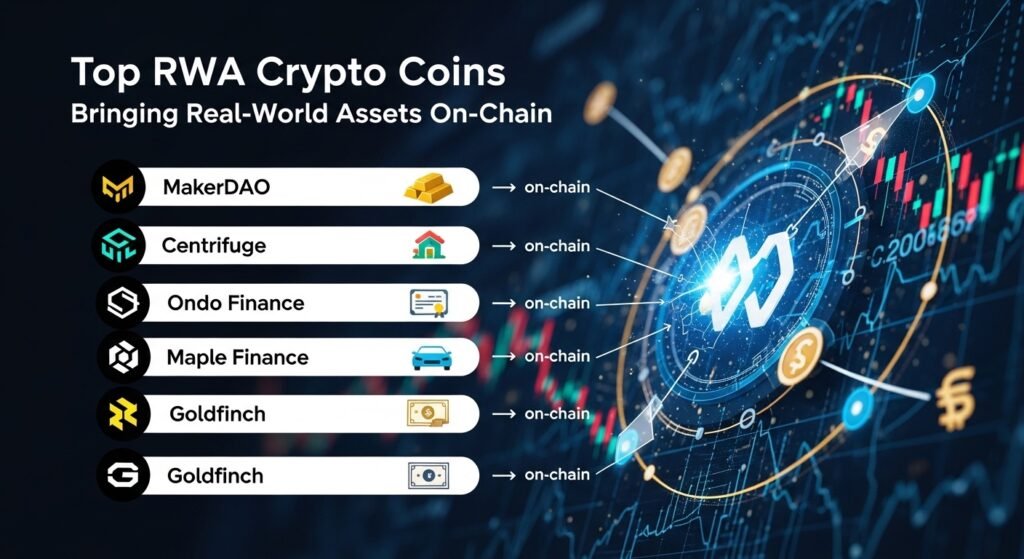
Top RWA Crypto Coins Bringing Real-World Assets On-Chain

Crypto Coins

COIN4U IN YOUR SOCIAL FEED

The rise of blockchain technology has extended far beyond cryptocurrencies, creating opportunities to tokenize real-world assets (RWAs) and bring them on-chain. By converting tangible assets such as real estate, commodities, and traditional financial instruments into digital tokens, RWA crypto coins are transforming the way investors access liquidity and diversify portfolios. These coins bridge the gap between conventional finance and decentralized ecosystems, opening a new frontier for innovation in decentralized finance (DeFi) and digital asset management.

RWA crypto coins enable secure, transparent, and programmable ownership of assets, allowing investors to trade, lend, and earn yield in a decentralized manner. Unlike traditional investments that may be illiquid or restricted, tokenized assets provide fractional ownership and seamless global accessibility. This paradigm shift empowers retail and institutional investors alike to participate in markets that were once limited by geography, regulation, or capital requirements.

As the adoption of RWA crypto coins grows, it becomes essential to understand which projects are leading the charge and how they are reshaping the financial landscape. These coins are not only enhancing liquidity and efficiency but are also promoting financial inclusivity and redefining the concept of asset-backed digital tokens.

Understanding Real-World Assets in Crypto

Real-world assets in the context of blockchain refer to physical or traditional financial assets that are represented digitally on a blockchain. Through tokenization, these assets become tradeable, programmable, and secure, allowing for fractional ownership and broader participation in markets that were previously inaccessible. Real estate properties, bonds, gold, and other commodities are common examples of RWAs being tokenized.

The integration of RWAs into crypto ecosystems brings multiple benefits. Firstly, tokenized assets increase market liquidity, allowing for faster and more efficient transactions. Secondly, the transparency of blockchain ensures that asset ownership, transaction history, and contractual terms are verifiable and immutable. Thirdly, RWAs facilitate innovative DeFi protocols, enabling lending, borrowing, and yield-generation strategies backed by tangible value.

Key Advantages of Tokenized Real-World Assets

Tokenized RWAs offer distinct advantages over traditional investment vehicles. Fractional ownership allows investors to participate with smaller capital allocations, enhancing accessibility. The programmable nature of blockchain enables automated compliance, smart contract-based transactions, and integration with decentralized exchanges. Additionally, tokenized assets can unlock new financial instruments, such as asset-backed stablecoins or collateralized lending platforms, providing investors with versatile investment strategies.

By merging conventional assets with blockchain technology, RWA crypto coins create a bridge between traditional finance and decentralized systems, allowing markets to operate with higher efficiency, reduced friction, and increased global reach.

Leading RWA Crypto Coins Transforming Finance

Several crypto projects are at the forefront of bringing real-world assets on-chain, each with unique approaches to tokenization, liquidity, and integration with decentralized finance ecosystems. These coins are reshaping investment strategies, enabling fractional ownership, and enhancing financial accessibility.

MakerDAO and Real-World Collateral

MakerDAO, one of the most prominent DeFi protocols, has pioneered the integration of real-world assets through its DAI stablecoin ecosystem. By accepting tokenized bonds, invoices, and other RWAs as collateral, MakerDAO enables borrowers to mint DAI against tangible value. This approach expands the utility of DeFi beyond purely crypto-backed loans, allowing investors to leverage real-world financial instruments while maintaining stability in the decentralized ecosystem.

MakerDAO’s model demonstrates how RWA crypto coins can support stablecoins, facilitate lending, and integrate traditional finance with blockchain-based platforms. By bridging the gap between real-world assets and decentralized liquidity, MakerDAO contributes to the maturation of the DeFi landscape.

Centrifuge: Tokenizing Real-World Assets
blockchain

Centrifuge is a dedicated platform for tokenizing real-world assets and connecting them with DeFi protocols. Through Centrifuge, businesses can convert invoices, real estate, and other assets into digital tokens, which are then used as collateral for decentralized loans. The platform’s Tinlake protocol allows investors to earn yield on tokenized assets, creating a new avenue for passive income and investment diversification.

By integrating with Ethereum and other blockchain networks, Centrifuge enhances transparency, traceability, and efficiency in asset-backed lending. Its approach exemplifies the potential of RWA crypto coins to unlock liquidity from previously illiquid assets, providing both borrowers and investors with innovative financial solutions.

RealT: Tokenized Real Estate

RealT focuses on the tokenization of real estate properties, enabling fractional ownership and direct access to rental income. Investors can purchase RealT tokens representing portions of physical properties, earning revenue in a transparent and automated manner. These tokens are tradable on decentralized exchanges, increasing liquidity and accessibility for global participants.

RealT demonstrates how RWA crypto coins can transform the real estate market by reducing entry barriers, enhancing transparency, and streamlining property management. This model illustrates the broader potential of blockchain to revolutionize traditional asset classes through digital tokenization.

Maple Finance: Institutional-Grade RWA Lending

Maple Finance provides decentralized lending solutions backed by institutional-grade RWAs. By leveraging tokenized corporate debt and other real-world instruments, Maple enables borrowers to access capital while offering investors attractive risk-adjusted returns. The platform integrates credit assessments and compliance measures with blockchain-based lending, creating a secure and transparent system for institutional participants.

Maple Finance’s approach highlights the convergence of traditional finance rigor with blockchain innovation, illustrating the role of RWA crypto coins in enabling professional-grade investment opportunities within decentralized ecosystems.

Applications and Use Cases of RWA Crypto Coins

RWA crypto coins are versatile instruments that extend beyond simple asset ownership. Their programmable nature enables various applications, including DeFi lending, collateralized stablecoins, fractional ownership, and yield farming. These use cases illustrate the transformative potential of bringing tangible assets onto the blockchain.

Collateralized Lending and Stablecoins

Tokenized RWAs can serve as collateral for decentralized lending protocols. By pledging real-world assets as digital tokens, borrowers can access liquidity in a stablecoin form, enabling efficient capital deployment without liquidating underlying assets. This approach combines the security of tangible value with the flexibility of DeFi, allowing for innovative financial structures and automated yield generation.

Fractional Ownership and Market Accessibility

Fractionalization of assets, such as real estate or commodities, allows smaller investors to participate in markets previously reserved for high-net-worth individuals or institutions. RWA crypto coins democratize access to high-value assets, enabling broader wealth distribution and increased market engagement. This fractional ownership model is particularly impactful in real estate, fine art, and rare commodities, where traditional ownership is often prohibitive.

Yield Generation and DeFi Integration

RWA crypto coins enable yield-generating opportunities by integrating tokenized assets with decentralized finance platforms. Investors can earn interest, fees, or dividends derived from real-world asset performance, all through smart contract automation. By bridging tangible value with programmable finance, these tokens create diverse strategies for portfolio growth and risk management.

Challenges and Risks of RWA Crypto Coins

While the potential of RWA crypto coins is significant, there are inherent challenges and risks. Regulatory compliance, asset verification, market volatility, and technological security are key factors influencing adoption and sustainability. Platforms must ensure that tokenized assets accurately represent underlying value, maintain transparency, and comply with jurisdictional requirements.

Smart contract vulnerabilities, hacking risks, and market liquidity constraints are additional considerations. Investors should conduct thorough due diligence, evaluate collateral quality, and assess protocol security when participating in RWA markets. Despite these challenges, the long-term growth prospects remain strong, with innovation and regulatory clarity expected to mitigate risks over time.

Regulatory Considerations

The tokenization of real-world assets intersects with traditional financial regulations, requiring careful navigation to ensure compliance. Jurisdiction-specific rules regarding securities, property ownership, and digital assets may affect issuance, trading, and collateral use. Successful RWA crypto coins implement compliance frameworks, legal audits, and transparent reporting to satisfy regulatory requirements while maintaining decentralized functionality.

Technological Security and Transparency
Top Coins

Security is paramount for RWA crypto coins. Platforms must safeguard smart contracts, asset registries, and transaction histories to prevent fraud, theft, or misrepresentation. Transparent asset audits and verifiable on-chain data enhance investor confidence and ensure that tokenized assets remain aligned with their real-world counterparts. These measures are essential for sustainable adoption and market growth.

Future Outlook for RWA Crypto Coins

The adoption of RWA crypto coins is poised for continued growth, driven by increasing demand for liquidity, transparency, and decentralized financial solutions. As DeFi ecosystems mature, more traditional assets are likely to be tokenized, integrating conventional finance with blockchain innovation.

Emerging technologies, regulatory clarity, and growing institutional participation will accelerate adoption, creating a robust market for asset-backed digital tokens. RWA crypto coins are not only reshaping investment strategies but also redefining how tangible assets are managed, traded, and leveraged globally.

Integration with Traditional Finance

The future of RWA crypto coins involves deeper integration with traditional financial systems. Banks, asset managers, and institutional investors are exploring blockchain tokenization to enhance efficiency, transparency, and accessibility. This convergence between conventional and decentralized finance is likely to create hybrid models, leveraging the strengths of both systems to optimize asset management and investment opportunities.

Expansion into New Asset Classes

As tokenization technology evolves, new asset classes, including intellectual property, commodities, and private equity, are expected to enter the blockchain ecosystem. RWA crypto coins will enable fractional ownership, liquidity, and programmable financial services across these diverse markets, fostering innovation and democratization of high-value assets.

Conclusion

Top RWA crypto coins are transforming how real-world assets are represented, traded, and leveraged on the blockchain. By bridging traditional finance and decentralized ecosystems, these coins provide liquidity, transparency, and access to previously restricted markets. Platforms like MakerDAO, Centrifuge, RealT, and Maple Finance exemplify the potential of tokenized assets, offering innovative solutions in lending, fractional ownership, and DeFi integration.

While challenges related to regulation, security, and market volatility remain, the continued adoption of RWA crypto coins signals a significant shift in the global financial landscape. Investors, developers, and institutions can benefit from the growing ecosystem, leveraging real-world asset tokenization to diversify portfolios, enhance market efficiency, and participate in the evolution of decentralized finance.

FAQs

Q: What are RWA crypto coins, and how do they bring real-world assets on-chain?

RWA crypto coins represent real-world assets such as real estate, commodities, or financial instruments in digital token form. These coins enable fractional ownership, liquidity, and decentralized trading by converting tangible assets into blockchain-based tokens. This process allows investors to access, trade, and leverage traditional assets while benefiting from the transparency, security, and programmability of blockchain technology.

Q: Which platforms are leading the tokenization of real-world assets, and what distinguishes their approaches?

Leading platforms include MakerDAO, Centrifuge, RealT, and Maple Finance. MakerDAO integrates RWAs into its stablecoin ecosystem, Centrifuge tokenizes invoices and real estate for DeFi lending, RealT offers fractional real estate ownership, and Maple Finance provides institutional-grade lending backed by tokenized assets. Each approach combines transparency, liquidity, and blockchain integration, creating unique opportunities for investors and borrowers.

Q: What are the primary benefits of investing in tokenized real-world assets using RWA crypto coins?

Investing in tokenized RWAs provides benefits such as increased liquidity, fractional ownership, accessibility to previously restricted markets, and integration with DeFi protocols for yield generation. Investors can diversify portfolios, earn passive income, and leverage programmable financial instruments while maintaining exposure to tangible value. These advantages make RWA crypto coins a compelling addition to digital asset strategies.

Q: What risks and challenges should investors consider when engaging with RWA crypto coins?

Investors should consider regulatory compliance, asset verification, technological security, and market liquidity. Smart contract vulnerabilities, fraudulent asset representation, and jurisdiction-specific legal constraints are key concerns. Conducting thorough due diligence, evaluating collateral quality . Assessing platform security are essential for mitigating potential risks while participating in RWA markets.

Q: How will RWA crypto coins shape the future of decentralized finance and global investment opportunities?

RWA crypto coins are expected to expand DeFi adoption by bridging traditional finance and decentralized systems. They provide access to previously illiquid assets, enable fractional ownership, and facilitate programmable financial services. As technology and regulatory clarity improve, RWA crypto coins will create innovative investment strategies, foster global participation. Redefine asset management and trading in both traditional and decentralized ecosystems.

Explore more articles like this

Subscribe to the Finance Redefined newsletter

A weekly toolkit that breaks down the latest DeFi developments, offers sharp analysis, and uncovers new financial opportunities to help you make smart decisions with confidence. Delivered every Friday

By subscribing, you agree to our Terms of Services and Privacy Policy

READ MORE

Best Blockchain Investment Platforms 2025 Top 10 Verified Platforms Guide

best blockchain investment platforms 2025

COIN4U IN YOUR SOCIAL FEED

The blockchain revolution continues to reshape the investment landscape, making it crucial for investors to identify the best blockchain investment platforms 2025 has to offer. As digital assets become increasingly mainstream, choosing the right platform can mean the difference between maximizing returns and facing unnecessary risks. Whether you’re a seasoned investor or just starting your blockchain journey, understanding the top-rated platforms, their unique features, and security protocols is essential for making informed investment decisions.

With over $2.3 trillion in cryptocurrency market capitalization and growing institutional adoption, finding the best blockchain investment platforms 2025 requires careful analysis of platform reliability, fee structures, available assets, and regulatory compliance. This comprehensive guide examines the leading platforms that have earned investor trust through proven track records, robust security measures, and innovative investment tools.

What Makes the Best Blockchain Investment Platforms Stand Out

Security and Regulatory Compliance

The foundation of any reliable blockchain investment platform lies in its security infrastructure and regulatory adherence. Top-tier platforms implement multi-layer security protocols, including cold storage solutions, two-factor authentication, and regular security audits. Additionally, platforms operating under proper regulatory frameworks provide investors with legal protections and transparent operations.

Leading platforms maintain insurance coverage for digital assets, employ advanced encryption technologies, and undergo regular third-party security assessments. These measures ensure that your investments remain protected against potential cyber threats and unauthorized access attempts.

User Experience and Interface Design

Modern blockchain investment platforms prioritize user experience through intuitive interfaces and streamlined navigation. The best platforms offer both beginner-friendly features and advanced tools for experienced traders. Mobile applications with full functionality allow investors to manage their portfolios on-the-go, while comprehensive desktop platforms provide detailed analytics and advanced trading options.

Successful platforms also provide extensive educational resources, including tutorials, market analysis, and investment guides to help users make informed decisions about their blockchain investments.

Top 10 Best Blockchain Investment Platforms 2025

Top 10 Best Blockchain Investment Platforms 2025

1. Coinbase Pro – Professional Trading Excellence

Coinbase Pro stands out as one of the most trusted names in blockchain investing, offering institutional-grade security and a wide selection of digital assets. The platform provides advanced charting tools, real-time market data, and competitive fee structures for serious investors.

Key Features:

  • Insurance coverage up to $250 million
  • Advanced order types and trading tools
  • Extensive cryptocurrency selection
  • Regulatory compliance in multiple jurisdictions
  • Professional-grade API access

2. Binance – Global Market Leader

As the world’s largest cryptocurrency exchange by trading volume, Binance offers comprehensive blockchain investment opportunities. The platform features spot trading, futures contracts, staking services, and innovative investment products like savings accounts and dual investment options.

Key Features:

  • Lowest trading fees in the industry
  • 500+ cryptocurrency options
  • Advanced DeFi integration
  • Educational academy resources
  • Multiple investment strategies

3. Kraken – Security-First Approach

Kraken has built its reputation on uncompromising security standards and transparent operations. The platform offers both basic and advanced trading interfaces, making it suitable for investors at all experience levels while maintaining institutional-grade security protocols.

Key Features:

  • Never been hacked since 2011
  • 24/7 customer support
  • Advanced security features
  • Comprehensive educational resources
  • Regulatory compliance worldwide

4. Gemini – Regulatory Pioneer

Founded by the Winklevoss twins, Gemini emphasizes regulatory compliance and institutional trust. The platform operates as a New York State-chartered trust company, providing additional legal protections for investor funds and transparent operations.

Key Features:

  • FDIC insurance for USD deposits
  • SOC 2 Type II certified
  • Institutional custody services
  • Mobile-first design
  • Automated portfolio rebalancing

5. FTX – Innovation-Driven Platform

FTX has rapidly gained recognition for its innovative approach to cryptocurrency trading and blockchain investments. The platform offers unique investment products, competitive fees, and advanced trading tools designed for both retail and institutional investors.

Key Features:

  • Revolutionary trading engine
  • Tokenized stock trading
  • Advanced derivatives products
  • Carbon-neutral operations
  • Comprehensive mobile application

Investment Strategies for Blockchain Platforms

Dollar-Cost Averaging (DCA)

Dollar-cost averaging represents one of the most effective strategies for blockchain investments, allowing investors to reduce volatility impact through regular, scheduled purchases. Most top platforms offer automated DCA features, enabling investors to build positions gradually over time.

This strategy proves particularly effective in the volatile cryptocurrency market, where timing perfect entries and exits becomes nearly impossible. By spreading purchases across different time periods, investors can achieve better average prices and reduce emotional decision-making.

Portfolio Diversification

The best blockchain investment platforms provide access to hundreds of different digital assets, enabling comprehensive portfolio diversification. Successful investors typically allocate funds across major cryptocurrencies, emerging altcoins, and blockchain-related stocks or ETFs.

Diversification strategies should consider market capitalization, use cases, technological foundations, and geographic exposure. Leading platforms offer portfolio tracking tools and automated rebalancing features to maintain optimal asset allocation.

Staking and Yield Generation

Modern blockchain platforms offer various yield-generating opportunities through staking, lending, and liquidity provision. These features allow investors to earn passive income on their holdings while maintaining exposure to price appreciation.

Popular Yield Strategies:

  • Proof-of-Stake coin staking
  • DeFi lending protocols
  • Liquidity pool participation
  • Savings account products
  • Dual investment options

Security Considerations for Blockchain Investing

Cold Storage Solutions

The most secure blockchain investment platforms utilize cold storage systems to protect the majority of customer funds. These offline storage solutions remain disconnected from internet access, providing maximum protection against cyber attacks and unauthorized access.

Leading platforms typically store 90-95% of customer funds in cold storage, maintaining only necessary amounts in hot wallets for daily operations. This approach significantly reduces the risk of large-scale fund losses due to security breaches.

Two-Factor Authentication and Security Protocols

Comprehensive security extends beyond platform-level protections to include user-level security measures. The best platforms require two-factor authentication (2FA) for account access and provide additional security options like withdrawal whitelisting and device management.

Advanced platforms offer hardware security key support, biometric authentication, and time-locked withdrawals for enhanced protection. These features ensure that even if login credentials become compromised, unauthorized access remains highly unlikely.

Fees and Cost Analysis

Trading Fee Structures

Understanding fee structures across different platforms helps investors optimize their returns and minimize unnecessary costs. Most platforms employ maker-taker fee models, where liquidity providers (makers) pay lower fees than liquidity takers.

Common Fee Types:

  • Trading fees (0.1% – 0.5%)
  • Deposit fees (varies by method)
  • Withdrawal fees (network dependent)
  • Inactivity fees (some platforms)
  • Premium service subscriptions

Cost Optimization Strategies

Experienced investors utilize various strategies to minimize fees and maximize returns. These include using native platform tokens for fee discounts, qualifying for volume-based fee reductions, and choosing optimal deposit and withdrawal methods.

Many platforms offer tiered fee structures based on trading volume or token holdings, providing significant cost savings for active investors. Understanding these structures helps optimize investment strategies and improve overall returns.

Regulatory Landscape and Compliance

Global Regulatory Framework

The blockchain investment landscape continues evolving as regulators worldwide develop comprehensive frameworks for digital asset operations. Leading platforms proactively implement compliance measures and maintain licenses in multiple jurisdictions.

Investors should prioritize platforms operating under clear regulatory oversight, as these provide additional legal protections and operational transparency. Regulatory compliance also indicates platform stability and long-term viability.

Tax Implications and Reporting

Blockchain investments carry specific tax obligations that vary by jurisdiction and investment type. The best platforms provide comprehensive transaction histories, tax reporting tools, and integration with popular tax software solutions.

Understanding tax implications before investing helps avoid compliance issues and optimizes after-tax returns. Many platforms now offer automated tax document generation and partnership with tax professionals for complex situations.

Future Trends in Blockchain Investment Platforms

Institutional Adoption and Integration

The growing institutional adoption of blockchain investments drives platform development toward enterprise-grade features and services. This includes advanced custody solutions, regulatory compliance tools, and integration with traditional financial systems.

Institutional demand continues pushing platforms to enhance security measures, provide detailed reporting capabilities, and offer sophisticated investment products. These improvements benefit all platform users through increased stability and feature development.

Decentralized Finance (DeFi) Integration

Leading blockchain investment platforms increasingly integrate DeFi protocols, providing users with access to decentralized lending, borrowing, and yield farming opportunities. This integration expands investment options while maintaining user-friendly interfaces.

DeFi integration represents a significant trend toward platform evolution, offering higher yield opportunities and more sophisticated investment strategies. However, these features also introduce additional risks that investors must carefully evaluate.

Mobile Trading and Accessibility

Mobile Trading and Accessibility

Mobile-First Platform Design

Modern blockchain investment platforms prioritize mobile accessibility, recognizing that many investors prefer managing portfolios through smartphone applications. The best platforms offer full-featured mobile apps with trading capabilities, portfolio tracking, and security features.

Mobile optimization includes biometric authentication, push notifications for price alerts, and offline functionality for basic account management. These features ensure investors can respond quickly to market opportunities regardless of location.

Cross-Platform Synchronization

Seamless synchronization between desktop and mobile platforms provides investors with flexibility and consistency across devices. Leading platforms maintain real-time data synchronization, ensuring that portfolio information and trading history remain current across all access points.

This synchronization extends to security settings, notification preferences, and customization options, creating a unified user experience that adapts to individual preferences and usage patterns.

Educational Resources and Support

Learning Platforms and Tutorials

The best blockchain investment platforms provide comprehensive educational resources to help users understand market dynamics, investment strategies, and platform features. These resources include video tutorials, written guides, webinars, and interactive learning modules.

Educational content covers topics from basic cryptocurrency concepts to advanced trading strategies, ensuring that investors at all experience levels can access relevant information. Regular updates to educational materials keep pace with rapidly evolving blockchain technology.

Customer Support and Community

Responsive customer support represents a crucial factor in platform selection, particularly given the complexity of blockchain investments and the 24/7 nature of cryptocurrency markets. Leading platforms offer multiple support channels including live chat, email, phone support, and comprehensive FAQ sections.

Active community forums and social media presence provide additional support avenues and enable users to share experiences, strategies, and market insights. These communities often become valuable resources for both new and experienced investors.

Risk Management and Investment Protection

Insurance Coverage and Asset Protection

Top-tier blockchain investment platforms maintain comprehensive insurance coverage protecting user funds against various risks including cyber attacks, internal fraud, and operational failures. Insurance coverage typically applies to funds held in hot storage, with cold storage protection through additional security measures.

Understanding insurance coverage limitations helps investors make informed decisions about fund allocation and risk management. Some platforms offer additional insurance options or recommend third-party insurance providers for enhanced protection.

Volatility Management Tools

The inherent volatility of blockchain investments requires sophisticated risk management tools. Leading platforms provide stop-loss orders, take-profit orders, and portfolio rebalancing features to help investors manage risk exposure.

Advanced risk management includes position sizing calculators, volatility indicators, and correlation analysis tools. These features enable investors to make data-driven decisions and maintain appropriate risk levels relative to their investment objectives

Conclusion

Selecting among the best blockchain investment platforms 2025 requires careful consideration of security, fees, features, and regulatory compliance. The platforms highlighted in this guide represent the industry leaders that have earned investor trust through proven track records and continuous innovation. Whether you’re seeking simple buy-and-hold functionality or advanced trading capabilities, these platforms provide the foundation for successful blockchain investing.

As the blockchain investment landscape continues evolving, staying informed about platform developments, security enhancements, and new features becomes essential for optimizing investment returns. The best blockchain investment platforms 2025 will continue adapting to meet growing investor demands while maintaining the highest standards of security and user experience.

READ MORE:Best Blockchain Investment Platforms for Beginners 2025

Explore more articles like this

Subscribe to the Finance Redefined newsletter

A weekly toolkit that breaks down the latest DeFi developments, offers sharp analysis, and uncovers new financial opportunities to help you make smart decisions with confidence. Delivered every Friday

By subscribing, you agree to our Terms of Services and Privacy Policy

READ MORE

ADD PLACEHOLDER