



















Cryptocurrency and Digital Commerce Regulation Guide

Cryptocurrency and Digital

COIN4U IN YOUR SOCIAL FEED

The rapid rise of cryptocurrency and the expansion of digital commerce have reshaped modern finance, online business models and global economic behaviour. What began as a technological experiment driven by decentralised digital currencies has evolved into a sophisticated ecosystem that includes blockchain networks, tokenised assets, decentralised finance and innovative digital payment solutions. As more consumers and businesses adopt these technologies, the need for strong and balanced cryptocurrency and digital commerce regulation becomes increasingly essential. Regulation must address transparency, safety, consumer protection and financial stability without hindering the innovation that fuels economic progress.

The regulatory environment around cryptocurrency and digital commerce is complex because it must align with rapidly evolving technologies. Governments across the world are trying to create frameworks that ensure security and accountability while supporting growth in financial and technological sectors. Businesses involved in digital trade must understand how regulations apply to them, and users must be aware of how these rules protect their rights and assets. This article explores the full landscape of cryptocurrency and digital commerce regulation, providing clarity on why regulation matters, how laws differ across regions and what the future of the digital economy might look like.

Cryptocurrency and Digital Commerce

To understand the purpose and structure of cryptocurrency and digital commerce regulation, it is important to first define the digital components at the heart of this transformation. Cryptocurrency refers to digital assets secured by cryptographic algorithms and powered by distributed ledger technology. These assets operate on blockchain networks, where transactions are recorded transparently and immutably. Bitcoin and Ethereum are the two most widely recognised cryptocurrencies, but thousands of tokens exist today, each serving different functions in digital ecosystems. Unlike traditional currencies, cryptocurrencies operate without a central authority, allowing fast, borderless and peer-to-peer transactions that bypass traditional banking systems.

Digital commerce refers to the buying and selling of goods and services using electronic platforms, ranging from online stores and mobile apps to digital marketplaces and subscription platforms. With the integration of cryptocurrencies into mainstream commerce, digital commerce has expanded into a broader digital economy. Users can purchase goods, access digital services or invest in tokenised assets directly from their digital wallets. This integration, while beneficial, introduces new regulatory challenges, especially in areas such as consumer rights, taxation, transaction transparency and platform accountability.

Why Regulation Matters in the Digital Economy
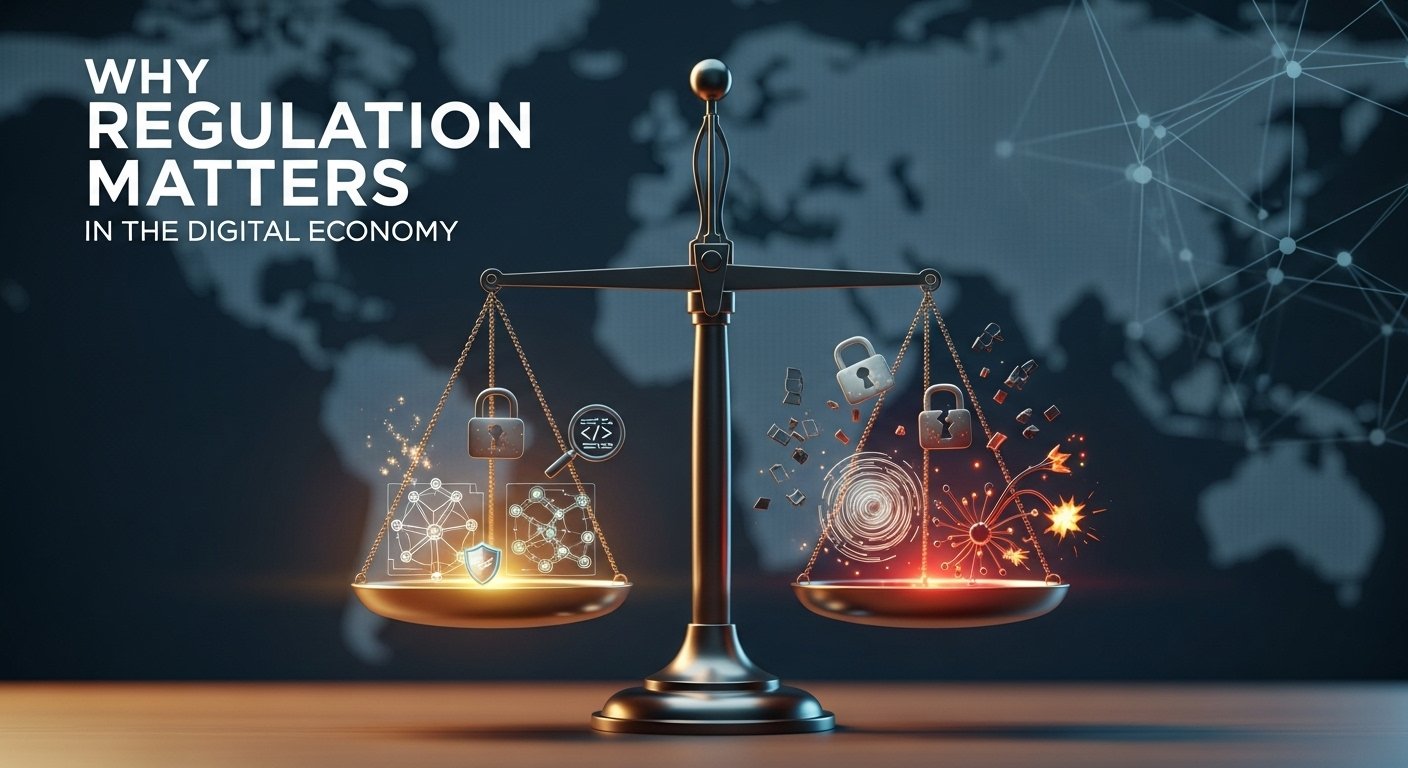
Why Regulation Matters in the Digital Economy

Regulation in the cryptocurrency and digital commerce space is necessary to ensure stability, prevent abuse and promote trust. Consumers engaging with cryptocurrencies often lack deep technical which can expose them to risks such as price volatility, phishing attacks, wallet compromises and fraudulent platforms. Without regulatory protection, users may suffer irreversible losses. Consumer protection laws adapted to digital technology ensure that businesses offering crypto services maintain transparent policies, secure infrastructure and fair dispute mechanisms.

Another major reason regulation is important is the need to combat financial crime. Cryptocurrencies have occasionally been misused for illegal activities because transactions can be pseudonymous and instantaneous. Regulators implement anti-money laundering controls and require service providers to verify user identities to reduce the potential for illicit activity. These rules allow law enforcement and financial authorities to detect suspicious behaviour while enabling legitimate transactions to flourish. By enforcing compliance, governments prevent crypto from becoming a haven for criminal enterprises.

Regulation also ensures fairness across the financial industry. Traditional finance institutions must comply with extensive legal requirements, while early crypto platforms once operated without comparable oversight. Creating a level regulatory framework ensures healthy competition while preventing new companies from gaining unfair advantages through regulatory gaps. In the long run, well-crafted regulations support innovation by creating clear rules, encouraging responsible growth and building confidence among investors, consumers and businesses.

Key Pillars of Cryptocurrency and Digital Commerce Regulation

Regulatory systems around the world generally focus on a few major themes, despite differences in legal traditions and economic priorities. One of the most important themes involves the classification of digital assets. Depending on their design and purpose, cryptocurrencies may be treated as currencies, commodities, securities or utility tokens. This classification determines which laws apply to the asset and how businesses must handle it. For example, a token that resembles an investment contract may be subject to securities regulation, requiring detailed disclosures and investor protections.

Another key pillar involves licensing and registration for crypto-related service providers. Exchanges, custodial wallet providers, payment processors and platforms offering token investment opportunities often need official authorisation to operate. Regulators require these businesses to maintain proper financial records, secure customer assets and demonstrate that they can operate safely. Licensing ensures that service providers meet minimum standards, reducing the risk of fraud or mismanagement.

Compliance with anti-money laundering and know-your-customer laws is another foundational aspect of cryptocurrency and digital commerce regulation. Businesses handling digital assets must verify customer identities, monitor unusual activities and report suspicious transactions to financial authorities. These procedures discourage criminal misuse of cryptocurrency and help integrate digital assets into the global financial system. Users may find identity verification burdensome, but it is essential for maintaining the integrity of the digital economy.

Taxation is another major element of regulation. Governments must determine how to tax crypto transactions, whether treating gains as capital income, business income or property-based gains. Merchants accepting cryptocurrency may need to convert values for tax reporting at the moment of the transaction. Staking rewards, mining profits and NFT sales may also carry tax obligations. Regulations help both individuals and businesses understand their responsibilities and avoid accidental non-compliance.

Finally, consumer rights and data protection form a growing area of digital commerce regulation. With users sharing personal information online and transacting digitally, rules surrounding privacy, cybersecurity, refund policies, and platform transparency are becoming increasingly important. Regulators expect businesses to secure sensitive information, communicate risks clearly and respond efficiently in case of breaches or service failures.

How Different Regions Approach Crypto and Digital Commerce

How Different Regions Approach Crypto and Digital Commerce

Regulatory approaches differ significantly across regions, reflecting varying attitudes toward innovation, financial stability and consumer protection. In North America, the regulatory environment is fragmented, especially in the United States, where different federal agencies interpret cryptocurrencies differently. Some agencies classify certain tokens as commodities while others treat them as securities. States may also impose individual licensing requirements, creating a multi-layered regulatory landscape. Canada has established a more streamlined system that treats many crypto trading platforms as securities dealers, requiring them to follow strict investor protection rules. Both countries pay close attention to issues related to stablecoins, decentralised platforms and tokenised securities.

Europe has moved toward a harmonised regulatory structure with the introduction of the Markets in Crypto-Assets framework. This regulation provides detailed rules for crypto asset service providers across the European Union, focusing on transparency, consumer protection and market integrity. Europe also applies strong privacy and e-commerce standards, which means crypto platforms must comply with multiple layers of regulation. As a region, the European Union leans toward treating digital assets similarly to traditional financial instruments while also supporting responsible innovation.

In the Asia-Pacific region, regulatory attitudes vary widely. Some countries promote technology development and crypto adoption by creating clear licensing regimes and innovation-friendly laws. Others impose strict limits on cryptocurrency trading or ban certain activities altogether. The region is diverse, but there is a common focus on controlling capital flows and ensuring financial stability. Many governments in the region pay special attention to cross-border payments, digital entertainment markets, gaming platforms and remittance services powered by blockchain.

Regulation of Crypto Payments in Digital Commerce

The use of cryptocurrency for everyday transactions has grown steadily, with more merchants accepting digital assets as payment for goods and services. Regulation plays a critical role in this area because both consumers and merchants need clarity on legal, tax and security aspects of crypto transactions. When a merchant receives cryptocurrency directly, they must understand how local laws treat digital assets, whether they must convert payments into fiat currency, and how to compute taxable income. Because crypto transactions are irreversible, consumer refund rights and chargeback policies must also be clearly defined.

Payment gateways that convert cryptocurrency to fiat currency offer additional convenience but also take on regulatory responsibilities. These companies often act as intermediaries and may need to comply with financial licensing rules, maintain secure processing systems and protect customer information. Their role makes cryptocurrency payments more accessible to merchants who prefer not to manage blockchain wallets themselves.

Stablecoins have become especially important in digital commerce because they offer the benefits of blockchain transactions without the extreme price volatility associated with many cryptocurrencies. However, stablecoins raise regulatory questions about issuer responsibility, reserve backing and systemic risk. Governments aim to ensure that stablecoin issuers hold sufficient assets to support redemption and operate with full transparency. As stablecoins become more integrated into digital commerce, they are likely to face increasingly detailed regulatory oversight.

See More: Comprehensive Guide to Cryptocurrency Blockchain and Digital Finance

Compliance Challenges for Businesses

Businesses operating in cryptocurrency and digital commerce face unique challenges because regulations evolve rapidly and differ across countries. One of the biggest challenges involves managing obligations across multiple jurisdictions. Since digital platforms typically serve global audiences, businesses may need to comply with several regulatory frameworks simultaneously. Some companies choose to limit services in certain regions to avoid legal complexity, while others invest heavily in compliance infrastructure to operate globally.

A second major challenge is balancing user privacy with regulatory oversight. Cryptocurrency users often prefer anonymity or pseudonymity, yet regulators require transparency for the sake of financial security and anti-crime measures. Businesses must find ways to respect user privacy while implementing identity verification and monitoring systems. Emerging technologies such as zero-knowledge proofs may eventually help reconcile privacy goals with regulatory requirements, but regulators are still learning how to apply these tools.

Cybersecurity presents another significant challenge. Digital assets are vulnerable to hacking, phishing attacks and technical failures. Businesses must implement strong security systems, conduct frequent audits and prepare detailed response plans for security incidents. Operational resilience is increasingly becoming a regulatory expectation, and companies that fail to secure customer assets may face penalties, reputational damage and loss of trust.

Future Trends in Cryptocurrency and Digital Commerce Regulation

The future of cryptocurrency and digital commerce regulation will likely involve greater integration between digital and traditional finance. As banks, fintech companies and established financial institutions adopt blockchain technology, regulatory frameworks may become more unified. Tokenisedd securities, digital bonds and central bank digital currencies are examples of products that will blur the line between decentralised and centralised finance. This convergence may lead to clearer rules and more predictable compliance expectations.

International cooperation is another emerging trend. Because blockchain networks operate globally, no single nation can regulate digital assets effectively on its own. International organisations and regulatory bodies are working toward consistent global standards on issues such as anti-money laundering, cross-border taxation and supervision of virtual asset service providers. More coordinated regulation can reduce fragmentation and help businesses operate more confidently across multiple markets.

Finally, regulation is becoming more technologically informed. Policymakers are increasingly willing to learn about blockchain mechanisms, smart contract design and decentralised architectures instead of applying outdated laws rigidly. This shift can encourage innovation by allowing regulators to craft rules that address outcomes rather than specific technologies. Regulatory sandboxes, pilot programs and public consultations will likely become more common as authorities seek to understand how emerging technologies can coexist with financial safeguards.

Conclusion

Cryptocurrency and digital commerce are transforming the global economy by enabling faster, more secure and more transparent ways of transferring value. As adoption grows, the importance of strong, clear and flexible cryptocurrency and digital commerce regulation becomes undeniable. Regulation protects consumers, prevents financial crime, maintains market integrity and creates a stable environment for innovation. While regulatory approaches differ across regions, the trend is toward more structured and cooperative frameworks that integrate digital assets into mainstream finance.

Users benefit when they understand how regulations affect their rights, security and responsibilities. Businesses succeed when they embrace compliance as part of their long-term strategy and design their platforms with regulatory expectations in mind. As the digital economy evolves, those who recognise regulation as. Pillar of trust—not a barrier—will be best positioned to thrive in the future of digital finance.


Explore more articles like this

Subscribe to the Finance Redefined newsletter

A weekly toolkit that breaks down the latest DeFi developments, offers sharp analysis, and uncovers new financial opportunities to help you make smart decisions with confidence. Delivered every Friday

By subscribing, you agree to our Terms of Services and Privacy Policy

READ MORE

Next Crypto to Explode in 2025 Smart Picks That Could Surge

Next Crypto to Explode

COIN4U IN YOUR SOCIAL FEED

The question on every investor’s mind right now is the same: which is the next crypto to explode in 2025? With the market maturing fast—after spot Bitcoin ETF approvals in the U.S., Ethereum’s Dencun scaling upgrade, and Europe’s MiCA framework settling into force—the backdrop for digital assets has never been more interesting. The cycle feels different because it is. Liquidity pipes from traditional finance have opened, blockspace has grown cheaper on Layer-2 networks, and regulation is beginning to harmonize in major jurisdictions. Put simply, the foundations are stronger than in prior cycles, and that changes how you should search for the next big crypto.

This guide gives you a practical, human-readable framework to evaluate 2025 candidates. Instead of scatter-shot “top 100 altcoins,” we’ll map where capital and users are actually going, explain the catalysts behind each theme, and highlight examples to watch. You’ll learn the difference between narratives and catalysts, how to avoid over-optimization when doing on-chain diligence, and how to time entries. We’ll also include high-signal industry milestones that matter to price discovery—like U.S. spot ETF approvals for Bitcoin and Ether, Ethereum’s proto-danksharding upgrade, and Europe’s MiCA rollout—so you can anchor your expectations in real events rather than hype.

How to Define “Next Crypto to Explode” Without Guesswork

Before naming any token, define the phrase. The next crypto to explode should meet three conditions. First, it has a clear catalyst within the next 3–12 months—a product launch, network upgrade, distribution unlock, or new access channel that can spark fresh demand. Second, it has structural tailwinds: user acquisition, falling transaction costs, or regulatory clarity that sustains flows. Third, it has a realistic path to valuation re-rating: either revenues, fees, staking yields, or verifiable usage that justify higher multiples. Without these, “explosion” is just a meme.

In 2025, the catalysts you can actually point to include the U.S. institutionalization of crypto exposure via spot ETFs, the maturation of Ethereum Layer-2 (L2) ecosystems after Dencun, and the standardization of compliance in Europe under MiCA. Each is investable because it changes how easily capital and users can reach assets.

Macro Pillars That Will Drive Breakouts in 2025

Macro Pillars That Will Drive Breakouts in 2025

Institutional Access and Liquidity

January 2024 marked a watershed: U.S. regulators approved multiple spot Bitcoin ETFs, giving pensions, RIAs, and retail brokerage accounts frictionless access to BTC. This is not just “more buyers”; it’s an upgrade to market plumbing—automated allocations, model portfolios, and tax-advantaged accounts can now include Bitcoin. In July 2024, spot Ether ETFs joined the lineup, pulling ETH into the same distribution pipes. These products don’t pick individual altcoins, but they lift the entire market’s risk appetite during inflow waves and normalize crypto as an asset class.

Scalability and Cost Compression

The Dencun upgrade (March 2024) enabled proto-danksharding (EIP-4844) on Ethereum, introducing data “blobs” that dramatically reduced L2 costs. Immediately after release, L2 transaction throughput doubled, and ecosystems like Base, Arbitrum, and Optimism leaned into cheaper blockspace with consumer-scale apps. Lower fees are not a niche improvement; they expand the addressable market of users and use-cases, which is central to identifying the next crypto to explode.

Regulatory Clarity

In the EU, MiCA became fully applicable to service providers by December 30, 2024, with stablecoin rules taking effect earlier in June 2024. Predictable guardrails tend to attract compliant liquidity and real-world partnerships—especially for remittances, tokenized assets, and fintech integrations. That’s a tailwind for projects building with banks and payment providers.

A 2025 Playbook: Where to Look for the Next Big Crypto

The Ethereum L2 Economy: Cheap Blockspace, Rich App Layers

If you want the next crypto to explode, watch the apps and tokens that live where users actually transact: L2s. After Dencun, L2 daily transactions surged, with Base frequently hitting multi-million-tx days, and developers pushing consumer apps into the mainstream. Inexpensive blockspace catalyzes growth in social, gaming, DeFi, and payments—areas where tokens can accrue value via fees, staking, or revenue-sharing.

What to evaluate: token’s claim on revenues or sequencer fees, user retention beyond incentives, and real on-chain transaction density from non-farm activity. Look for L2 tokens or app-level tokens whose economics improve as blob fees stay low and throughput rises. If an L2 or its leading apps become a default venue for stablecoin commerce, that can be rocket fuel.

Real-World Assets (RWA): Yields That Make Sense to TradFi

Tokenized Treasuries, money-market funds, and on-chain invoices are not just buzzwords; they’re synchronous with the rate environment and compliance trends. As MiCA and similar frameworks harden, expect more banks and fintechs to tokenize cash and short-duration paper. Tokens tied to RWA issuance rails, or protocols that take a fee from tokenization flows, can re-rate if volumes jump. The key is regulatory footing and audited custody; without those, RWA tokens won’t scale.

Restaking, Data Availability, and Security as a Service

Restaking extends Ethereum’s economic security to external services, while data availability (DA) layers monetize blockspace for modular chains. Projects in these categories can see reflexive growth if developers adopt them as default infrastructure. For investors, the filter is sustainability: does the token capture durable fees from validation, DA sales, or slashing-protected security markets? If yes, you’ve got a shot at the next big crypto because usage converts directly into revenues rather than pure emissions.

DePIN and AI x Crypto: When Compute Meets Markets

Decentralized physical infrastructure (DePIN) networks that tokenize compute, storage, bandwidth, or GPU time can spike when hardware demand is hot—especially in an AI-first world. If an AI model marketplace or GPU network secures enterprise workloads and settles payments on-chain, the native token may benefit from increased throughput and staking demand. The 2025 screen here is real customers, not just token incentives.

Payments and Stablecoin Rails

Stablecoins are already crypto’s killer app. As MiCA shapes European issuance and as more mainstream fintechs integrate stablecoin rails, networks that minimize costs and compliance risk will win checkout, remittance, and B2B volume. Tokens capturing a fee on payment routing or settlement can rerate when merchant processors plug in. The catalysts in 2025 are regulatory go-lives, issuer approvals, and L2 adoption, where fees are trivial.

Catalysts You Can Date on a Calendar

Catalysts You Can Date on a Calendar

ETFs and the Liquidity Flywheel

U.S. spot Bitcoin ETFs started trading in January 2024 and accelerated BTC’s institutional adoption. By mid-2024, Ether ETFs began trading as well. Together, they formalized crypto allocations in traditional portfolios. During strong inflow periods, liquidity and risk appetite spill down the market-cap ladder—historically a prime window for identifying the next crypto to explode among mid-caps tied to clear narratives.

Ethereum Upgrades and L2 Milestones

With Dencun live and blobs operating, watch for further L2 roadmap checkpoints and fee trajectories. If L2s sustain ultra-low costs while improving fraud proofs or migrating to decentralized sequencers, app tokens with real fee-share mechanics can catch a bid. That’s a fundamental—not speculative—reason to expect upside in specific tokens.

Regulatory Go-Lives

Europe’s MiCA is a multi-stage catalyst. Stablecoin provisions applied from June 30, 2024; broader service-provider rules took effect December 30, 2024. In 2025, as compliance programs mature and passports are issued, expect volume shifts toward licensed venues and assets. Tokens aligned with compliant infrastructure and KYC-friendly DeFi could benefit.

Shortlist Framework: Turning Themes Into Picks

This isn’t financial advice, and you should always do your own research, but here’s how to translate the above into a candidate list for the next crypto to explode:

Platform Leaders With Fresh Distribution

Assets that just gained new access channels often enjoy a multi-quarter demand tailwind. Bitcoin and Ether’s spot ETF inclusion opened the door to model-portfolio flows and retirement accounts. For downstream plays, look for tokens whose dependency trees include ETH blockspace or BTC settlement rails and that convert higher usage into fee capture.

L2 Native Applications With Real Retention

An L2 game, social app, or payments protocol that retains users after incentives taper is a prime candidate. Verify daily active wallets, organic txs per user, and meaningful revenue, not just emissions. L2 ecosystems like Base have shown the throughput to host consumer apps that weren’t feasible pre-Dencun; tokens that accrue value from those workflows can move quickly when an app crosses the chasm.

Infrastructure That Sells Picks and Shovels

Projects selling data availability, restaking security, or decentralized compute to builders can rally when dev adoption inflects. Here, the token’s role should be indispensable—staking for security, usage-linked burns, or mandatory fee payments—so that rising demand isn’t diluted by emissions. If mainnet launches or big integration partners are scheduled in 2025, you have time-boxed catalysts.

RWA and Stablecoin Gateways

If a protocol is the plumbing that brings Treasuries, invoices, or remittances on-chain under compliant regimes like MiCA, pay attention. Traditional finance prefers predictability; the first movers that pass audits and obtain approvals can capture long-tail volume. Over 2025, expect more payment processors to experiment with on-chain rails on Ethereum L2s, boosting tokens that route those flows efficiently.

See More: Crypto Market Enters Fear Territory, Losses Mount

How To Vet a 2025 Breakout, Step by Step

Read the Tech Roadmap—Then Tie It to Valuation

A whitepaper without a burn mechanism, fee share, or staking utility cannot justify a re-rating on usage alone. Conversely, a token that reliably captures sequencer fees, protocol revenue, or settlement charges can logically explode when adoption spikes. For Ethereum-adjacent projects, check how EIP-4844 blobs intersect with their costs and whether lower data fees translate into higher margins or more users.

Watch Liquidity and Listings

Even great tokens can stall if liquidity is thin. New exchange listings, bridge support into L2s, or on-ramps via fintech apps can unlock trapped demand. ETFs were the mega-example in 2024 for BTC and ETH; in 2025, watch for similar distribution upgrades—custody integrations, broker-dealer platforms, and bank partnerships.

Verify Real Usage

On-chain dashboards can show daily active addresses, tx counts, and fee volumes. After Dencun, L2 throughput jumped materially; the question is whether a token’s user growth is sticky. Check if the activity comes from unique wallets tied to functioning products rather than airdrop farming. Platforms like Base sustaining multi-million-tx days suggest there’s room for app tokens to scale—if value accrual exists.

Respect the Regulatory Perimeter

Regulated stability is an underrated bull case. Projects aligned with MiCA-like rules or that can integrate with banks and fintechs have clearer paths to mass adoption. The next big crypto for payments will likely run where compliance is possible, not where it’s cheapest alone.

Timelines That Matter in 2025

Post-Halving Dynamics

Bitcoin’s fourth halving occurred in April 2024 at block 840,000, cutting miner rewards to 3.125 BTC per block. Historically, BTC’s strongest price action has often come months after the halving as supply reductions meet cyclical demand. In 2025, that lag can still influence the risk curve: when BTC strength returns, capital often rotates to majors and then to high-beta mid-caps. That’s typically when the next crypto to explode emerges.

The L2 Cost Curve

If blob pricing remains low and throughput stable, L2 builders will push more consumer apps live throughout 2025. Each successful app creates a mini-flywheel: users arrive for the app, they need the network’s token or pay fees in it, and liquidity thickens. Track fee trends, sequencer decentralization, and developer velocity as leading indicators.

Compliance Milestones

As MiCA passports roll out and issuers tick compliance boxes, expect more European fintechs to integrate stablecoins and tokenized assets. Pay attention to announcements of licensed operations, custody approvals, and compliant on-ramps; those are direct catalysts for payments and RWA tokens.

Putting Names to Narratives—Without Over-Optimization

Because this article is designed to be evergreen and educational—not a rotating call sheet—focus on how to pick rather than chasing tickers. When you apply the framework, you’ll inevitably surface a shortlist of contenders in each bucket. From there, run a sanity check:

  1. Is there a dated catalyst within 3–12 months?

  2. Does the token capture value from the catalyst?

  3. Are liquidity, listings, and custody good enough for new inflows?

  4. Is regulation a tailwind, neutral, or a blocker?

  5. Does on-chain data confirm sticky usage, not just airdrop gaming?

Projects that pass this five-part test are your best bets for the next crypto to explode in 2025.

Risk Management for a Volatile Year

Even with strong tailwinds, crypto remains volatile. ETFs, upgrades, and regulation improve the floor but don’t erase drawdowns. Size positions modestly, ladder entries, and set invalidation levels. Remember that tokens with the greatest upside also carry the most reflexivity on the downside. A balanced core in BTC and ETH—now easily accessed via regulated products—can give you the staying power to participate in asymmetric mid-cap moves when catalysts hit.

Conclusion

Finding the next crypto to explode in 2025 is not about guessing the hottest ticker; it’s about aligning with catalysts that actually reroute liquidity and users. The big levers—spot ETFs, Ethereum’s scalable L2 economy after Dencun, and clear, enforceable rules under MiCA—are now in place. Use them as your compass. Start with platform leaders and their app layers, prioritize tokens that directly capture growing usage, and verify everything with on-chain data and real distribution. Do that consistently, and you won’t have to chase pumps; you’ll already be positioned where the next wave hits.

FAQs

Q: What single catalyst most increases the chance of a token exploding in 2025?

The largest single catalyst is a broader distribution that unlocks new buyers—like U.S. spot ETFs did for BTC in January 2024 and ETH in July 2024. When access friction drops, allocations can scale, and liquidity trickles down to quality mid-caps with real utility.

Q: How did Ethereum’s Dencun upgrade change the investing landscape?

By enabling proto-danksharding and blob transactions, Dencun slashed data costs for rollups, supercharging Layer-2 throughput. That makes consumer-grade apps viable and creates fertile ground for tokens that share in network or app fees.

Q: Does regulation help or hurt explosive upside?

In 2025, clarity helps. The EU’s MiCA framework provides predictable rules, especially for stablecoins and service providers. Clearer rules mean larger institutions can participate, which increases credible demand for compliant projects.

Q: Are L2 tokens or app tokens better bets?

It depends on value capture. Some L2s channel sequencer fees or staking yields to the token; some do not. Many app tokens have explicit fee-share or burn mechanics tied to usage. Study tokenomics first, then the user funnel. The post-Dencun L2 surge makes both categories investable if value accrual is real.

Q: How do Bitcoin’s cycles factor into picking the next big crypto?

Bitcoin’s halving in April 2024 reduced new supply, and historically, strength in BTC precedes rotations into majors and then mid-caps. That timing often lines up with when narratives meet catalysts, helping identify the next crypto to explode

Explore more articles like this

Subscribe to the Finance Redefined newsletter

A weekly toolkit that breaks down the latest DeFi developments, offers sharp analysis, and uncovers new financial opportunities to help you make smart decisions with confidence. Delivered every Friday

By subscribing, you agree to our Terms of Services and Privacy Policy

READ MORE

ADD PLACEHOLDER