








































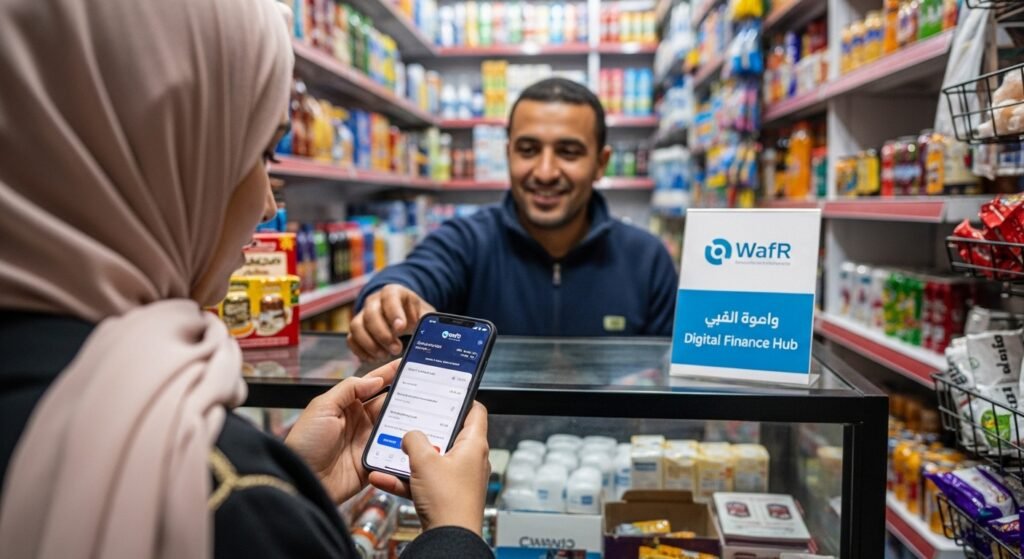
Morocco’s financial landscape is undergoing a quiet but powerful transformation. While traditional banks and global fintech giants often dominate headlines, a homegrown innovator is reshaping how everyday people access financial services. Moroccan Fintech WafR is turning neighborhood corner stores into dynamic digital finance hubs, bridging the gap between underserved communities and modern financial technology.
In many parts of Morocco, local grocery shops and small retail outlets serve as social and economic anchors. These corner stores are trusted, accessible, and deeply integrated into daily life. Recognizing this unique position, WafR has developed a model that leverages these stores to deliver digital payment solutions, mobile financial services, and broader financial inclusion initiatives. Instead of building new infrastructure from scratch, Moroccan Fintech WafR enhances what already exists.
The result is a powerful ecosystem where traditional retail meets cutting-edge fintech innovation. This article explores how Moroccan Fintech WafR is transforming corner stores into digital finance hubs, the technology behind its model, the impact on small businesses and consumers, and what this means for the future of Morocco’s digital economy.
The Rise of Moroccan Fintech WafR
The story of Moroccan Fintech WafR reflects the broader evolution of financial technology across North Africa. As smartphone adoption increases and regulatory frameworks evolve, fintech startups are finding fertile ground for innovation. WafR stands out by focusing not only on urban tech-savvy consumers but also on everyday citizens who rely on physical retail touchpoints.
Unlike purely digital platforms, Moroccan Fintech WafR integrates technology directly into community stores. This hybrid approach blends physical accessibility with digital capability. By equipping shop owners with tools that enable cashless transactions, loyalty programs, and bill payments, WafR creates a seamless experience for customers who may not have traditional bank accounts.
The company’s growth signals a shift in how financial services are delivered. Rather than expecting customers to adapt to digital banking apps, WafR brings digital finance to familiar, trusted environments.
Understanding Morocco’s Financial Landscape
To appreciate the impact of Moroccan Fintech WafR, it is essential to understand Morocco’s financial ecosystem. While the country has made significant strides in banking penetration, a portion of the population remains underbanked or unbanked. Rural communities and low-income households often rely heavily on cash transactions.
At the same time, Morocco has invested in strengthening its financial infrastructure. The central banking authority, Bank Al-Maghrib, has supported digital transformation and regulatory modernization. These reforms encourage fintech development and foster innovation within the financial sector.
Moroccan Fintech WafR operates within this evolving environment, aligning its solutions with national objectives aimed at expanding financial access and promoting a more inclusive economy. By leveraging regulatory support and technological progress, WafR positions itself at the intersection of policy and innovation.
How Moroccan Fintech WafR Turns Corner Stores Into Digital Finance Hubs
At the core of Moroccan Fintech WafR’s model is the transformation of small neighborhood shops into multifunctional service points. Traditionally, these stores sell groceries, household goods, and basic necessities. Through WafR’s platform, they now also facilitate digital financial services.
Store owners are equipped with digital interfaces that allow customers to pay utility bills, top up mobile phones, participate in loyalty programs, and access promotional offers. This effectively converts a simple point of sale into a comprehensive digital finance hub.
The integration of mobile wallet technology and secure payment gateways ensures transactions are processed efficiently and transparently. Customers who may not feel comfortable using standalone fintech apps can interact with digital finance through a trusted shopkeeper.
This model reduces barriers to adoption. Instead of requiring individuals to open bank accounts or navigate complex interfaces, Moroccan Fintech WafR embeds fintech into daily routines.
Empowering Small Retailers Through Technology
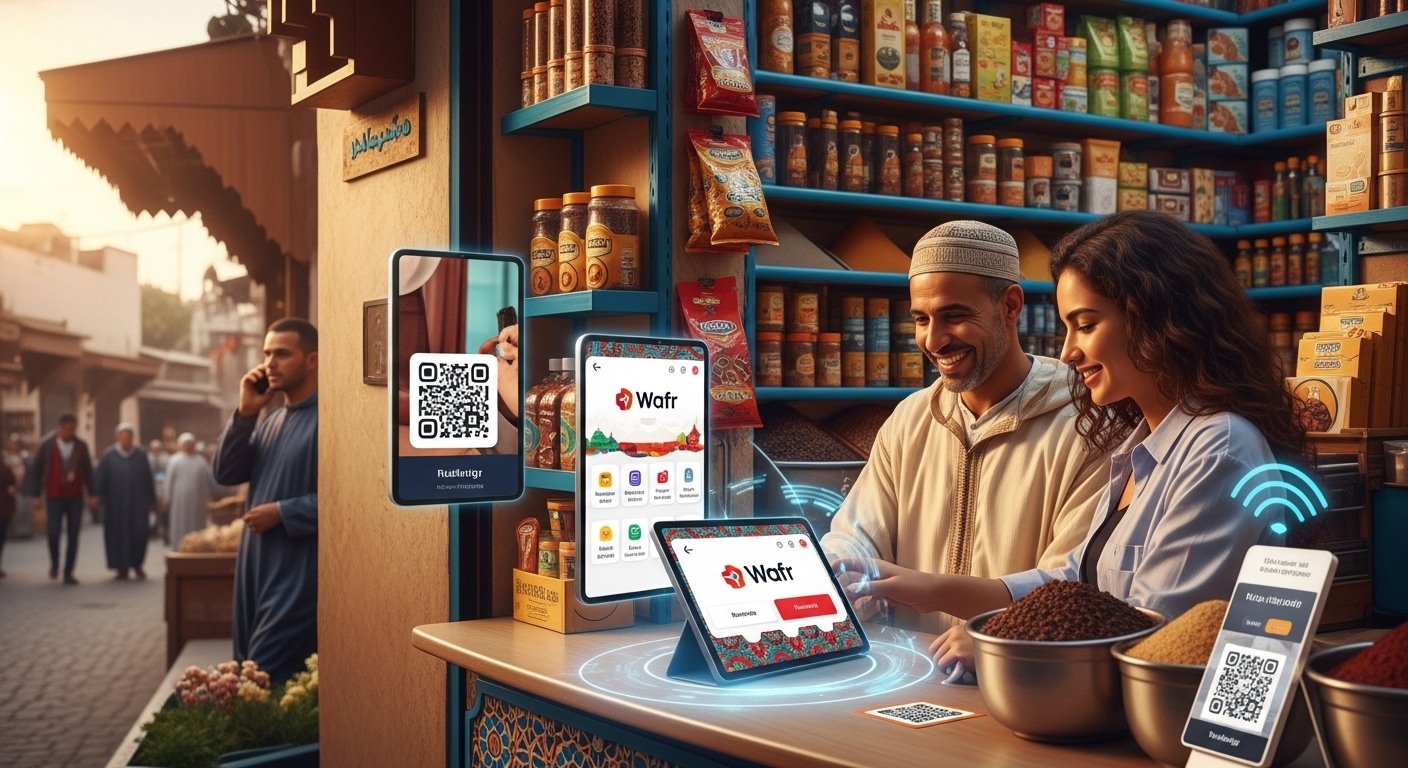
For many small retailers, competition from large supermarkets and e-commerce platforms poses a serious threat. Moroccan Fintech WafR addresses this challenge by giving corner stores a competitive edge.
Through data analytics and retail fintech solutions, shop owners gain insights into customer behavior and purchasing patterns. Loyalty programs encourage repeat visits, while digital payment capabilities attract younger, tech-savvy consumers.
The shift from purely cash-based transactions to digital transaction systems also enhances transparency and record-keeping. Retailers can better manage inventory, track revenue, and make informed business decisions.
By empowering small businesses, Moroccan Fintech WafR contributes to local economic resilience. The corner store becomes more than a retail outlet; it becomes a gateway to digital finance and economic participation.
Advancing Financial Inclusion Across Communities
Financial inclusion remains a critical goal for emerging markets. Moroccan Fintech WafR plays a vital role in expanding access to services for individuals who might otherwise be excluded from the formal financial system.
In communities where traditional banks are distant or intimidating, corner stores offer familiarity and convenience. By turning these stores into digital finance hubs, WafR lowers psychological and logistical barriers.
The availability of micro-payment services, bill settlement options, and digital rewards systems allows individuals to engage with modern financial tools without formal banking relationships. Over time, this exposure builds trust and familiarity with digital finance.
Moroccan Fintech WafR thus supports broader national ambitions to integrate more citizens into the financial ecosystem, fostering economic stability and growth.
The Technology Behind the Transformation
Behind the scenes, Moroccan Fintech WafR relies on robust technology infrastructure. Secure cloud-based platforms handle transaction processing, while encryption safeguards customer data.
The integration of secure payment gateways ensures compliance with financial regulations and protects against fraud. Real-time transaction verification enhances reliability and customer confidence.
Data analytics tools provide valuable insights for both WafR and participating retailers. By analyzing transaction patterns, the platform can tailor promotional campaigns and improve service offerings.
Technology, however, remains invisible to the end user. The emphasis is on simplicity. Customers interact with familiar store environments while benefiting from advanced fintech capabilities.
Building Trust in Digital Financial Services
Trust is central to the success of Moroccan Fintech WafR. In many communities, skepticism toward digital finance can slow adoption. By partnering with trusted local retailers, WafR leverages existing relationships.
Shopkeepers act as intermediaries who explain services and reassure customers. This human element differentiates Moroccan Fintech WafR from purely app-based platforms.
Transparency in fees, clear communication, and reliable service delivery reinforce confidence. Over time, repeated positive experiences strengthen trust in digital financial services.
This approach highlights a key insight: fintech adoption is not solely about technology. It is also about relationships and community engagement.
The Broader Impact on Morocco’s Digital Economy
The success of Moroccan Fintech WafR extends beyond individual transactions. By embedding digital finance into everyday commerce, the company contributes to the broader digital economy.
Increased adoption of cashless payment systems supports tax transparency and formal economic activity. Digital transaction records provide valuable data that can inform policy and business strategies.
Moreover, as more consumers interact with digital finance through corner stores, demand for additional services such as micro-loans and insurance products may grow.
Moroccan Fintech WafR’s model demonstrates how localized innovation can drive national transformation. It exemplifies how fintech can be inclusive, community-oriented, and scalable.
Challenges and Opportunities Ahead
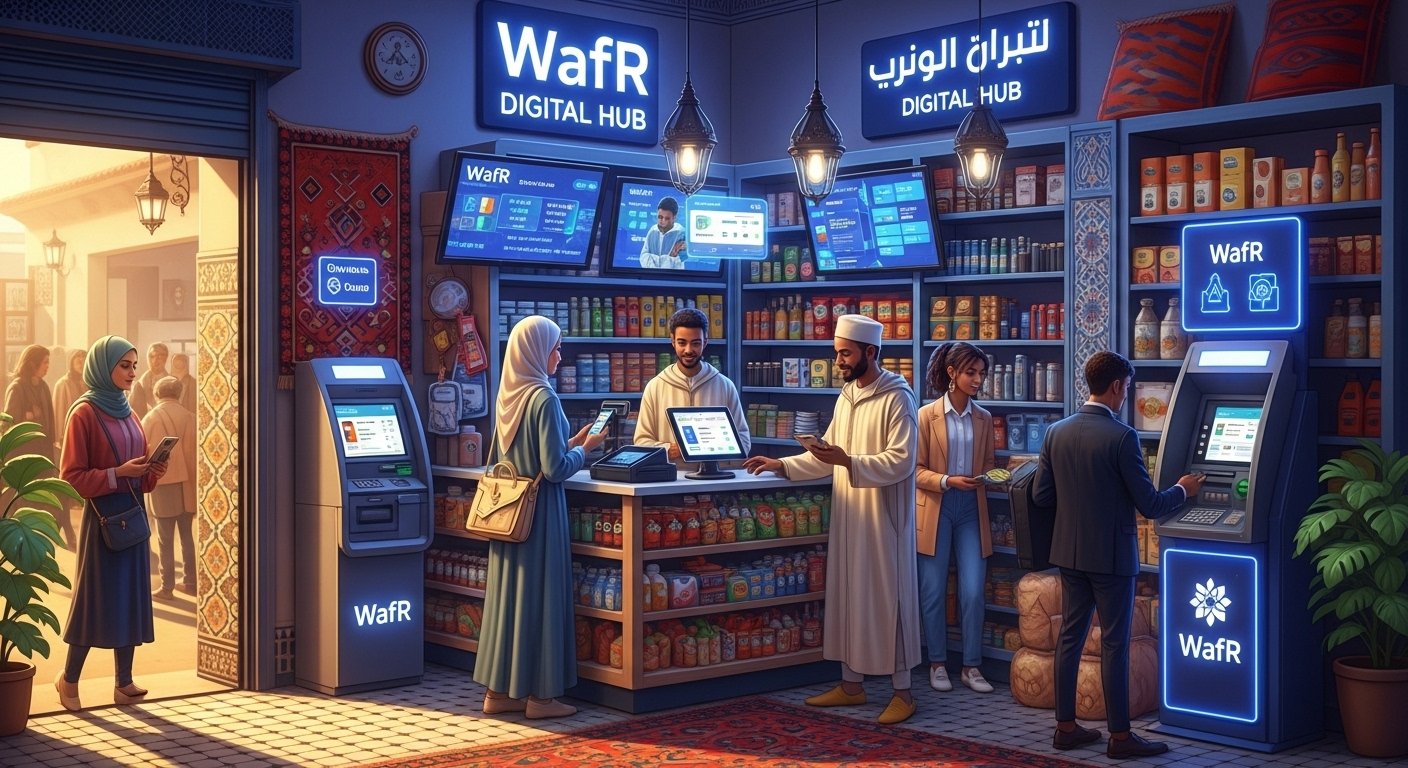
Despite its success, Moroccan Fintech WafR faces challenges. Expanding infrastructure, maintaining cybersecurity standards, and navigating regulatory changes require ongoing investment.
Competition from global fintech firms and local startups also intensifies. However, WafR’s deep integration with community retailers provides a unique advantage.
Opportunities abound in expanding service offerings. Integrating digital banking services, facilitating government benefit disbursements, or partnering with larger financial institutions could further enhance the ecosystem.
The key will be maintaining balance between rapid innovation and operational stability.
A Blueprint for Emerging Markets
The Moroccan Fintech WafR model offers lessons for other emerging markets. Many countries share similar characteristics: strong community retail networks, growing smartphone penetration, and segments of underbanked populations.
By transforming corner stores into digital finance hubs, fintech companies can leverage existing infrastructure rather than building costly new branches.
The success of Moroccan Fintech WafR illustrates that innovation does not always require disruptive replacement. Sometimes, it involves enhancing traditional systems with digital capabilities.
This hybrid approach could inspire fintech strategies across Africa, the Middle East, and beyond.
Conclusion
Moroccan Fintech WafR turns corner stores into digital finance hubs, redefining how financial services are delivered in Morocco. By combining trusted local retailers with advanced financial technology solutions, WafR expands access, empowers small businesses, and accelerates digital transformation.
Its model bridges the gap between tradition and innovation. Instead of replacing physical commerce, Moroccan Fintech WafR enhances it with digital tools that benefit communities and retailers alike.
As Morocco continues to modernize its economy, initiatives like WafR demonstrate that inclusive fintech can drive sustainable growth. By embedding digital finance into everyday life, Moroccan Fintech WafR is not only transforming corner stores but also shaping the future of financial inclusion.
FAQs
Q: How does Moroccan Fintech WafR help improve financial inclusion in Morocco?
Moroccan Fintech WafR improves financial inclusion by integrating digital financial services into neighborhood corner stores that people already trust and visit regularly. Instead of requiring customers to open bank accounts or navigate complex digital platforms, WafR allows them to pay bills, access promotions, and conduct transactions through familiar retail environments. This approach reduces barriers related to geography, trust, and digital literacy, gradually introducing underserved populations to formal financial systems.
Q: What benefits do small retailers gain by partnering with Moroccan Fintech WafR?
Small retailers benefit from increased customer engagement, access to digital payment capabilities, and valuable business insights through data analytics. By becoming digital finance hubs, they attract a broader customer base and strengthen loyalty through rewards programs. The ability to process digital transactions also improves record-keeping and operational efficiency, enabling better financial management and competitiveness against larger retail chains.
Q: Is the Moroccan Fintech WafR model scalable to other countries?
Yes, the Moroccan Fintech WafR model has strong potential for scalability in other emerging markets with similar retail structures and financial inclusion challenges. Countries with dense networks of small shops and growing mobile connectivity can replicate this hybrid approach. By leveraging trusted community retailers as access points for digital finance, fintech companies can accelerate adoption without building entirely new infrastructure.
Q: How does Moroccan Fintech WafR ensure transaction security and customer trust?
Moroccan Fintech WafR relies on secure cloud-based systems, encrypted data transmission, and compliance with regulatory standards to protect transactions. Additionally, the presence of trusted shopkeepers helps reinforce customer confidence. By combining technological safeguards with human interaction, WafR addresses both technical and psychological aspects of trust in digital financial services.
Q: What is the long-term impact of turning corner stores into digital finance hubs?
The long-term impact includes stronger financial inclusion, greater participation in the formal economy, and improved economic resilience for small businesses. As more consumers engage with digital finance through corner stores, broader adoption of cashless systems and advanced financial products may follow. Moroccan Fintech WafR’s model could contribute to sustained economic modernization while preserving the social fabric of local communities.