


































For much of the past decade, blockchain technology has lived through cycles of hype, disillusionment, and skepticism. Once hailed as a revolutionary force capable of reshaping finance, governance, and the internet itself, it has more recently been dismissed by critics as inefficient, overhyped, or even useless. High-profile project failures, volatile cryptocurrency markets, and regulatory uncertainty have contributed to a growing narrative that blockchain has failed to live up to its early promises. Yet, in the midst of this widespread doubt, New York City bets on blockchain, positioning itself against the prevailing sentiment and signaling a long-term commitment to digital infrastructure and innovation.
New York City’s decision is not merely symbolic. As one of the world’s leading financial, technological, and cultural hubs, the city’s stance on emerging technologies often sets a precedent for other global centers. By choosing to explore blockchain applications in public services, finance, data security, and economic development, New York City is effectively challenging the idea that blockchain is obsolete. Instead, it suggests that the technology’s most meaningful applications may only now be coming into focus.
This article explores why New York City bets on blockchain at a time when many have written it off, what this move means for the future of urban governance and innovation, and how blockchain could still prove its relevance beyond speculative cryptocurrency markets. By examining the city’s motivations, potential use cases, challenges, and broader implications, we can better understand whether blockchain is truly a discarded technology or simply one that is evolving into a more mature and practical form.
Why Blockchain Was Labeled as Useless
The Collapse of Early Expectations
Blockchain’s reputation problem stems largely from the gap between its early promises and real-world outcomes. In its early years, blockchain was portrayed as a solution for everything from global payments and digital identity to supply chains and voting systems. These sweeping claims created unrealistic expectations. When many projects failed to deliver scalable, user-friendly solutions, disappointment set in. As a result, the idea that blockchain could transform society began to lose credibility.
The collapse of several high-profile cryptocurrency platforms further reinforced the belief that blockchain was fundamentally flawed. Critics argued that if the most visible applications of blockchain could not maintain stability or trust, then the underlying technology itself must be inadequate. This sentiment gained traction in mainstream media, where blockchain was increasingly associated with speculation rather than innovation.
Energy Consumption and Environmental Concerns
Another major reason blockchain was discarded as useless lies in its environmental impact. Certain blockchain networks, particularly those relying on energy-intensive consensus mechanisms, were criticized for their high electricity consumption. Environmental advocates questioned whether a technology with such a large carbon footprint could be justified, especially when its benefits seemed abstract or limited to financial speculation.
These concerns became a powerful argument against blockchain adoption, especially for governments and public institutions aiming to meet sustainability goals. The perception that blockchain was inherently wasteful overshadowed ongoing improvements in energy efficiency and alternative consensus models, contributing to the narrative that it was a technological dead end.
Regulatory Uncertainty and Public Distrust

Regulatory confusion also played a significant role in blockchain’s decline in reputation. Governments around the world struggled to classify and regulate blockchain-based assets and services. This uncertainty created legal risks for businesses and discouraged large-scale adoption. At the same time, public distrust grew as scams, fraud, and poorly managed projects dominated headlines.
Against this backdrop, it is understandable why many concluded that blockchain was more trouble than it was worth. Yet, despite these challenges, New York City bets on blockchain, suggesting that the technology’s failures may be less about its core principles and more about how it has been implemented so far.
Why New York City Is Taking a Different View
A Strategic Vision for Digital Infrastructure
New York City’s interest in blockchain reflects a broader strategy focused on modernizing digital infrastructure. As cities become more data-driven, the need for secure, transparent, and resilient systems grows. Blockchain, at its core, offers a decentralized way to record and verify information, making it attractive for applications beyond cryptocurrency.
By investing in blockchain research and pilot programs, the city is signaling that it sees long-term value in the technology’s foundational features rather than its speculative uses. New York City bets on blockchain not because it ignores past failures, but because it believes the technology can evolve into a practical tool for urban management and economic growth.
Reinforcing Its Role as a Global Financial Hub
As a global financial capital, New York City cannot afford to ignore technological shifts that could reshape finance. While many financial institutions have grown cautious about public blockchain networks, they continue to explore private and permissioned blockchains for settlement, compliance, and data sharing. By supporting blockchain innovation, the city aims to remain at the forefront of financial technology rather than reacting to changes after they occur.
This proactive stance helps attract startups, researchers, and investors who are still committed to blockchain’s potential. In this sense, New York City bets on blockchain as a way to maintain its competitive edge in a rapidly evolving global economy.
Embracing Innovation Despite Skepticism
New York City has a long history of adopting new technologies before they are universally accepted. From financial engineering to digital media, the city has often served as a testing ground for innovations that later became mainstream. Betting on blockchain fits this pattern. Even if the technology is currently unfashionable, the city recognizes that innovation often requires patience and a willingness to experiment.
This willingness to look beyond short-term trends is what sets New York City apart. Rather than following the crowd in dismissing blockchain, it is choosing to explore how the technology might be refined and repurposed to address real-world challenges.
Practical Blockchain Use Cases for a Modern City
Public Records and Data Integrity
One of the most promising areas where blockchain could add value is in managing public records. Cities handle vast amounts of data related to property ownership, permits, licenses, and legal documents. Ensuring the integrity and transparency of these records is critical for public trust. Blockchain’s ability to create tamper-resistant records makes it well-suited for this purpose.
By experimenting with blockchain-based record systems, New York City could reduce fraud, streamline administrative processes, and improve accessibility for residents. This approach highlights how New York City bets on blockchain not as a buzzword, but as a tool for improving governance.
Digital Identity and Citizen Services
Digital identity is another area where blockchain could play a transformative role. Secure and verifiable digital identities could simplify access to city services, reduce paperwork, and enhance privacy protections. Instead of relying on centralized databases that are vulnerable to breaches, blockchain-based systems could give individuals greater control over their personal information.
For a city as large and diverse as New York, improving the efficiency of citizen services is a constant challenge. Blockchain offers a potential pathway to more inclusive and secure digital interactions between residents and government agencies.
Supply Chain Transparency and Urban Logistics
Urban supply chains are complex, involving countless stakeholders and transactions. Blockchain can provide end-to-end visibility into these processes, helping cities track goods, verify compliance, and respond more effectively to disruptions. This capability became especially relevant during global supply chain crises, when transparency and coordination were in short supply.
By applying blockchain to logistics and procurement, New York City could improve efficiency and accountability while supporting local businesses. This practical focus underscores why New York City bets on blockchain even as others question its relevance.
Economic Implications of New York City’s Blockchain Bet
Attracting Talent and Investment
When a major city publicly supports an emerging technology, it sends a strong signal to the market. Entrepreneurs and investors often follow such signals, viewing them as indicators of future opportunities. By embracing blockchain, New York City positions itself as a hub for blockchain innovation, attracting skilled professionals who might otherwise look elsewhere.
This influx of talent can have a multiplier effect, fostering collaboration between startups, universities, and established companies. Over time, this ecosystem can generate new jobs and economic growth, even if blockchain itself remains a niche technology.
Supporting a Broader Tech Ecosystem
Blockchain does not exist in isolation. It intersects with fields such as artificial intelligence, cybersecurity, and data analytics. By investing in blockchain initiatives, New York City indirectly strengthens its broader technology ecosystem. Research and development in one area often lead to breakthroughs in others, creating a virtuous cycle of innovation.
This holistic approach to technology policy explains why New York City bets on blockchain despite its controversial reputation. The city is not wagering everything on a single technology, but rather exploring how blockchain fits into a larger digital strategy.
Long-Term Competitiveness
Cities compete globally for investment, talent, and influence. Those that fail to adapt to technological change risk falling behind. While blockchain may not dominate headlines as it once did, its underlying concepts of decentralization and cryptographic security continue to influence new systems and platforms.
By staying engaged with blockchain’s evolution, New York City ensures it remains adaptable and competitive in the long run. This forward-looking mindset is essential in a world where technological relevance can shift rapidly.
Addressing the Criticisms Head-On
Scalability and Performance Improvements
One of the most common criticisms of blockchain is its limited scalability. Early networks struggled to handle large volumes of transactions efficiently, reinforcing the idea that blockchain was impractical for large-scale use. However, ongoing research has led to significant improvements in performance, including more efficient consensus mechanisms and layered architectures.
New York City’s approach acknowledges these limitations while recognizing that technology evolves over time. By supporting experimentation and pilot projects, the city can evaluate whether newer blockchain solutions are capable of meeting real-world demands.
Environmental Sustainability
Environmental concerns remain a serious challenge for blockchain adoption. Yet, not all blockchain systems are equally energy-intensive. Many newer platforms prioritize sustainability, using consensus methods that dramatically reduce energy consumption. By focusing on these alternatives, New York City can align blockchain initiatives with its environmental goals.
This nuanced approach demonstrates that New York City bets on blockchain with a clear understanding of its drawbacks and a commitment to responsible implementation.
Rebuilding Public Trust
Public skepticism toward blockchain is rooted in years of negative headlines. To overcome this distrust, transparency and education are essential. By communicating clearly about its blockchain initiatives and focusing on tangible benefits rather than hype, New York City can help reshape public perception. When residents see blockchain being used to improve services rather than fuel speculation, trust can gradually be restored. This shift in narrative is crucial for any meaningful adoption.
The Broader Significance of New York City’s Decision
Setting an Example for Other Cities
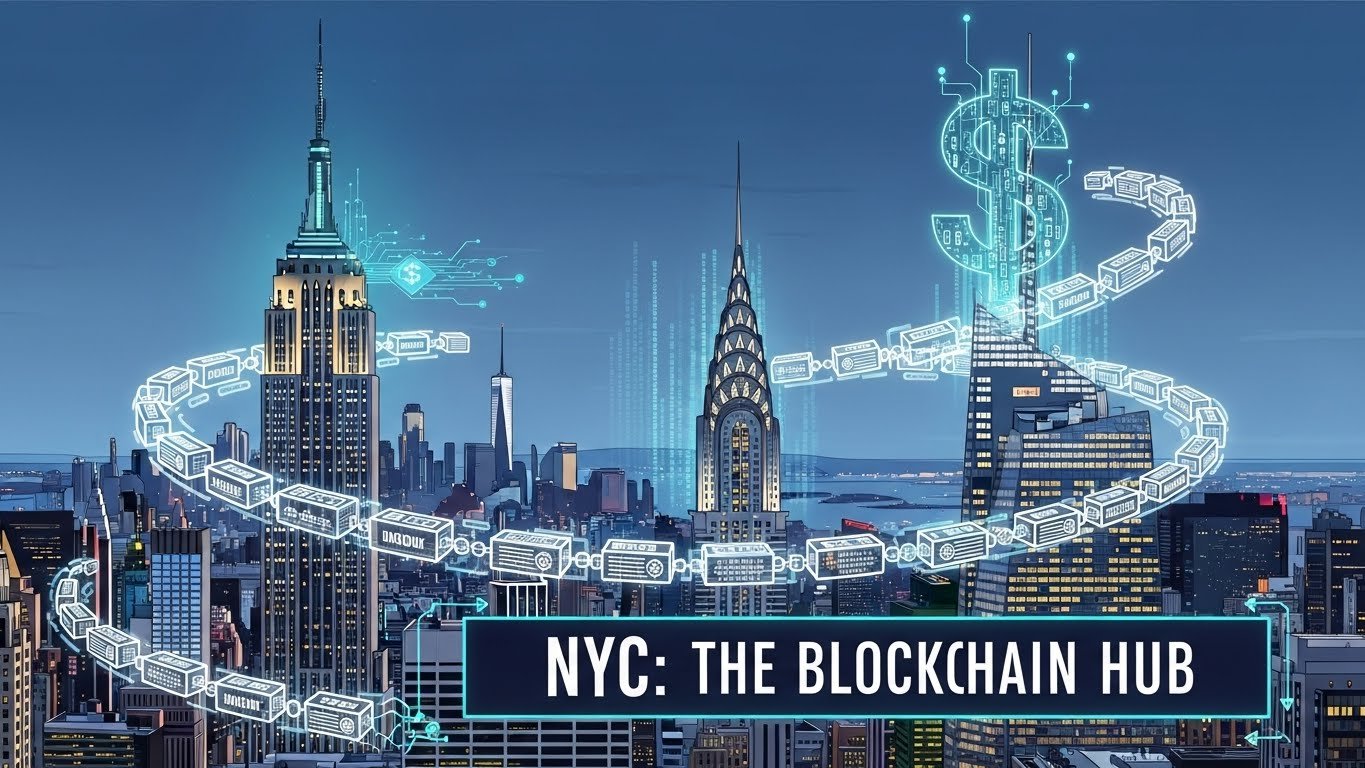
As a global city, New York’s policy choices often influence others. When New York City bets on blockchain, it challenges other municipalities to reconsider their own assumptions about the technology. Even cities that remain skeptical may feel compelled to explore blockchain more seriously rather than dismissing it outright. This ripple effect could lead to more thoughtful and selective adoption of blockchain worldwide, focusing on practical use cases rather than speculative trends.
Redefining Blockchain’s Role
New York City’s stance helps redefine what blockchain is for. Instead of being viewed primarily as a vehicle for cryptocurrency speculation, blockchain can be repositioned as a foundational technology for secure data management and digital trust. This reframing is essential if blockchain is to move beyond its troubled past. By emphasizing utility over hype, New York City bets on blockchain as a mature technology rather than a get-rich-quick scheme.
A Test Case for the Future
Ultimately, New York City’s blockchain initiatives serve as a real-world test case. If successful, they could demonstrate that blockchain still has a role to play in modern society. If they fail, they will provide valuable lessons about the technology’s limitations. Either way, the city’s willingness to experiment contributes to a more informed and balanced understanding of blockchain’s potential.
Conclusion
The decision that New York City bets on blockchain at a time when many have written it off is both bold and pragmatic. Rather than embracing the technology blindly or rejecting it outright, the city is taking a measured approach that focuses on practical applications, long-term strategy, and responsible innovation. By looking beyond the hype and the failures of the past, New York City is exploring whether blockchain’s core principles can still deliver value in areas such as public administration, digital identity, and economic development.
This bet is not without risks. Blockchain still faces challenges related to scalability, sustainability, and public trust. However, New York City’s willingness to confront these issues head-on suggests a level of maturity often missing from earlier adoption efforts. In doing so, the city is not just betting on blockchain, but on its own ability to shape technology in service of public good.
Whether blockchain ultimately proves its worth or fades into obscurity, New York City’s experiment will play a crucial role in determining its future. In an era defined by rapid technological change, the city’s choice to engage rather than dismiss may turn out to be its most valuable investment.
FAQs
Q: Why does New York City believe blockchain is still worth exploring?
New York City believes blockchain is worth exploring because its core features, such as data integrity, transparency, and decentralization, can address real-world challenges in governance and digital infrastructure. While many early projects failed, the city sees potential in refined and more focused applications that go beyond speculation.
Q: How is New York City’s approach to blockchain different from past hype cycles?
Unlike earlier hype-driven adoption, New York City’s approach emphasizes practical use cases, pilot programs, and long-term evaluation. The city is not promoting blockchain as a cure-all but as a tool that may complement existing systems when applied thoughtfully.
Q: Does New York City’s blockchain bet focus on cryptocurrencies?
No, the city’s interest in blockchain extends beyond cryptocurrencies. While digital assets are part of the broader ecosystem, the primary focus is on blockchain as a technology for secure records, digital identity, and efficient public services rather than price speculation.
Q: Can blockchain really improve city services for residents?
Blockchain has the potential to improve city services by making data more secure, transparent, and accessible. For residents, this could mean faster processes, reduced fraud, and greater trust in public records, provided the technology is implemented responsibly.
Q: What risks does New York City face by betting on blockchain?
The risks include technological limitations, public skepticism, and the possibility that blockchain solutions may not outperform existing systems. However, by starting with small-scale experiments and continuous evaluation, New York City aims to manage these risks while exploring potential benefits.