


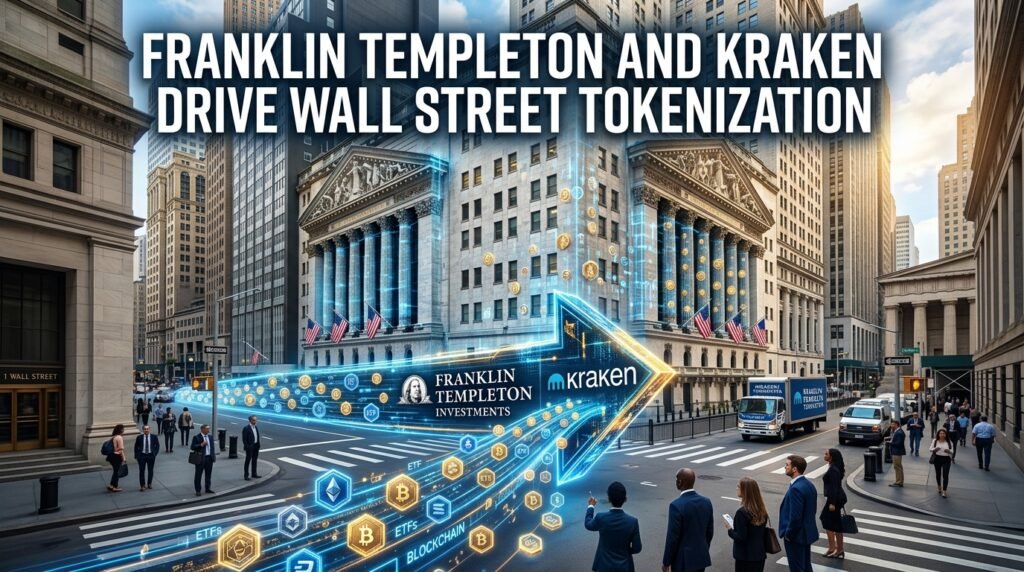
The financial world is entering a transformative era where traditional assets are increasingly merging with blockchain technology. One of the latest developments accelerating this evolution is the partnership between Franklin Templeton and Kraken’s Payward. Their collaboration to tokenize Wall Street assets reflects a growing movement toward digital finance, decentralized infrastructure, and blockchain-powered investment products. As institutional adoption expands, this partnership could redefine how investors access stocks, bonds, funds, and other traditional financial instruments.
The concept of tokenization has been discussed for years, but the involvement of major financial institutions now signals that the idea is moving from theory into practical implementation. Franklin Templeton, a globally recognized asset manager, has already demonstrated strong interest in blockchain innovation. Kraken, through its parent company Payward, has become one of the most influential crypto infrastructure firms in the industry. Together, they are aiming to bridge traditional finance with digital asset markets in a way that could reshape capital markets.
This partnership comes at a critical moment for the crypto industry. Institutional investors are increasingly demanding compliant and regulated blockchain solutions. Meanwhile, financial firms are exploring how tokenized assets can improve liquidity, reduce settlement times, and open access to global markets. By combining Franklin Templeton’s expertise in asset management with Kraken’s blockchain infrastructure, the collaboration has the potential to accelerate the adoption of tokenized securities worldwide.
The Rise of Asset Tokenization in Modern Finance
Asset tokenization refers to the process of converting ownership rights of traditional assets into blockchain-based digital tokens. These tokens can represent stocks, bonds, real estate, commodities, or even private equity holdings. The growing interest in tokenization is driven by the promise of enhanced efficiency, transparency, and accessibility.
Traditional financial systems often rely on intermediaries, lengthy settlement periods, and expensive operational structures. Blockchain technology introduces a decentralized ledger that can streamline transactions while reducing costs. Through tokenization, investors may gain access to fractional ownership opportunities that were previously difficult or impossible to obtain.
The partnership between Franklin Templeton and Kraken’s Payward highlights how tokenization is becoming more than just a crypto-native concept. It is evolving into a practical solution for Wall Street institutions seeking modernization. As blockchain infrastructure matures, tokenized financial products are likely to become increasingly common across global markets.
Another major factor fueling tokenization is the rise of institutional demand. Hedge funds, banks, and asset managers are now exploring blockchain-based solutions to improve market efficiency. Regulatory frameworks are also gradually evolving, creating clearer pathways for compliant tokenized asset offerings. This combination of technological progress and institutional interest is laying the foundation for a new financial ecosystem.
Why Franklin Templeton Is Embracing Blockchain Technology
Franklin Templeton has emerged as one of the most forward-thinking traditional asset managers in the blockchain space. Unlike many financial institutions that initially viewed crypto with skepticism, Franklin Templeton has actively explored distributed ledger technology for years.
The company launched blockchain-based investment products and participated in digital asset initiatives well before institutional crypto adoption became mainstream. Its willingness to innovate has positioned it as a leader among traditional financial firms entering the tokenization market.
One of the key reasons Franklin Templeton supports blockchain technology is the efficiency it can bring to financial operations. Traditional systems often involve multiple layers of intermediaries, which increase both costs and transaction times. Blockchain-based settlement mechanisms can significantly streamline these processes while improving transparency.
The company also recognizes the long-term potential of digital assets. As younger generations become more comfortable with blockchain-based finance, institutions must adapt to evolving investor expectations. Tokenized products can offer greater accessibility, faster transactions, and enhanced liquidity, making them attractive to both retail and institutional investors.
Franklin Templeton’s partnership with Kraken’s Payward demonstrates its commitment to staying ahead of financial innovation trends. By collaborating with a major crypto infrastructure provider, the asset management giant is positioning itself for the next phase of digital finance evolution.
Kraken’s Payward and Its Expanding Institutional Role
Kraken has built a reputation as one of the most trusted cryptocurrency exchanges globally. Through its parent company, Payward, the firm has expanded beyond retail crypto trading into institutional services, custody solutions, and blockchain infrastructure development.
Institutional participation in crypto markets requires reliable infrastructure, regulatory compliance, and secure custody systems. Kraken’s experience in these areas makes it an ideal partner for traditional financial institutions seeking blockchain integration.
Payward’s collaboration with Franklin Templeton reflects a broader trend where crypto-native firms are increasingly partnering with established Wall Street companies. This convergence between traditional finance and digital asset platforms is accelerating the mainstream adoption of blockchain technology.
Kraken’s infrastructure capabilities could play a central role in facilitating tokenized securities trading, settlement, and custody. By leveraging blockchain networks, tokenized assets may eventually trade continuously rather than being restricted to traditional market hours. This could introduce a more efficient and globally accessible investment environment.
The partnership also strengthens Kraken’s position as a key institutional player in the digital asset industry. As regulatory clarity improves, crypto infrastructure providers with strong compliance records are likely to attract more collaborations with traditional financial giants.
How Tokenized Wall Street Assets Could Transform Investing
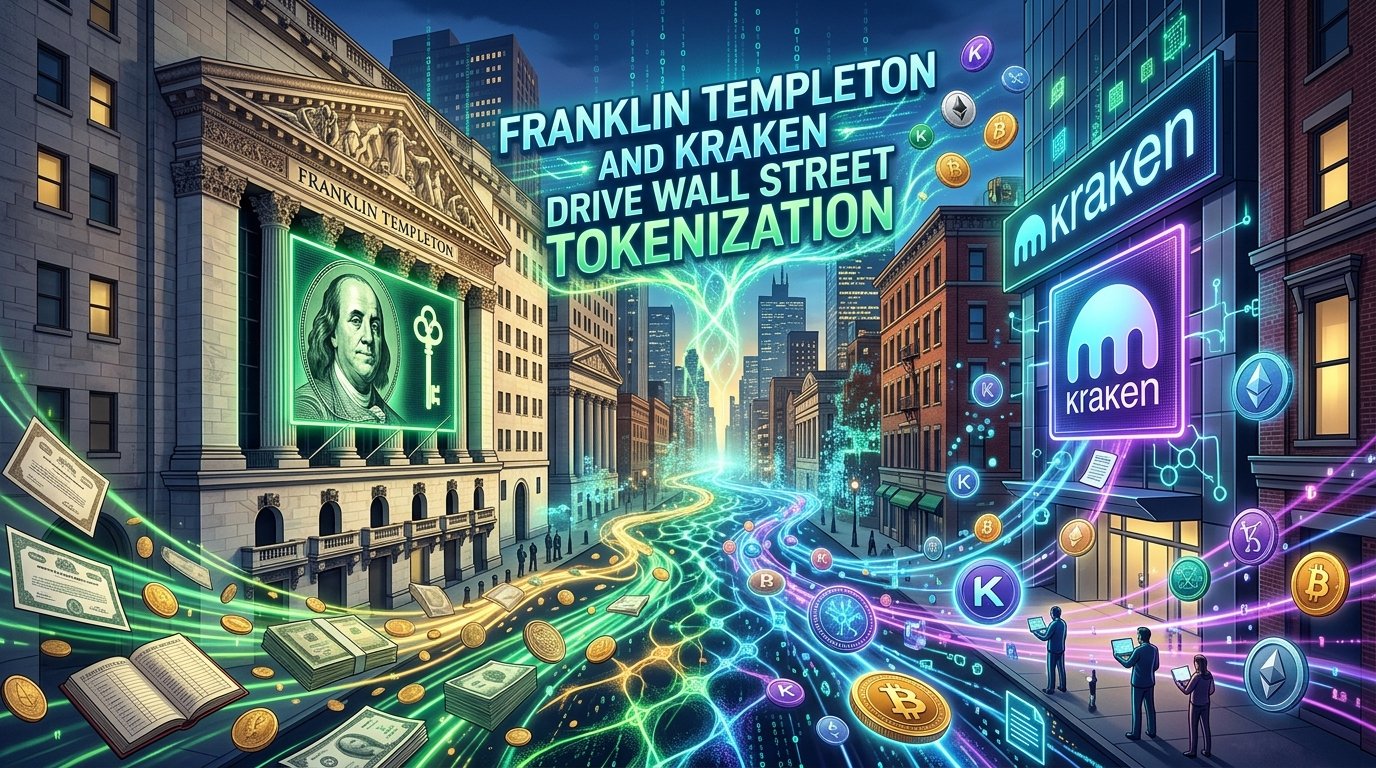
The tokenization of Wall Street assets has the potential to fundamentally change how investors interact with financial markets. Traditional investment systems have long faced issues related to settlement delays, market accessibility, and liquidity fragmentation. Blockchain technology offers solutions to many of these inefficiencies.
One of the biggest advantages of tokenized assets is fractional ownership. Investors could potentially buy small portions of expensive financial products, making high-value assets more accessible to a broader audience. This democratization of investing could attract millions of new participants into global financial markets.
Another important benefit is faster settlement. Traditional securities transactions can take days to finalize due to clearinghouse processes and intermediary involvement. Blockchain-based systems can enable near-instant settlement, reducing operational risks and improving market efficiency.
Tokenized assets may also increase global market participation. Since blockchain networks operate continuously, investors from different regions could access tokenized securities without relying on conventional market hours. This could create a more interconnected and liquid financial ecosystem.
Transparency is another major advantage. Blockchain ledgers provide immutable transaction records that enhance accountability and reduce the likelihood of fraud. For institutional investors, this added transparency can improve trust and compliance capabilities.
As Franklin Templeton and Kraken push forward with tokenization initiatives, these benefits may gradually become integrated into mainstream finance.
Regulatory Challenges Facing Tokenized Securities
Despite the excitement surrounding tokenization, regulatory uncertainty remains one of the biggest obstacles to widespread adoption. Financial authorities around the world are still determining how tokenized securities should be classified and regulated.
Traditional securities laws were not designed for blockchain-based financial products. As a result, regulators must balance innovation with investor protection. Compliance requirements related to custody, trading platforms, anti-money laundering standards, and investor disclosures remain complex.
The partnership between Franklin Templeton and Kraken’s Payward could help establish industry standards for compliant tokenization. Since both firms operate within regulated financial environments, their collaboration may provide a model for future institutional blockchain initiatives.
Governments and regulators are gradually recognizing the importance of digital asset innovation. Several jurisdictions are already introducing frameworks designed specifically for tokenized securities and blockchain-based financial products. These developments could encourage more institutions to enter the market.
However, regulatory fragmentation across countries remains a challenge. Different legal definitions and compliance rules can complicate cross-border tokenized asset trading. Achieving global interoperability will likely require coordinated regulatory efforts.
Institutional Adoption Signals a Major Market Shift
The involvement of major institutions like Franklin Templeton indicates that blockchain adoption is moving beyond speculation and into mainstream finance. Institutional participation often acts as a catalyst for broader market acceptance, infrastructure development, and regulatory progress.
In previous years, many traditional financial firms viewed crypto primarily as a speculative asset class. Today, the focus is increasingly shifting toward blockchain’s utility in financial infrastructure. Tokenization, smart contracts, and decentralized settlement systems are becoming serious areas of exploration for institutional investors.
The Franklin Templeton and Kraken partnership reflects this changing mindset. Rather than competing with blockchain technology, traditional finance is beginning to integrate it into existing systems. This evolution could eventually lead to hybrid financial models where digital assets and traditional securities coexist seamlessly.
Institutional adoption also increases credibility within the broader market. Large financial firms conduct extensive due diligence before adopting new technologies. Their participation signals growing confidence in blockchain’s long-term viability.
As more institutions embrace tokenization, competition among financial firms could intensify. Asset managers, banks, and exchanges may accelerate blockchain investments to avoid falling behind in the digital finance race.
The Future of Wall Street on Blockchain
The tokenization of Wall Street assets could represent one of the most significant financial transformations of the coming decade. While the industry remains in its early stages, the involvement of companies like Franklin Templeton and Kraken suggests that tokenized finance is gaining serious momentum.
In the future, investors may interact with financial markets through blockchain-powered platforms that operate around the clock. Tokenized stocks, bonds, ETFs, and alternative assets could become widely accessible to retail and institutional investors alike.
Smart contracts may automate complex financial processes, reducing administrative burdens and operational costs. Decentralized finance infrastructure could also integrate with traditional markets, creating entirely new investment opportunities.
The growth of tokenized finance could further blur the boundaries between traditional banking, crypto exchanges, and asset management firms. Companies capable of combining regulatory compliance with blockchain innovation are likely to emerge as industry leaders.
While challenges related to regulation, scalability, and interoperability still exist, the direction of the industry appears increasingly clear. Blockchain technology is gradually becoming embedded within the foundations of modern finance.
Competition in the Tokenized Asset Market
The partnership between Franklin Templeton and Kraken’s Payward is part of a larger competitive landscape where financial institutions are racing to establish leadership in tokenized finance. Major banks, fintech companies, and crypto firms are all investing heavily in blockchain infrastructure.
Several global institutions have already launched pilot programs involving tokenized bonds, digital securities, and blockchain-based settlement systems. This growing competition is accelerating innovation across the financial sector.
Crypto-native firms bring technical expertise and blockchain infrastructure, while traditional institutions contribute regulatory experience and established investor networks. Partnerships between these two sectors may become increasingly common as tokenization adoption expands.
Competition could also drive improvements in scalability, security, and user experience. As firms attempt to attract institutional investors, the quality and reliability of blockchain-based financial services are likely to improve significantly.
The tokenized asset market may eventually become one of the largest sectors within digital finance. Analysts increasingly believe that trillions of dollars in traditional assets could migrate onto blockchain networks over the next decade.
Conclusion
The collaboration between Franklin Templeton and Kraken’s Payward represents another major milestone in the evolution of blockchain-based finance. By working together to tokenize Wall Street assets, the two firms are contributing to a broader transformation that could redefine how global financial markets operate.
Tokenization offers compelling advantages, including faster settlement, increased liquidity, improved transparency, and broader market accessibility. As institutional interest continues to grow, blockchain technology is becoming increasingly integrated into mainstream financial systems.
While regulatory challenges and infrastructure limitations remain important considerations, the momentum behind tokenized finance continues to strengthen. Partnerships between traditional financial institutions and crypto infrastructure providers are likely to play a critical role in shaping the future of digital investing.
The financial industry is entering a new era where blockchain and traditional finance no longer exist as separate ecosystems. Instead, they are converging into a more efficient, accessible, and globally connected financial framework. The Franklin Templeton and Kraken partnership may ultimately be remembered as one of the key steps toward bringing Wall Street fully onto the blockchain.