


















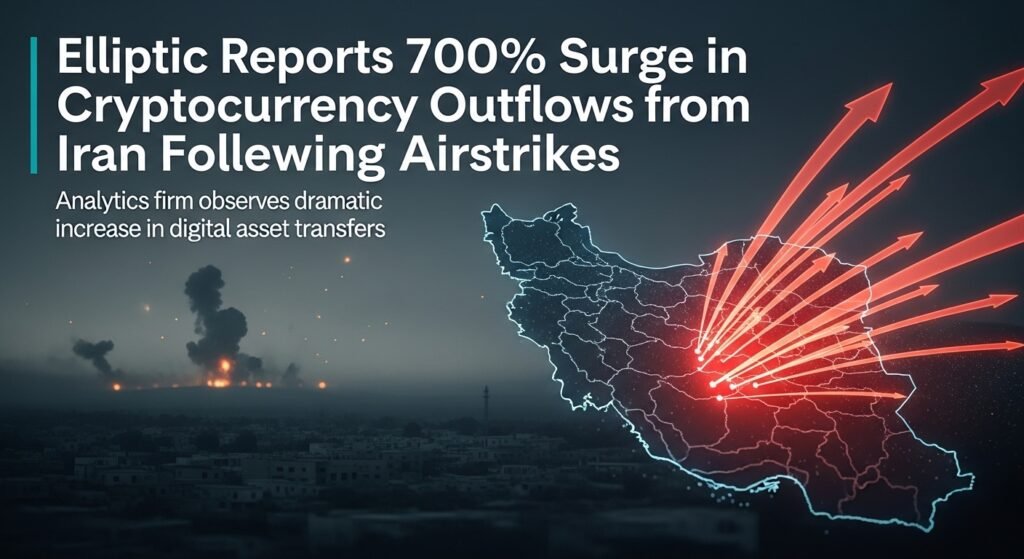
Elliptic Reports 700% Surge in Cryptocurrency Outflows from Iran Following Airstrikes

Cryptocurrency Outflows

COIN4U IN YOUR SOCIAL FEED

The global financial world once again witnesses how geopolitical crises and digital asset flows intersect, as blockchain analytics firm Elliptic revealed a staggering 700% surge in cryptocurrency outflows from Iran following recent US‑Israeli airstrikes on Tehran and other key locations. This dramatic spike, which occurred almost instantly after the first military strikes, has raised urgent questions about capital flight, financial stability, sanctions evasion, and the evolving role of cryptocurrencies in times of international strife. According to Elliptic’s on‑chain data analysis, Iran’s largest cryptocurrency exchange Nobitex experienced an unprecedented jump in outgoing transaction volume. How digital assets often serve as both a financial lifeline and a controversial tool during crises that disrupt traditional banking systems. The surge highlights broader patterns of economic behavior under duress and the complex dynamics of digital finance in regions facing intense geopolitical pressure.

Understanding the Elliptic Report and Its Immediate Context

In the wake of coordinated US and Israeli airstrikes against targets within Iran, blockchain monitoring firm Elliptic released a detailed report showing that transaction volumes leaving Iranian crypto exchange Nobitex spiked by 700% within minutes of the initial attacks. This kind of reaction illustrates how global events can instantly affect crypto markets and investor behavior, especially in jurisdictions where traditional economic channels are already constrained. Elliptic’s analysis points to substantial movement of digital assets from within Iran to offshore platforms . Users rapidly sought to preserve value or move funds beyond the reach of local controls.

Nobitex, which processed approximately $7.2 billion in crypto transactions in 2025 and serves millions of users, plays a central role in Iran’.  Its prominence means that large fluctuations in activity on the platform — such as the sudden outflows documented — can offer significant insights into how economic participants respond to political shocks and security threats. In this case, the surge in outflows signals emergency financial behaviors that extend far beyond normal market movements.

What the 700% Surge Reveals About Capital Flight and Crisis Response

The 700% surge in crypto outflows from Iran’s largest exchange isn’t merely a statistical anomaly; it reflects deeper patterns tied to how individuals and institutions seek to protect assets during crisis. When faced with heightened risk — whether from potential exchange shutdowns, fear of asset seizure, or collapsing financial infrastructure — market participants often turn to digital assets as a relatively fast and borderless means of moving value. Cryptocurrencies like Bitcoin and stablecoins provide an alternative avenue to shift funds abroad, bypassing the slower, regulated banking system.

This phenomenon is frequently referred to as capital flight, where value rapidly exits a country in response to economic instability or political upheaval. In Iran’s case, the fear of crackdown, international isolation, or further financial sanctions can drive both retail holders and larger participants to convert local currency into cryptoassets and transfer them to foreign wallets or exchanges that are perceived as safer or more accessible.

Furthermore, the speed of these transactions — with volumes jumping within minutes of airstrikes — shows how digital financial systems can react to real‑world events far more quickly than traditional mechanisms. The real‑time nature of blockchain makes it possible to observe these patterns almost instantly, giving analysts like those at Elliptic invaluable tools to monitor and understand global capital movements.

The Role of Cryptocurrencies in Sanctions and Financial Restrictions

Iran’s enduring struggle with international sanctions has made cryptocurrencies a recurring topic in discussions about financial resilience and evasion. Over the past years, digital assets have offered a way for Iranians to engage in global trade and preserve economic value despite strict limitations on cross‑border transactions and banking access. Elliptic’s report underscores this delicate balance by showing how crypto flows can accelerate sharply in times of heightened economic stress, potentially circumventing traditional banking restrictions.

While some observers view this as a natural response to financial isolation, others express concern that such movements could undermine sanctions enforcement and create avenues for illicit activity. Cryptocurrencies do not inherently distinguish legitimate financial transfers from those aimed at evading regulatory oversight, and blockchain analytics firms like Elliptic often find themselves at the center of efforts to trace and interpret these flows. Their work reveals not only the raw data of movement but also the broader implications for compliance, regulation, and international financial security.

How the Airstrikes Triggered an Immediate Crypto Market Reaction

The catalyst for this latest surge in activity was the sudden escalation of conflict following US and Israeli military actions, which created an acute sense of uncertainty throughout Iran’s financial and economic landscape. In situations where domestic banking becomes unreliable or inaccessible, digital assets often emerge as an alternative means to protect wealth or ensure liquidity. As news of the airstrikes spread and concerns over government response and economic fallout grew, Iranian crypto users began converting rials to digital assets and withdrawing them from Nobitex at an extraordinary pace.

This response also coincides with past patterns noted in Elliptic’s data, where crypto outflows spiked during earlier episodes of domestic unrest, such as widespread protests and government‑imposed internet blackouts. These patterns illustrate how geopolitical and domestic stressors can interact with financial technology, creating even greater volatility in asset flows.

Mapping Outflows: Where Are the Funds Going?
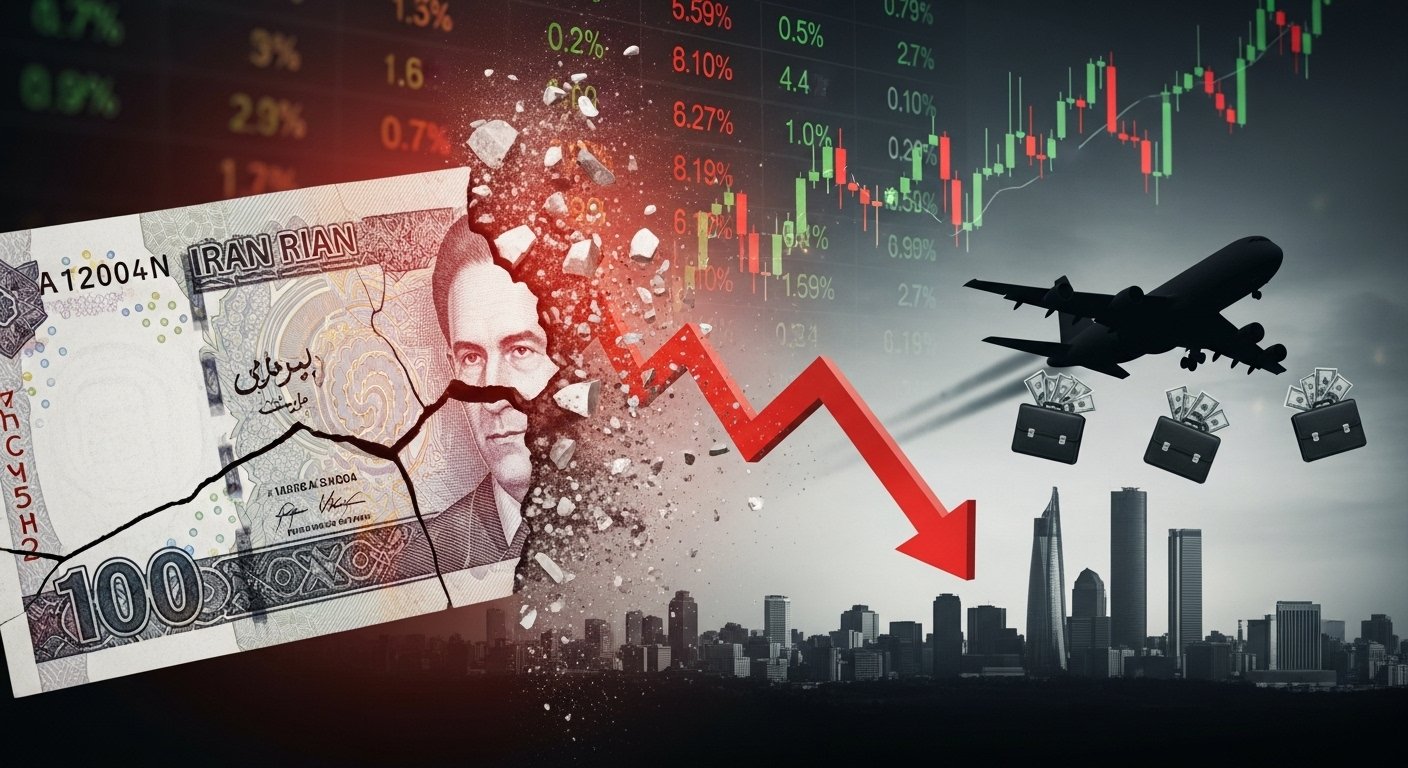
geopolitical tension.

Elliptic’s tracing work indicates that much of the outflow from Nobitex did not dissipate but was instead redirected to overseas exchanges that have historically received funds from Iranian accounts. This suggests that participants were not merely liquidating into local cash but actively seeking jurisdictions and platforms where their assets could be stored or traded in a more stable environment.

The flow of funds to foreign exchanges raises significant questions about international liquidity, regulatory compliance, and tracking mechanisms. While crypto’s transparency allows on‑chain tracing of movements, identifying the ultimate owners and intent behind transfers remains challenging, especially when assets move through multiple wallets and platforms. This creates both opportunities and complications for authorities and financial analysts striving to maintain oversight in an increasingly digital world.

Broader Implications for Iran’s Economy and the Crypto Sector

The recent outflow surge could have lasting implications for Iran’s domestic financial ecosystem and the global crypto market. If confidence in local financial infrastructure continues to erode, more users may turn to digital assets as a long‑term store of value or hedge against instability. At the same time, increased outflows can strain liquidity on local exchanges. Lead to price disparities between regional trading pairs, and create distinct market dynamics that are sensitive to geopolitical shifts.

Moreover, the international community is likely to scrutinize such movements more closely, as large‑scale transfers in times of conflict raise concerns about compliance with sanctions regimes and the potential for misuse of digital assets. Blockchain analytics firms like Elliptic will continue to play a vital role in monitoring and interpreting these trends, offering insights that help shape regulatory responses and compliance practices worldwide.

What This Means for Traders, Regulators, and Ordinary Citizens

For crypto traders, a 700% spike in outflows serves as a stark reminder of how quickly market dynamics can change in response to geopolitical tension. Volatility is often magnified in such scenarios, and traders must weigh not only traditional market signals but also broader political developments that could influence asset flows.

Regulators, on the other hand, face the ongoing challenge of balancing financial freedom with compliance, ensuring that digital asset platforms cannot be exploited for illicit finance or sanctions evasion. Elliptic’s work highlights the importance of transparent on‑chain analysis and collaborative regulatory frameworks to detect and deter suspicious movements.

For ordinary citizens in Iran, these trends reflect deeper concerns about economic stability, access to financial services, and the role of digital currencies in everyday life. When traditional banking can no longer guarantee safety or accessibility, alternative systems like blockchain technology become more than an investment — they become a vital part of economic survival.

Conclusion

The 700% surge in cryptocurrency outflows from Iran following the recent airstrikes — as reported by Elliptic — underscores the profound impact that geopolitical events can have on financial behavior, particularly within the realm of digital assets. This dramatic increase illuminates how crisis conditions catalyze rapid capital movement, demonstrating both the power and risk inherent in cryptocurrency markets. From potential capital flight and sanctions implications to the resilience of blockchain infrastructure. The situation offers a vivid example of digital finance’s evolving role in global economics and international relations. As the world watches these trends unfold, it remains clear that the intersection of geopolitics and crypto will continue to shape financial landscapes far into the future.

FAQs

Q: What exactly caused the 700% surge in cryptocurrency outflows from Iran’s Nobitex after the airstrikes?

The 700% surge in cryptocurrency outflows from Iran’s Nobitex exchange was triggered almost immediately after coordinated US and Israeli airstrikes targeted Iranian infrastructure, creating severe uncertainty about the stability of local financial systems. Blockchain analytics firm Elliptic reported that within minutes users began rapidly converting rials into cryptoassets and withdrawing them to external wallets or offshore exchanges, indicating an urgent effort to move capital out of the country and bypass traditional financial disruptions.

Q: Why would people use cryptocurrencies instead of traditional banking systems during geopolitical crises?

In times of geopolitical crisis or economic instability, cryptocurrencies offer unique advantages, including faster settlement, lower barriers to cross‑border transfers, and the ability to operate independently of centralized banking systems. In a situation where banking infrastructure might be compromised or access restricted due to sanctions, sanctions evasion . Government controls, digital assets like Bitcoin and stablecoins become a viable alternative for preserving and relocating value quickly.

Q: Does a spike in crypto outflows always indicate illegal activity or sanctions evasion?

Not necessarily. While spikes in crypto outflows can raise regulatory concerns — especially in contexts where sanctions are in place — they do not inherently prove illegal activity. Sudden increases in withdrawals can stem from a wide range of motivations, including fear of financial instability, hedge against currency devaluation. Relocation of savings, or shifts into self‑custody wallets. Blockchain analysis helps distinguish patterns, but context is crucial in interpreting intent.

Q: How do analytics firms like Elliptic trace where funds go after leaving an exchange?

Analytics firms such as Elliptic track on‑chain transaction data, which records every transfer of cryptocurrency on public blockchains. By following the path of digital assets through multiple wallet addresses and exchanges, they can identify . When funds move from local exchanges like Nobitex to foreign platforms. This tracing helps determine flow patterns, identify common destination points, and alert regulators to suspicious movements associated with sanctions or illicit finance.

Q: What might the long‑term impact of this surge be on Iran’s economy and global crypto markets?

In the long term, a 700% surge in outflows may signal ongoing capital flight and declining confidence in domestic financial infrastructure, potentially pushing more Iranian users toward decentralized finance and crypto solutions. For global markets, sustained large‑scale movements from high‑stress jurisdictions could increase volatility. Trigger regulatory scrutiny, and influence how exchanges worldwide handle compliance and monitoring of international flows. This scenario highlights the growing importance of robust blockchain analytics and international cooperation to balance financial freedom with security.


Explore more articles like this

Subscribe to the Finance Redefined newsletter

A weekly toolkit that breaks down the latest DeFi developments, offers sharp analysis, and uncovers new financial opportunities to help you make smart decisions with confidence. Delivered every Friday

By subscribing, you agree to our Terms of Services and Privacy Policy

READ MORE

Dino Altcoins Surge in Cryptocurrency Mania

COIN4U IN YOUR SOCIAL FEED

Every crypto cycle builds new narratives, yet one theme keeps resurfacing: the resurrection of older alternative coins—popularly dubbed Dino Altcoins. These are the veteran projects that once led headlines, cooled off during bear markets, and are now rumbling back to life as liquidity, attention, and developer energy rotate across the ecosystem. In today’s cryptocurrency mania, renewed interest in Dino Altcoins reflects a mix of macro liquidity, shifting investor psychology, cyclical altcoin season dynamics, and visible progress in roadmaps that had quietly matured in the background.

The appeal is simple but powerful. Many of these projects already survived multiple stress tests. They possess battle-hardened communities, widely integrated infrastructure, listings on major exchanges, and recognizable brands. In a market where new tokens emerge daily, the endurance of an older asset can feel like a comfort. But the real driver isn’t nostalgia—it’s utility. From smart contracts and DeFi rails to layer-2 scaling, indexing, interoperability, and payments, legacy altcoins often underpin the crypto plumbing that newer narratives rely upon.

What Makes a “Dino Altcoin”?

A Dino Altcoin isn’t just old. It’s a project with historical significance, recurring relevance, and sticky infrastructure. These assets often launched during earlier cycles, secured exchange coverage, and built tooling or network effects that persisted. They might not be the shiny new thing, but they anchor wallets, bridges, or DeFi protocols that keep crypto moving.

Key hallmarks include broad wallet support, multiple custody providers, robust documentation, and a long paper trail of audits and incident reports. Dino Altcoins also tend to have real governance histories—people remember past votes and upgrades. Crucially, they remain part of the conversation whenever developers discuss interoperability, staking, yield farming, or scalability. This combination of familiarity and function gives them a narrative edge when capital rotates down the risk curve.

Catalysts Behind the Comeback

Liquidity Cycles and the Risk Curve

Crypto capital rarely sits still. In the early stage of a crypto bull market, liquidity concentrates in the most trusted assets, then moves outward as confidence grows. Once majors rally, traders hunt beta in mid-caps and, eventually, the long tail. Dino Altcoins sit at a sweet spot: higher beta than blue chips, but lower headline risk than flash-in-the-pan tokens. As spot volumes rise and market capitalization expands, a modest percentage of that flow can translate into meaningful upside for legacy names.

Narrative Recycling and Brand Recall

Crypto narratives are not one-and-done. Themes like layer-1 competition, layer-2 scaling, privacy, and cross-chain bridges recur, each time amplifying assets with strong brand recall. When momentum speculators scan lists for “what could move next,” Dino Altcoins stand out because retail has heard of them before. That top-of-mind awareness lowers friction for capital rotation and accelerates rediscovery when the market collectively revisits old use cases with new tools.

Roadmap Maturity and Quiet Shipments

Bear markets are where serious teams ship. Many Dino Altcoins used downcycles to optimize consensus, harden security, refine tokenomics, and expand developer environments. These upgrades can be poorly understood by newer investors until a cycle spotlights them. The result is a re-rating when catalysts like mainnet upgrades, protocol merges, or ecosystem incentives become visible. In other words, yesterday’s promises become today’s product.

Infrastructure Entanglement

Dino Altcoins frequently anchor DeFi primitives, price oracles, index services, or EVM-compatible environments. They may power liquidity routes, cross-chain swaps, or NFT marketplaces that other projects depend on. This entanglement creates resilience: even if retail interest wanes, institutions, developers, and market makers still need these networks to function. When volumes rise, the underlying rails benefit from transaction fees, staking demand, or new listings.

How to Evaluate Dino Altcoins Today

How to Evaluate Dino Altcoins Today

Tokenomics That Actually Align Incentives

Tokenomics isn’t just supply. It’s the governance, emissions, lockups, and fee flows that determine who gets paid and when. Sustainable Dino Altcoins balance rewards for validators or stakers with a credible path to reduced inflation. Look for clear documentation, transparent on-chain data, and upgrade proposals that constrain emissions over time. If incentives drive behaviors that support network health—like staking to secure consensus or providing liquidity to deepen markets—the token has a stronger case beyond speculation.

Developer Mindshare and Commit Velocity

A chain lives or dies by builders. Git repositories, dev grants, hackathons, and integrations matter. Measure not only raw commit counts but also the breadth of contributors, the cadence of releases, and the presence of reference dApps. A small, steady stream of high-quality commits can signal more than sporadic bursts. Also track SDKs, documentation quality, and educational resources. Dino Altcoins with thriving dev ecosystems attract tooling, tutorials, and third-party integrations that compound over time.

Real Usage and Fee Generation

Narratives must connect to usage. Consider daily active addresses, transactions, fee revenue, and on-chain liquidity. If the protocol supports smart contracts, inspect which dApps are dominant and whether users stick around after incentives taper. For payment-oriented chains, merchant adoption, wallet partnerships, and POS integration are telling. For DeFi ecosystems, protocol TVL, utilization ratios, and the distribution of liquidity across pools can indicate whether usage is organic.

Security Track Record and Incident Response

Older chains carry scars, but scars show healing. Study past incidents, audits, and bug bounty programs. A mature Dino Altcoin will exhibit a pattern: incidents identified, mitigations shipped, and follow-up audits completed. The existence of a responsible disclosure process, independent security reviews, and timely postmortems inspires confidence. It’s not about zero vulnerabilities; it’s about proven response and learning.

Governance, Voting, and Accountability

Governance reveals a network’s values. Are proposals realistic or performative? Is voter turnout meaningful, and do whales dominate outcomes? Sustainable Dino Altcoins cultivate governance literacy, publish clear proposals, and record rationales for decisions. The best projects institutionalize transparency, making it easy to see budgets, treasury movements, and grant results.

Reading the Market: Timing, Rotation, and Risk

Recognizing the Altcoin Season Hand-Off

Traders often describe a relay: majors sprint first, mid-caps follow, and then the baton passes to higher-beta tokens. The transition is rarely clean, but there are hints. When liquidity stays elevated while blue-chip momentum stalls, rotational flows may start. Watch dominance metrics, stablecoin supply changes, and social volume diffusion across tickers. A widening participation base suggests risk appetite is pushing outward.

On-Chain Signals That Matter

On-chain isn’t magic, but it helps. Monitor changes in exchange reserves, staking inflows, and active addresses. Rising staking with flat prices can signal patient accumulation by long-term participants. Decreasing exchange balances can indicate supply leaving for cold storage or yield strategies. Fee spikes without commensurate spam can point to genuine usage. Combine these datapoints with spot and perp funding data to contextualize sentiment.

Managing Risk in a Mania

Mania is intoxicating. It’s also unforgiving. Set maximum exposure per position, plan exit criteria in advance, and avoid over-leveraging into illiquid pairs. Embrace the basics: DYOR, avoid chasing unsustainable yield farming, and respect that even legacy assets can retrace sharply. Hedge where appropriate, maintain stablecoin reserves, and allow your thesis—not the timeline—to determine whether you HODL or rotate. In fast markets, survival is alpha.

Why Dino Altcoins Can Outperform—And When They Don’t

Why Dino Altcoins Can Outperform—And When They Don’t

The Case for Upside

When institutional adoption accelerates, venues prioritize assets with compliance histories, multiple custodians, and established market structure. Dino Altcoins score well here. Market makers understand their order books, derivatives desks list linear and inverse products, and risk teams have more data points. When retail arrives late, these assets can experience narrative-driven catch-up rallies, amplified by familiar tickers and prior all-time highs acting like psychological magnets.

The Bear Case to Consider

Past glory can be a trap. Some legacy projects ossified culturally or missed design pivots such as modular architectures or intent-centric execution. Others rely on incentives without achieving product-market fit. Beware of chains that burn emissions without compounding usage, or treasuries that fund vanity projects instead of ecosystem needs. When fundamentals lag, liquidity will rotate out as quickly as it arrived.

Building a Strategy Around Dino Altcoins

Define Your Universe and Thesis

Begin by mapping sectors—DeFi, infrastructure, privacy, gaming, NFT tooling, layer-1, layer-2, oracles—and identify two or three Dino Altcoins in each that still show technical momentum and community energy. Write a one-paragraph thesis for every pick, specifying catalysts you’re watching, from upgrades to ecosystem launches. The clearer the thesis, the easier it is to cut or hold under pressure.

Entry, Scaling, and Exit

Rather than all-in entries, consider tranching. Add on pullbacks to prior breakout levels or near established support zones. For exits, set partial profit targets and maintain a “core” position you only unwind if the thesis breaks. Place protective stops where the narrative would be invalidated, and revisit them after major catalysts. Momentum is a tool, not a strategy by itself.

Portfolio Construction and Correlation

Dino Altcoins can be surprisingly correlated during risk-on phases, which means apparent diversification might not protect you. Blend uncorrelated exposures where possible, balancing infrastructure with application tokens. Monitor the share of your portfolio that depends on the same macro driver, such as regulatory clarity, interoperability demand, or scalability narratives. If one macro shock can sink multiple positions, your diversification is thinner than it looks.

Information Flow and Noise Reduction

Your edge is not having more news; it’s interpreting it better. Track developer channels, governance forums, and credible research notes while ignoring copy-paste hype. Build a short routine: scan on-chain data dashboards, skim governance proposals, and read one deep technical post per week. Over time, this compounding knowledge helps you separate signal from noise when a narrative suddenly heats up.

Deep Dive: Fundamentals That Separate Survivors

Economic Security and Validator Health

For proof-of-stake systems, validator distribution, slashing parameters, and client diversity are crucial. Concentration risk in a handful of validators can undermine resilience. Healthy Dino Altcoins show geographically dispersed validators, robust uptime, and tooling that makes node operation accessible. If a small set of actors can push upgrades unilaterally, governance may be more theater than substance.

Throughput, Finality, and User Experience

Raw TPS claims are less important than predictable finality and a smooth wallet experience. Successful legacy chains invest in RPC reliability, indexing performance, and SDK coherence. They cultivate wallet partners so end-users can onboard without friction. If a project’s user journey still feels like 2018, the market will notice.

Ecosystem Flywheels and Grants

The best flywheels start with developer grants that target primitives missing from the stack—like a robust DEX, lending market, or stablecoin rail—then shift toward self-sustaining fee flows. Grants should be structured with milestones, clawbacks, and transparent reporting. Watch whether funded teams keep shipping after the grant ends. If not, the flywheel may be subsidy-dependent.

Treasury and Runway Discipline

A seasoned Dino Altcoin treats its treasury like a business. It hedges into stablecoins during rising markets, finances key hires, and secures a multi-year runway. Openness about treasury policies, alongside the use of multi-sig schemes and time-locked proposals, builds trust. When markets turn, disciplined treasuries can continue building while competitors scramble.

See More: Best Altcoins to Invest in 2025, Top Cryptocurrency Investment

Psychology: Riding the Wave Without Drowning

Combatting FOMO with Process

FOMO thrives on low time preference. Counter it with checklists: thesis validity, fundamental catalysts, liquidity conditions, and risk budget. If two out of four are missing, skip the trade. Process transforms euphoria into structured action. It also prevents the classic error of buying a parabolic candle exactly when early participants are distributing.

Patience in Consolidation

Strong trends pause. Consolidations shake out leveraged positions and reset funding. For Dino Altcoins, these interludes often coincide with the market digesting fresh upgrades or waiting on key proposals to pass. Patience is a position. Let patterns mature and let narratives breathe before adding.

Learning From Post-Cycle Autopsies

After every cycle, the best investors perform autopsies. Which theses played out? Which were narrative mirages? Which governance processes produced real accountability? Dino Altcoins provide unusually rich data for this exercise because they span multiple cycles. Document what you discover now so your next cycle decisions are sharper.

The Road Ahead: What Could Sustain the Momentum

Modular Stacks and Interoperability

The shift toward modular execution creates openings for legacy chains with specific strengths, from settlement assurances to data availability. As interoperability matures, Dino Altcoins that integrate seamlessly with rollups, bridges, and intent layers can position themselves as specialized hubs in a broader, composable network.

Real-World Assets, Compliance, and Institutions

If tokenized real-world assets continue to grow, institutions will prioritize chains that satisfy custody, monitoring, and audit requirements. Dino Altcoins with documented histories, multi-year uptime, and cooperation with analytics providers may capture this flow. The more predictable the environment, the more comfortable large capital becomes.

User Abstraction and Mass Adoption

Wallet standards, account abstraction, and gasless transactions can convert crypto usability from hurdle to advantage. Legacy ecosystems that adopt these features quickly—without sacrificing security—can introduce their brands to entirely new cohorts. Combine this with localized fiat on-ramps and the runway for adoption expands.

Conclusion

The resurgence of Dino Altcoins is not a museum tour. It’s a market re-rating of assets that survived, adapted, and sometimes quietly led the infrastructure race while the spotlight drifted elsewhere. In the current cryptocurrency mania, the strongest of these veterans combine matured tokenomics, clear governance, durable DeFi linkages, and developer energy. They benefit from narrative recall, but they endure because users find real value on their networks.

For investors, traders, and builders, the opportunity lies in nuance. Don’t chase tickers because they’re old or because a social feed says they’re back. Do the work: read proposals, review code progress, study usage, and model risk. Embrace process over prediction. If you can ride rotations without letting euphoria replace discipline, Dino Altcoins can be a productive, even stabilizing, segment of your crypto strategy. If not, the same forces that elevate them will remind you—swiftly—why this market rewards patience and punishes complacency.

FAQs

Q: What exactly qualifies a token as a Dino Altcoin?

A Dino Altcoin is an older, battle-tested crypto asset that retains relevance through infrastructure ties, developer support, and continued utility. Age alone isn’t enough. The project should have meaningful integrations, active governance, and measurable on-chain activity that demonstrates ongoing use beyond speculation.

Q: Are Dino Altcoins safer than newer tokens?

They are not inherently “safe,” but they often have clearer histories, exchange depth, and established tooling. This lowers some operational risks, such as custody and liquidity, compared to unproven launches. However, price risk remains significant. You should still apply strict risk management, diversify thoughtfully, and avoid over-exposure.

Q: How can I spot rotation into Dino Altcoins during an altcoin season?

Look for stalling momentum in majors while overall crypto volumes remain high. Track dominance metrics, social dispersion across tickers, funding rates, and on-chain shifts like declining exchange balances. A broadening of attention to mid-caps with historical brand recognition is a classic tell that rotation has begun.

Q: Which fundamentals matter most for long-term holding?

Focus on sustainable tokenomics, visible developer velocity, genuine fee generation, security discipline, and credible governance. Evaluate whether the ecosystem keeps attracting builders and whether users stick around after incentives fade. If the network earns fees from real activity and reinvests intelligently via its treasury, long-term prospects improve.

Q: What’s the biggest mistake investors make with Dino Altcoins?

Chasing nostalgia without a thesis. Investors often buy because an asset “once pumped,” ignoring whether the market need remains or whether competitors have surpassed it. Align entries with catalysts, define exit criteria, and keep position sizes within your risk budget. In a market defined by volatility, process beats memory every time.

Explore more articles like this

Subscribe to the Finance Redefined newsletter

A weekly toolkit that breaks down the latest DeFi developments, offers sharp analysis, and uncovers new financial opportunities to help you make smart decisions with confidence. Delivered every Friday

By subscribing, you agree to our Terms of Services and Privacy Policy

READ MORE

ADD PLACEHOLDER