
DeFi Tokens Gain Momentum in Yield Boom

DeFi Tokens Gain Momentum in Yield Boom

COIN4U IN YOUR SOCIAL FEED

The decentralized finance ecosystem, widely known as DeFi, is once again gaining strong traction as DeFi tokens gain momentum across the broader cryptocurrency market. After a period of consolidation and uncertainty, investors are shifting their focus back to protocols that offer attractive yield opportunities and robust liquidity solutions. This renewed interest is not random; it reflects a deeper transformation in how capital is allocated within digital finance.

The latest wave of growth is being driven by more sustainable financial models, improved infrastructure, and increasing confidence among both retail and institutional participants. Unlike earlier cycles that were heavily driven by hype and unsustainable returns, the current momentum is rooted in real value creation, efficient capital usage, and transparent revenue generation.

As the crypto market matures, DeFi continues to stand out as a critical innovation, offering permissionless access to financial services. In this article, we explore why DeFi tokens gain momentum on yield and liquidity narratives, and how these trends are shaping the future of decentralized finance.

The Evolution of DeFi: From Speculation to Real Utility

Early Growth and Market Excitement

In its early stages, DeFi experienced explosive growth fueled largely by speculative activity. Investors rushed into platforms offering extremely high annual percentage yields (APYs) through yield farming, often without fully understanding the risks involved. Many projects relied heavily on token emissions to attract liquidity, which led to short-term gains but long-term instability.

While this phase helped bring attention to decentralized finance, it also exposed several weaknesses. Token inflation reduced value over time, and security vulnerabilities in smart contracts led to multiple high-profile exploits. As a result, market confidence declined, and the sector entered a period of correction.

Shift Toward Sustainable Financial Models

The current phase of DeFi represents a clear shift toward sustainability and efficiency. Instead of focusing solely on high yields, investors are now prioritizing protocols that generate real yield, meaning income derived from actual platform activity such as trading fees, lending interest, and protocol usage.

This transition has significantly improved the credibility of DeFi. Projects that emphasize transparency, revenue generation, and long-term viability are now attracting more capital. As a result, DeFi tokens gain momentum in a more stable and sustainable manner compared to previous cycles.

Yield Narratives Driving DeFi Token Growth

The Emergence of Real Yield

One of the most important drivers behind the recent surge is the rise of real yield. This concept focuses on distributing actual revenue to token holders instead of relying on inflationary rewards. Investors are increasingly drawn to protocols that provide consistent income backed by real economic activity.

This change in narrative has reshaped investor behavior. Tokens associated with platforms generating strong revenue streams are seeing increased demand, contributing directly to their upward price movement. As a result, yield-driven DeFi tokens are becoming more attractive for long-term investment.

Evolution of Yield Farming Strategies

Modern yield farming has evolved significantly from its early days. Today, investors use more advanced strategies that balance risk and reward. Instead of simply chasing the highest returns, they focus on optimizing their portfolios through diversification and risk management.

The introduction of automated tools and analytics platforms has made yield farming more efficient. These tools help users identify the best opportunities in real time, making the process more accessible and data-driven. This evolution has played a key role in helping DeFi tokens gain momentum in a more structured and reliable way.

Staking as a Stable Income Source

Staking has become another major factor contributing to the growth of DeFi tokens. By locking their assets into protocols, users can earn rewards while supporting network operations. This provides a relatively stable and predictable form of passive income.

As more investors look for consistent returns, staking-based DeFi projects are gaining popularity. This increased participation strengthens the overall ecosystem and boosts demand for associated tokens, further reinforcing the momentum narrative.

Liquidity Narratives Reshaping the DeFi Market

The Role of Liquidity in DeFi Growth

Liquidity is a fundamental component of any financial system, and it plays a crucial role in decentralized finance. Deep liquidity pools enable efficient trading, reduce price slippage, and improve the overall user experience.

Protocols that successfully attract and maintain liquidity are more likely to succeed. As a result, competition among platforms has intensified, leading to innovative solutions designed to optimize liquidity distribution. This has become a key reason why DeFi tokens gain momentum in the current market cycle.

Advanced Liquidity Incentive Models

While liquidity mining remains important, it has evolved beyond simple token rewards. Modern protocols offer a combination of incentives, including fee sharing, governance rights, and long-term rewards for committed participants.

These improved models help align the interests of users and platforms, creating a more balanced and sustainable ecosystem. Investors are more confident in protocols that reward participation without excessive token inflation, which contributes to stronger token performance.

Cross-Chain Liquidity Expansion

The growth of cross-chain technology is another major factor influencing liquidity narratives. By enabling assets to move seamlessly across different blockchain networks, cross-chain solutions reduce fragmentation and unlock new opportunities for capital deployment.

This increased interoperability allows liquidity to flow more freely, enhancing efficiency across the entire ecosystem. As a result, DeFi platforms that support cross-chain functionality are gaining a competitive advantage, and their tokens are benefiting from increased demand.

Institutional Interest in DeFi Tokens

Growing Participation from Institutions

Institutional investors are beginning to recognize the potential of decentralized finance. Hedge funds, asset managers, and financial firms are exploring DeFi as a way to access new yield opportunities and diversify their portfolios.

This influx of institutional capital is bringing greater stability and legitimacy to the market. It is also encouraging the development of more sophisticated financial products, which further enhances the appeal of DeFi tokens.

Impact of Regulatory Developments

Regulation remains an important factor in the growth of DeFi. While uncertainty still exists, progress is being made toward clearer guidelines that protect investors without stifling innovation.

As regulatory frameworks become more defined, institutional participation is likely to increase. This could act as a strong catalyst for continued growth, helping DeFi tokens gain momentum in a more secure and regulated environment.

Risks and Challenges in the DeFi Ecosystem
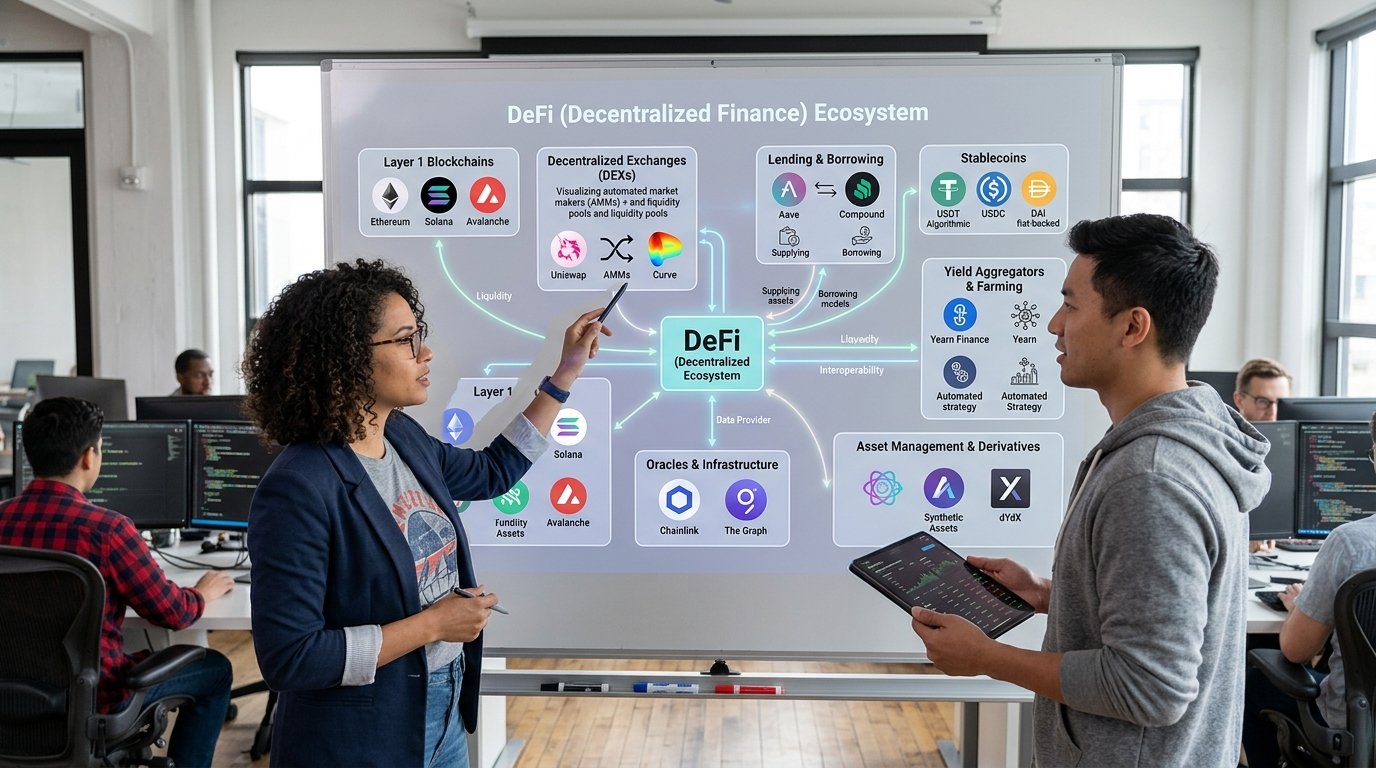
defi ecosystem

Smart Contract Risks

Despite its advantages, DeFi is not without risks. Smart contract vulnerabilities can lead to significant financial losses if exploited. Although many projects undergo security audits, no system is completely immune to risk.

Investors should carefully evaluate protocols before committing funds and consider diversifying their investments to reduce exposure.

Market Volatility

The cryptocurrency market is known for its volatility, and DeFi tokens are no exception. Prices can fluctuate rapidly due to changes in sentiment, macroeconomic factors, or technological developments.

While the current momentum is driven by strong narratives, it is important to remain cautious and prepared for potential market corrections.

Long-Term Sustainability

Ensuring long-term sustainability remains a key challenge for DeFi projects. Protocols must balance the need to attract liquidity with the requirement to generate real value.

Projects that fail to establish sustainable economic models may struggle to maintain growth. This is why investors are increasingly focusing on fundamentals rather than short-term hype.

The Future of DeFi Tokens

Integration with Traditional Finance

One of the most exciting prospects for DeFi is its potential integration with traditional financial systems. As these two worlds begin to merge, DeFi could play a central role in shaping the future of global finance.

This integration may lead to hybrid systems that combine the efficiency of decentralized platforms with the stability of established institutions, creating new opportunities for growth.

Continued Innovation and Expansion

Innovation remains at the core of DeFi. New use cases, including decentralized derivatives, insurance, and identity solutions, are expanding the ecosystem and attracting new users.

As technology continues to evolve, it will drive further adoption and strengthen the position of DeFi within the broader financial landscape.

Long-Term Growth Outlook

The long-term outlook for DeFi tokens remains highly promising. By providing open and accessible financial services, DeFi has the potential to transform how people interact with money.

As adoption increases and the ecosystem matures, DeFi tokens gain momentum not just as speculative assets but as integral components of the digital economy.

Conclusion

The narrative that DeFi tokens gain momentum on yield and liquidity narratives reflects a fundamental shift in the cryptocurrency market. Investors are moving away from speculative hype and toward sustainable, value-driven opportunities.

With the rise of real yield, improved liquidity mechanisms, and growing institutional interest, DeFi is entering a new phase of maturity. While risks remain, the sector’s ability to innovate and adapt positions it for long-term success.

Understanding these dynamics is essential for anyone looking to participate in the evolving DeFi ecosystem. As the market continues to develop, those who focus on strong fundamentals and sustainable growth will be best positioned to benefit.

FAQs

Q. Why are DeFi tokens gaining momentum now?

DeFi tokens are gaining momentum due to the shift toward real yield models, improved liquidity systems, and increasing investor confidence in sustainable returns.

Q. What is real yield in DeFi?

Real yield refers to income generated from actual platform activity, such as trading fees and lending interest, rather than from token inflation.

Q. How does liquidity affect DeFi tokens?

Liquidity improves trading efficiency, reduces slippage, and increases demand for tokens, making them more valuable and stable.

Q. Are DeFi tokens a safe investment?

DeFi tokens carry risks, including smart contract vulnerabilities and market volatility. Careful research and risk management are essential.

Q. What is the future of DeFi tokens?

The future looks promising, with growth driven by innovation, institutional adoption, and integration with traditional financial systems.

Explore more articles like this

Subscribe to the Finance Redefined newsletter

A weekly toolkit that breaks down the latest DeFi developments, offers sharp analysis, and uncovers new financial opportunities to help you make smart decisions with confidence. Delivered every Friday

By subscribing, you agree to our Terms of Services and Privacy Policy

READ MORE

Blockchain Technology for Supply Chain Management Complete Guide 2025

blockchain technology for supply chain management

COIN4U IN YOUR SOCIAL FEED

The global supply chain industry faces unprecedented challenges—from counterfeiting and fraud to inefficiencies and lack of transparency. Enter blockchain technology for supply chain management, a revolutionary solution that’s transforming how businesses track, verify, and optimize their logistics operations.

This distributed ledger technology offers unparalleled transparency, security, and efficiency, making it the go-to solution for modern enterprises seeking competitive advantages. With companies losing billions annually to supply chain inefficiencies, blockchain emerges as the transformative technology that addresses these critical pain points while creating new opportunities for innovation and growth.

What Is Blockchain Technology for Supply Chain Management?

Blockchain technology for supply chain management refers to the implementation of distributed ledger systems to record, track, and verify every transaction and movement of goods throughout the entire supply chain network. Unlike traditional databases controlled by single entities, blockchain creates an immutable, transparent record that all authorized participants can access and verify in real-time.

This technology creates a digital chain of custody for products, from raw material sourcing to final delivery. Each transaction or movement gets recorded as a “block” containing detailed information about the product, timestamp, location, and parties involved. Once added to the chain, this information cannot be altered or deleted, ensuring data integrity and accountability.

How Blockchain Works in Supply Chain Operations

The implementation of blockchain in supply chains involves several key components working together seamlessly. Smart contracts automate processes and trigger actions when predetermined conditions are met. For instance, payment can automatically release when goods reach a specific location, verified through IoT sensors connected to the blockchain network.

Distributed nodes across the network validate each transaction, eliminating the need for intermediaries and reducing processing time. This peer-to-peer verification system ensures that no single party can manipulate data, creating unprecedented trust among supply chain partners who may have never worked together before.

Key Benefits of Using Blockchain for Supply Chain Transparency

Key Benefits of Using Blockchain for Supply Chain Transparency

Enhanced transparency stands as perhaps the most compelling advantage of blockchain technology for supply chain management. Every stakeholder—from manufacturers and distributors to retailers and consumers—can trace a product’s journey with complete visibility.

Real-Time Tracking and Visibility

Traditional supply chains operate with information silos, where each participant maintains separate records. Blockchain eliminates these silos by providing a single source of truth accessible to all authorized parties. Companies can monitor shipments in real-time, identify bottlenecks immediately, and make data-driven decisions to optimize operations.

This level of visibility extends beyond location tracking. Organizations can monitor temperature conditions for perishable goods, verify handling procedures, and ensure compliance with regulatory requirements throughout the journey. When issues arise, pinpointing the exact location and cause becomes instantaneous rather than taking days or weeks of investigation.

Fraud Prevention and Counterfeit Detection

The pharmaceutical, luxury goods, and electronics industries lose billions annually to counterfeiting. Blockchain creates an unforgeable digital identity for each product, making it virtually impossible for counterfeit items to enter the legitimate supply chain undetected.

Consumers can scan QR codes or use mobile apps to verify product authenticity instantly, checking the complete history from manufacturing to their hands. This capability not only protects brand reputation but also ensures consumer safety, particularly critical for medications and food products.

Implementing Blockchain Solutions in Your Supply Chain

Successfully implementing blockchain technology for supply chain management requires careful planning and strategic execution. Organizations must consider their specific needs, existing infrastructure, and long-term objectives before selecting a blockchain platform.

Choosing the Right Blockchain Platform

Multiple blockchain platforms cater specifically to supply chain applications. Hyperledger Fabric offers enterprise-grade permissioned networks ideal for businesses requiring privacy and control. Ethereum provides smart contract functionality suitable for complex supply chain scenarios requiring automation and programmability.

VeChain specializes in supply chain and business processes, offering ready-to-deploy solutions that integrate with existing systems. IBM Food Trust, built on Hyperledger Fabric, focuses specifically on food supply chain traceability. The choice depends on factors including transaction volume, privacy requirements, scalability needs, and integration complexity.

Steps to Deploy Blockchain in Supply Chain Operations

The deployment process begins with identifying specific pain points and use cases where blockchain delivers maximum value. Rather than attempting to blockchain-ize the entire supply chain immediately, successful implementations typically start with pilot projects targeting high-impact areas.

Next, organizations must establish governance frameworks defining who can access the network, what information gets shared, and how decisions get made. This step proves crucial because blockchain’s value increases with network participation—getting competitors or partners to join requires clear benefits and trust mechanisms.

Technical integration follows, connecting blockchain networks with existing ERP systems, IoT devices, and databases. This integration ensures seamless data flow without disrupting ongoing operations. Organizations should also invest in training staff across all levels, from warehouse workers scanning QR codes to executives interpreting blockchain analytics.

Blockchain Use Cases Transforming Supply Chain Industries

Real-world applications of blockchain technology for supply chain management demonstrate tangible benefits across diverse industries. These success stories provide valuable insights for organizations considering blockchain adoption.

Food Industry Traceability Solutions

Walmart pioneered blockchain adoption in food supply chains, reducing the time needed to trace mangoes from farm to store from seven days to just 2.2 seconds. This capability proves invaluable during food safety incidents, enabling rapid identification of contaminated batches and minimizing health risks.

The system tracks every touchpoint—harvesting, processing, packaging, distribution, and retail—creating an immutable record. When contamination occurs, affected products can be removed from shelves within minutes rather than days, potentially saving lives and reducing financial losses from widespread recalls.

Pharmaceutical Supply Chain Security

Counterfeit medications kill hundreds of thousands annually and cost the industry over $200 billion yearly. Blockchain provides pharmaceutical companies with tools to create tamper-proof digital passports for each medication package.

MediLedger Network brings together major pharmaceutical manufacturers, wholesalers, and pharmacies on a shared blockchain platform. The system verifies product authenticity at each transaction point, ensures compliance with track-and-trace regulations, and prevents illegitimate products from entering the supply chain. Patients can verify their medication’s authenticity using smartphone apps, building trust and ensuring safety.

Automotive Parts Authentication

The automotive industry faces significant challenges with counterfeit parts compromising vehicle safety and performance. BMW and other manufacturers implement blockchain solutions to track parts from suppliers through assembly and eventual vehicle lifetime maintenance records.

This approach ensures only authentic, quality-tested components enter vehicles while creating comprehensive maintenance histories that increase resale value. Service centers can verify parts authenticity before installation, protecting consumers and maintaining brand integrity.

Overcoming Challenges in Blockchain Supply Chain Adoption

Despite its transformative potential, blockchain technology for supply chain management faces several implementation challenges that organizations must address proactively.

Integration with Legacy Systems

Most companies operate with established ERP, WMS, and TMS systems that weren’t designed for blockchain connectivity. Creating middleware solutions that bridge legacy systems with blockchain networks requires significant technical expertise and investment.

The solution involves developing APIs and integration layers that translate data between systems without requiring complete infrastructure overhauls. Organizations should seek blockchain platforms offering pre-built connectors for popular enterprise systems, reducing development time and complexity.

Achieving Network Effect and Collaboration

Blockchain’s value multiplies with network participation, but convincing competitors and partners to join shared networks presents challenges. Companies fear losing competitive advantages by sharing data or worry about governance and control issues.

Successful networks establish clear value propositions for all participants, implement robust privacy controls that protect sensitive information, and create neutral governance structures preventing any single organization from dominating. Consortium blockchains, where multiple organizations jointly govern the network, often prove more acceptable than single-company initiatives.

Scalability and Performance Considerations

Public blockchains like Bitcoin process limited transactions per second, unsuitable for high-volume supply chains. However, permissioned enterprise blockchains like Hyperledger Fabric handle thousands of transactions per second, meeting most supply chain requirements.

Organizations must evaluate throughput needs carefully, considering peak transaction volumes and future growth. Hybrid approaches combining public blockchains for verification with private channels for high-volume transactions offer balanced solutions.

Cost Analysis: ROI of Blockchain in Supply Chain Management

Understanding the financial implications of implementing blockchain technology for supply chain management helps organizations make informed investment decisions and set realistic expectations.

Initial Investment and Implementation Costs

Blockchain implementation costs vary significantly based on scope and complexity. Small pilot projects might cost $50,000 to $200,000, while enterprise-wide deployments can exceed several million dollars. Major cost components include platform licensing, system integration, hardware infrastructure, consulting fees, and training programs.

Organizations should budget for ongoing costs including network maintenance, security updates, transaction fees (for some blockchain platforms), and dedicated personnel to manage blockchain operations. Cloud-based blockchain-as-a-service offerings from providers like IBM, Microsoft, and Amazon reduce upfront infrastructure costs while providing scalability.

Measurable Returns and Cost Savings

Despite significant initial investments, blockchain delivers substantial returns through multiple channels. Reduced fraud and counterfeiting save companies millions annually. Walmart reported 40% reduction in food waste through improved traceability, translating to millions in savings.

Administrative cost reductions occur through automated reconciliation and smart contracts eliminating manual verification processes. Companies report 30-50% reductions in documentation and verification costs. Faster dispute resolution and reduced paperwork free up personnel for value-adding activities.

Improved inventory management through real-time visibility reduces carrying costs and stockouts. Organizations report 10-20% inventory cost reductions after blockchain implementation. Enhanced consumer trust and brand reputation, while harder to quantify, contribute significantly to long-term competitive advantage and market share growth.

Future Trends: The Evolution of Blockchain Supply Chains

The future of blockchain technology for supply chain management promises even greater capabilities as the technology matures and adoption accelerates.

Integration with IoT and AI Technologies

The convergence of blockchain with Internet of Things (IoT) sensors creates autonomous supply chains where devices automatically record data directly to blockchain networks. Temperature sensors in refrigerated trucks, GPS trackers on shipping containers, and RFID tags on products feed real-time data into immutable records without human intervention.

Artificial Intelligence analyzes blockchain data to predict demand patterns, optimize routing, identify potential disruptions before they occur, and recommend proactive measures. This combination creates intelligent, self-optimizing supply chains that adapt dynamically to changing conditions.

Sustainability and ESG Compliance

Environmental, Social, and Governance (ESG) reporting requirements intensify globally, pressuring companies to demonstrate sustainable practices throughout supply chains. Blockchain provides verifiable proof of ethical sourcing, carbon footprint tracking, and fair labor practices.

Consumers increasingly demand transparency about product origins and environmental impact. Blockchain enables brands to share verified sustainability credentials, differentiating themselves in competitive markets. Carbon credit trading on blockchain networks creates new mechanisms for companies to achieve net-zero commitments.

Tokenization and Financial Innovation

Tokenization of physical assets on blockchain enables new financing models for supply chains. Small suppliers can tokenize invoices or inventory, accessing working capital faster through decentralized finance platforms. This democratization of supply chain finance reduces dependency on traditional banks and lowers financing costs.

Smart contracts automate payment terms based on verified delivery milestones, improving cash flow for all participants. Cryptocurrency settlements enable instant cross-border payments, eliminating currency conversion fees and reducing transaction times from days to minutes.

Blockchain Technology for Supply Chain Management: Best Practices

Organizations achieving success with blockchain implementations follow proven best practices that maximize benefits while minimizing risks.

Start with Clear Business Objectives

Avoid implementing blockchain simply because competitors are doing so. Identify specific business problems where blockchain’s unique characteristics—immutability, transparency, decentralization—provide superior solutions compared to traditional databases or systems.

Define measurable success metrics before deployment, such as reduced processing time, decreased fraud incidents, improved customer satisfaction scores, or inventory cost reductions. These metrics guide implementation decisions and demonstrate ROI to stakeholders.

Build Collaborative Networks

Blockchain’s value depends on network participation. Invest time in building consortiums with suppliers, distributors, and even competitors who recognize mutual benefits. Establish governance frameworks that ensure fair participation and decision-making.

Provide incentives for network participants, whether through cost-sharing of implementation expenses, improved payment terms, or access to better market intelligence. Networks where all participants gain value grow faster and deliver greater benefits.

Prioritize Interoperability and Standards

The supply chain ecosystem includes numerous blockchain platforms and legacy systems that must communicate effectively. Adopt industry standards for data formats, transaction protocols, and identity management from the beginning.

Participate in industry consortiums and standards organizations shaping blockchain supply chain protocols. This involvement ensures your implementation remains compatible with evolving standards and facilitates future expansion.

Security Considerations for Blockchain Supply Chain Networks

Security Considerations for Blockchain Supply Chain Networks

While blockchain offers enhanced security compared to traditional systems, organizations must still address specific security challenges to protect their supply chain networks.

Access Control and Permission Management

Implement robust identity and access management systems determining who can view, add, or validate information on the blockchain. Role-based access ensures suppliers see only relevant portions of the supply chain while preventing unauthorized access to sensitive business data.

Multi-factor authentication, digital certificates, and biometric verification add security layers protecting against unauthorized network access. Regular access audits identify and remove obsolete permissions, maintaining tight security controls.

Smart Contract Security and Auditing

Smart contracts automate supply chain processes but can contain vulnerabilities exploitable by malicious actors. All smart contracts should undergo rigorous security audits by specialized blockchain security firms before deployment.

Implement testing protocols including formal verification methods that mathematically prove smart contract behavior matches specifications. Use established smart contract libraries and frameworks rather than building from scratch, reducing vulnerability risks.

Regulatory Compliance and Legal Frameworks

Blockchain technology for supply chain management operates within evolving regulatory environments that organizations must navigate carefully.

Data Privacy and GDPR Considerations

Blockchain’s immutability conflicts with GDPR’s “right to be forgotten” requirement. Organizations must implement solutions like off-chain data storage where blockchain contains only encrypted pointers to personal information that can be deleted when required.

Choose blockchain architectures supporting selective disclosure, where participants control what information they share with whom. Zero-knowledge proofs enable verification without revealing underlying data, balancing transparency with privacy.

Cross-Border Trade Regulations

International supply chains must comply with varying regulations across jurisdictions. Blockchain systems should incorporate regulatory requirements directly into smart contracts, automatically ensuring compliance with import/export restrictions, customs requirements, and trade sanctions.

Work with legal experts specializing in blockchain and international trade to structure implementations that meet regulatory requirements while maintaining operational efficiency. Stay informed about evolving regulations as governments worldwide develop blockchain-specific legal frameworks

Conclusion

The transformation potential of blockchain technology for supply chain management extends far beyond simple tracking improvements. This revolutionary technology creates transparent, efficient, and secure supply chain ecosystems that benefit all participants—from manufacturers and logistics providers to retailers and end consumers.

Organizations implementing blockchain solutions gain competitive advantages through reduced costs, enhanced customer trust, improved sustainability compliance, and operational excellence. As regulatory requirements intensify and consumer expectations rise, blockchain transitions from optional innovation to competitive necessity.

SEE MORE:How Blockchain Technology Transforms Supply Chain Management

Explore more articles like this

Subscribe to the Finance Redefined newsletter

A weekly toolkit that breaks down the latest DeFi developments, offers sharp analysis, and uncovers new financial opportunities to help you make smart decisions with confidence. Delivered every Friday

By subscribing, you agree to our Terms of Services and Privacy Policy

READ MORE

ADD PLACEHOLDER