
















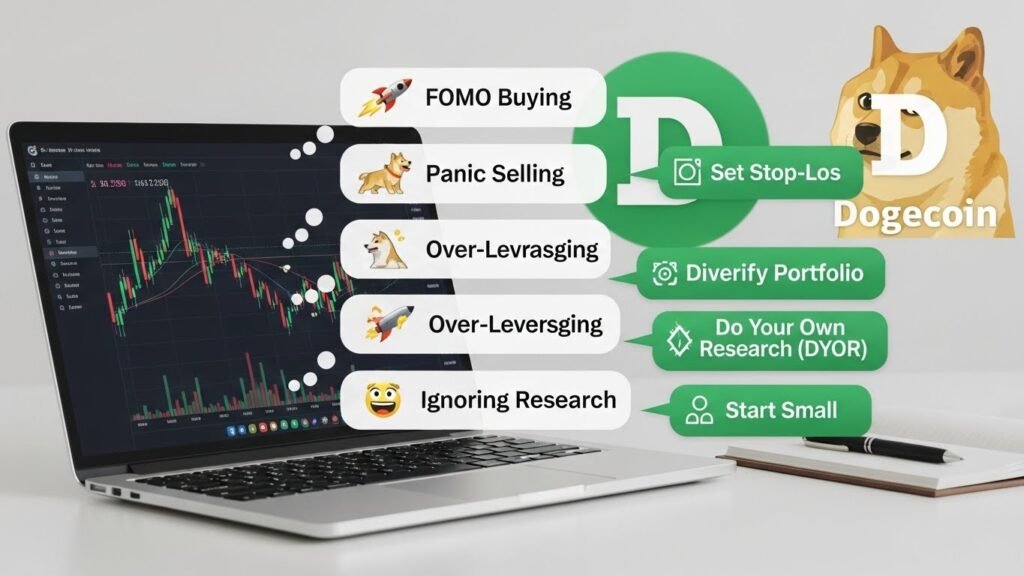
Dogecoin has evolved from a lighthearted internet meme into one of the most recognized cryptocurrencies in the global market. Its low price per coin, strong community support, and frequent social media hype make it especially attractive to beginners. However, this accessibility often creates a false sense of simplicity. Many new traders jump into Dogecoin trading without proper knowledge, only to experience avoidable losses. Understanding common Dogecoin trading mistakes is essential for anyone looking to trade responsibly and sustainably.
Beginners often treat Dogecoin as a shortcut to quick profits, influenced by viral posts, celebrity mentions, and sudden price spikes. This mindset can lead to emotional decision-making, poor risk management, and unrealistic expectations. Like any digital asset, Dogecoin operates in a highly volatile market that rewards patience, discipline, and education rather than impulse.
This article explores the most frequent mistakes beginners make when trading Dogecoin and explains in detail how to avoid them. By learning these lessons early, traders can protect their capital, improve decision-making, and develop a healthier long-term approach to crypto trading.
Misunderstanding What Dogecoin Really Is
Treating Dogecoin Only as a Meme Coin
One of the most common Dogecoin trading mistakes is assuming it has no real market dynamics because it started as a joke. While Dogecoin’s origins are humorous, its market behavior is serious. Millions of traders actively buy and sell it, and its price responds to supply, demand, sentiment, and broader crypto trends. Ignoring these fundamentals leads beginners to trade casually without strategy.
Dogecoin may lack a hard supply cap, but that does not mean it has no value. Its inflationary model affects long-term price behavior, which traders must understand. Beginners who trade without acknowledging this often misjudge price potential and hold unrealistic expectations.
Not Understanding Market Cycles
Many beginners enter Dogecoin trading during hype phases without recognizing where the market is in its cycle. Buying near peaks and selling during fear-driven dips is a classic error. Understanding crypto market cycles, including accumulation, expansion, distribution, and correction phases, helps traders avoid buying at the worst possible time. Dogecoin tends to experience sharp rallies followed by extended pullbacks. Traders who fail to recognize this pattern often panic when prices fall, locking in losses that could have been avoided with patience and planning.
Trading Without a Clear Strategy
Entering Trades Based on Emotions
Emotional trading is among the most damaging Dogecoin trading mistakes beginners make. Fear of missing out, excitement during price surges, and panic during drops can override logic. Emotional reactions lead to impulsive buying and selling, usually at unfavorable prices.
Successful Dogecoin trading requires predefined entry and exit points. Traders who act emotionally often abandon their plan mid-trade, resulting in inconsistent outcomes. Learning emotional discipline is just as important as understanding technical indicators.
Copying Social Media Influencers Blindly
Social media plays a major role in Dogecoin price movements, but blindly copying influencers is risky. Many online personalities promote Dogecoin without transparency about their own positions or motives. Beginners who follow these signals without verification often enter trades too late. Relying solely on online hype rather than personal analysis is a serious error. Crypto market sentiment should be one factor among many, not the sole reason for entering a trade.
Ignoring Risk Management Principles
Investing More Than You Can Afford to Lose
One of the most fundamental Dogecoin trading mistakes is risking money needed for daily expenses or emergency savings. Cryptocurrency markets are unpredictable, and Dogecoin is no exception. Beginners who overinvest experience extreme stress, which leads to poor decisions. Responsible trading starts with using disposable income only. This approach reduces emotional pressure and allows traders to think more rationally during market fluctuations.
Not Using Stop-Loss or Take-Profit Levels
Many beginners enter Dogecoin trades without defining when to exit. Without stop-loss strategies, small losses can turn into significant drawdowns. Similarly, failing to set take-profit levels can result in missed gains when prices reverse suddenly. Having predefined exit points ensures consistency and protects traders from emotional reactions. Risk management is not about avoiding losses entirely but about controlling them effectively.
Overtrading and Chasing Small Price Movements
Trading Too Frequently Without Purpose
Overtrading is a hidden but dangerous Dogecoin trading mistake. Beginners often believe more trades mean more profits. In reality, excessive trading increases exposure to fees, mistakes, and emotional fatigue.
Dogecoin’s volatility can tempt traders to chase every small movement. However, not every fluctuation represents a profitable opportunity. Learning when not to trade is just as important as knowing when to enter.
Confusing Noise With Trends
Short-term price movements often mislead beginners into thinking a trend is forming. Acting on market noise rather than confirmed trends results in unnecessary losses. Understanding technical analysis basics such as support, resistance, and volume can help differentiate real trends from temporary fluctuations.
Failing to Understand Volatility in Dogecoin Trading
Underestimating Sudden Price Swings
Dogecoin is known for its sharp and unpredictable price swings. Beginners often underestimate how quickly prices can rise or fall. Entering trades without accounting for volatility leads to unexpected losses or forced exits. Understanding volatility helps traders position sizes appropriately. Smaller positions reduce risk during unpredictable market conditions and provide more flexibility.
Panic Selling During Market Corrections
Market corrections are normal in crypto trading. Beginners who panic sell during temporary dips often sell at the worst possible time. This behavior locks in losses and prevents recovery gains. Experienced Dogecoin traders view corrections as part of the broader trend rather than a signal of failure. Patience and perspective are key to avoiding this mistake.
Neglecting Fundamental and Sentiment Analysis
Relying Only on Price Charts
While technical analysis is valuable, relying exclusively on charts is a limitation. Dogecoin is heavily influenced by market sentiment, news, and community activity. Ignoring these factors leaves traders unprepared for sudden market reactions. Understanding broader crypto sentiment, regulatory developments, and community trends provides a more complete trading picture.
Misinterpreting News and Hype
Not all news impacts Dogecoin equally. Beginners often overreact to headlines without evaluating their long-term significance. This leads to unnecessary trades driven by speculation rather than analysis. Learning to distinguish between short-term hype and meaningful developments is essential for smarter trading decisions.
Using Poor Trading Psychology
Expecting Instant Profits
Many beginners enter Dogecoin trading expecting quick riches. This unrealistic mindset leads to frustration and reckless decisions. Trading is a skill that develops over time through experience and learning. Accepting that losses are part of the process helps traders stay grounded and focused on improvement rather than instant success.
Refusing to Learn From Mistakes
Another common Dogecoin trading mistake is repeating the same errors without reflection. Beginners often blame the market rather than analyzing their own decisions. Keeping a trading journal helps identify patterns, strengths, and weaknesses. Continuous learning is essential in a fast-evolving crypto environment. Traders who review and adapt their strategies improve significantly over time.
Overlooking Security and Platform Knowledge
Ignoring Basic Security Practices
Security is often underestimated by beginners. Poor password management, lack of two-factor authentication, and phishing scams result in lost funds. These losses are avoidable with basic security awareness. Protecting assets is as important as making profitable trades. Understanding crypto wallet security is essential for long-term participation.
Not Understanding Trading Platform Features
Many beginners use trading platforms without fully understanding order types, fees, and tools. This leads to accidental mistakes, such as market orders executed at unfavorable prices. Taking time to learn platform features improves execution quality and reduces unnecessary losses.
Conclusion
Dogecoin trading offers exciting opportunities, but it also comes with significant risks, especially for beginners. The most common Dogecoin trading mistakes stem from emotional decision-making, lack of strategy, poor risk management, and unrealistic expectations. By understanding these pitfalls and learning how to avoid them, traders can significantly improve their chances of success.
Responsible Dogecoin trading requires patience, education, and discipline. Treating Dogecoin as a serious financial instrument rather than a quick gamble transforms the trading experience. Beginners who focus on long-term learning, proper risk control, and emotional balance are far more likely to achieve consistent results in the dynamic crypto market.
FAQs
Q: Why do beginners lose money so quickly in Dogecoin trading?
Many beginners lose money because they enter Dogecoin trading without a clear strategy or understanding of market behavior. Emotional decisions driven by hype, fear, and unrealistic expectations often result in buying at high prices and selling during panic-driven drops. Lack of risk management and overtrading further increase losses.
Q: Is Dogecoin trading suitable for beginners in crypto?
Dogecoin trading can be suitable for beginners if approached responsibly. Its relatively low price and high liquidity make it accessible, but beginners must first learn basic trading principles, volatility management, and emotional discipline to avoid common mistakes.
Q: How important is risk management in Dogecoin trading?
Risk management is critical in Dogecoin trading because of its high volatility. Using stop-loss levels, limiting position sizes, and only investing affordable capital help traders protect themselves from significant losses and emotional stress.
Q: Can social media trends be trusted for Dogecoin trading decisions?
Social media trends should not be trusted blindly. While they influence Dogecoin price movements, they often exaggerate expectations. Successful traders use social sentiment as a supplementary factor, not the primary reason for entering trades.
Q: How long does it take to become consistent in Dogecoin trading?
Consistency in Dogecoin trading takes time, practice, and continuous learning. Beginners should focus on education, analyzing past trades, and improving discipline rather than expecting quick profits. Over time, experience helps develop better judgment and confidence.